Interview with Hans-J?rgen Sommer
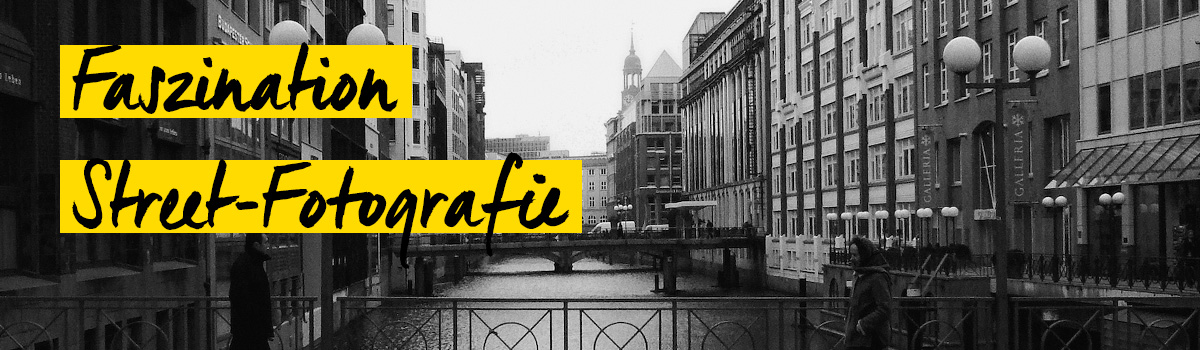
The fascination of street photography
Hans-J?rgen Sommer is fascinated by street photography and has found his passion in it. He discovered it for himself at the age of 40. For him, it is a challenge in terms of adequate composition and precise timing. He does not adhere to the usual conventions in photography. If the quality is right, selective coloration also makes it into his narrow selection of images. In this interview, you will gain exciting insights into his work and what is particularly important to him in his photography.
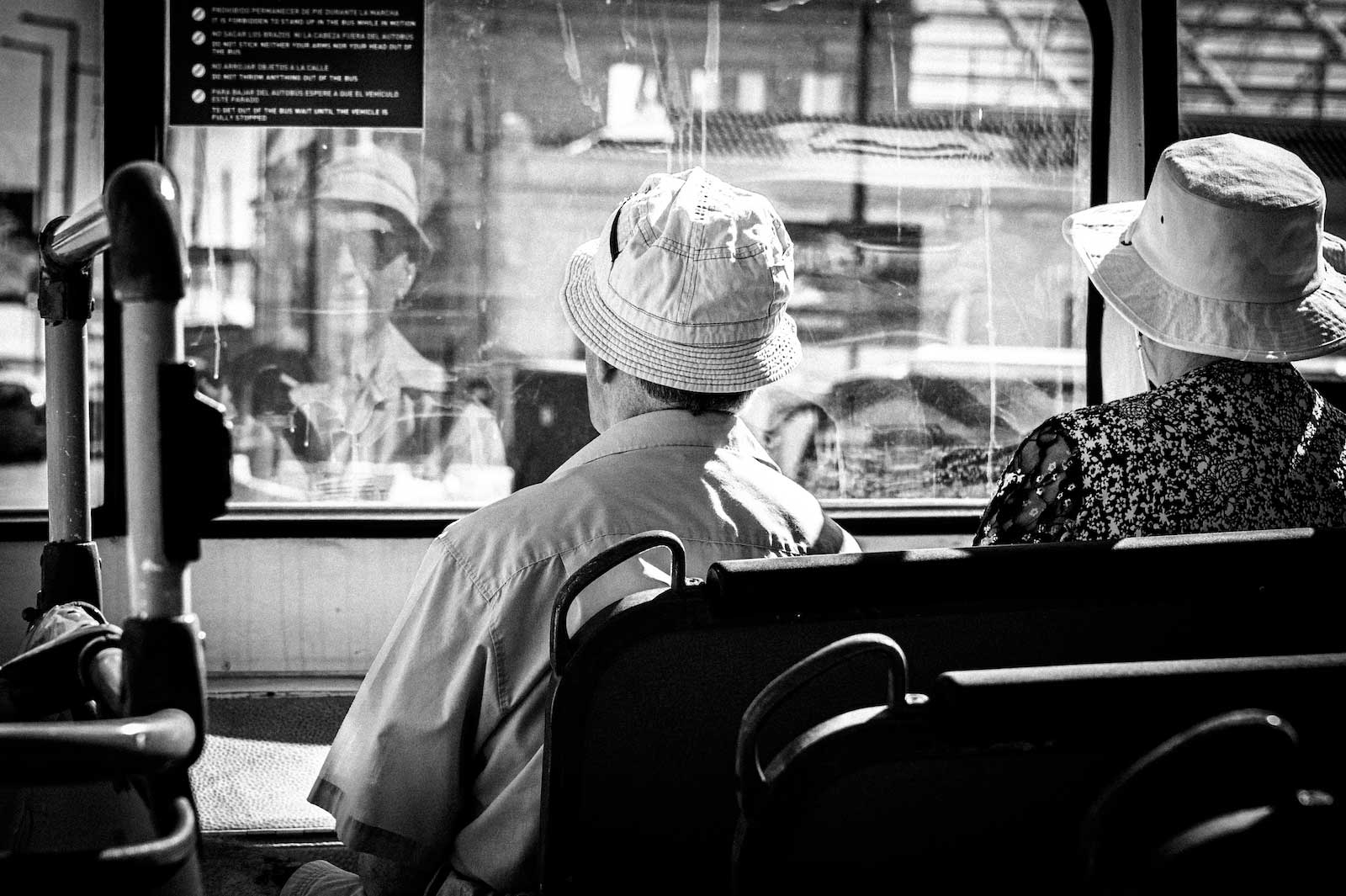

What does photography mean to you and how did you get into it?
For me, photography is a substitute for painting. I would love to be able to paint, but I don't have the patience for it. The advantage of painting for me is that there are no limits. In photography, you have to make do with the scenario that presents itself. I love challenges and I always try to get the best out of a scene in terms of composition. It's not the image statement that is important, but the goal is a harmonious image that I would like to hang on my wall. Photography now takes up a large part of my life and is a way of giving free rein to my creativity.
I started when I was 15. Before that, I enjoyed painting, but freezing the moment relatively quickly is what inspired me about photography. Back then, I devoured tons of literature on technique and composition.
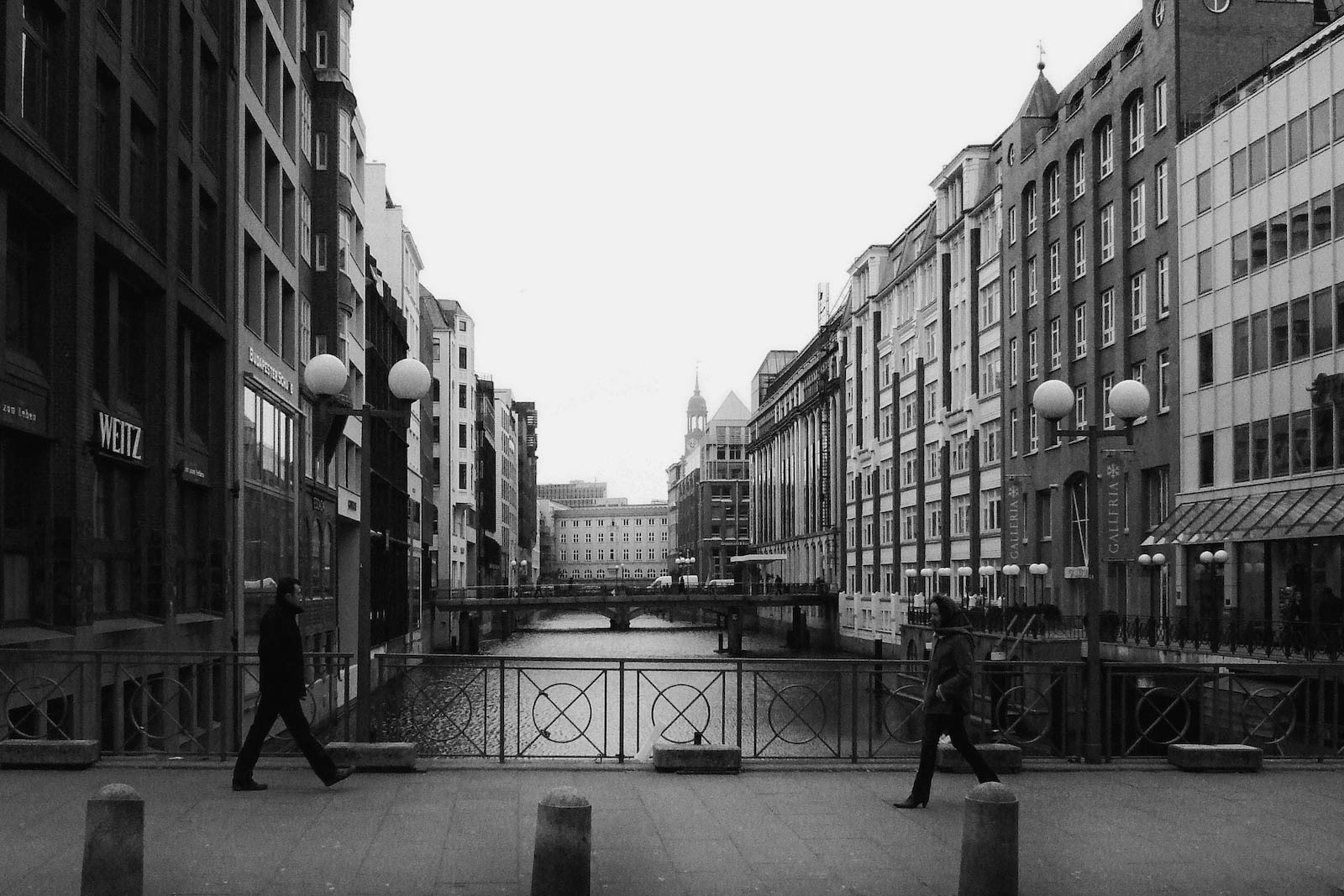
Travel, street, black and white and much more - in which genre do you feel most at home?
I love street photography. It's all about timing and composition so that the result is coherent. Black and white processing is often a good choice, as it usually looks classy. But a color version can also work. In Germany and France, the guidelines for street photography are strict. Normal travel photography can also be very beautiful here. Portraits also fascinate me. But not model photography, I've tried that too, but character heads with rough edges.
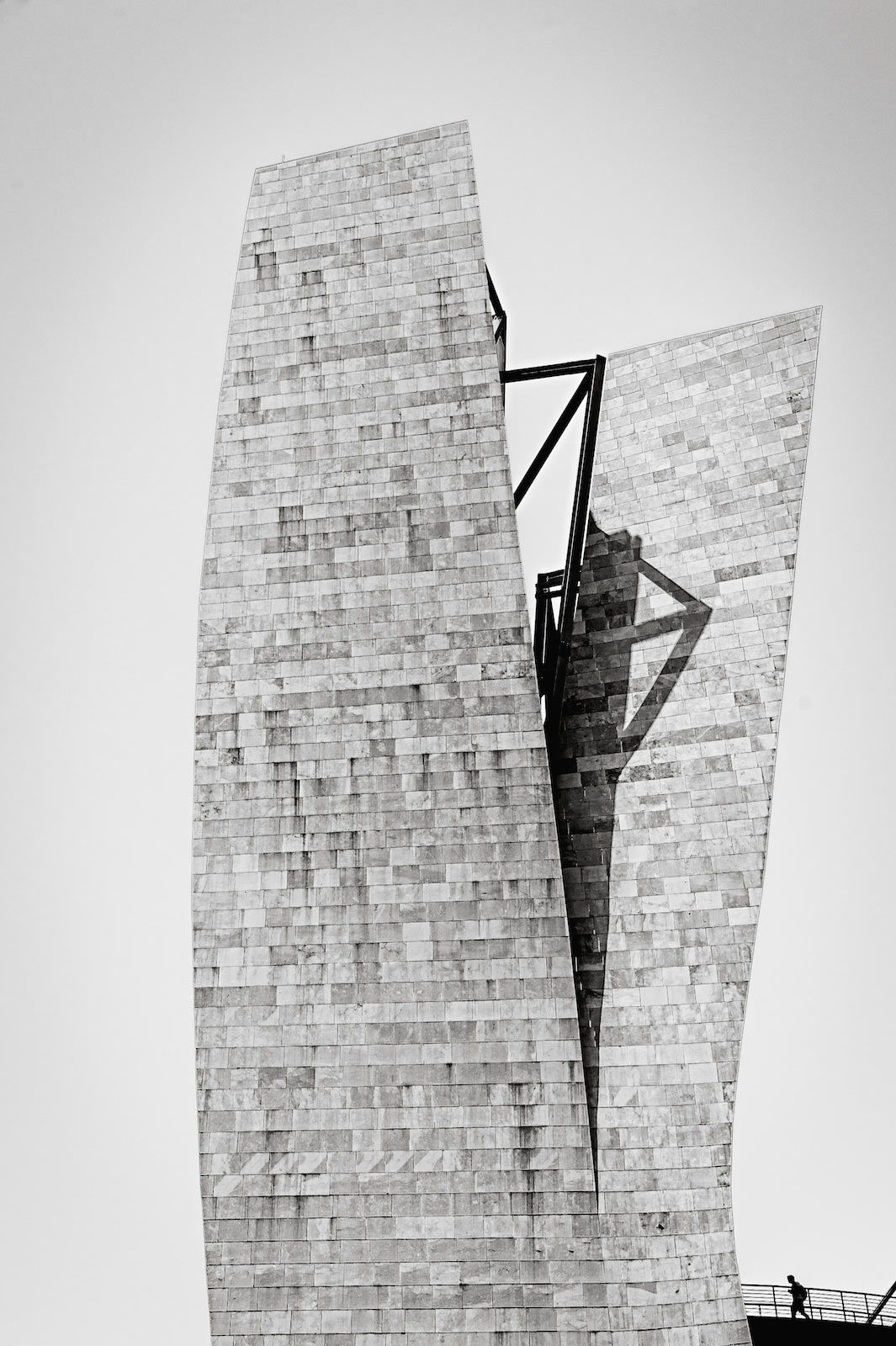
How do you approach your photography and how do you find your subjects?
I rarely go looking for motifs on my own, I'm usually accompanied by my wife or photo friends. I'm always on tenterhooks when I'm traveling, as I could miss an interesting subject. I have to thank my wife, she is very understanding of my passion. Of course, I try to find a balance between time for photography and time for my wife.
Over the years, I think I've trained my eye to notice interesting situations and compositions. In street photography, every second counts. I'm now convinced that a lot of things happen subconsciously for me. I'm often surprised at home on the computer that a photograph has turned out well, even though the moment was very brief when an interesting scene arose and I took the shot.
How important is technology to you?
For me, the camera is like a paintbrush, a means to an end. Over the years, I've accumulated quite a few bodies and lenses. I'm only demanding in two things: the fastest shutter speed (min. 1/8000) for my fast lenses in good light and tools for focusing my manual lenses (focus peaking). I always shoot with aperture priority, as every second counts in street photography, so I also appreciate the autofocus. I now like the compactness of system cameras, especially when traveling. I'm currently thinking about taking photos with just one Lens on our upcoming trip to Paris. And that will be with a 90mm manual, very fast lens, which will be another challenge.
What or who inspires you?
First of all, I'll mention the situation in an underpass in Munich from the city center to the English Garden. There were skylights through which the light shone. And there was a street musician sitting there with his clarinet. A beam of light fell directly on his instrument. I simply had to capture this lighting mood.
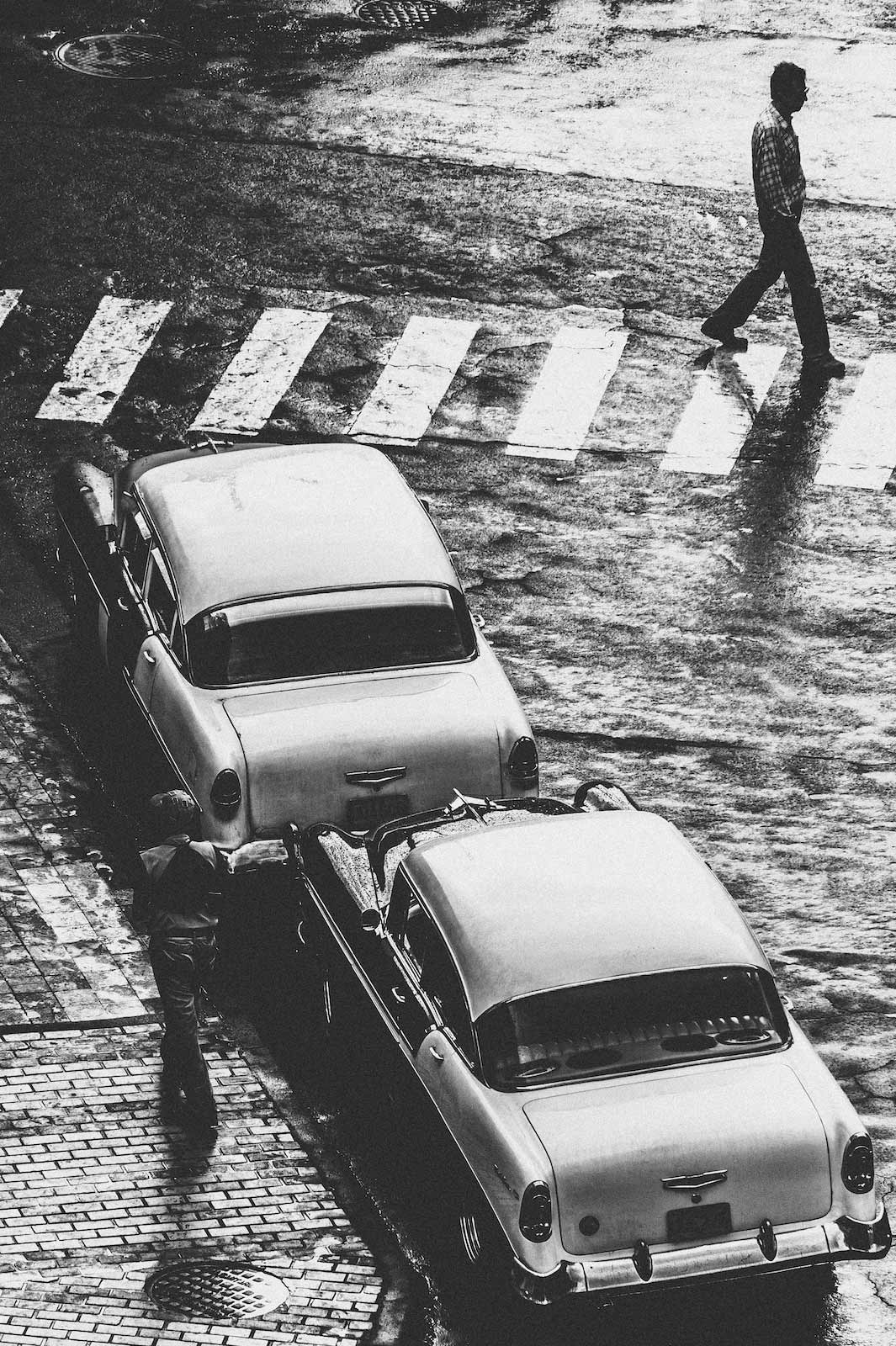
I usually use a zoom lens for my street photography - some people will turn up their noses now. One situation reinforces this. We were on the roof of a hotel in Santiago de Cuba after a rain shower. Down on the street, I saw an interesting scene and was able to capture it thanks to the 300 mm focal length (full format). In my opinion, one of my best photographs in terms of timing and composition.
One evening when we were in Thailand, I took pictures of the incredibly beautiful sunset with the sea and the typical longtail boats, picturesque. My wife just said "Be a bit romantic". But unfortunately I had other priorities that evening. My wife really has a lot of understanding for me.
Where are your pictures published?
I've had a portfolio website for years with increasing numbers of users. I've had a second site for about a year now: a travel photo blog. On this site, I show beautiful travel impressions of the destinations my wife and I have visited. You can also find me on Instagram and Facebook. A few years ago, I took a portrait of a relatively well-known artist at a vernissage. I made this expressive portrait available to Wikipedia. Years ago, I sold my pictures at a Christmas market for a good cause. The idea of charity is close to my heart. I've also had an exhibition, but I'm no longer prepared to pay in advance. An exhibition should only cost the artist something if it sells.
About Hans-J?rgen Sommer
Born in Speyer am Rhein in the summer of 1969 and raised in the provinces around Ludwigshafen, Hans-Ju?rgen Sommer turned to the beautiful arts at an early age. He enjoyed painting, but at the age of 15 he discovered photography. He was fascinated by capturing the right moment. A photograph was precious in those analog times. So he had to deal intensively with every picture, right from the planning stage. He still benefits from this today.
With the advent of digital photography, he lives out his passion even more intensively and has been able to incorporate his experience in the field of information technology into his workflow. This opened up new creative possibilities for him.
At the age of 40, he discovered travel and street photography for himself. For him, it was a challenge in terms of adequate composition and precise timing.
He is particularly fond of Paris, which he considers the most beautiful city he knows from a photographic point of view.
Hans-Ju?rgen Sommer does not adhere to the usual conventions in photography. If the quality is right, selective coloration also makes it into his narrow selection of images.
He has exhibition experience and has also been involved in charity work in the past.