Polarizing filters




Free live consultation
Your individual consultation - from the comfort of your sofa
Arrange appointment


Meaning of the delivery status
Immediately available
The item is in stock and can be shipped at short notice.
The item is also in stock in our shop in Düsseldorf.
Please note: Despite updating our website regularly, it is possible that an item may be out of stock but shown as available for a short time, especially when orders are high. All information is therefore without guarantee. We will inform you immediately if there is a delay in the expected availability/delivery time. The availability information refers to an order quantity of 1. Availability may vary for higher order quantities.
Delivery time (from-to) working days after receipt of payment
The item is not in stock in our inhouse warehouse and will be ordered from the external warehouse/manufacturer or disributor after you have placed an order. The expected delivery time is listed with the item.
Please note: Despite updating our website regularly, it is possible that an item may be out of stock but shown as available for a short time, especially when orders are high. All information is therefore without guarantee. We will inform you immediately if there is a delay in the expected availability/delivery time. The availability information refers to an order quantity of 1. Availability may vary for higher order quantities.
Item has been ordered
The item has already been ordered from the manufacturer or distributor. The delivery time is usually between 1 week and 2 months. As soon as a more precise delivery time is known, we will publish the details on our website. After placing the order, you will be informed regularly about the delivery time.
Available at a specified date
The item has already been ordered from the manufacturer or distributor. We have been informed of the expected delivery date.
We are happy to order for you
The item is currently not in stock and will be ordered for you from the manufacturer or distributor after you have placed an order. The delivery time is usually between 1 week and 2 months. After placing the order, you will be informed regularly about the delivery time.
Item has been ordered. Delivery time 1-3 months
The item is currently not available. We were not given a delivery time. Experience shows that the expected delivery time is 1-3 months.
Goods have been ordered. Long delivery time expected. Pre-order now and secure your place on the waiting list.
The manufacturer or supplier cannot confirm a date, so we assume a waiting time of 2 to 9 months. You can still order the item and secure your place on the waiting list.
Delivery alarm
You would like to be informed as soon as the item is in stock?
Notification when the product is back in stock No reservation and no place on the waiting listYou want to reserve the product?
Order now, pay later (prepayment) Notification when the product is back in stock Product reservation and fixed place on the waiting list Cancellable at any time free of charge (until delivery)What is polarized light?
With polarized light, the electric field of the light oscillates in only one direction, such as up and down. It is therefore linear and can be referred to as linear polarization. However, most of the light we find in nature, such as sunlight or the light from a light bulb, is unpolarized and the electric field oscillates in many directions at once. This can cause problems in photography - such as unwanted reflections.
What is a polarizing filter and how does it work?
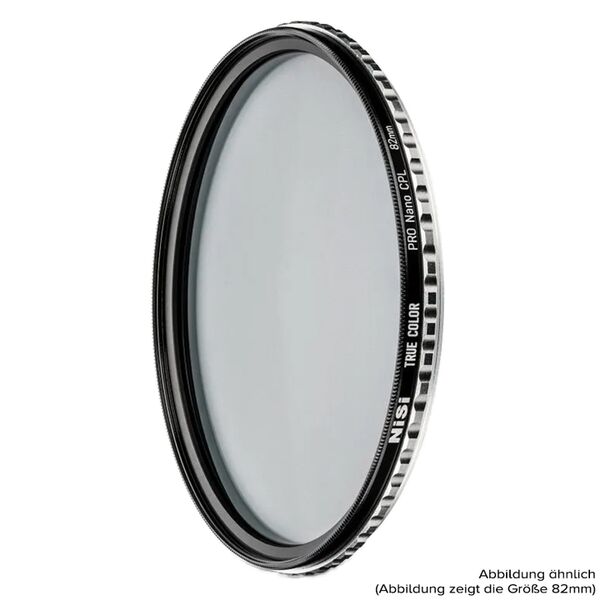
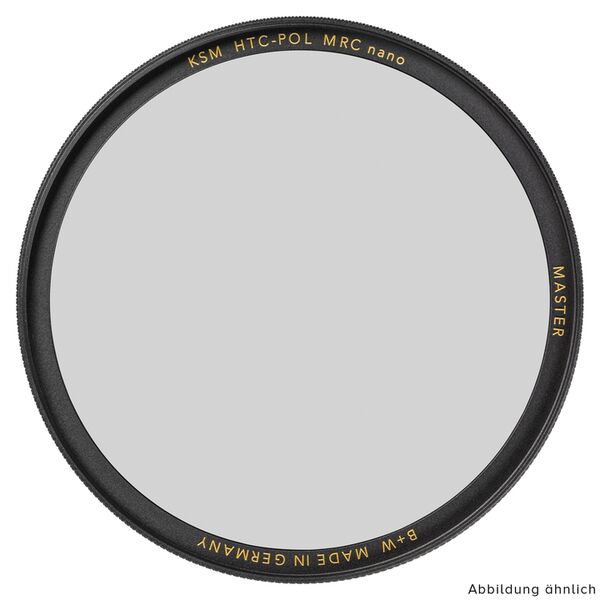
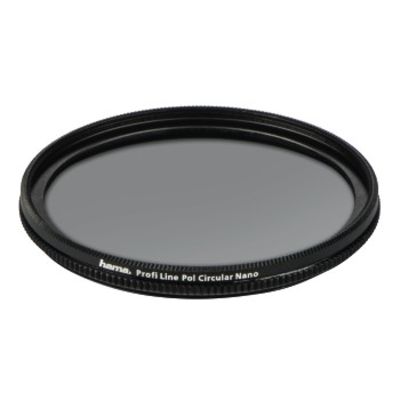
A polarizing filter helps you to suppress or emphasize reflections on non-metallic planes and thus achieve the desired photo quality. It accomplishes this by filtering out only one direction of this unpolarized light. Such a polarizer absorbs complementary polarizing light instead of reflecting it.
Light rays oscillating in the "wrong" plane can thus be suppressed. While linear polarizing filters were also widely used in the past, today the technology of circular polarizing filters has largely prevailed. A circular polarizing filter consists of two polarizing filter foils lying directly behind each other. A "true" circular polarizing filter produces circularly polarized light directly from unpolarized light.
Special polarizing filters
Usually, color changes are not desired with a circular polarizing filter. However, there are special polarizing filters that can filter out some of the blue light, for example. This so-called Warming Polarizer works like a combination of a polarizing filter and a light yellow filter. Red, yellow and green colors are emphasized, giving the impression of a warmer image
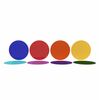
Special polarizing filters can be used to emphasize light in certain colors. Depending on the setting of the filter and the direction of polarization, these are different contrasting colors. Images created with these filters show distinct color changes. These polarizing filters are available for the colors green and red as well as for yellow and blue. The yellow-and-blue filter is commonly known as the Gold-N-Blue filter and is used primarily in landscape photography. On cloudy days, you can use it to create artificial blue and yellow colors on a gray sky or body of water. The Red-Green filter, on the other hand, is used less often because it looks very artificial.
Range of application of the polarizing filter
A circular polarizing filter is simply screwed onto the threaded insert of your camera lens and works best when oriented 90? to the sun. For example, if you want to take photos on a lake or the ocean and suppress the reflections of the water, but at the same time intensify the blue of the sky and water, you can set this up with a polarizing filter for your camera.
In landscape photography, the polarizing filter is thus a must, especially when it comes to photographing bodies of water - still or flowing. By means of polarizing filters, contrasts can be created here that are difficult or impossible to achieve even through image processing. However, a polarizing filter can also be very useful outside of landscape photography, for example in wildlife photography with a long focal length. For example, if you want to photograph animals on the surface of water, a polarizing filter is an excellent choice. Often the animals do not stand out strongly enough from the water surface due to the reflection and are therefore difficult to recognize in photos. Using polarizing filters, you can turn down the contrast of the water, making it darker. Dolphins, whales, fish and other marine animals stand out better from the water surface as a result. However, a circular polarizing filter also helps you if you want to photograph foliage or forests. For example, it can suppress annoying blue or silvery reflections of the sky, and you can get a rich green out of your pictures.
A polarizing filter is also suitable for rainbows. Color lines of the rainbow are polarized light and are therefore suppressed with the correct polarization. So if you turn the polarizing filter to its extreme setting, no rainbow will be seen. If you now adjust the polarizing filter 90? from this position, more than half of the polarized light from the clouds around the rainbow will be absorbed and the rainbow will be almost completely transmitted. If you compare the rainbow to its surroundings, it looks much stronger. So by turning the polarizing filter, you can find the contrast that suits you.
Not only the quality of the polarizing filter film is crucial!
With the polarizing filter, you should pay attention to the workmanship and feel in order to be able to make the most precise adjustment possible. The polarizing film in itself already darkens the light. The second polarizing foil can change the darkness by turning it and that to the desired degree. This trick of polarization thus allows you to darken your image as you wish without distorting the light source. Here it is important that precise turning - without over-turning - is possible. With a high-quality polarizing filter, this can be adjusted with millimeter precision to achieve the optimal degree of reflection and contrast