Discover new perspectives!
From the magazine Schnappschuss No. 58
Perspective is an essential part of photography! Regardless of how you photograph, it gives the photographer the opportunity to leave their usual field of vision and discover new angles. A consciously chosen perspective is essential for interesting photos. Christian Laxander in an interview with Jonas Junk, pictures by Daniel Krug and Valentin Schnitzler
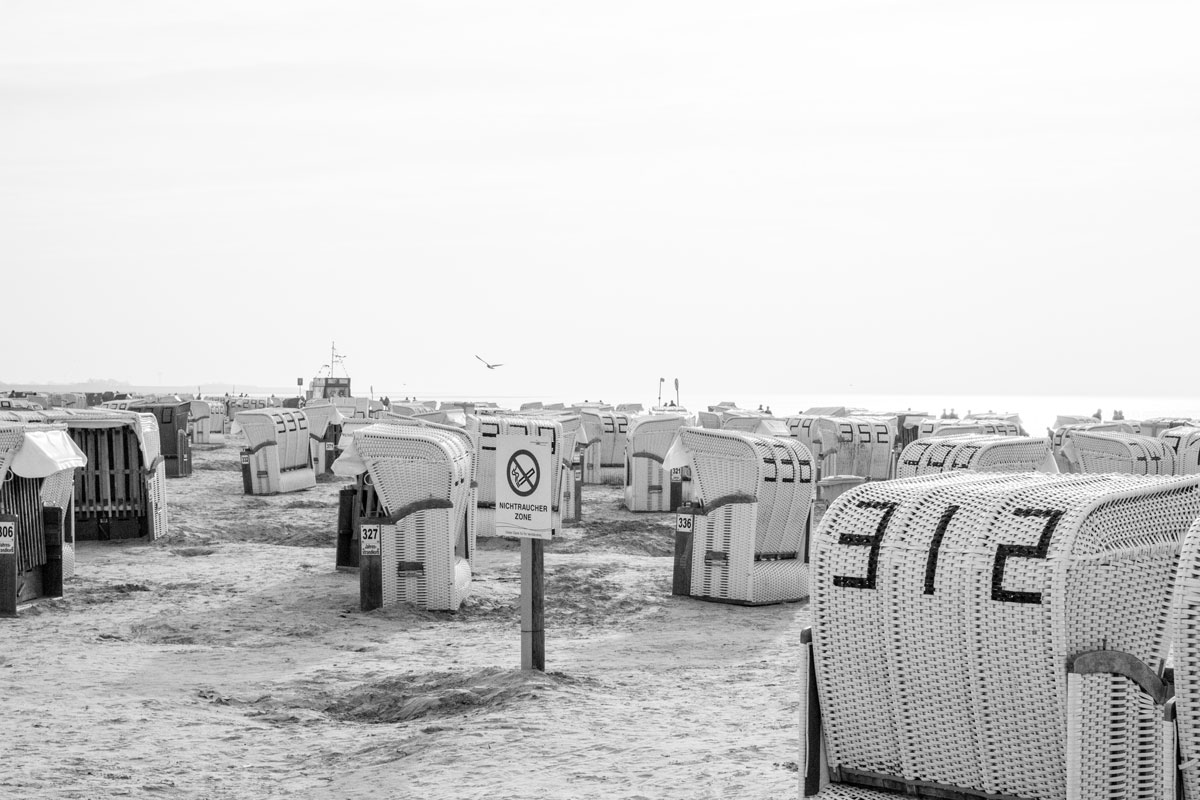
To give your own pictures that certain "wow effect", you have to show the human eye
something new that it has never seen before. As soon as you have to think about a photo, it stays in your memory.
In addition, perspective can direct the viewer's gaze and thus depict reality differently, which is why we visited our workshop leader Christian Laxander. In his studio in Pulheim near Cologne, where some Foto Koch Akademie workshops also take place, we talked to him about the basics of choosing the right perspective. In this article, we take up the content of the conversation and describe further aspects of this topic.
Why is perspective so important in photography?
The most exciting thing about perspective, according to Christian, is that you can use it to create different images and create a new look by changing your own point of view. This allows you to show your own way of looking, which may not correspond to the normal way of looking, in the photos. New cameras in particular have made it easier to discover new angles thanks to their compact and lightweight design, tilting displays, remote control via smartphone or tablet and improved image stabilizers. You can take the camera with you wherever you go and put it in any position.
What is the normal perspective?
The starting point for interesting perspectives is the "normal" perspective. In everyday language, normal perspective can be described as the view of a person from eye level. "The normal perspective is, so to speak, the point from which I - or my camera - see the picture," explains Christian. In order to create special pictures, it is advisable to try out new perspectives and leave the normal perspective, whereby shots from a very central position can also be a very nice stylistic device if, for example, attention is paid to completely symmetrical lines and motifs.
What perspectives are there and what can I use them for?
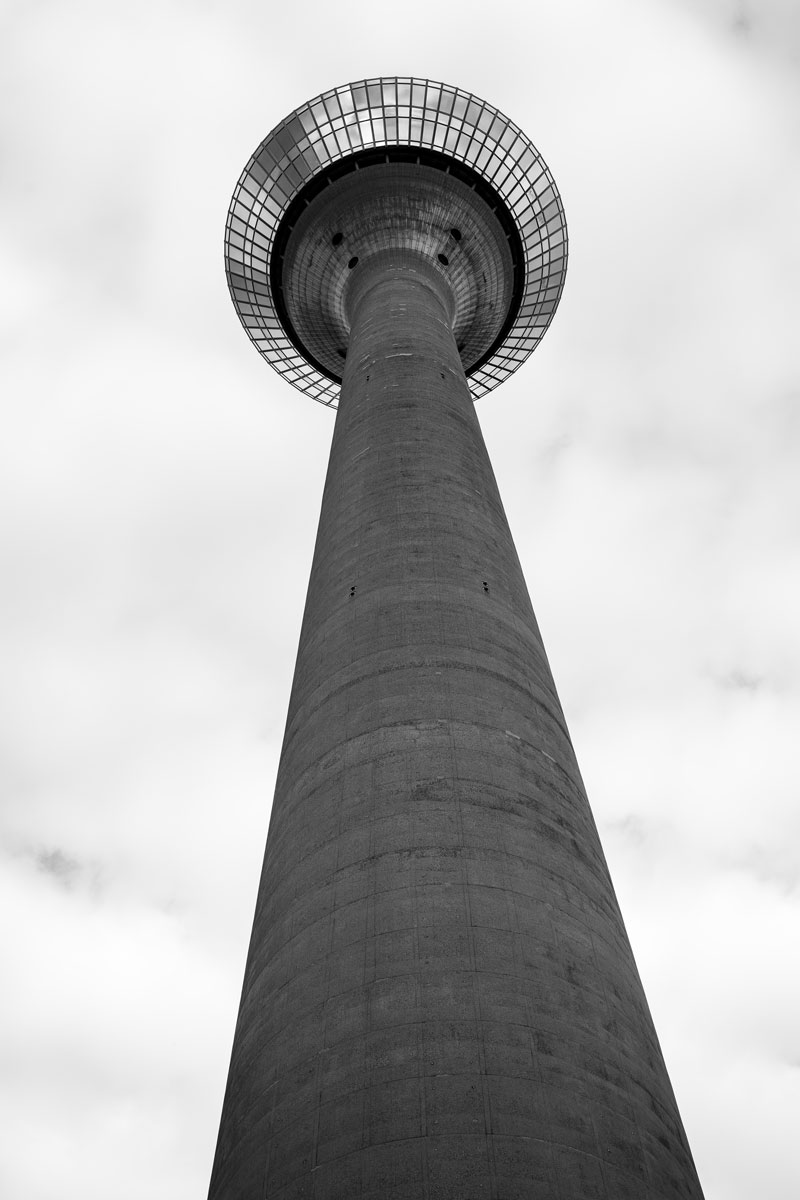
The two best-known perspectives are probably the frog's-eye view and the bird's-eye view. With the frog perspective, you try to take photos from as low a point of view as possible. The pictures often look much more interesting as the human eye is not used to this low perspective. For example, when photographing your own pet, it makes sense to leave the normal perspective and go to the same height. Try it out for yourself! Whether it's photos of children, your own dog or macro photography: lie down on the ground and observe how the image changes.
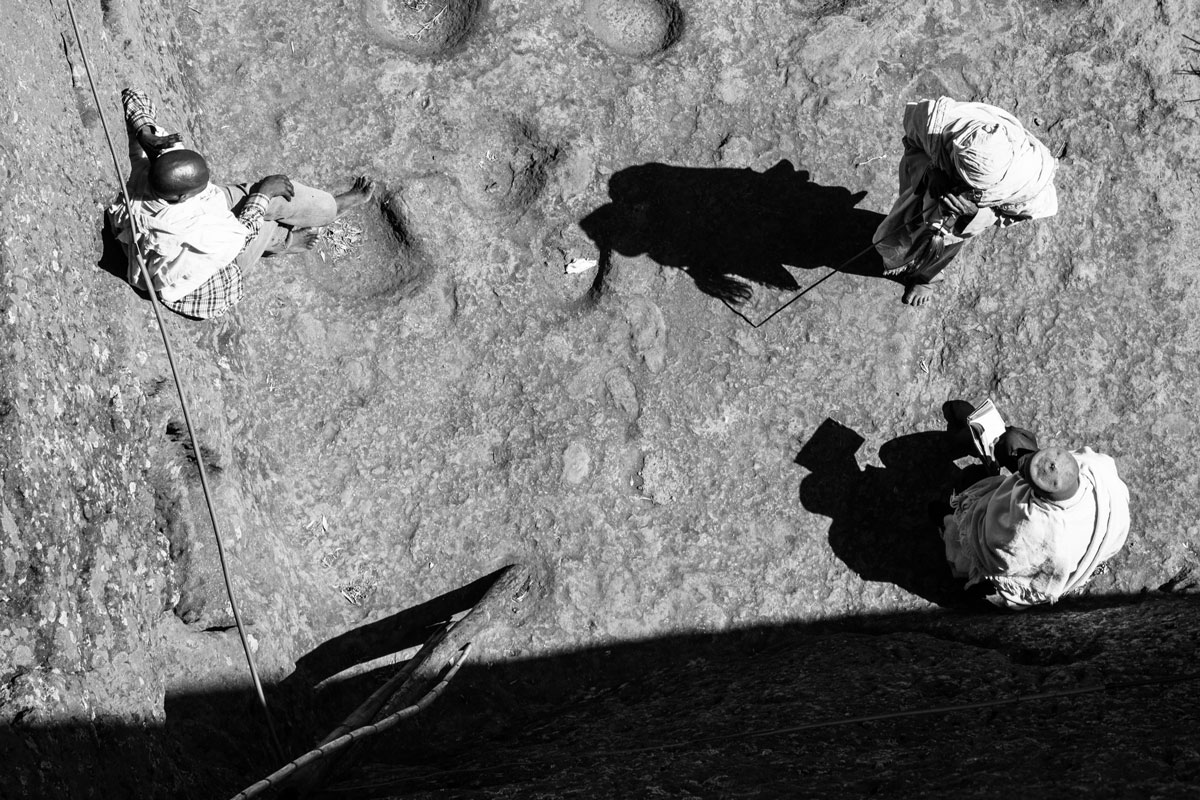
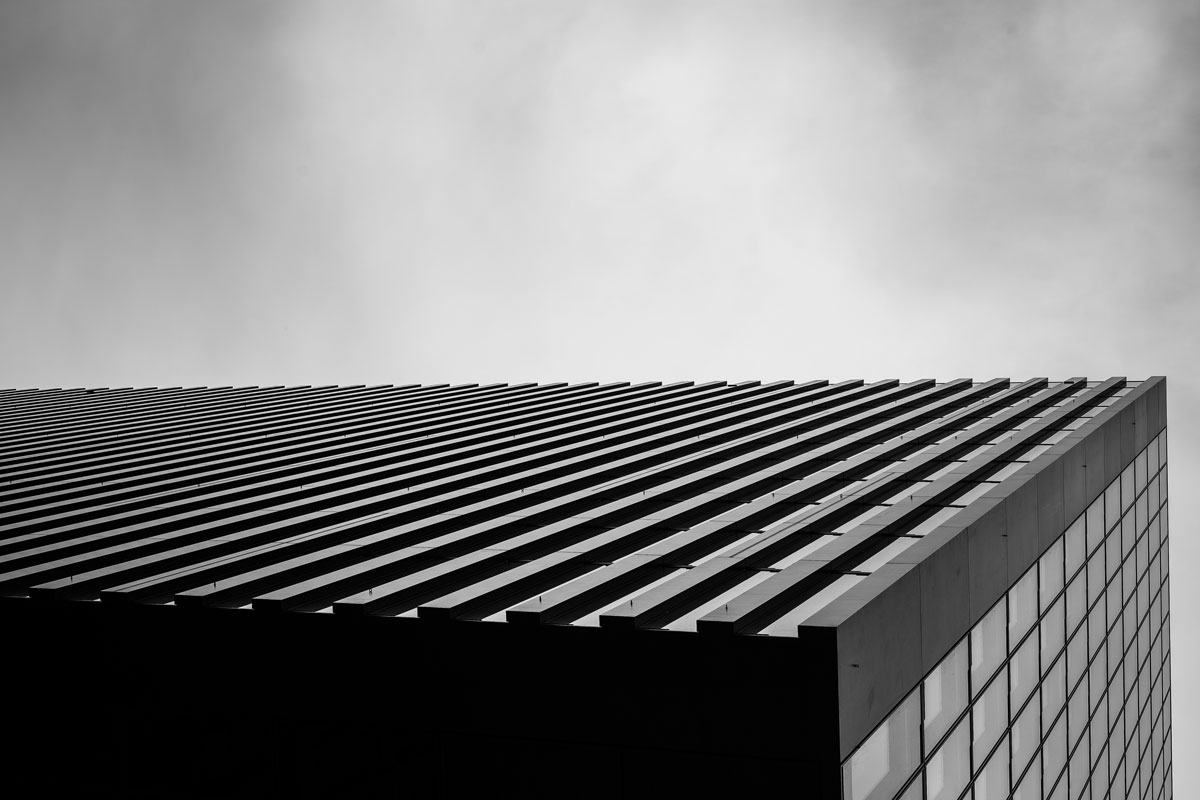
The bird's eye view is the exact opposite of the frog's eye view. The bird's eye view gives the viewer a top view of the object that the eye would not normally see. This also makes the photos more interesting. How you can implement the bird's eye view depends of course on the subject. In landscape and architectural photography, an elevated viewpoint often helps. This could be a mountain, a tall building or a bridge. In portrait photography, on the other hand, a ladder is enough. For particularly interesting perspectives, you can also use additional equipment and modern accessories. Completely new types of photography are possible with a drone on which a camera is mounted. If you go up with a drone and photograph vertically from top to bottom, you get an ideal view. Here you can easily play with objects and lines through streets, bodies of water and much more. In this way, you can create an impressive image composition that was difficult to achieve until a few years ago. But the photographer can not only move in the vertical plane. There is also often scope to discover new perspectives on a horizontal plane. For example, if you want to depict an avenue as impressively as possible, you can choose the central perspective. The symmetry of the lines gives the picture a completely new look. Another popular perspective is the 2-point perspective. Here, the image has not just one vanishing point, as with the central perspective, but two. For example, if you take the corner of an interesting building in the center of the picture, two lines run to the sides. If you combine the vertical and horizontal options, further options quickly become available, such as the 3-point perspective, where you have three vanishing points. Traditionally, this is often used for cars by photographing upwards at the front corner of the bumper. One line runs upwards, one along the front of the vehicle to the side and one along the length of the vehicle to the rear. If you deliberately photograph from the side or even at an angle, as in the car example, the distortion of a wide angle can bring additional dynamism to the image. Interesting lines and an exciting image composition are the aim of every special perspective. Although the focal length does not change the perspective itself, it is a "tool to enhance the effect of a particular perspective," says Christian. "However, you can only change the perspective by leaving your own point of view."
Modern cameras with a flip-up display are particularly practical for discovering new perspectives! Ideal for anyone who doesn't like to lie down on the ground or would like to take photos from above. Liveview makes it easy to experiment with different angles, such as the frog's-eye view. Discovering for yourself how unusual angles distort reality is great fun. A small hotel pool looks much bigger when photographed from a frog's-eye view.
Another exciting perspective can also be created with an underwater housing. For an exciting picture, for example, one part can be shown above and one part underwater.

Which perspectives are used for certain areas of the shot?
Basically, you can use any perspective for any type of shot to create a specific look, according to the photo trainer. Landscapes and interiors are perhaps better photographed from above or below. "The classic portrait is often photographed at eye level from the hand," notes Christian, adding that this doesn't mean you can't take portraits from above or below. There are no fixed rules - it's all about trial and error to get the best picture in the end. With the help of a very special lens - a tilt-shift lens - the plane of focus of an image can be changed to achieve a certain style. A tilt-shift lens is perfect for architectural photography in particular, as the ability to adjust the lenses in the Lens means that you can avoid sharp lines. Another new trend is to create unique
portraits with the tilt-shift lens. It is also important to mention the fisheye lens, which changes the perspective and distorts the subject through spherical projection.
Is photography more creative with a fixed focal length?
You often hear: buy a fast fixed focal length so that you have to move your feet and change your point of view. "If you use a fixed focal length, it can really lead to more creative photography," says Christian. Without the zoom function, the photographer has to move around and find out where the subject looks best from. Of course, this doesn't always apply, as exceptional shots can also be taken with zoom lenses. In the end, it all comes down to your own taste and preferences.
Is the vacationer in Italy supporting the Leaning Tower of Pisa with his hand also playing with perspective?
You also need the right location for a photo like that, so that's also a perspective. "I can think of more examples off the top of my head," remarks Christian: "Carrying children on your hand,
holding the sun or moon. There are also things like that. Of course, you can argue about whether this is the basis of perspective, but yes, you can also do things like this with perspective."
To summarize, it can be said that perspective is a decisive creative tool. It helps the photographer to show new angles that the viewer is not used to and that make them think, possibly drawing their attention to details that they would otherwise not have noticed. Photos can look much more interesting this way.
For many pictures, it therefore makes sense to leave the usual point of view and try out new perspectives. Our tip for all beginners: don't hesitate, pick up your camera and try out as much as possible! Photography should be a challenge, it should be fun and in the end you alone should like the picture. Good luck with that!
You can watch the video interview with Christian Laxander at:
www.fotokoch.de/perspektiven further links:
www.fotokoch.de/akademie
www.fototrainer.com Instagram:
www.instagram.com/valentin.schnitzler
www.instagram.com/jonas__junk/
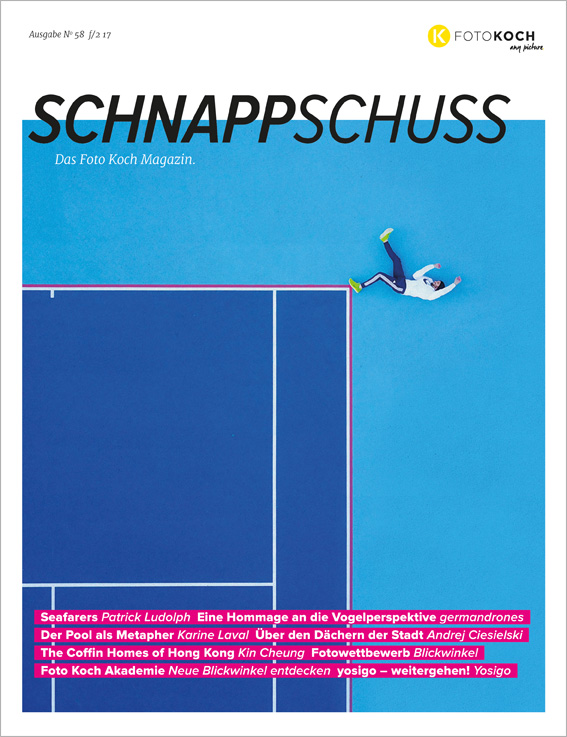
"Schnappschuss" magazine
The Foto Koch magazine has a modern, creative design and is relatively unique in terms of design and content further information