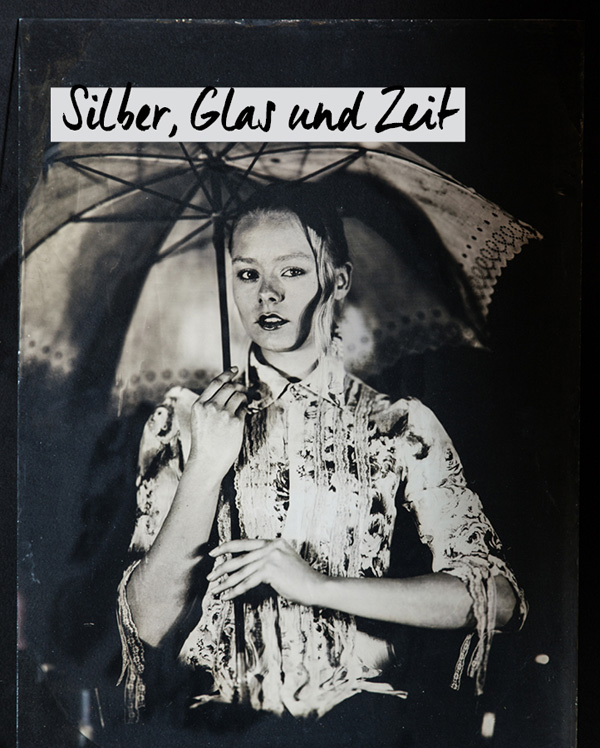
Silver, glass and time
Unique pieces instead of "everyone does digital". About a year ago, Thomas Stelzmann took us into the world of ambrotypes in an interesting article for Schnappschuss No. 55; a world that feels like a journey through time. As announced at the time, the whole project was still a long way from reaching its goal, because one thing was certain: there is still room for improvement... by Thomas Stelzmann
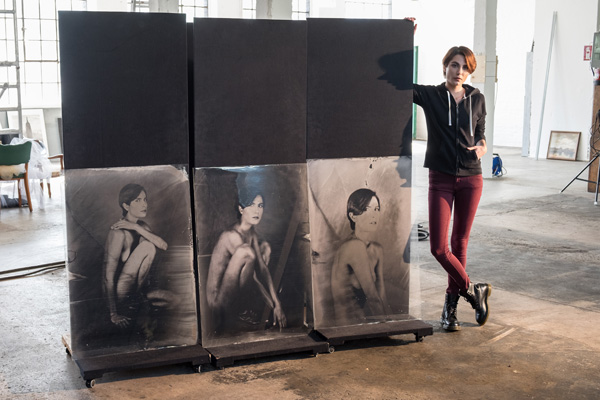
"Number Three"
April 12, 2016, Wuppertal Barmen, in a former ribbon weaving mill. The looms have been idle for a long time, but something is happening in the rooms again.
"Number Three" has just been finished and now has to dry.
"Number Three" is a glass plate, it is wafer-thin, only about 2 mm thick.
Simple framed glass, actually completely unspecial.
Or not...?
Not quite.
The special thing about "Number Three" is the pale yellow image of a young woman that can be seen on it. It is not printed or glued on, it was created on the plate.
The young woman is Roarie Yum, freelance model from Tampa (Florida), and "Number Three" is a so-called ambrotype and with its 100x70 cm size probably one of the largest contemporary ambrotypes in Europe.
There are a few more plates of this size in Europe, and presumably they all come from our photo studio "geb?ude.1 fotografie" in Wuppertal, at least for the moment.
"Immortal"
In 1850, the so-called "wet-plate" process was invented, which in this country is somewhat unwieldily but more precisely called the "collodion wet-plate process". It was intended to be a cheaper and healthier substitute for the daguerreotype, which was common at the time. This not only required expensive, silver-plated copper plates, it also required the handling of iodine, bromine, chlorine and mercury vapors: not exactly a dream job for the photographer.
In the "wet-plate" process, the "film material" is only produced shortly before the picture is taken; it cannot be produced in stock when you have the time.
The carrier plate made of simple glass (sizes up to about 18x24 cm are common) is evenly wetted with collodion, a yellowish-reddish mixture of ether, alcohol, cellulose nitrate ("gun cotton") as well as bromine and iodine salts. The ether evaporates quickly and produces the typical "doctor's odor". This is not entirely harmless, as ether vapors are not toxic, but they have an anaesthetic effect and are highly explosive.
A kind of gel forms on the plate and from now on the clock starts ticking: no more than 10 minutes should pass before developing, depending on the ambient temperature and humidity. The plate must not become dry during this entire time: a "wet plate". In the next step, the immersion of the still moist plate in silver nitrate solution, silver salts form in the hair-thin collodion layer within a few minutes: the plate becomes light-sensitive. This happens under red light and with caution: silver nitrate is corrosive and you only have two eyes, so protective goggles are absolutely essential here. The light sensitivity of the plate, if you can call it that, is now normally around ISO 0.5 (yes, you read that right), and even less with older collodion. It is taken out of the bath, placed in a cassette protected from light in the camera and exposed there. The process requires blue and UV light in order to work; under incandescent light, you will end up with a dry, inactive plate, but no image.
Back in the darkroom, the plate is developed and then fixed (again in the light). Here the unexposed silver compounds are washed out and the image slowly becomes visible. This is followed by soaking, drying and later an airtight seal. This is necessary because you are dealing with elemental silver, which gradually turns black on contact with atmospheric oxygen, as you know from grandma's good silver cutlery. The image would disappear after a few years and all the work would be for nothing. The result is technically a pale yellow negative, which appears as a "normal image" against a black background: an ambrotype. Each plate is absolutely unique and cannot be reproduced. There is only this one image, this one piece of photographic truth, the opposite of the "digital power-yes-everyone".
The term "ambrotype", by the way, contains the Greek word "ambrotos", which means "immortal". This fits well, because if everything has been done correctly, these images do not fade, they last for decades or even centuries. Pictures dating from around 1850 still exist.
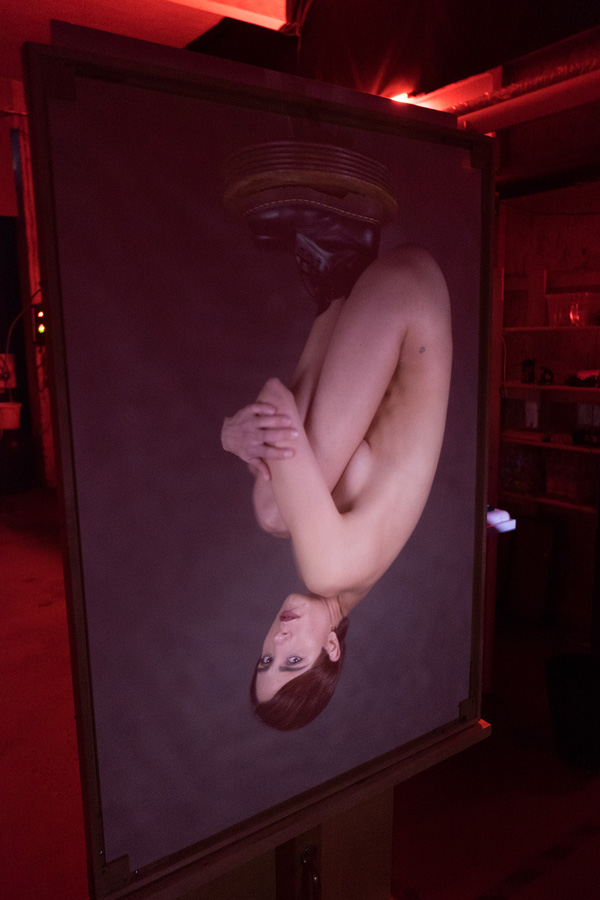

On the way to the meter
It was a long road with many difficulties and initially "smaller" plates before we were able to make plates in the size of 100x70 cm.
We only decided to give it a try in September 2014, when we were planning a wet-plate demonstration for our open day in the studio.
The question that arose as to how big these plates could actually be made was answered three months later: "At least 70x50 cm." That was the size of our first large plate That was the size of our first large plate.
Plates of this size are rare in the scene and are reverently called "mammoth plates". They are rare because you need a camera that is capable of holding such a plate and, above all, because you need a lens that can produce an image of at least this size (image circle). Such lenses are rare, and when they are offered, you have no choice whether to buy them or not: you MUST if you want to go ahead.
We built the camera ourselves without further ado: A 3x3 m party tent, made lightproof with silage film from the farm and miles of Gaffa tape, served as a walk-in camera obscura including darkroom.
The lens, a Carl-Zeiss-Jena from the 1930s with 750 mm focal length, threw the image upside down and inverted onto a mobile plate holder with ground glass. It could be moved back and forth for focusing. The focusing screen was only removed shortly before the picture was taken and replaced by the wet plate from the silver bath, in the hope that the subject had not moved out of the focus range of less than one centimeter.
After about 12 - 22 seconds of exposure time, the picture was exposed. The plate could be removed and poured over with developer in the camera under red light. As soon as the midtones became visible, the process was stopped with water and the plate could be placed in a large fixing bath in the next room.
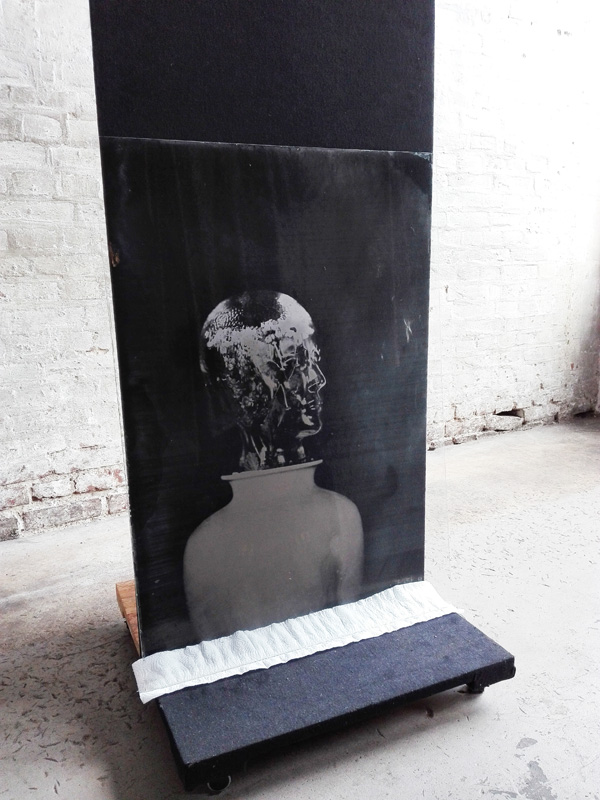
In June 2015, we managed to produce three 100x70cm plates in this camera. They were of poor quality and no longer exist. But they were proof that we were able to make plates in this size at all: like the 70x50cm plates, they were another start.
The camera tent has been retired for over a year now. In our new studio space in Wuppertal-Barmen, we have set up a camera obscura with fixed walls on a floor space of 7x8 m and a ceiling height of almost 4 m.
Everything now happens completely in this camera: from storing the glass panes to cleaning, photographing and, of course, sealing.
In addition to a new height-adjustable lens (1200 mm, f11), the camera's equipment also includes a powerful ventilation system against the ether vapors and its own water connection. And what is even more important: it is probably the only camera in the world with its own coffee machine!
Several 100x70 cm plates have now been created in this environment. Not all of them are very good, but some of them are. The process, with all its chemical and technical pitfalls, is complicated and offers many opportunities to make mistakes.
Perhaps it can never be fully mastered.
Anyone who wants to see the results of our efforts so far will have the opportunity to do so this year from 14.09.2017.
In the "Alte Pumpstation" in Haan, we will be presenting what is probably the largest contemporary ambrotypes in Europe during a joint exhibition with a D?sseldorf artist. We will provide information about this in good time on our website gebaeude1.de and on the specially created website ambroteam.com
After the exhibition, we will carry out further tests, because the answer to the question of how large ambrotypes can actually be made is certainly not 100x70 cm??
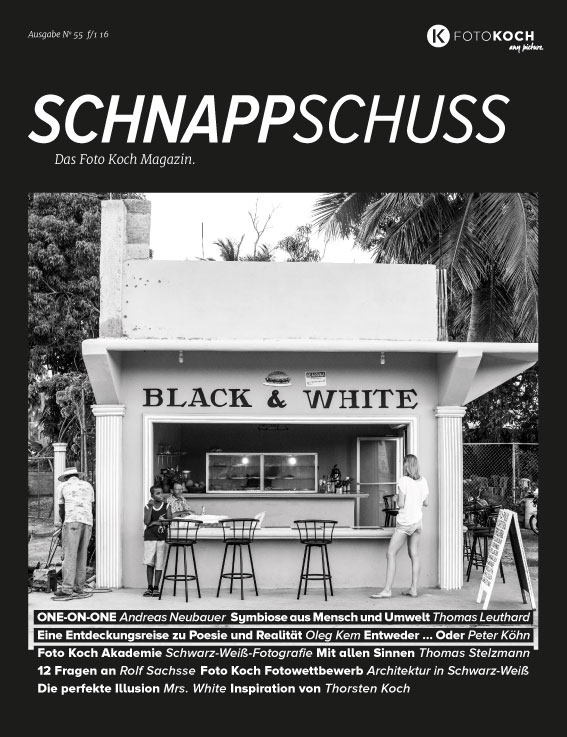
Thomas Stelzmann already reported on the topic of ambrotypes in our black and white issue of Schnappschuss (No. 55) from May 2016. You can read the status at that time from page 32 onwards To the issue as PDF
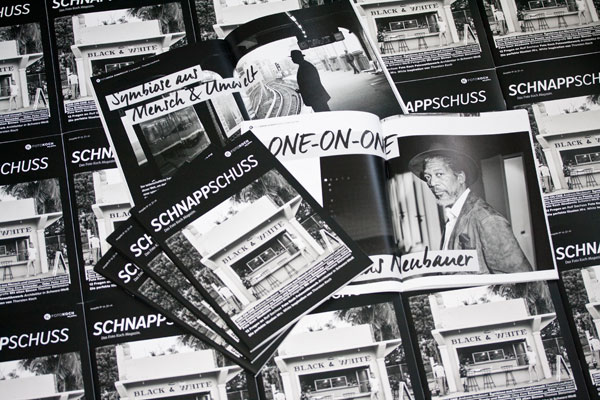
"Schnappschuss" magazine
The Foto Koch magazine has a modern, creative design and is relatively unique in terms of design and content further information
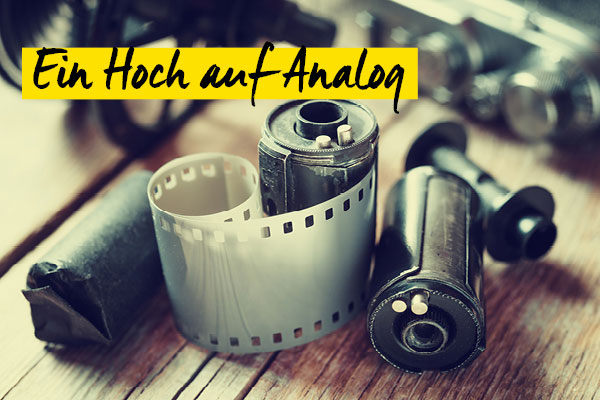
Hooray for analog
Who doesn't love the sound of the film being rewound, the moment when you excitedly pick up your pictures from the developer, the sound of the slide projector when a new slide is shown or the excitement when you develop your own films in the darkroom further information