
12 | 100 The evolution of the camera
from the series 100 Photos - 100 Stories
Prints, silver plates, chemical vapors... all this used to be part of photography. Don't you think so? Find out more about the evolution of the camera, and therefore of photography, in this article from the "100 Photos 100 Stories" series.
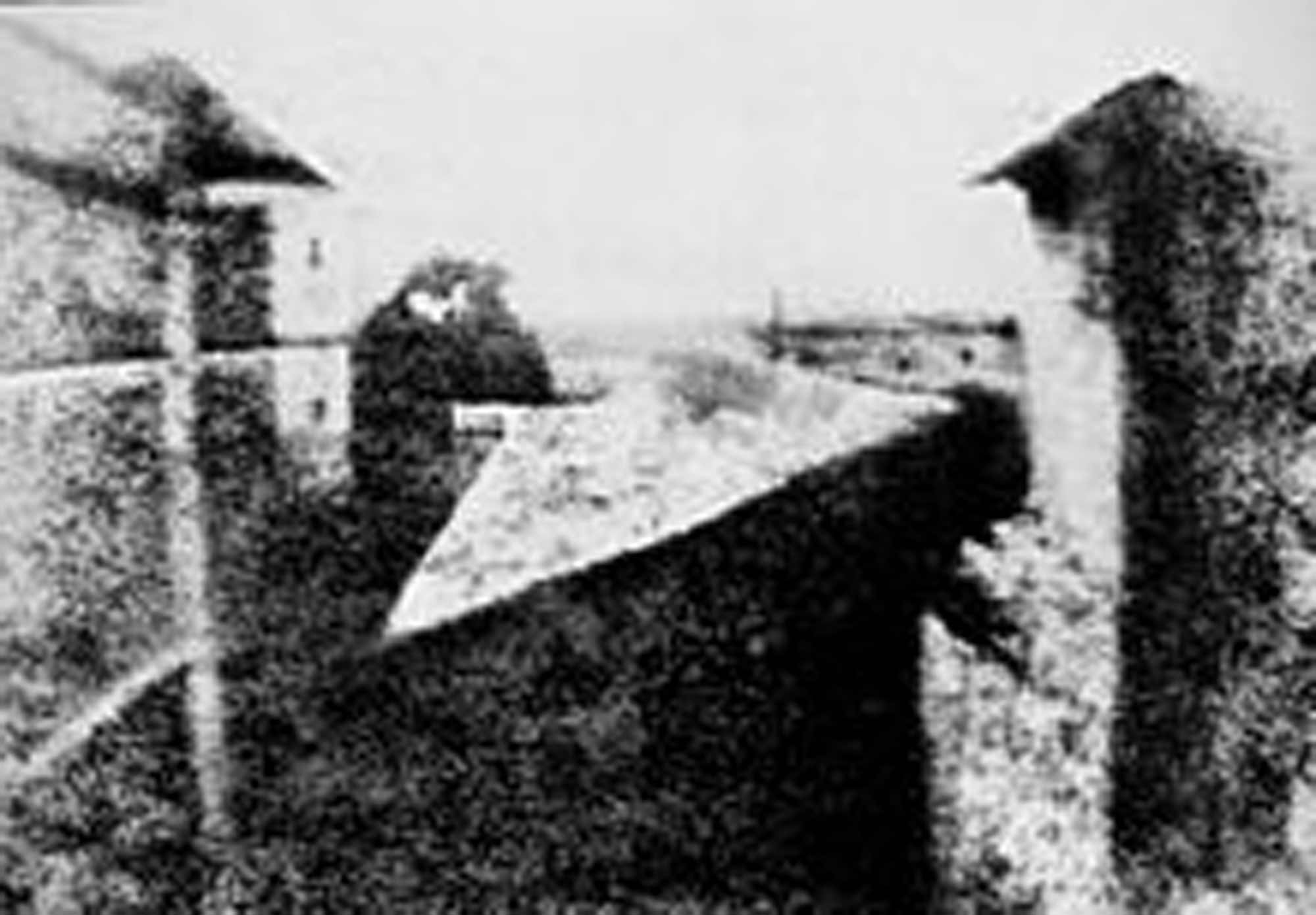
1826
Joseph Nic?phore Ni?pce is considered the inventor of photography. He experimented with the photographic process as early as 1816 in order to be able to produce print templates (replacement for lithography). In 1826 he took what is probably the world's first picture: the view from his study with an exposure time of 8 hours.
1839
It was not until 13 years after the first photograph, on August 19, 1839, that Francois Arago officially announced the invention of photography by Ni?pce and Daguerre. Daguerre's process was as follows: he developed an exposed silver plate coated with silver iodide in mercury vapor and then fixed it in a warm saline solution. However, the still relatively long exposure time could already be considerably reduced from 15 minutes under favorable lighting conditions to 45 seconds at the beginning of 1840 In the same year, Baron Seguire produced the first bellows camera.
 wikipedia.org
The oldest surviving photograph:
1861
The Scottish physicist James Clerk Maxwell first presented a method for color images in 1861 . Three black and white images were taken, one each through a red, green and blue filter. These were then combined to create a color photograph. The first known color image was taken by Thomas Sutton, who invented the SLR camera at the time.
1893
In 1893 William Kennedy Laurie Dickson presented the first 35 mm film at the World's Fair in Chicago. At that time, it was used exclusively for motion pictures.
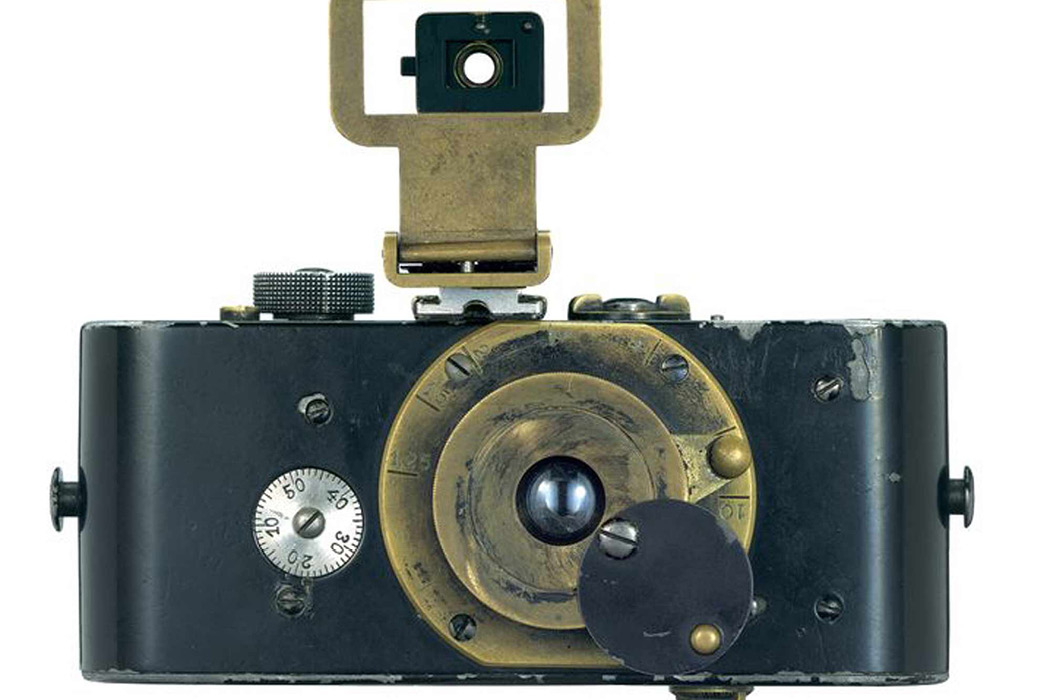
1914
In 1914 Oskar Barnack, founder of Leica, developed the first 35 mm camera.
1977
Konica sold the first "autofocus camera". A milestone in history!
1991
Kodak presented the first digital camera with 1.3 megapixels for 19,995 dollars. Customers were attracted by the technology, but certainly not by the price of the treasures.
1999
the first modern digital SLR, the Nikon D1, was introduced in 1999. It had 2.7 megapixels and was already incredibly fast at 4.5 frames per second.
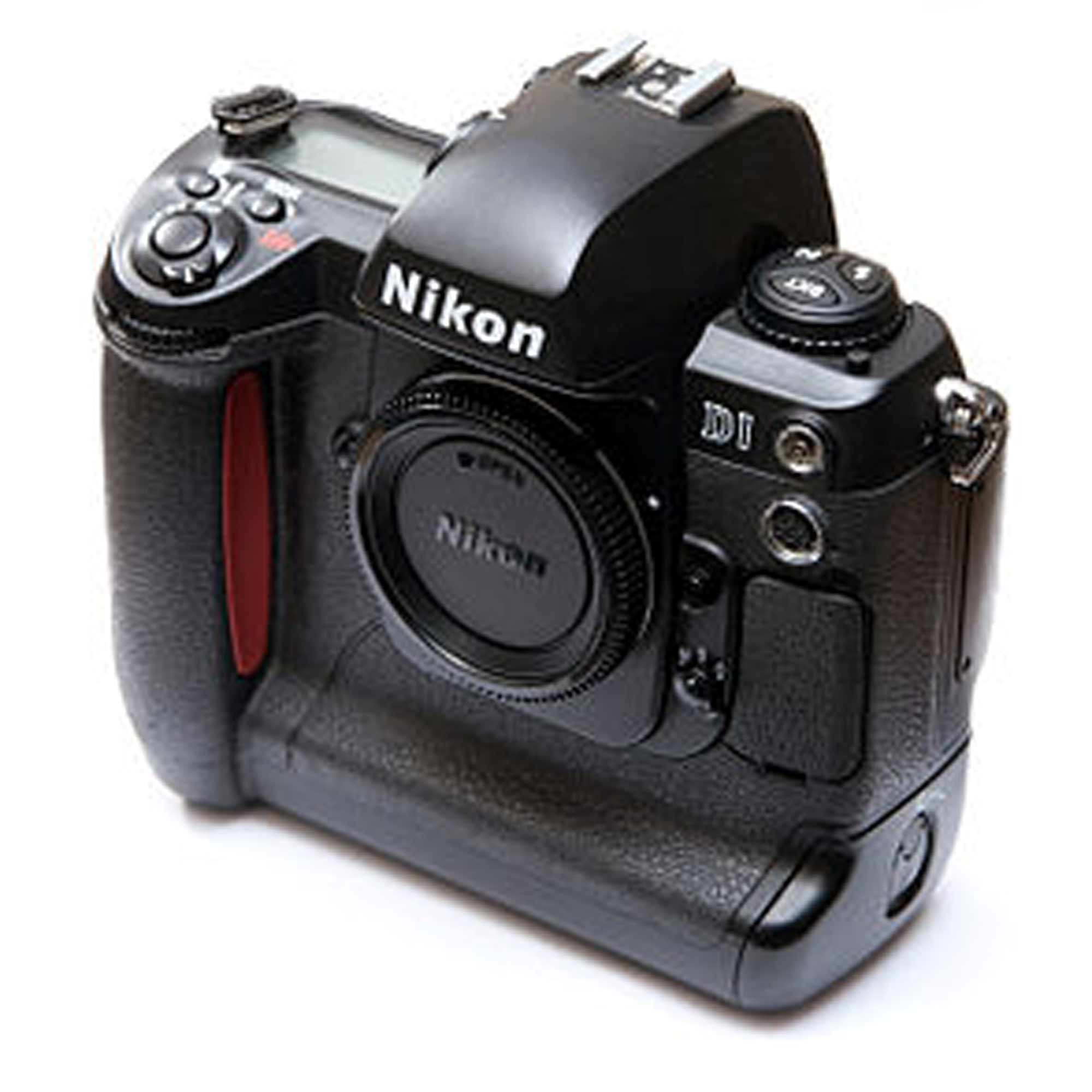
From the starting signal in 1999 the cameras continued to develop. The megapixels, resolution and speed improved with every year. In 2014 the first mirrorless system cameras were introduced. As usual, these were eyed from afar. Today, every second photographer has a mirrorless system camera. Like every system, changes first have to establish themselves and be seen as "good" before they experience a breakthrough. What the future holds and how we will photograph in the future remains a mystery. We are curious!