
13 | 100 A journey to Mount Ijen
from the series 100 photos - 100 stories
Reading time 6 minutes - by Daniel Krug
The trip to Indonesia: without a travel guide, without a plan... will it go well? In this article of the "100 Photos 100 Stories" series by our colleague Daniel Krug, you will learn the exciting story behind the picture "A trip to Mount Ijen".
A trip without a plan
The framework for the story behind this photo is our trip to Indonesia, which in itself is a small side story. A friend and I set off on a three-week vacation to the Southeast Asian island nation in 2012. Apart from the flights, we hadn't booked anything and hadn't planned anything. We didn't even have a proper travel guide with us. Even though I no longer manage to embark on adventures without any information, this also has its advantages. Personally, I always find it a shame when you know what to expect beforehand. You can compare it to a movie that you've been looking forward to for so long and then it's disappointing because your expectations were too high. Whereas, on a Sunday afternoon, you find a movie by chance while zapping and are pleasantly surprised... if you'd had high expectations here too, you probably wouldn't have found it as great.
The pros and cons
In any case, this type of travel has advantages because you get to see a lot of unexpected things, but also disadvantages because you miss a lot of things or you are not sufficiently informed. First we went to Bali, one of the most touristy islands, probably also the Mallorca of the Australians, and then took the ferry over to Java, the most populous island in Indonesia. Once there, we only found out by chance after a while in the tourist office at the harbor that there was a time difference and that it was an hour earlier than on our watches. So much for "being informed".
The top spots on Java
In this tourist office, everyone was talking about "Ijen" and "Bromo" all the time, we honestly didn't really understand it, but booked a tour anyway. As it turned out, these are the top spots on Java and are visited by masses of tourists every day. The first excursion was to the Ijen volcano. We were picked up at 3 a.m. from our hotel, where we had upgraded our room to a room with a TV. Not because of the TV, but because the toilet was equipped with a toilet seat. At the end of the journey, we were dropped off somewhere in the dark and the driver pointed in one direction up the mountain. At the same time, tons of other people arrived. So we set off and now we come to the real story behind the photo.
The story behind the pictures:
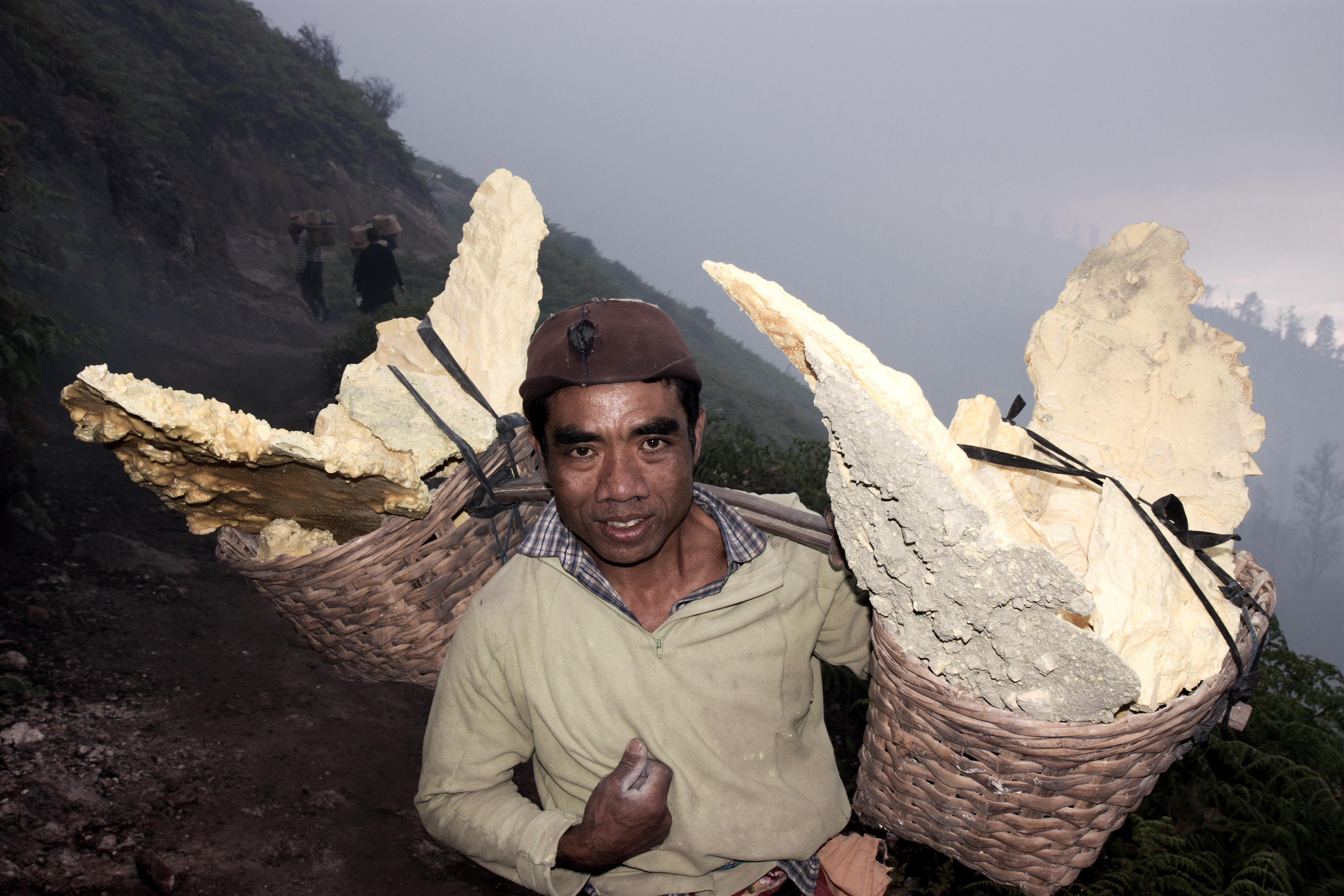
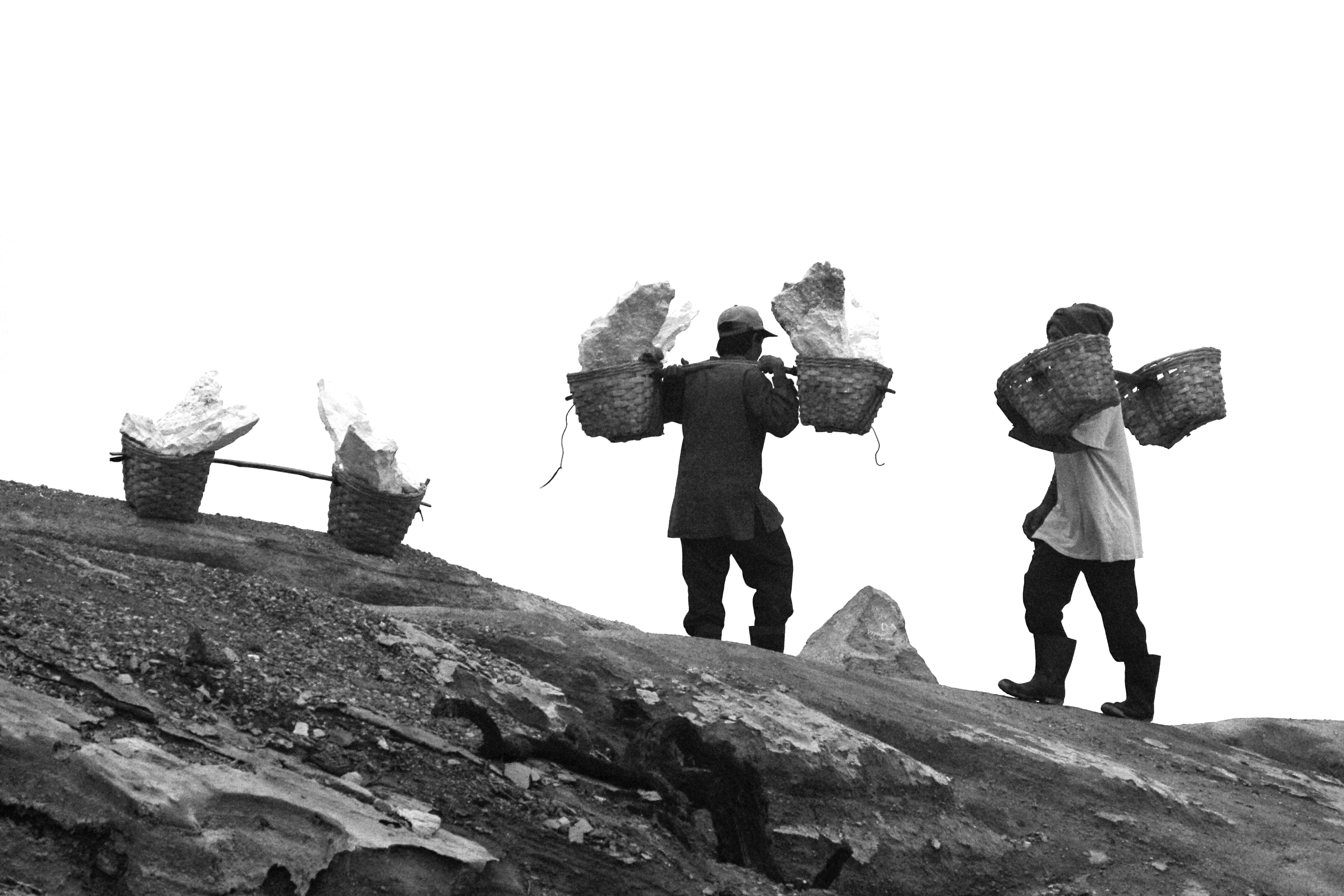
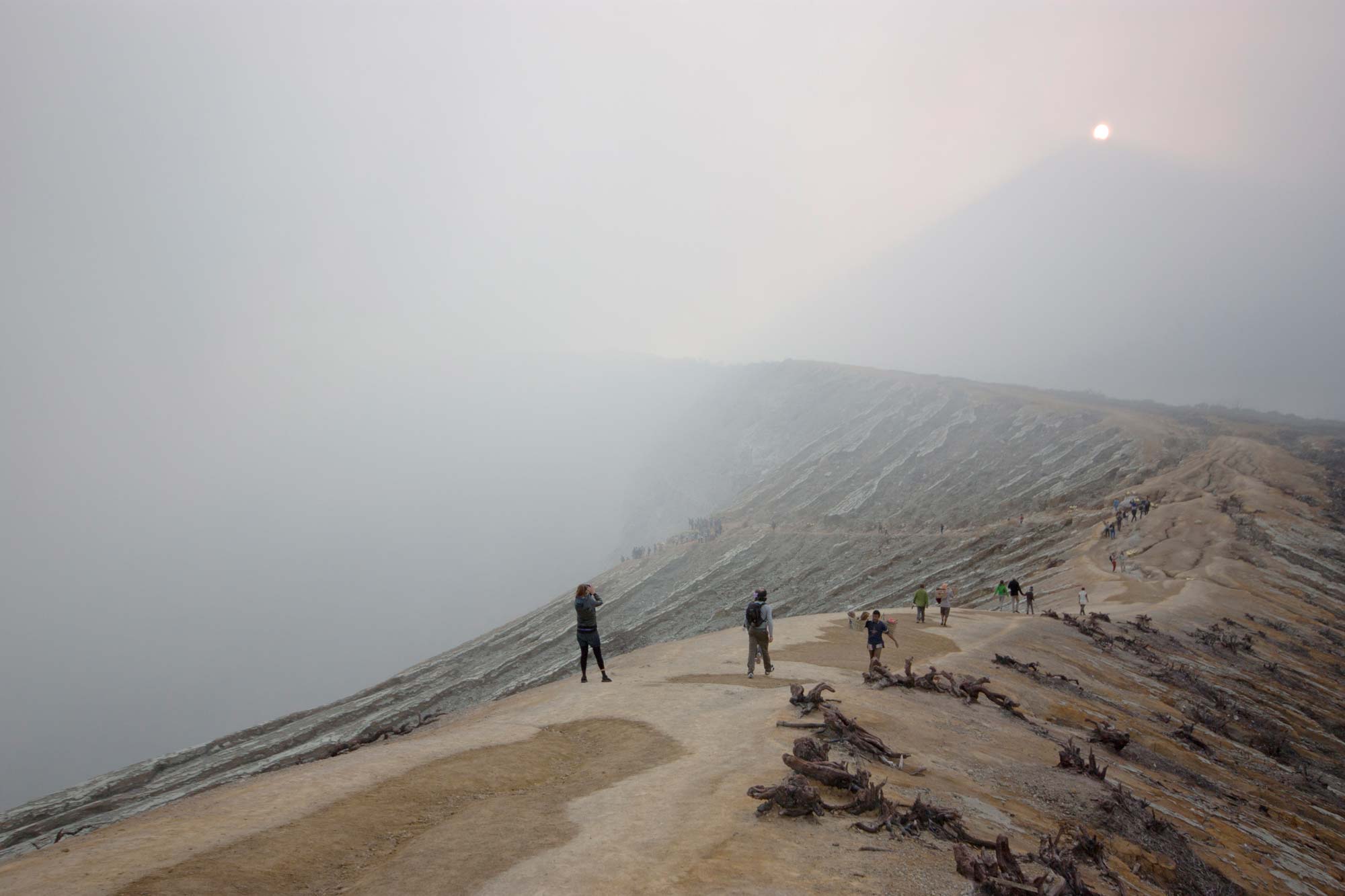
The story is about the men of Mount Ijen, whose lives deserve to be told. On the way up the mountain, we came across the first of these men. They carried a pole with two baskets over their shoulders containing yellow lumps. The higher we got, the more of these men we saw and the stronger the bestial stench of rotten eggs became. It soon became clear that it was sulphur. There is a blue-turquoise lake in the volcanic crater, which we didn't get to see at all that day due to the clouds, but that's not a bad thing as the atmosphere was so unique. The lake is known as the "largest acid barrel on earth" and is also home to the last sulphur mine in the world. After our trip, we took a closer look at this place. Every day, countless men risk their lives to mine sulphur.
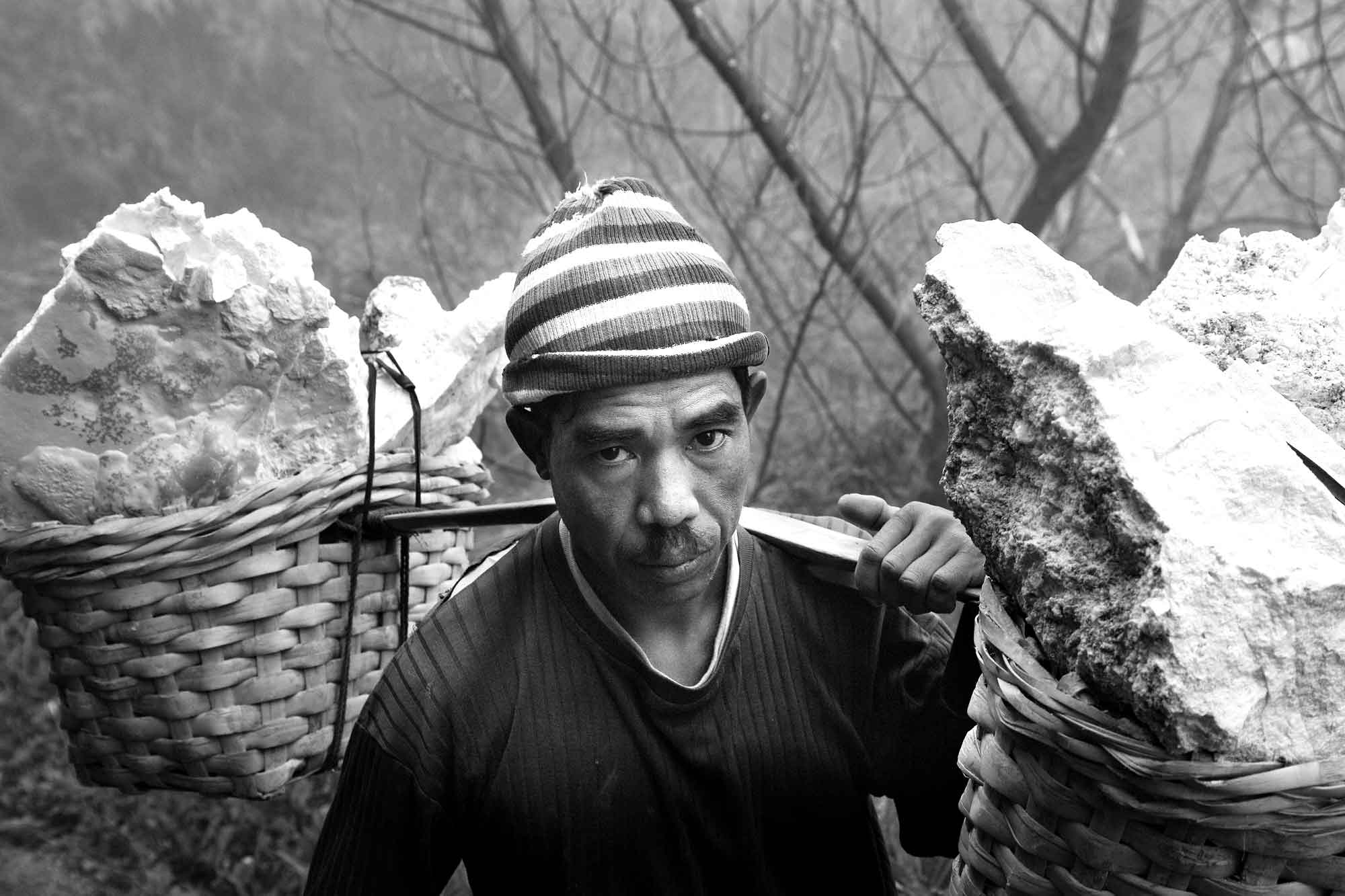
Sulphur mining with risks
Without any protective clothing worth mentioning, they expose themselves to the toxic fumes, break out the sulphur with iron bars and drag the characteristic yellow lumps 300 meters up to the crater rim and then down the mountain, passing lots of tourists. Each load weighs between 70 and 100 kilograms, which they balance on their scarred shoulders. We ourselves tried to lift one of these baskets and didn't really make it, although most of the workers had a much smaller build than us. The descent is uneven, sandy and life-threatening. The men are probably celebrated as heroes in their villages. As a rule, the next generation also carries out this job, although the average life expectancy is perhaps just 50 years. Sulphur is needed in sugar factories, for example, to bleach the sugar, or in medicine and chemistry. Normally, the element is a waste product from the oil and gas industry and does not need to be mined anywhere, but it is cheaper locally than importing sulphur. A worker manages two loads per day and earns four to eight euros. In contrast to other professions, that's a lot.
Greatest respect
We must show the workers the greatest respect. They put their lives on the line and work so hard that we can hardly imagine it here. All for a raw material that doesn't actually need to be mined. This automatically raises the question of the meaningfulness of this activity. Another example of what is going wrong on our planet.
More about our employee Daniel Krug:
Instagram: mr_jug_photography
Sources we used to find out about this place:
- Travel guides and other tourists on site
- http://www.vulkane.net/vulkane/kawah-ijen/kawah-ijen.html
- https://indojunkie.com/ijen/