An evening full of exchange, learnings & insights
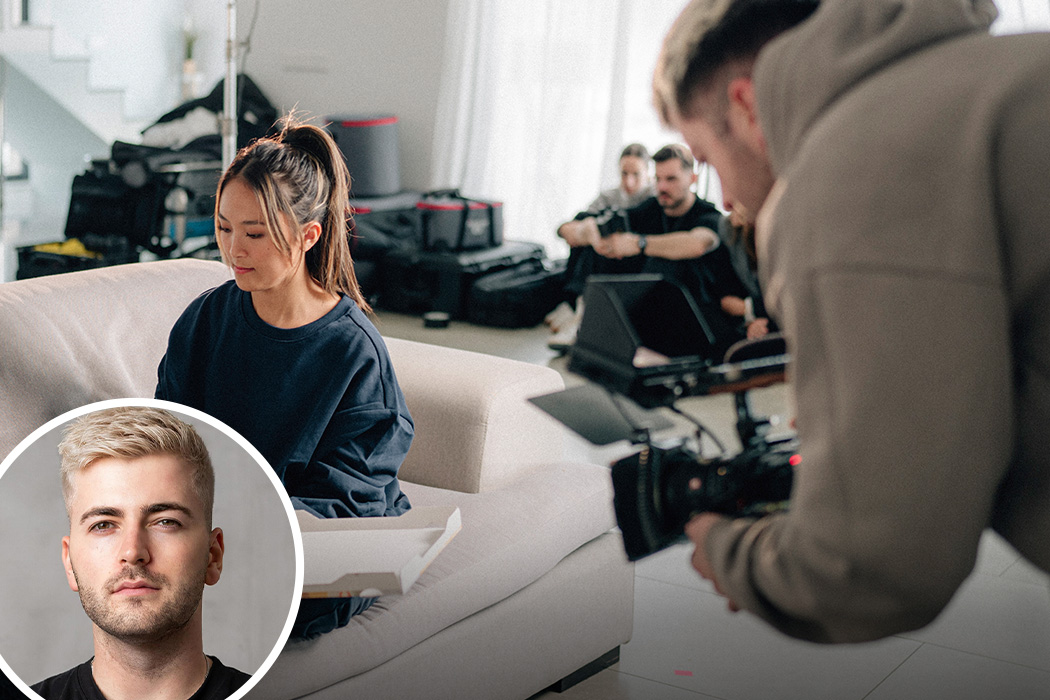
With the Creator Night in Hanover, we wanted to create a place where creators can not only watch, but really get into conversation. And that's exactly what happened: on location in Awid Safaei's studio and in the livestream chat. From equipment and workflow to AI, creativity and the question of whether it's still worth starting with content creation today, everything was covered.
What made the evening special was the mixture of honest experiences, practical tips and the exchange with the community.
Here are the most important learnings...
The recording
Note: At the beginning of the livestream, there were unfortunately brief interruptions in the sound and image due to network problems (the first 15 minutes of the recording are therefore not complete).


What we talked about
The live podcast was about the topics that really concern creators right now:
- How much equipment do you really need at the beginning?
- How do you build a workflow that doesn't end in complete chaos?
- How do you stay creative if you want to deliver regularly?
- What role does AI play in the everyday life of creators?
- And what distinguishes good content from content that really sticks?
The topics were not plucked out of the air. Even before the event, our survey showed that many creators are particularly concerned with workflow optimization, growth & monetization, inspiration and creativity as well as AI. It was precisely these topics that ran through the evening.

Learning 1: It's not the most expensive setup that counts at the beginning
One of the clearest takeaways of the evening: if you're starting out, you shouldn't get lost in the equipment too early. The point behind this is simple but important: the best setup is useless if you get lost in it and don't even get started
To get started:
- Smartphone or simple camera
- good sound
- good light
It was also clear in the chat that the topic was on many people's minds. There were direct questions about light, cameras, Lenses and setups. Creators who are just starting out have a huge need for guidance . This made the clear message of the evening all the more valuable: keep it simple, start first and upgrade later.
Learning 2: Regularity is important - but not at any price
Another big topic was content workflow. It was all about the question of how often you should post and whether quantity or quality is more important. The answer was not black and white: quality often only comes from repetition. If you never publish, you won't get any better. At the same time, there's no point in posting something just for the sake of posting.
That's where it got interesting, because this is a topic that is currently on the minds of many in the community. The survey made it clear that post-production and brainstorming are currently taking up a lot of time. This also fits in with what was discussed in the podcast: The real bottleneck is often not the posting itself, but everything before and after - developing ideas, shooting, editing, finishing.
Learning 3: Batch production can take the pressure off
In line with this, there was also a lot of talk about batch production. In other words, producing content in batches instead of starting from scratch every day. The advantage is obvious - you gain more peace and quiet in your everyday life, can react more spontaneously to other projects and are less likely to get into that mode where you are constantly "chasing production".
The message here was also pleasantly honest: nobody has everything perfectly under control. Not every to-do list is completed neatly, not every week runs perfectly. But a sensible workflow helps to produce your own content in a more relaxed and sustainable way in the long term.
Learning 4: Creativity is more than just technology
Things got particularly exciting again later on with Leo Keller when it came to creativity, style and the famous "creative eye". After all, many technical things can be learned more quickly today than in the past - through tutorials, tools and AI. What can't be copied so easily is a real feeling for what looks good, what sticks and what feels like you.
A nice thought from the conversation was that you shouldn 't focus too much on the perfect algorithm move, but also on what you really enjoy yourself. If you do your thing consistently, the community will also notice in the end. This is often more powerful than adapting perfectly to every new trend.
Learning 5: AI has long since arrived in the workflow, but it won't replace everything
Of course, the topic of AI was also on the agenda. The podcast was about how AI influences the workflow, which tools are useful and perhaps where the limits lie. The tenor was fairly balanced: AI can be extremely helpful, speed up processes and make many steps easier. At the same time, so much is changing so quickly that it's easy to feel like you're constantly running behind.
It was exciting to see that this was also reflected in the survey. Many are already using chatbots, generative functions in image processing and video editing or AI tools for automation. At the same time, however, it remained clear after the discussion: tools can provide support, but no one can completely take away your taste, perspective and creative decisions.
Fittingly, a hot take came from the community before the event, which was later picked up on in the podcast: "In six months, we won't have to edit videos anymore." It was precisely statements like this that gave the evening extra energy, because they triggered discussion instead of just approval.
What really moves the community right now
In addition to the podcast itself, the community was particularly exciting, as there were also discussions in the chat. It was about gear, lighting, cameras, color grading, AI tools and very practical questions from everyday life as a creator.
This picture also became very clear in the survey. Many are currently focusing on growth and a better workflow. At the same time, creativity continues to play a major role. And when asked about creative blocks, the answers were surprisingly human: going out, doing sport, getting away from it all, talking to others, clearing your head. In other words, often the exact opposite of even more screen time.
It was also interesting to see that the content format (short or long form) was not as clear-cut as one might expect. Short-form was slightly ahead , but long-form was also strongly represented. This shows quite clearly that creators are currently not only looking for quick reach , but also for depth, storytelling and long-term development.
Our conclusion
What remains from Creator Night is one thing above all: the need for honest exchange in the creator community. Between all the new tools, platforms, trends and AI developments , it is becoming increasingly important to exchange ideas,learn from each other and not have to figure everything out on your own.
The evening showed that creators today are faced with many new opportunities - but also many new questions. This makes it all the more valuable to exchange ideas: about excessive demands, about processes, about creativity, about style and about how to find your own way.