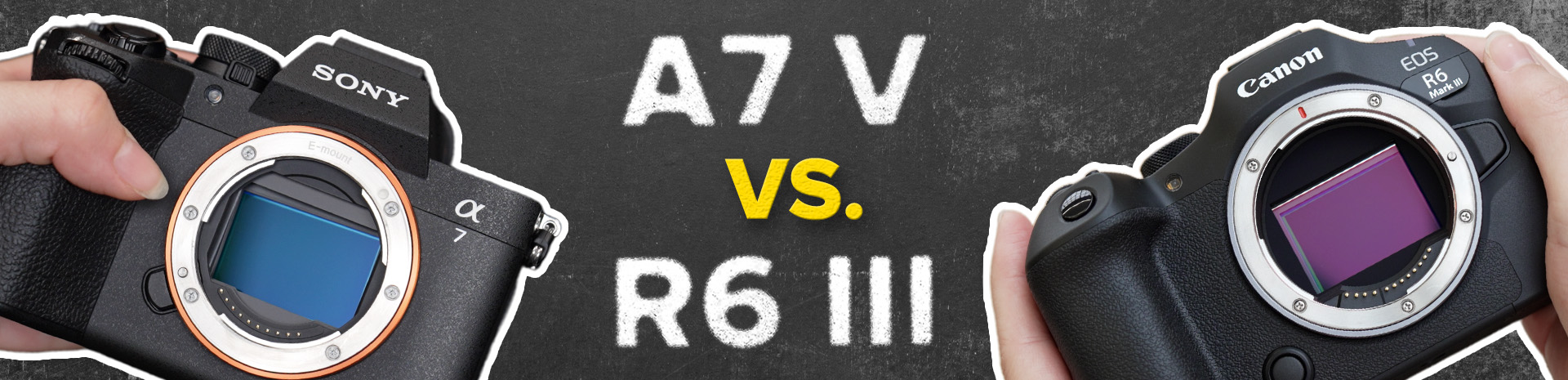
The great hybrid camera duel
Sony Alpha 7 V or Canon EOS R6 III - which one suits YOUR workflow?
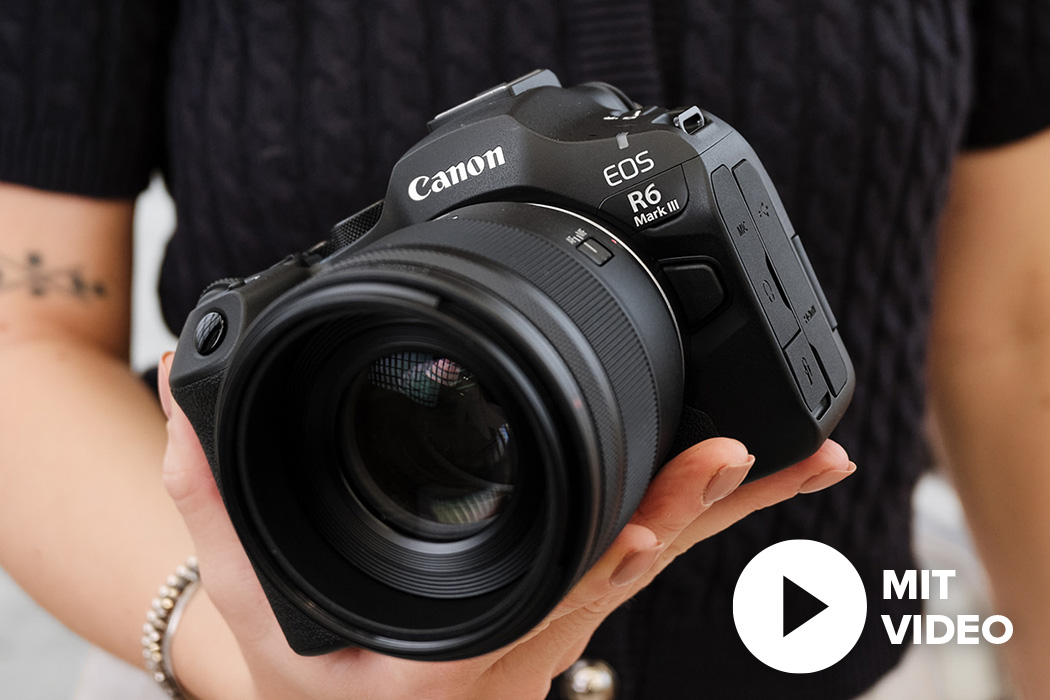
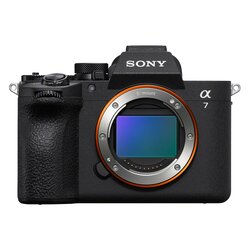
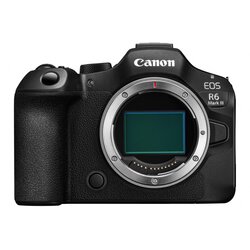
Canon EOS R6 III or Sony Alpha 7 V: two hybrid cameras that look suspiciously similar on paper, but in practice diverge in crucial areas. Both focus on the "sweet spot" around 33 megapixels, both promise top autofocus and strong video. But who really delivers more speed, more video features and the better workflow?
In this in-depth comparison, we take a detailed look at the differences and classify what really counts in everyday use.
Small spoiler: There are clear winners depending on the type of user.

Resolution & crop reserve
Both Sony and Canon emphasized the sensor when presenting their new models. While the R6 III has increased from 24 to 32.5 megapixels compared to its predecessor, Sony is sticking with 33 megapixels and has opted for a partially stacked sensor, which enables several layers of the sensor to be read out simultaneously thanks to the partially stacked structure. This results in a faster readout speed. We will find out in a moment whether this actually results in noticeably more speed in practice.
Generally speaking, around 33 megapixels is a real sweet spot in terms of resolution. Even when cropping, the image quality remains at a high level and at the same time the file sizes remain manageable.
"The new resolution (of the Canon R6 III) is a big advantage for me. I also like to crop something in or choose a different section when editing. (...) But you're not overloaded with files that are too large?" - Silke an Mey, fashion & beauty photographer from Düsseldorf
For those who really need more resolution, there are models from both Sony and Canon that offer more megapixels. Such as the Canon EOS R5 II (45 MP), the Sony Alpha 7R V (61 MP) or the Sony Alpha 1 II (50 MP).
White balance & Color balance
Due to the similar resolution, the image results of both cameras appear similarly detailed. Differences are more likely to be seen in color reproduction and dynamics, as the two sensors are tuned differently in this respect. In general, Canon tends to produce slightly warmer color tones, which also ensures appealing skin tones. Sony is slightly cooler in direct comparison, which some perceive as more neutral or "real". However, we have to say that the AI white balance of the Alpha 7 V really stood out positively in our hands-on (at least the white balance was much more accurate compared to the A7 IV ).
Both cameras deliver very reliable autofocus with reliable recognition of people, animals and various objects (e.g. airplanes or trains) even under difficult lighting conditions. In practice, this means that subjects are recognized quickly, faces are tracked accurately and the focus is spot on even with spontaneous movements.
As already mentioned in our review of the A7 V, the Alpha 7 V combines Sony's most sophisticated AF technologies to date in one camera. Thanks to the new processor and AI-supported subject and eye analysis, Real-Time AF works smoothly and reacts quickly. Sony speaks of up to 60 AF calculations per second. Only in real low light does the advantage tilt slightly: here the 7 V approaches the performance of the A7 IV and no longer has the big advantage.
Canon continues to rely on the further developed Dual Pixel CMOS AF II system. Although Canon does not give any official calculation rates, the AF is noticeably more reliable, more stable and faster than its predecessor. The R6 III covers the field of view very generously and offers (depending on the focusing area configuration) almost 300 more selectable AF points than Sony. This is particularly advantageous for precise placement of the focus in the peripheral area.
Our opinion
The autofocus of both cameras is at the absolute top level. It is so good that you no longer have to worry about blurred or incorrectly recognized subjects. Both cameras work quickly and reliably and still offer options for adapting the autofocus to the respective situation. The decision between the Alpha 7 V and R6 III should therefore not be based on the autofocus.

 Picture: Sony
Now we come to the topics where the comparison becomes really exciting and there are clear differences between the two cameras. The first question: Which of the two cameras is faster?
FPS (but with limitations)
The R6 III manages up to 40 frames per second (with electronic shutter) in JPEG & RAW - but not consistently in full color depth. Here the decision has to be made: rather 14-bit at a maximum of 12 fps in the mechanical shutter or up to 40 fps in the electronic shutter and therefore a 14-bit RAW with "only" 12-bit A/D conversion. In practice, however, the loss of quality is manageable. It may not be technically more feasible, but in practice it is still an advantage over the Sony A7 V. The A7 V achieves a maximum speed of 30 fps in RAW (with electronic shutter), but without compromising on image quality (14 bit).
Both cameras can also save HEIFs instead of JPEGs. HEIF is a good alternative for anyone who takes a lot of continuous shots and doesn't necessarily need the flexibility of RAW (or doesn't want it due to the large file sizes). JPEGs have maximum compatibility, but are limited to 8-bit colors, while HEIF offers 10-bit color depth with significantly better color gradients at smaller file sizes, but is not yet supported everywhere without problems.
But beware:Sony limits the continuous shooting speed to 15 frames per second with slower Lenses, especially in connection with third-party lenses. The 30 frames are only possible with a selection of the original G-/G-Master Lenses. But we will come to the subject of Lenses in a moment. The 30 images are only possible with a selection of the original G-/G-Master Lenses.
 Picture: Canon
Buffer
But how many pictures can you take in a row with the two cameras?
The R6 III has a buffer of approx. 330 JPEGs and can therefore take almost twice as many pictures as the Alpha 7V (approx. 180). In RAW, both come closer together, but with 150 uncompressed RAWs, Canon is ahead of Sony by 55 images.
Not to forget: storage speed is also a matter of cost. The ratio here is between Type A CF cards, which are only used by Sony, and Type B (compatible with the R6 III), which is not only twice as fast, but also slightly cheaper. Type B is also much more widespread (e.g. among other manufacturers and in the accessories market). To compare the
Pre-capture
A particularly exciting feature on both sides is the pre-capture function. While the R6 III can buffer 30 images before the actual shot is taken, Sony regains the lost point here. This is because the A7 V not only has twice as long a pre-capture, but also the option of setting it from 0.03 to 0.1 seconds in hundredths of a second increments and from there in 0.1 second increments. So depending on your needs, Sony gives you more leeway to use the full 30 frames or set a shorter time window if you don't want to fill up your memory card too quickly.
A big advantage of the Canon R6 III is the pre-capture function in video mode (pre-recording): With pre-recording, automatic recording starts a certain time before recording is started manually. In the case of the R6 III, this is possible up to 5 seconds before the start of recording.
 Picture: Canon
Both systems offer a high-quality Lenses portfolio and both mounts are excellently positioned for most areas of application.
Sony relies more heavily on physical aperture rings on many FE Lenses, often including a de-click option for video, and programmable focus hold buttons that allow you to quickly access functions. With Canon's RF Lenses, the configurable control ring is the special feature. This allows you to control additional exposure parameters such as ISO directly on the Lens.
There are clear differences in the selection and, above all, in the full continuous shooting performance: there are currently almost 60 in-house lenses available for the A7 V, with only 27 of them currently capable of 30 frames per second. The more than 170 third-party Lenses for the FE mount are also throttled to 15 fps (in continuous autofocus). Sony presumably wants to prevent dropouts of older focus motors and at the same time, of course, promote the use of its own Lenses from the G and GM series. You can find a list of all compatible Lenses here.
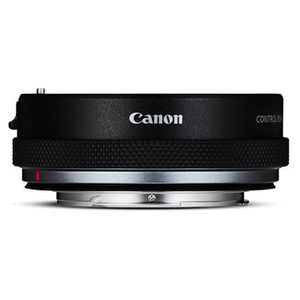
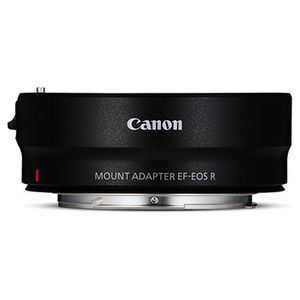
Canon introduced a very strict Lenses policy right from the start with the first RF lens, but is currently opening up to selected manufacturers, at least in the APS-C range. Canon currently lists just over 40 RF lenses in full-frame format, with an additional 38 of the slightly older EF Lenses via. EF-EOS R adapter are considered fully compatible). The adapter with control ring even adds the above-mentioned control ring to the older Lenses.
Canon therefore offers a larger selection of fully compatible Lenses for its R6 III. If you don't (or don't always) need the maximum continuous shooting speed of the Alpha 7 V , Sony's third-party lens mount offers significantly more Lenses overall
Our opinion
Sony's generalized restriction on the use of third-party lenses is understandable, but it also restricts Lenses from, for example, Sigma or Tamron, which would actually be fast enough. However, the fact that Canon (as of February 2026) does not allow any manufacturer to sell full-frame Lenses with autofocus is also a shame.
Both systems have their advantages: Canon offers more fully compatible Lenses from its own house and, thanks to the adapter, the possibility of accessing the even larger selection of EF lenses. For Sony cameras, however, the market offers a much larger selection of Lenses for special applications.
When we look at the Canon EOS R6 III and the Sony Alpha 7 V as hybrid cameras, we quickly realize that both manufacturers have worked on exactly the points that really count in everyday video work: Fewer problems with heat, better usability, clean colors directly in the camera and features that significantly simplify the workflow.
 Picture: Sony
Overheating
With many hybrid cameras, 4K 60p in particular has long been an area in which the temperature display has at some point been nervously eyed. In practice, you can see that the issue of overheating has been noticeably alleviated in both models. Although no active fans have been installed in either camera (as is the case with the Cinemaline FX2 and C50 siblings), passive cooling has been significantly improved thanks to the smart design.
According to initial user experiences,the R6 III weakens after around 30-45 minutes of continuous recording at 4K/60p due to the heat, while Sony is often more limited by battery life in this scenario and lasts significantly longer overall (approx. 2 hours). So if you want to film for longer in everyday life, Sony is often more relaxed.
Improved white balance
Both have also improved the white balance. Particularly interesting: At Sony, the topic is explicitly considered as part of the AI processor - with the aim of achieving consistent colors faster and more reliably. This saves time in post-processing (and sometimes nerves), especially in the run-&-gun or in changing light. White balance plays a much greater role in filming in particular, as subsequent correction in post-processing is much more difficult than with photos.
IBIS upgrade
The integrated image stabilizer (IBIS) has been revised on both cameras. The result: less disturbing micro-blurring in the image without the need to immediately reach for the gimbal. This is a real plus, especially for reportage, events or on the move.
On the data sheet, Canon looks like the clear winner here:
- Canon claims up to 8.5 stops of correctionfor the R6 III, also addressing the dreaded wide-angle wobble. However, Canon's measurements refer to a combination with stabilized Lenses, but with a longer focal length.
- Sony specifies 7.5 EV (image center) and 6.5 EV (peripheral areas)for the Alpha 7 V, measured at 50 mm without additional stabilization in theLenses.
The values are therefore not really comparable. In our tests, however, the results of both cameras were very convincing! However, the Alpha 7 V also scores with multi-stage digital stabilization and intelligent AI integration, such as active stabilization based on the detected subject.
 Picture: Sony
Resolution
In 4K (up to 60p), both cameras utilize the full potential of the high-resolution sensors by downsampling the image from the 7K resolution of the sensor to a 4K resolution (oversampling). With the R6 III, however, we can also record the native 7K - this is not possible with the Alpha 7 V.
In most cases, however, the oversampled 4K offers a more balanced image overall in terms of sharpness of detail, dynamics and image noise.
4K/60p without crop
Both cameras (compared to their predecessors) can record 4K at 60p without additional cropping. This is an important point for many videographers in order to keep the image section uniform during slow-motion recordings. This is worth its weight in gold, especially for vlogging or reportage.
With the Alpha 7 V, a new function, "Viewing angle priority", has been specially integrated for this purpose. This allows you to switch between 4K 60p at 7K downsampling with a slight crop and 4K 60p at 6K downsampling without a crop. This gives the user the choice between the full viewing angle and a slightly more detailed image.
Internal RAW recording
A clear advantage of the Canon R6 III: the camera can record RAW internally in various formats. Similar to RAW photos, this also offers more flexibility and scope for editing videos in post-production: white balance, highlights, color look, all with significantly more room for improvement. The full RAW quality can only be obtained from the sensor in the C50, but the two slightly compressed RAW codecs already offer more than enough possibilities.
Sony will most likely continue to reserve internal RAW recording more for the Cinema Line and even with the compact Cine models such as the FX3 or FX30, this has not yet been an issue internally.
 Picture: Canon
Open Gate
Recording in Open Gate can make the workflow much easier. The idea is simple: the entire sensor area (often in a 3:2 aspect ratio) is recorded, not just the section that corresponds to the final output format (16:9). Especially if you need several formats from one take (16:9, 9:16, 1:1) or work with many anamorphic Lenses, this is a real added value. So it's exciting to see that the R6 III has "inherited" this feature from the C50.
In practice, however, this function is not yet very widespread, which is probably one reason why Sony has decided not to include it here. This is probably also a topic for future Cinemaline cameras.
Rolling shutter
Due to higher readout speeds, the rolling shutter effect is less significant. Fast pans or hectic movements appear more controlled and less distorted. Sony even classifies this as being reduced by around 50% compared to the A7 IV and this is exactly how it feels in dynamic situations.
Our opinion
Both cameras are really powerful filmmaking tools and cover the important functions: 4K with 7K oversampling, 4K 60p without crop, 4K 120p for extreme slow-motions and also high bit rates, as well as 4:2:2 10-bit chroma subsampling is on board.
However, there is a clear winner here - at least in terms of the range of functions. With 7K, Open Gate and RAW recording, the R6 III offers functions that not everyone needs, but which are really nice to have. So if you're planning to do a lot of video work, you'll not only have more to try out here, but may also be able to cover larger video projects with the R6 III in the future.
In terms of connectivity and connections, both are clearly designed to handle not only photo setups, but also modern workflows such as live streaming, hybrid productions and run-&-gun video.
What both do well:
- Large HDMI port for external recording: both cameras rely on a full-format HDMI connection.
- Audio setups: Both are fully equipped with a 3.5 mm jack for microphones and a separate 3.5 mm jack for headphones. (Plus a digital audio interface via the accessory shoe for wireless microphones)
Important for setup: Sony has two USB-C ports, Canon only has one. With the A7 V, you can therefore provide continuous power and quickly transfer data or network/remote at the same time - ideal for fixed rigs, tethered shooting or 4K webcam output. With the R6 III, everything runs via a USB-C port: This works, but you have to prioritize (power or data/network) and possibly work with workarounds, which can increase setup time and sources of error.
Storage structure
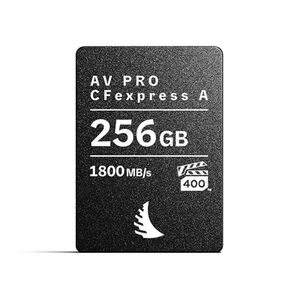
When it comes to the storage structure & RAW workflow, the philosophies differ quite clearly and this can be a real deciding factor depending on the workflow. A big advantage of the Alpha 7 V (or all Sony cameras that use CFexpress Type A cards): The memory card slot can hold CFexpress cards as well as SD cards and is therefore much more flexible. If you are not working with high data rates, you can also use two SD cards - with the Canon R6 III you are limited to one SD card & one CFexpress type B card.
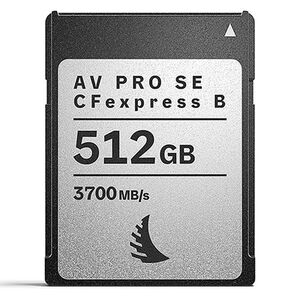
Our CFexpress B recommendation:

Our CFexpress A recommendation:
Sony has been using the same type of battery(Sony NP-FZ100) in the Alpha series for almost 10 years and this also applies to the A7 V. This is good news for users: if you upgrade to a new model, you generally don't have to worry that the existing battery pool will suddenly become worthless or only work to a limited extent.
Unfortunately, Canon users cannot sympathize with this: Canon has relied on the same battery design for many years, but has already introduced new battery generations twice since the introduction of the EOS R (2018), which output a higher amperage in order to meet the increasing demands - including the step from the R6 II to the R6 III. Although the R6 II battery (LP-E6NH) is still compatible with the R6 III, certain functions may be limited (e.g. network, LCD boost, HDR assist or Lenses functions). If you want to take advantage of the full performance of the R6 III, the new LP-E6P is the best option - but it is also backwards compatible. And because Canon has not necessarily been known for consistent battery continuity in the past, this could be at least a small damper for some users. A list of all the restrictions when using different Canon batteries can be found on page 26 of the manual.
At the same time, of course, the question arises as to how long Sony can continue to offer the current battery type unchanged before an update becomes necessary - at the moment, however, it doesn't seem as if this is imminent.
 Picture: Canon
Display
One feature of the Sony Alpha 7 V that has immediately generated enthusiasm is the new display. Sony has opted for a 4-axis display (similar to the Alpha 1 II) and this makes a noticeable difference in handling. It is noticeable how much easier it is to realize unusual perspectives because the display offers significantly more freedom of movement. This is a real plus, especially for photographers who often have to work from awkward positions - for example in wildlife photography, when shooting close to the ground or overhead.
With the EOS R6 III,Canon is sticking with the tried-and-tested display that folds out and rotates to the side. Anyone who has already worked with such a display and is satisfied with it will not miss anything. Nevertheless, the mechanism of the Alpha 7 V is a real highlight.
Both cameras rely on a full-touch display, including touch focus and convenient menu operation. However, there are differences in resolution, size and interface:
- Canon EOS R6 III: 3.0 inch LCD with 1.62 million pixels
- Sony Alpha 7 V: 3.2 inch (slightly larger) with 2.1 million pixels (twice as many as Canon and also more than the A7 IV)
Compared to the R6 III, the A7 V also has a vertical menu, which makes it easier to operate the menu in a vertical position.
EVF (viewfinder)
Both cameras have the same EVF as their predecessors. This is not necessarily a bad thing - both viewfinders are solid and deliver a clean image. At the same time, a step forward in resolution would be welcome for both, simply to make fine details and manual focusing even more pleasant.
The Canon R6 III also lacks eye-tracking in the viewfinder, as we know it from the R5 II or R1. In our view, however, this is not a real point of criticism, but rather a clear differentiation within the Canon product line and not a dealbreaker for most users in the R6 segment.
Ergonomics
When it comes to the camera body, a lot comes down to personal preference and that is precisely why there is rarely a clear "better" or "worse" here. Both the Canon EOS R6 III and the Sony Alpha 7 V have changed very little compared to their respective predecessors - more like fine-tuning. For example, a tally light has been added to the R6 III, but the basic feel in the hand remains the same.
Canon has long been known for building bodies that are particularly easy to grip and ergonomic. The rounded edges fit comfortably in the hand and the grip is the right size for a secure hold. This is particularly noticeable with larger hands or heavier Lenses: The R6 III relies on a deeper, more pronounced grip, which makes handling seem more comfortable when there is a decent amount of glass hanging from the front.
At Sony, the development in the Alpha 7 series was particularly noticeable from the leap from the A7 III to the A7 IV: the cameras have grown in grip and size. Many would have liked the A7 V to have a body similar to the A9 III (i.e. even more "hand-filling" and thus a little closer to Canon's ergonomic philosophy). In practice, however, Sony has largely stuck to the A7 IV form factor. As a result, the A7 V appears (minimally) more compact and lighter than the R6 III, but scores particularly well with a different approach: more customizable buttons and dials, which allows for greater individualization.
You have to be honest: You can only describe handling in a blog, but whether a camera feels right for you is decided by your hand. The best thing to do is to try out both models in our store.
Our opinion
Basically, the desire is of course to have a camera that is as small and light as possible. However, if it no longer fits well, securely and stably in the hand, this has clear disadvantages for both photography and filming. On the one hand, we are glad that Canon has stuck to its usual non-slip, rounded design and we are also glad that Sony is moving away from angular, small cameras and focusing more on ergonomics.
The bottom line is that the Canon EOS R6 III and Sony Alpha 7 V don't make it easy - and that's a good sign. Both deliver image quality in the "sweet spot" area around 33 megapixels, both have an autofocus that makes it hard to worry about accuracy in everyday use, and both are to be taken absolutely seriously as hybrid cameras. The decision is therefore less about "good or bad" and more about your workflow.
When you want speed: sports, wildlife, action
If you don't want to waste a second in sports, wildlife or action, pre-capture, continuous shooting rate and buffer often decide whether you get the moment - or just tell people that it was "almost" there.
- Sony: Scores with flexible pre-capture settings and 14-bit throughout, but stops at 30 fps.
- Canon: If you thrive on timing, long series and non-repeatable moments, there's a lot to be said for the R6 III: up to 40 fps (with the color depth trade-off) and a significantly larger buffer that keeps you in the burst longer. Together with pre-capture and very stable tracking, this is clearly an action camera - especially if you often shoot long series and don't want to constantly wait for the buffer.
And: If you rely heavily on third-party Lenses and still expect high continuous shooting rates, Sony is more limited here in practice - you should really keep this in mind before buying.
If you make a lot of video and want "more features"
If you want to keep as many video options open as possible - for today and for later, larger projects - then what counts in the end are the functions that give you real flexibility in editing and everyday shooting:
- Canon: Is currently the feature set winner: 7K internal, Open Gate and especially internal RAW options are features you don't need every day - but when you do need them, they make productions much easier and more future-proof. Anyone who seriously wants to expand video will have more room to grow here.
- Sony: Holds back on the big "pro video" features (e.g. internal RAW/open gate recording), but scores with very good runtime, overall stress-free working and clever details such as AI white balance and the extremely flexible 4-axis display.
If you think in systems: Lenses, accessories, media
- Sony: Is a dream for many when it comes to the breadth of the lens market - especially through third party suppliers. If you don't need 30 fps, the FE system is extremely versatile.
- Canon: Feels very "closed" and integrated: Control Ring, a growing RF selection and additionally the EF world via adapters, which many already own.
When it comes to memory cards: Sony is more flexible with two universal slots, Canon offers a strong argument for maximum performance and higher compatibility with CFexpress Type B.
Which camera for whom?
- Canon EOS R6 III: For action/sports/wildlife fans, hybrid creators with a focus on "speed", and anyone who wants to benefit from Open Gate, 7K and internal RAW recording for video.
- Sony Alpha 7 V: For run-&-gun, long sessions, creators who prefer the display/handling, and anyone who wants a very well-rounded overall package - plus the enormous lens variety (as long as 30 fps doesn't have to be the permanent standard).
In the end, both cameras are really powerful tools - the best tip remains: First think about the three things you do most often (action? video? events? travel?) and choose accordingly. And if you're unsure: visit the store, pick up both, click through the menu, mount your favorite lens - after five minutes, you'll usually know exactly which one feels "like your camera".
Arrange a free consultation by phone or video chat and ask our experts your questions - from the comfort of your sofa.