Photo Koch photo tours
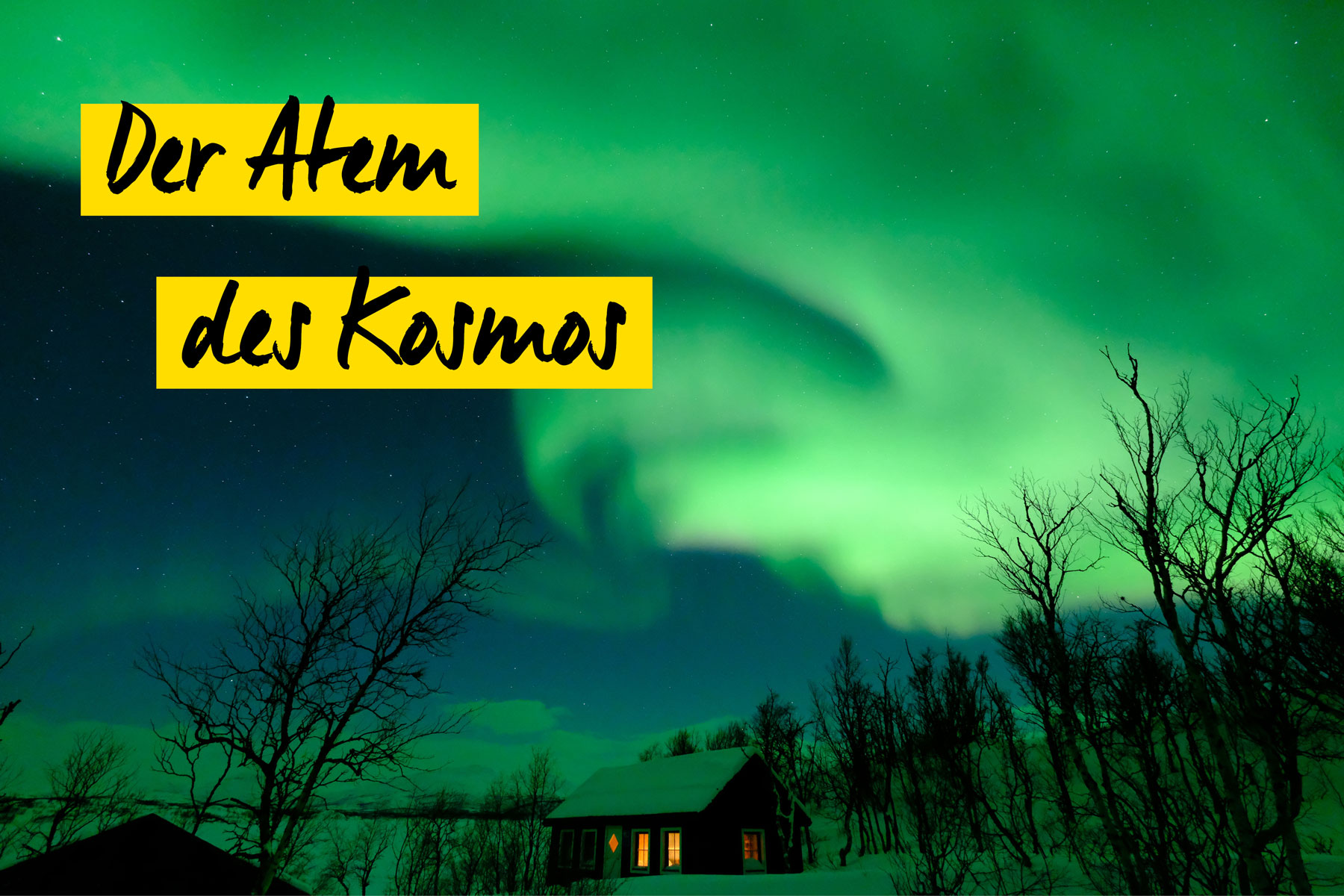
Aurora Borealis - The breath of the cosmos
by Eugen Kamenew
This astronomical photo expedition was accompanied by award-winning astrophotographer Eugen Kamenew. Experience the beauty of the mystical natural spectacles in an exciting report.
Even as a small child, I looked at aurora images from the Arctic regions of the world in astronomy books with incredulous amazement. This always aroused mixed feelings in me. On the one hand, I wanted to firmly believe that such an indescribable beauty of nature existed. And on the other hand, my mind told me with a good dose of skepticism that this could never originate from the real world; because if it did, then reality would indeed be surreal or even mystical.
These colorful images in the countless books and magazines burned themselves into my memory forever and never let go of me from then on. By devouring astronomical literature, I realized early on that we as homo-sapiens have a very short phase of existence on our home planet Earth. If you want to shape your life consciously, then you should set yourself goals early enough in life.
I set myself the goal early on of experiencing this legendary and mystical phenomenon, the Northern Lights, at least once in my life.
But as is so often the case, extraordinary and rare natural phenomena are not waiting for you on your doorstep. This was also the case with the fragile phenomenon of the Aurora Borealis. It only occurs in the exotic northern (Aurora Borealis) or southern (Aurora Australis) polar regions of the earth. The rule that the further up in the Scandinavian countries, the higher the probability of seeing an aurora borealis, is only partially correct. The reason for this lies in the fact that the geographic North Pole does not overlap with the geomagnetic North Pole. The geomagnetic North Pole is located in north-eastern Canada and is around 2000 km away from the actual geographic North Pole. The Earth's magnetic axis is inclined at an angle of 11 degrees to the Earth's axis. In addition, the geomagnetic North Pole is not static and stable like the Earth's axis, but dynamic. The Earth's geomagnetic north pole moves 55 km per year from the North American continent towards Siberia.
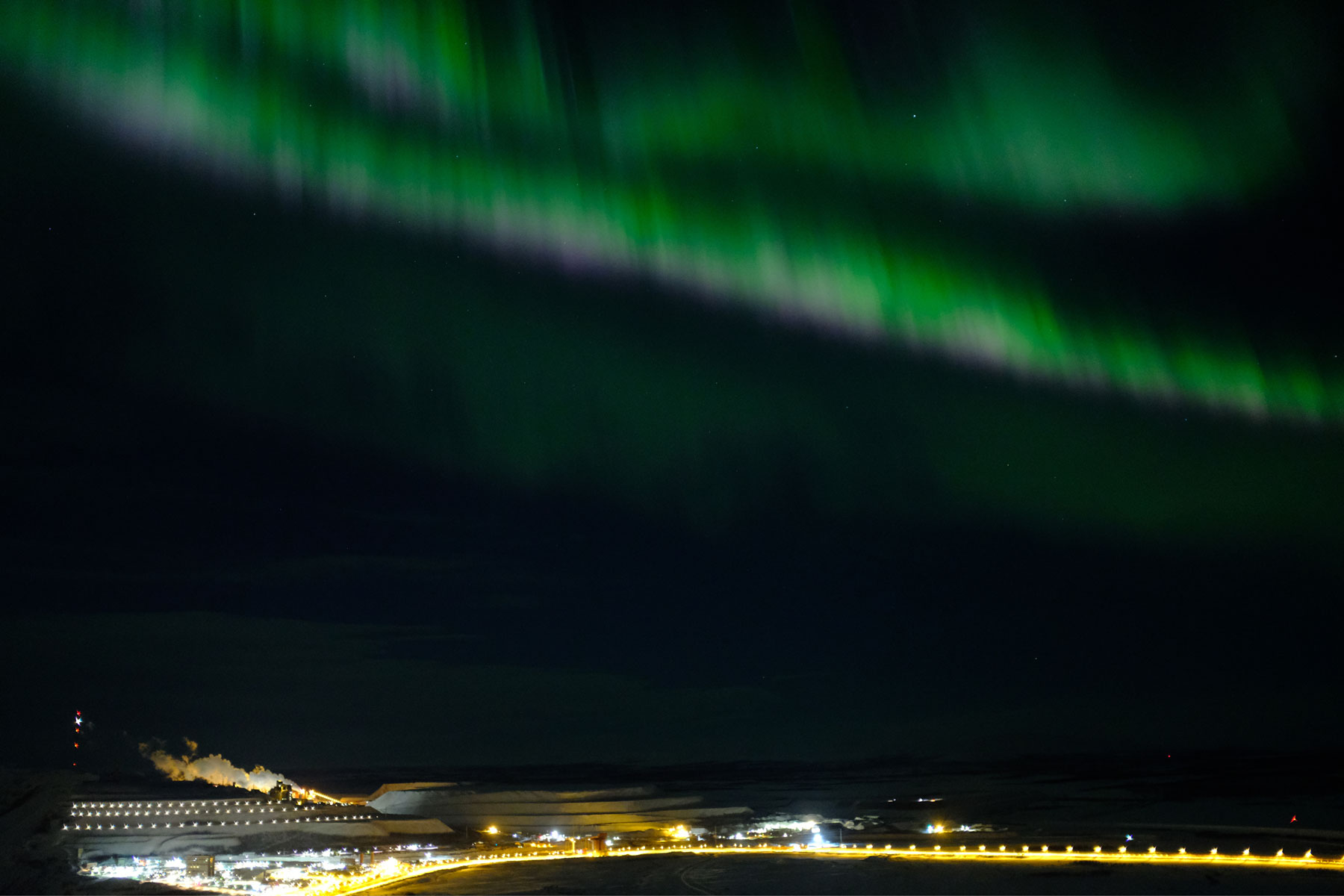 Photo: Eugen Kamenew
With this in mind, I realized early on that staying at home and waiting for the Northern Lights was not the best option. Although sometimes there are indeed exceptional situations. I owe my first aurora sighting to such an exceptional situation. In the fall of 2003, there was a huge plasma ejection (CME Coranal Mass Ejection) on the surface of the sun. This coronal mass ejection was Earth-directed and reached the Earth's magnetosphere in two days at an average speed of 900km/sec. I experienced the intense reddish aurora borealis for the first time in southern Germany and captured it photographically with my first digital 4-megapixel camera. This geomagnetic storm was so strong that the auroral activity was not only visible throughout Germany, but even spread as far as the Canary Islands. I published my first aurora report "The spirits of the night" in the magazine of astronomical associations "Sternzeit 2/2004". My own experience was so indescribable that no picture or text could adequately and authentically convey it.
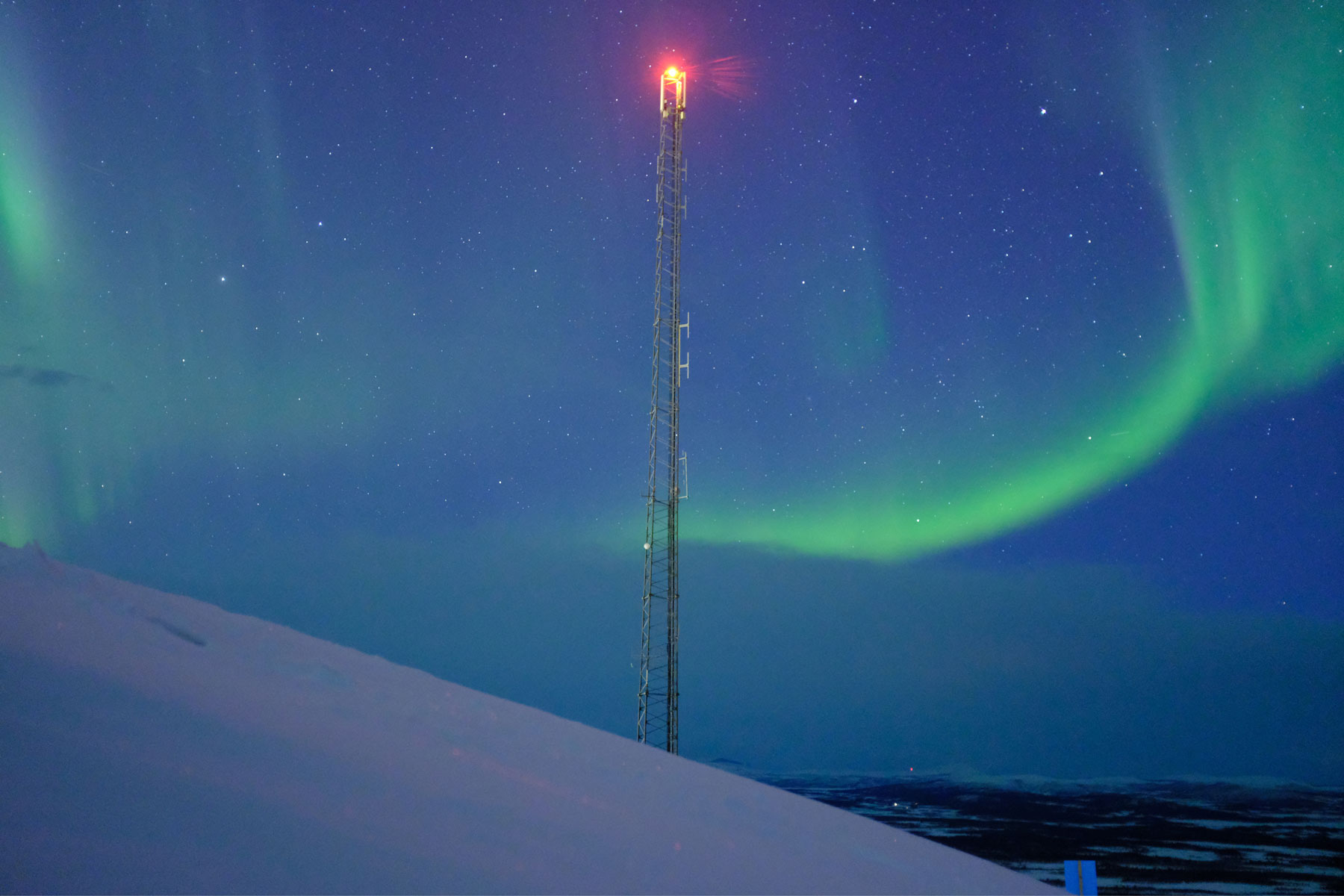
 Photo: Eugen Kamenew
So, at the young age of 21, I had achieved my greatest goal in life: to see and experience the Northern Lights. However, I quickly realized that this cosmic event could not be the end, but only the beginning of something big. My everlasting longing for further rendezvous with the auroras. Such huge solar wind storms, which are also Earth-directed, are relatively rare and correlate very strongly with the maximum of the sunspot cycle, which reaches its culmination every 11.1 years on average. In simple terms, I didn't want to wait until 2014 to possibly see my next aurora with a bit of luck.
When I graduated with a degree in sociology with a focus on media studies, I began to approach the subject of astrophotography in a new way as a freelance photographer. In addition to the first global expeditions to total solar and lunar eclipses, I also photographed several meteor streams, planetary constellations and, of course, the long-awaited auroras.
Several expeditions to Scandinavian countries were undertaken to experience the auroras and capture them photographically for eternity. So I established myself early on as an expedition photographer with the main focus on astrophotography. As a photo instructor, I offer various photo courses throughout Germany covering a wide range of topics. When I was asked by Foto Koch and TourVital whether I, as a travel photographer, had a concept for creating a photo tour, I was thrilled. As an aurora enthusiast, I only had one answer in mind: an aurora trip!
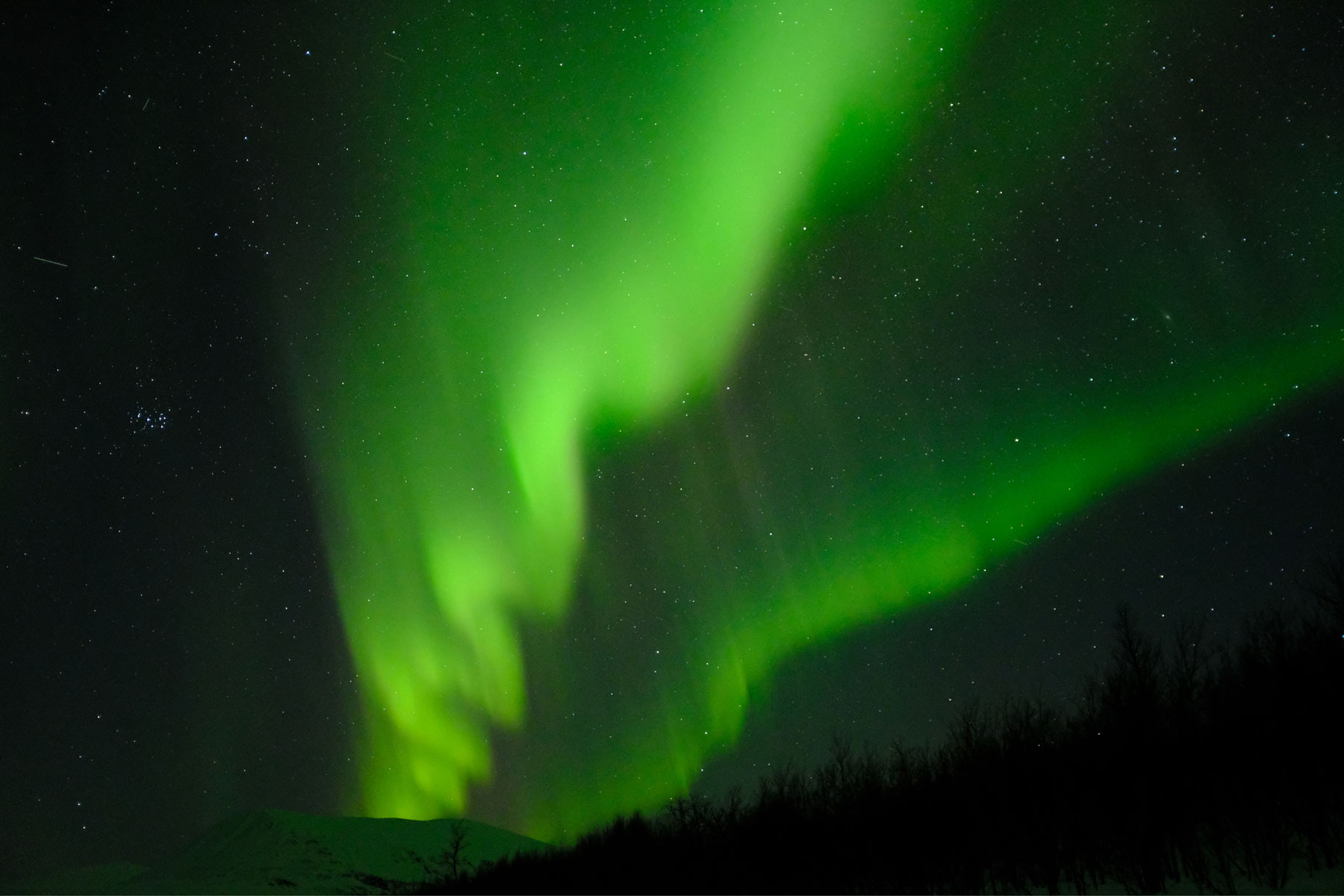 Photo: Eugen Kamenew
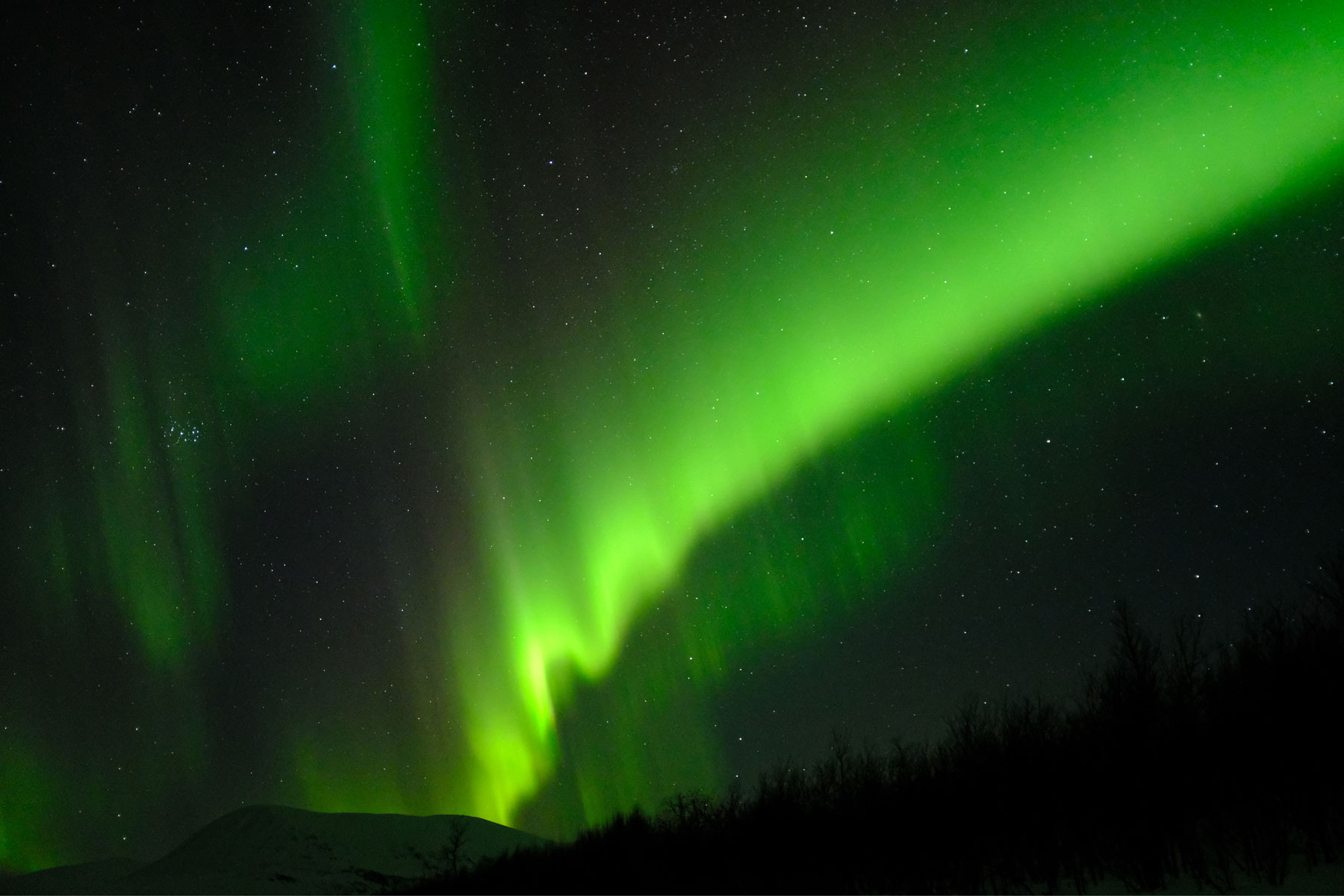 Photo: Eugen Kamenew
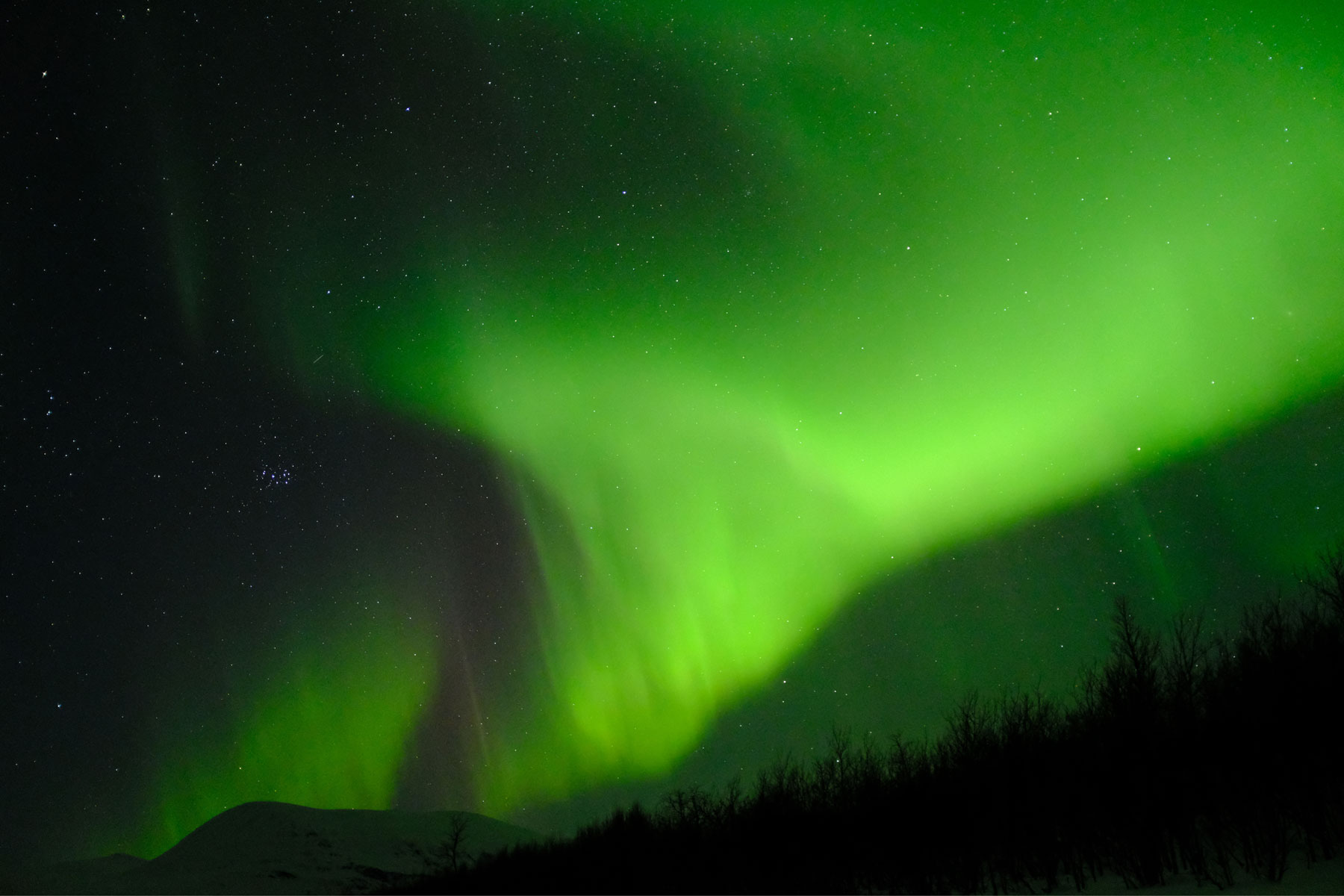 Photo: Eugen Kamenew
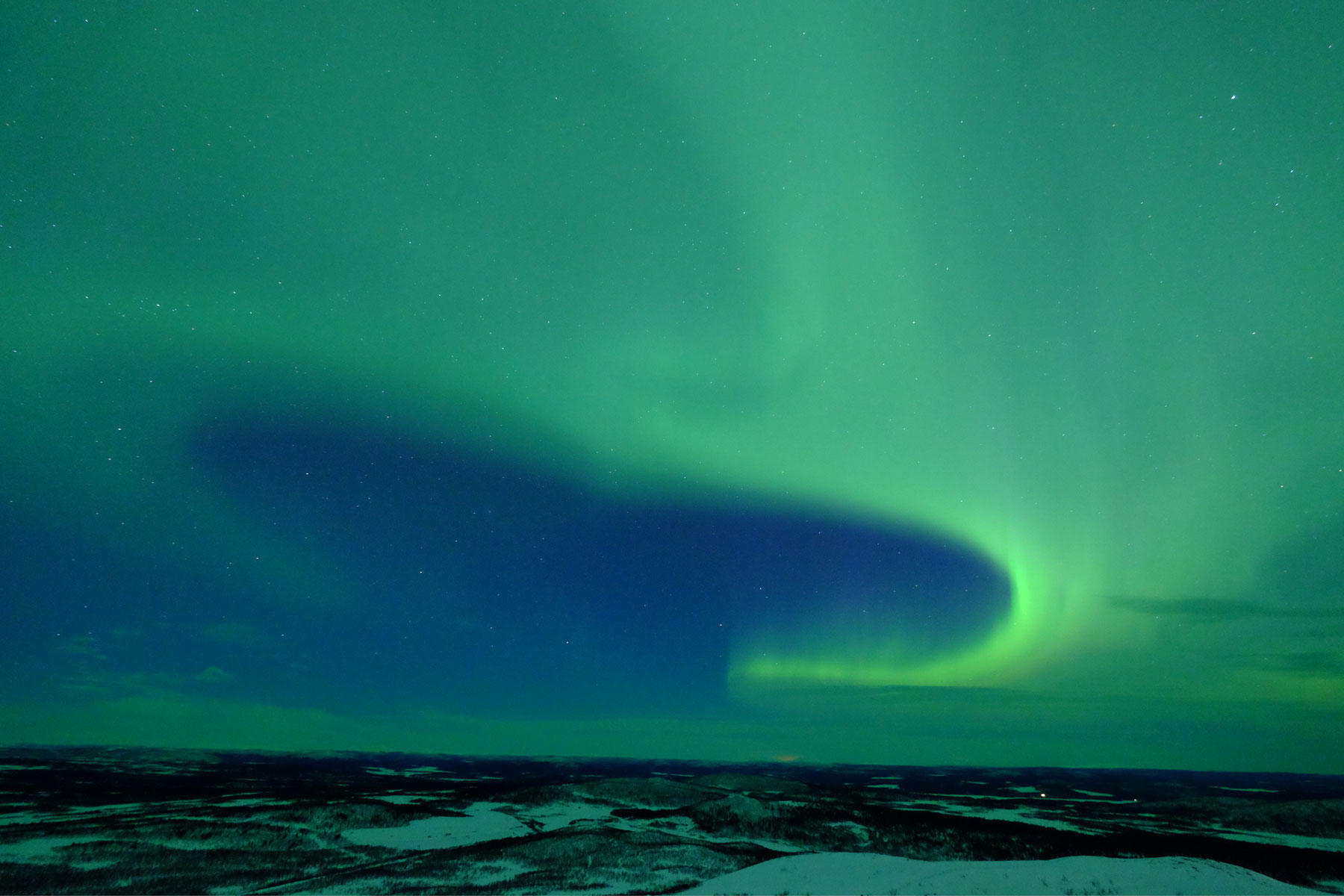 Photo: Eugen Kamenew
Science as an indicator of success for a successful photo trip
I knew from my own experience that one of the most important factors for a successful trip is the weather. I was aware that I could not guarantee my participants good weather. So there is only one question: how can I increase the probability of success so that my aurora group is not under thick clouds and doesn't see anything? The answer is to analyze weather statistics. I analyzed the cloud distribution from 20 years (1992 to 2012) of accumulated satellite data to find the best possible location. It turned out that Kiruna in northern Sweden is the winner among all other Scandinavian countries with a 55.2 % probability of an absolutely starry sky. With such a promising statistic, we should be able to experience a cloudless starry sky every other night.
But what about auroral activity? Because even if you have a starry sky, the appearance of the aurora is not automatically guaranteed. To maximize our chances of success in this respect, I focused on the hitherto inexplicable phenomenon at the equinox, the so-called equinox effect. Around March 20 and September 23, of all times, auroral activity increases without any increase in solar activity. I really wanted to take advantage of this effect in order to do justice to the aurora statistics, so that at least 8 out of 10 nights in Kiruna are accompanied by aurora activity.
In addition to the weather and aurora activity statistics, there is also a third success factor that should not be ignored under any circumstances. This is magnitude visibility.
Magnitude visibility refers to the quality of the night sky. If you stay in a light-polluted city like Kiruna, you won't see much or, in the worst case, nothing at all of the aurora borealis. Under ideal conditions in the countryside, the human eye is able to recognize the faintest stars up to 6 magnitudes without the disturbing light pollution of large cities. Many aurora enthusiasts who stay in urban infrastructures that emit a lot of artificial light wonder why they can only see so few stars and usually no aurora at all, even though the auroral activity was there according to the space weather report. The reason is quite simply the artificial light pollution of big cities in the form of streetlights, neon signs, car headlights, etc.
The only way to escape this light pollution is to be mobile. For this reason, we organized a tour guide with a minibus who would drive us out of the city's light waste for 7 hours each night.
With this newly gained radius of action of 100 km, we will be able to enter the wilderness of Lapland and stand under a perfect, unclouded starry sky. Another advantage was that we would have a different and new location to photograph every night. After this long phase of planning and developing the best possible concept, it was ready. Our successful concept, which now consists of three pillars: The best possible weather statistics for Kiruna, the highest probability of aurora activity in the month of March and a magnificent starry sky in the untouched nature of Lapland.
Now all I had to do was to arouse enthusiasm among Foto Koch customers.
In many lectures, I vigorously drummed up publicity and held a very special aurora info evening with live stream at the Foto Koch Academy. The room was so full with countless interested people that we needed extra chairs. Over a thousand live viewers showed incredible interest in the social networks
I hadn't expected so much interest with the best will in the world. The longing of the people in the lecture room for the magical, archaic and extraordinary was clearly palpable. If I could inspire the audience so much with my live presentation, what would it be like if they were to experience the Northern Lights themselves on this trip?
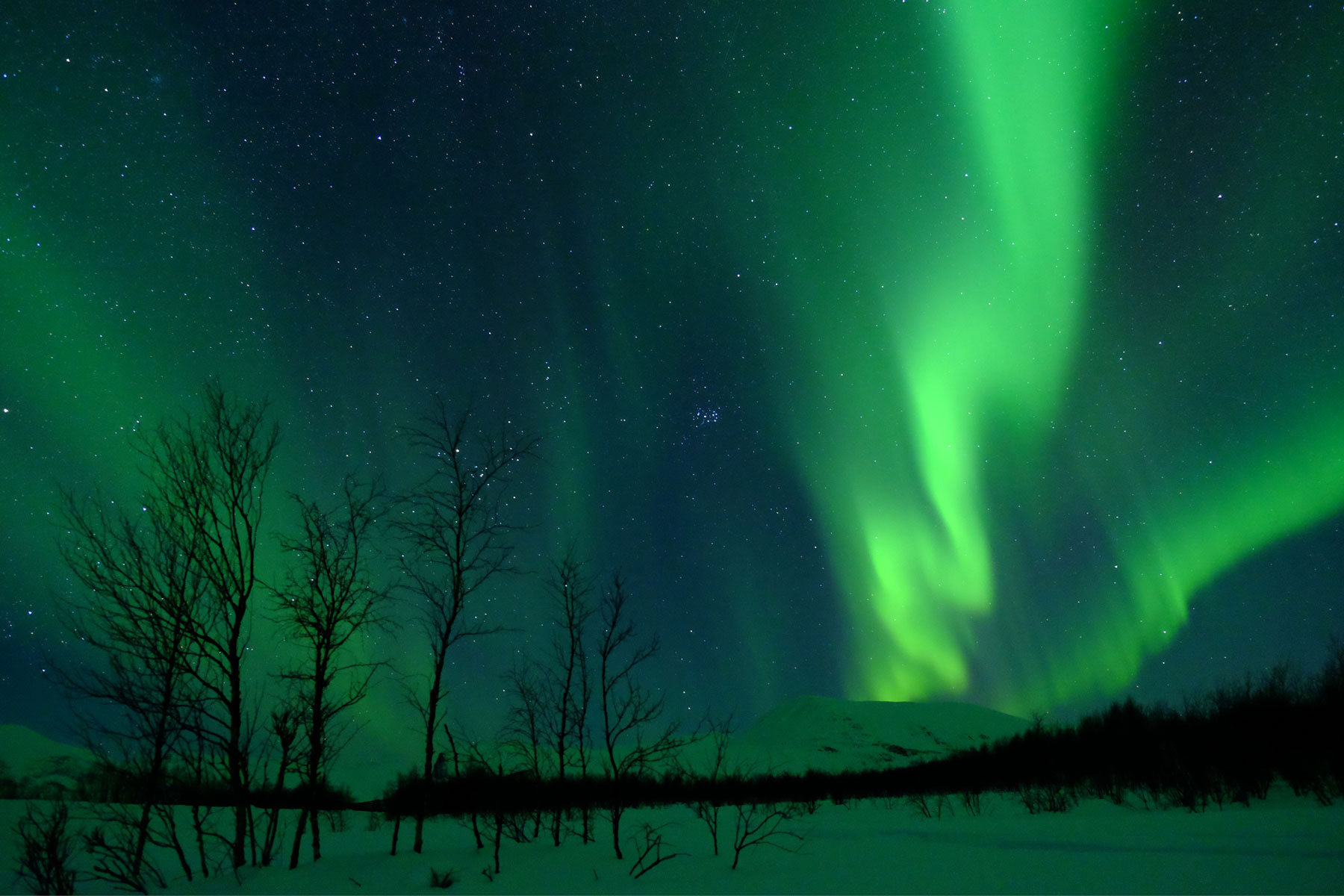 Photo: Eugen Kamenew
Countdown to geomagnetic activity
The phase of putting all this into practice. I had four aurora photographers in my team. I collected my people with a travel sign at Frankfurt airport. It was also a nice surprise that I already knew three of them personally. Apart from the preparatory e-mails I wrote to my aurora team, I already announced at the airport that we were incredibly lucky with both the local weather and the aurora activity that had been announced. The aurora already greeted us above the clouds on the plane. Before we had even landed in Kiruna, one of my participants photographed the aurora on the plane. The original plan was that when we arrived in Kiruna at 23:40 and checked into the hotel, we would recover from the flight as normal and go to sleep. But we couldn't pass up such a good-weather opportunity, because the forecasts for both terrestrial and space weather looked fantastic and so all my participants agreed not to go to sleep but to experience auroras. Because I had spoken to our Kiruna tour guide personally on the phone a few days earlier, everything was arranged and nothing stood in the way.
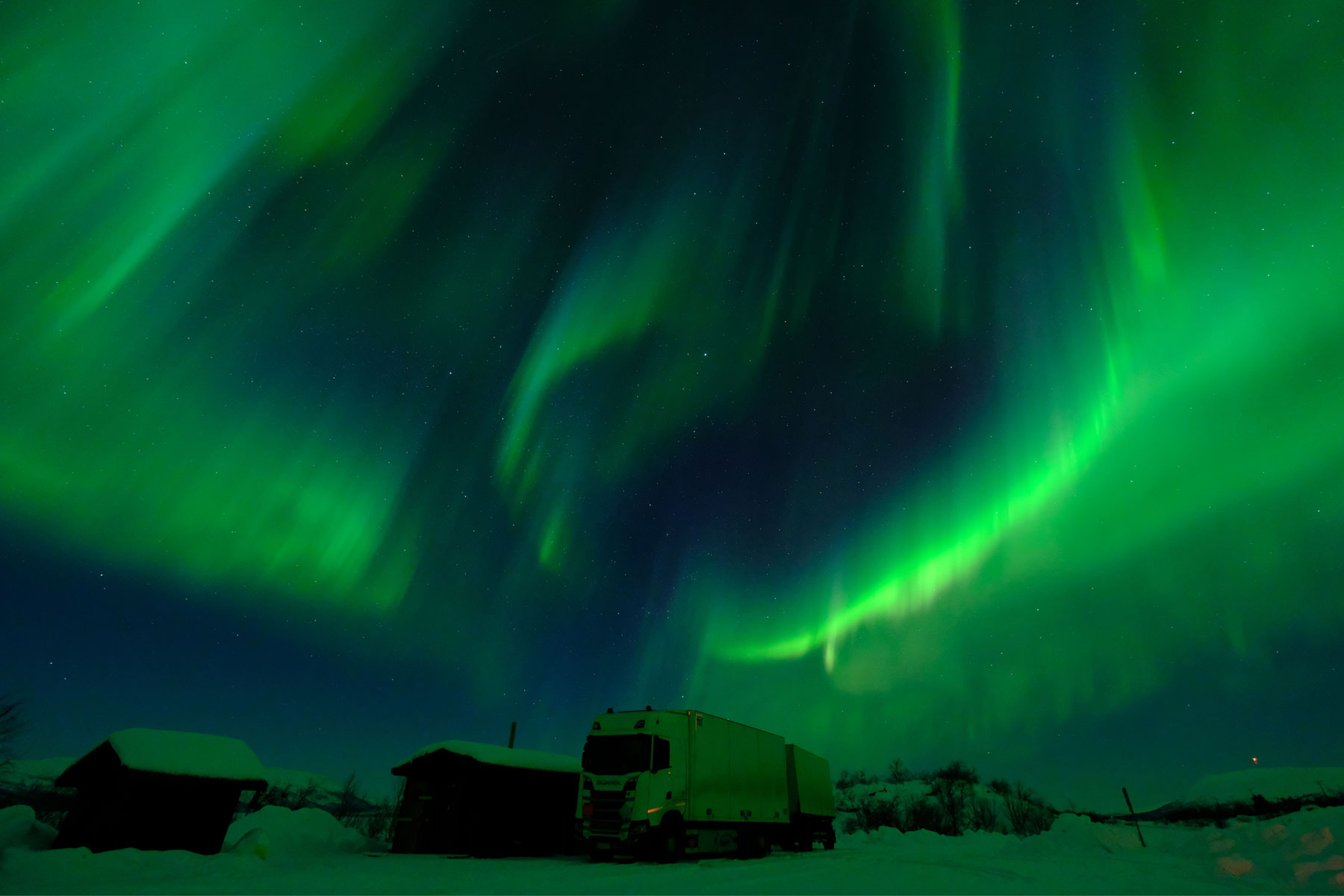 Photo: Eugen Kamenew
The rendezvous with the aurora borealis
The stewardess was so impressed by the photo from the system camera that she immediately had the cabin lights switched off throughout the plane. Now we were flying in complete darkness, with the dynamic green aurora rapidly changing shape. We all just hoped that the auroral activity would not diminish when we landed. The opposite was the case. After landing, we were warmly welcomed by our tour guide Emil. Emil enthusiastically told us the same thing I had already told my participants, that we were incredibly lucky with the weather. After a quick check-in at the hotel, we immediately set off in our Arctic clothing for a night-time rendezvous with the Northern Lights. Following the E10 road to the north-west, we could hardly wait to leave the artificial lights of the city behind us. We all couldn't wait to jump out of the car to finally photograph the auroras. The auroras were simply everywhere and enchanting. After what felt like an eternity, we were finally far enough away from Kiruna. Emil drove off the road into the huge parking lot where there was only one truck.
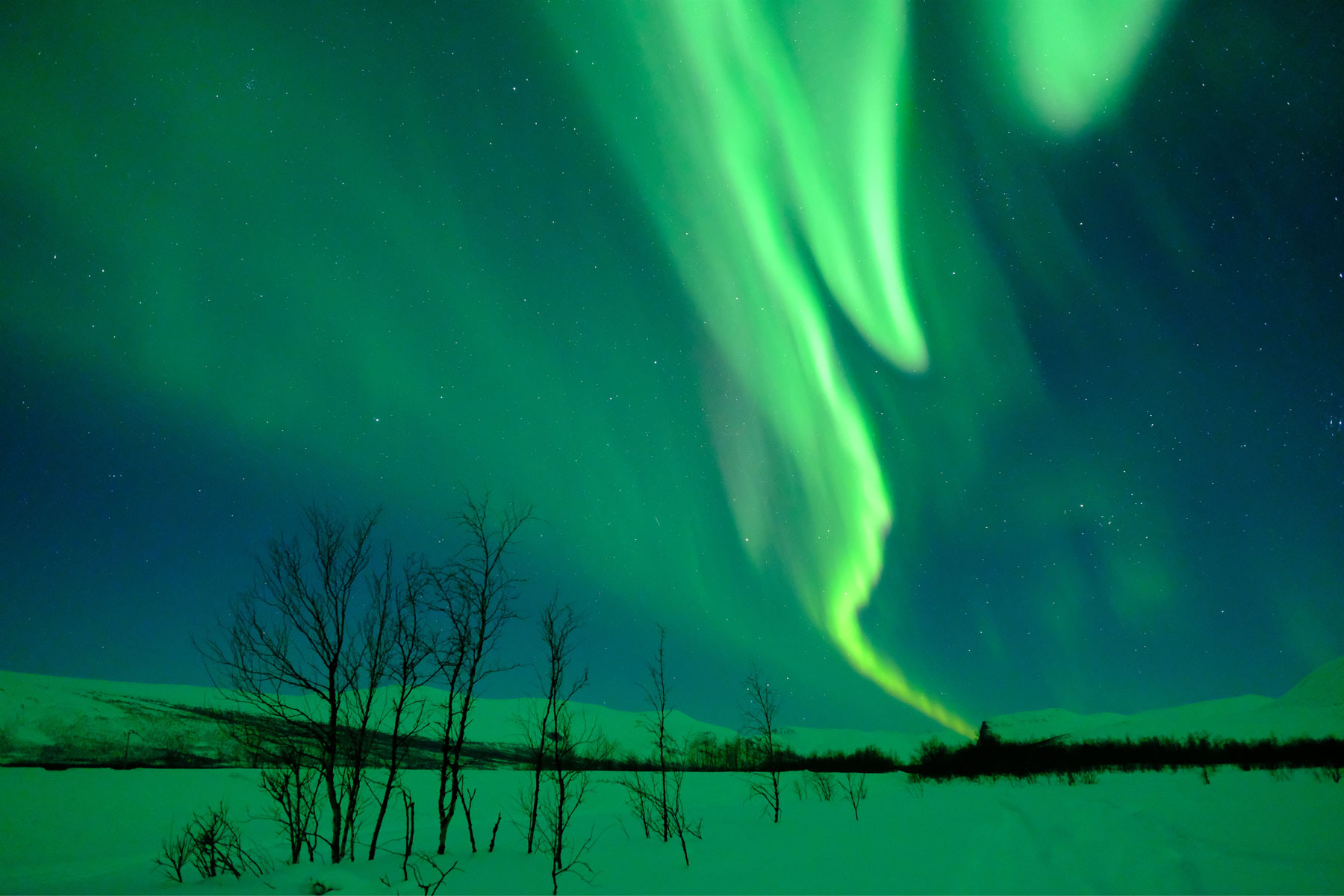 Photo: Eugen Kamenew
At first, hardly anyone could pull themselves together and everyone wanted to get going straight away. None of my participants had ever seen an aurora before and now they were standing there at 68 degrees north latitude under the cascading lights of the Aurora Borealis. It was a category G1 geomagnetic storm. We couldn't stop being amazed. It was very difficult to concentrate on taking photos because everyone just wanted to experience it. I received a text message from a friend in Germany: "Wow, currently 600 nanoteslar pulse with K5. All sky cam is on fire! Maybe you saw it from the plane?". He was absolutely right. There was no other way to describe it, the night sky was actually burning in a green, reddish and violet spectrum of light. We couldn't have dreamed of a better welcome.
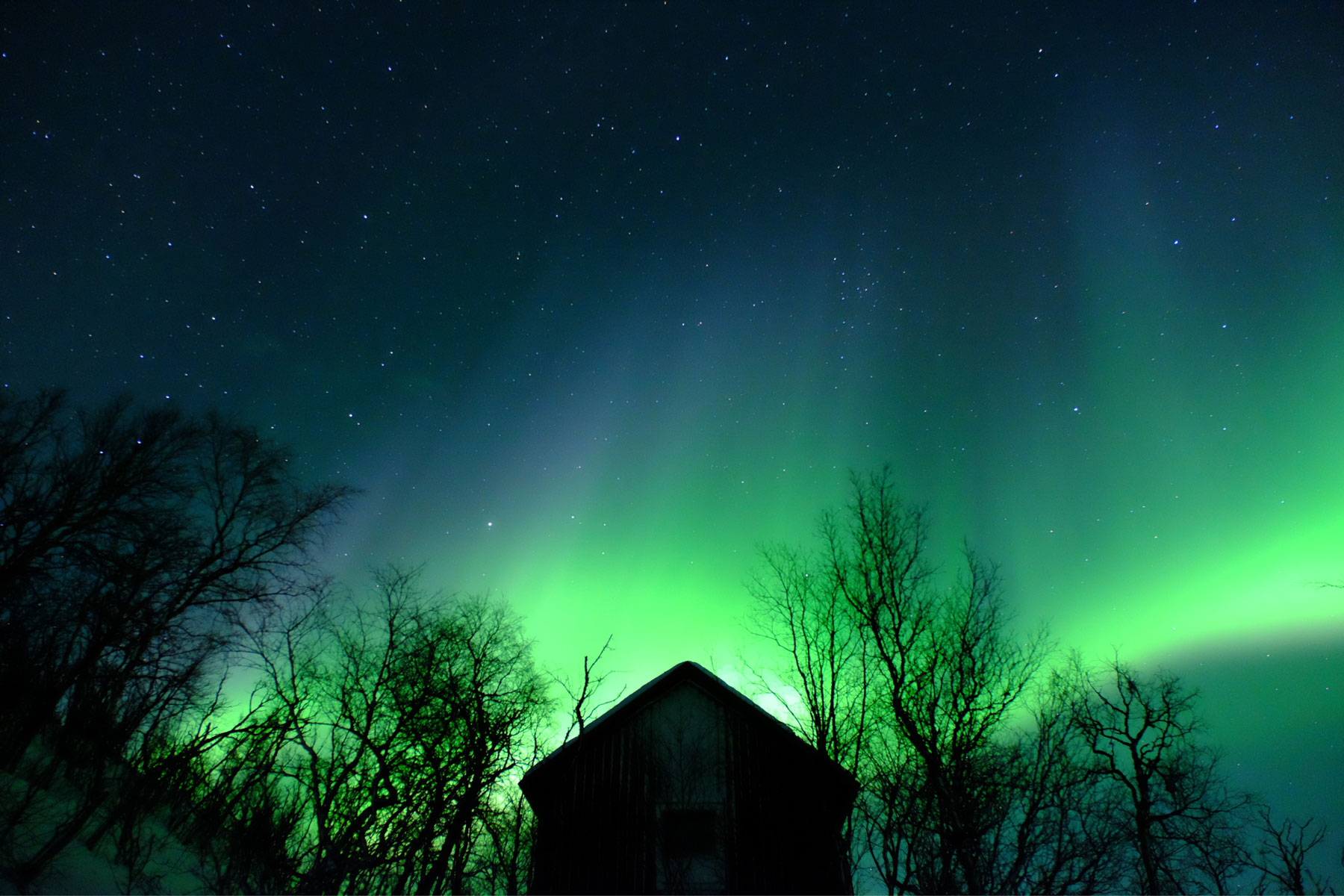 Photo: Eugen Kamenew
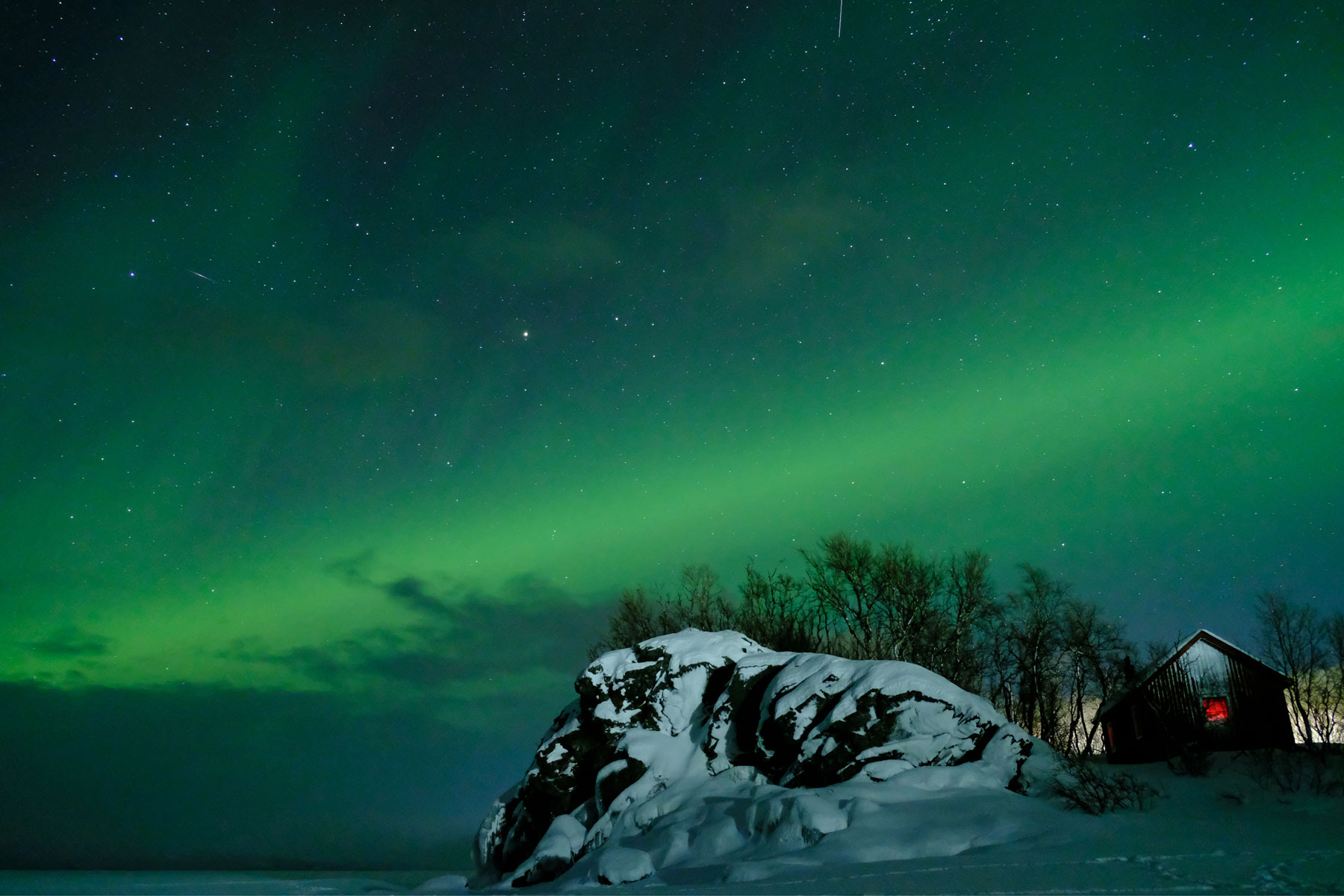 Photo: Eugen Kamenew
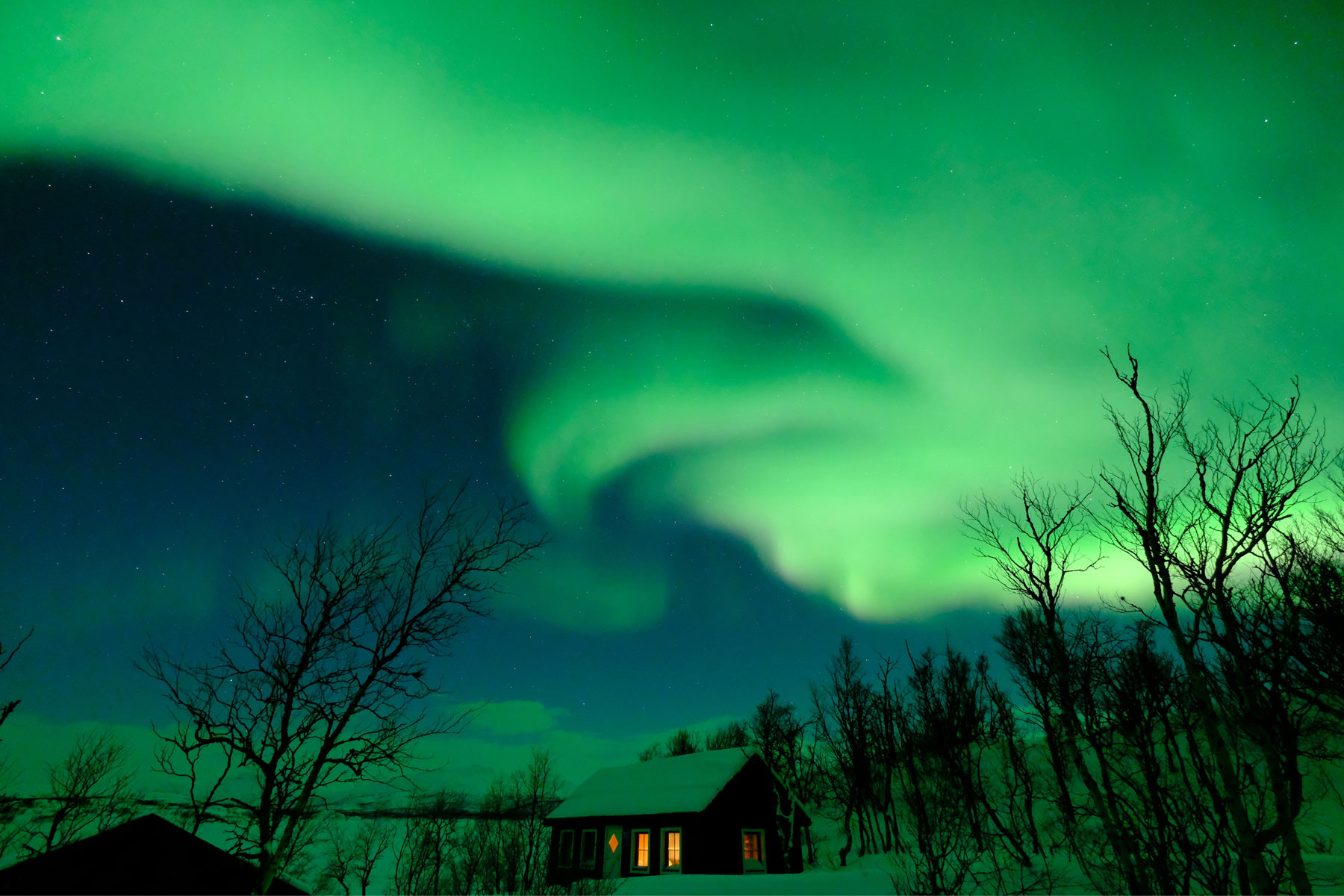 Photo: Eugen Kamenew
The second night - northern lights and campfire
On the second night from March 15 to 16, 2018, we drove 70 km west almost to a small village called Nikkaluokta. This time we had the whole night to ourselves and our photos. We also experienced the coldest temperature in the whole of Sweden: -33.7 degrees Celsius. The relative humidity in Lapland is very low, as Norway's north-south mountain range shields the low-pressure areas from the Atlantic Ocean that bring moisture. The sub-zero temperatures felt in the dry cold were nowhere near as extreme as the -10 degrees Celsius damp cold in Germany, for example. Emil lit a campfire in a nearby wooden hut so that we could take photos efficiently throughout the night and not just freeze. He took good care of us and always provided us with hot tea or traditional delicacies. A second successful aurora night in the warmth with endless activity in the starry night sky. There was a new form of aurora: the pulsating Aurora Borealis. The best way to observe it was to simply lie on your back and admire the real-time pulsation.
The third night at lofty heights
Our third aurora night took place on the 724 m high Luossavaara mountain. The participants experienced the uniform arcs and radiant bands of the polar sky. No two aurora nights were the same
Abisko National Park - a dream for aurora photography - the fourth night
The fourth and last night we were able to experience was in Abisko National Park, which is located almost 100 km northwest of Kiruna. Here, too, we found ideal terrestrial foreground motifs such as snow-covered mountains and forests on the frozen lake.
After the last night with Aurora Borealis, I had to realize that no picture or video can come close to reflecting my own experience. Many Nordic peoples regarded the auroras as mystical beings. And I couldn't shake off the feeling that this was a living and organic being. The breath of the cosmos became visible through the pulsating, dynamic aurora borealis in an impressive way. In such extraordinary moments, you feel like a part of the big picture, because everything is somehow interconnected. The effects of the solar wind can be seen directly in the Earth's magnetic field lines. The incredible variation of shapes and a full spectrum of rainbow colors was present.
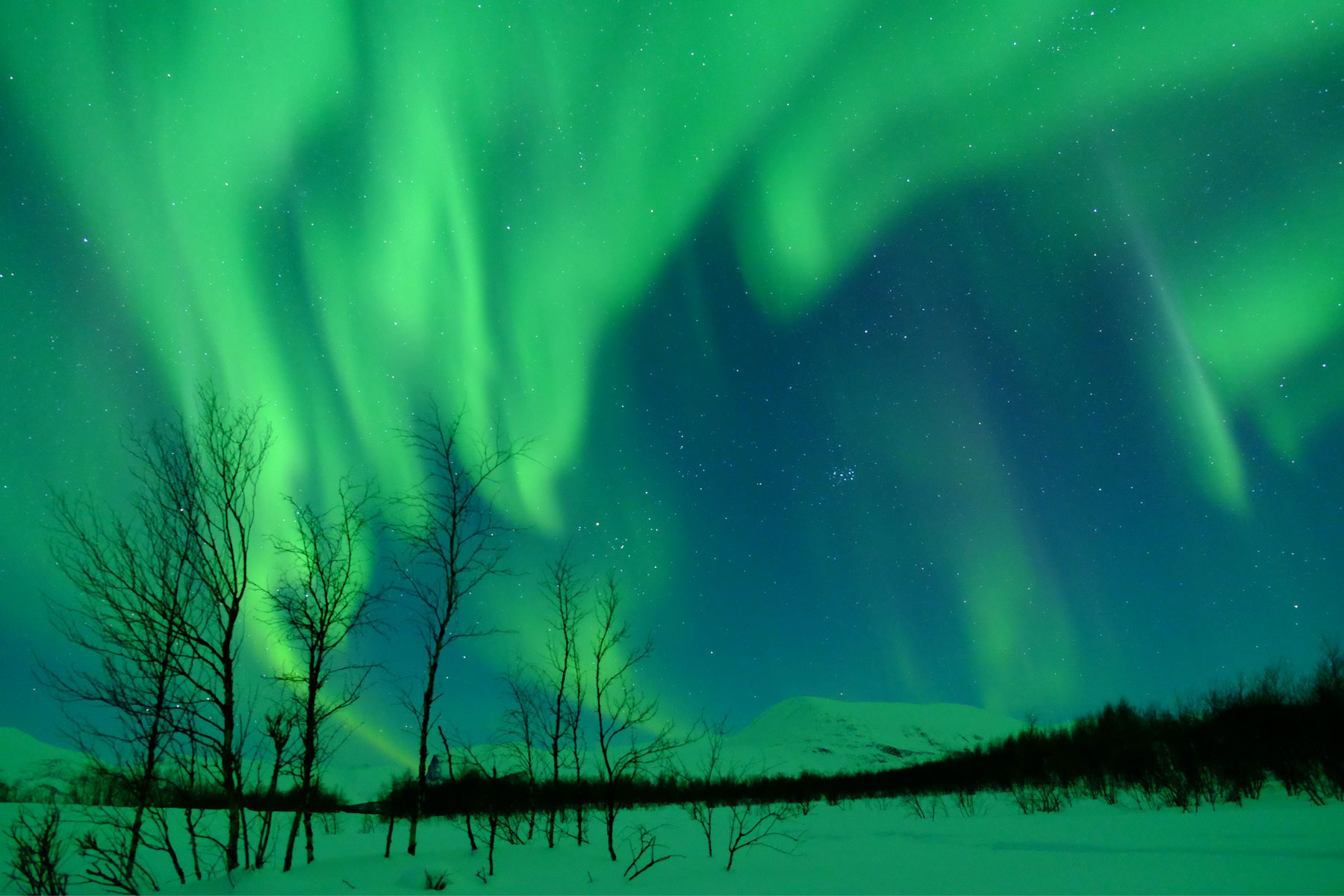 Photo: Eugen Kamenew
The conclusion of the aurora trip
The weather and aurora statistics proved their worth. We were able to experience a total of four starry nights out of a total of seven. Of these four starry nights, we were able to experience an aurora with increased activity each time. So the first aurora trip was a complete success! But what happened when we had cloudy skies? We visited the famous Ice Hotel, photographed moose in the wilderness and experienced Swedish ice fishing on the frozen lake. So it was actually even more than a purely astronomical trip.
Each day we also spent more than three hours in the hotel conference room analyzing images, taking star trails and compiling the 4K video, making effective use of the time so that in the end each photographer could take home their individual and unique aurora images.
The Foto Koch expedition will of course also accompany each participant and me for a lifetime and the "Breath of the Cosmos" will be remembered forever, not only through the great photos.
More about Eugen Kamenew: Astrophotography - kamenew.net Foto Koch Academy
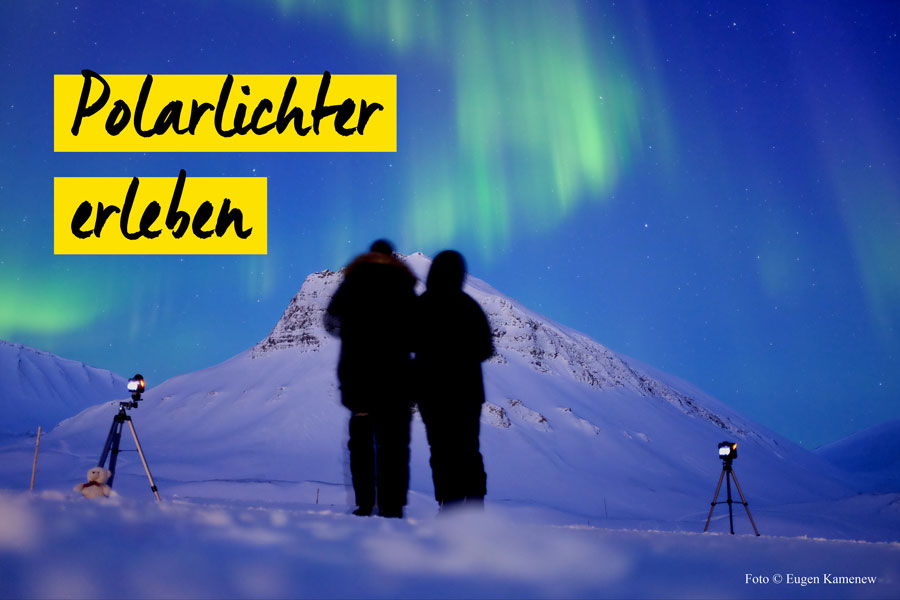
Book now for 2019: Aurora Borealis (aurora borealis photography) in northern Sweden
Fulfill your dream of experiencing the Northern Lights live and learn from the "Astronomy Photographer of the Year 2014" how to capture this unique moment photographically. 6 days | March 2020 Price: from 2.790,- incl. flight & hotel
All information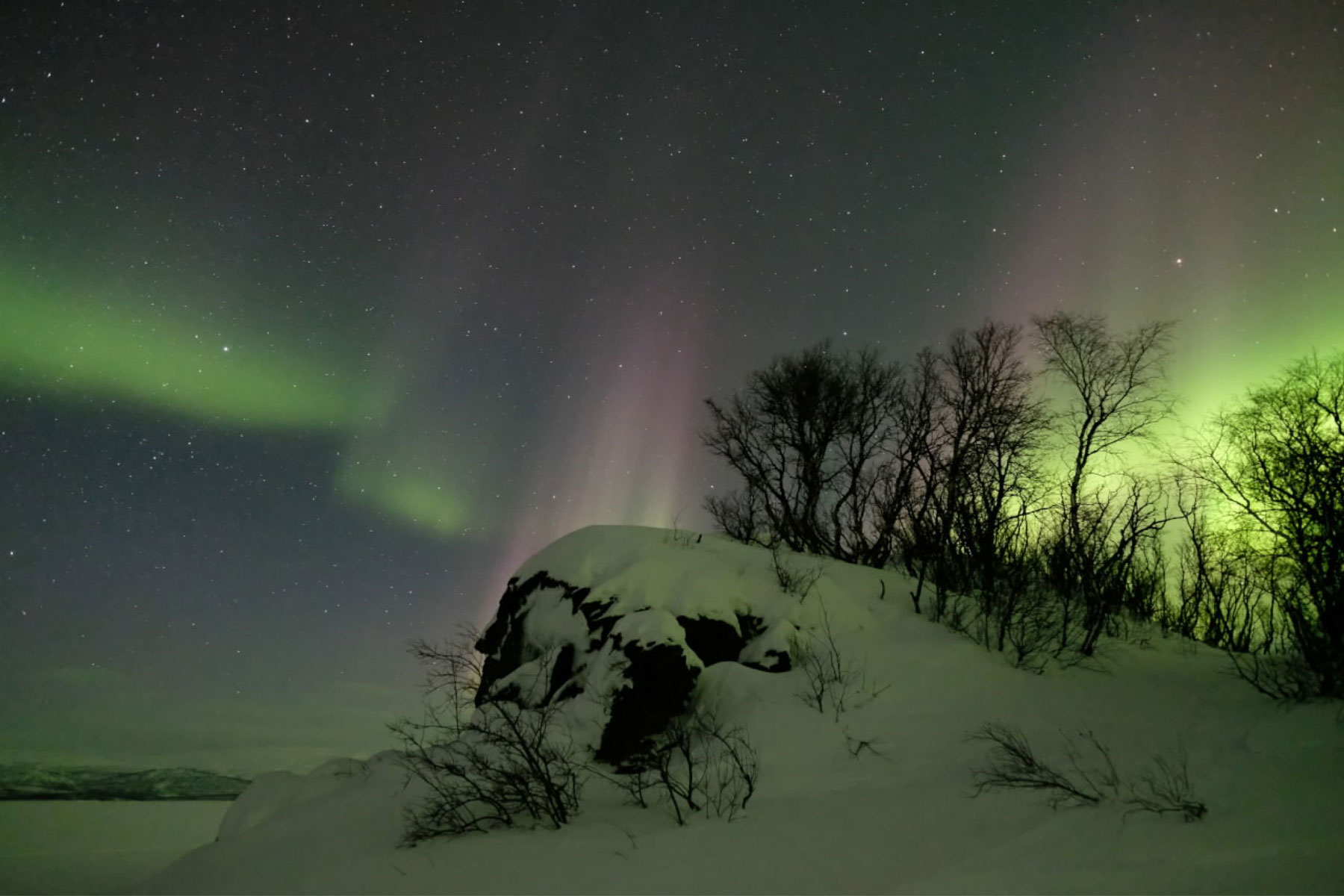
Axel Krause, participant of the Foto Koch photo trip to Kiruna reports:
The trip was a complete success for me, especially as I had previously traveled to Iceland and Finland three times without success. Now, with this organization and with Mr. Kamenew, the long-awaited dream of a photographer to photograph the Northern Lights has come true. And in all their beauty and special intensity. The experience was something very special.
On arrival, we participants were informed in detail about the technical requirements and the cameras were made ready for the special challenge. Special settings such as white balance, interval function, time and aperture, but also the use of the Lens heating were played through.
After the group arrived in Kiruna around midnight, we immediately started to the hotel and then by bus to the surroundings of Kiruna where the light emission was particularly low. In addition to Mr. Kamenew, we were also supported by a local guide. Shortly after our arrival, we were able to experience the Northern Lights in all their beauty. You have to let it all sink in, and so I was sometimes overwhelmed by the visual impressions and the camera settings. I hadn't expected this intensity of color. Yes, the joy and the associated nervousness didn't make photography easy. But then it worked and the first pictures were in the box. I still had the information about the settings in my head, but concentrating on what was happening was particularly important. The conditions were not the easiest at minus 32 degrees and I was always worried about my camera and Lens. Would it go well, would the lens heater work, would the power banks last? Yes, I was aware of the dew point problem in theory, but the requirements in practice were somewhat different. Precisely setting the distance with open aperture was also not as easy as I had thought, a challenge that I wanted to be up to. Gloves, tape, hyperfocal - those were the issues. Unfortunately, my headlamp couldn't switch off after the red light and had to be switched off using white light in several places. That was a problem, as the aim was to create as little disturbing light as possible. But the guide had a spare lamp. In general, we were a great team that complemented each other well and were able to discuss our findings in the afternoon workshop.
Yes, it was a special experience that has stayed with me.
A little more about the technical side. I've been shooting with the Fuji X system (XPro 2 and XT20) for about 5 years. I also used the GFX in Kiruna. The exposure times at open aperture were between approx. 4 and 12 seconds. The ISO varied between 1600 and 6400 ISO depending on the intensity of the light
I learned a lot and now, a few weeks after the event, my curiosity about the Northern Lights is growing again.
Photo tours: Discover the world with professionals
Discover the world with our Foto Koch Academy trainers and bring home breathtaking photos Learn more

Foto Koch Academy
Would you like to broaden your photographic horizons?
Then why not attend one of our photo workshops. Inform here