Date
Group 1: February 27 - March 04, 2022
Group 2: March 04 - March 09, 2022
Location
Abisko National Park, Lapland, Sweden
Photo trainer
Eugen Kamenew ("Astronomy Photographer of the Year 2014")
Airport
from D?sseldorf, incl. Rail&Fly ticket for fast arrival by train
Price
2.890,-
for accommodation in a double room, single room supplement 380,- ? The booking is made with our partner African Dreamtravel.
Book now
Experience the Northern Lights with Eugen Kamenew in Abisko National Park / Lapland
This astronomical photo expedition is accompanied by award-winning astrophotographer Eugen Kamenev. The freelance expedition photographer was awarded the "Astronomy Photographer of the Year 2014" award by the Royal Greenwich Observatory in London and the BBC Sky at Night magazine. The space agency NASA has published his pictures on its official website "APOD" (Astronomy Picture of the Day). As an aurora photographer, he has been to Scandinavia several times to capture this unforgettable natural spectacle in photographs. Eugen Kamenew studied "Cinematography & Photography" at Hawaii Pacific University and was awarded the academic title of "Diplom-Soziologe" with a specialization in media studies at Philipps-Universit?t Marburg.
Aurora Borealis
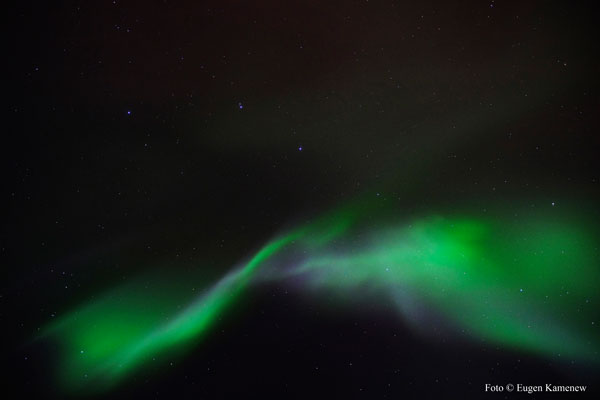
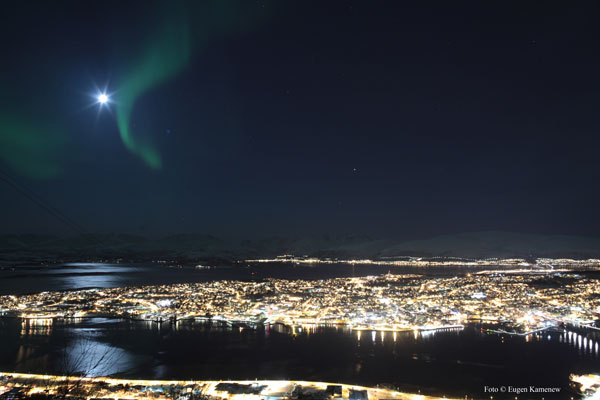
Aurora Borealis is one of the most fascinating astronomical natural phenomena. To experience the impressive aurora borealis, it is best to travel to the far north of Scandinavia. The golden rule applies here: the further north you go, the higher the probability of being able to admire the Northern Lights, even when the sun's geomagnetic activity is low. If you would like to experience the fascination of the Aurora Borealis live and capture this special moment in a photograph, embark on an astronomical expedition to the Earth's auroral oval. Those at home in the middle geographical latitudes will not be able to see it, as the geomagnetic activity of the solar storms is not strong enough there on average.
Sequence
Day 1 Arrival: Welcome north of the Arctic Circle
Flight with SAS (Scandinavian Airlines) from D?sseldorf to Kiruna, northern Sweden.
Evening program:
Eugen Kamenew welcomes you and introduces you to the photographic program for the coming days.
Night program:
Aurora photography under a starry night sky. Day 2 Exploring Abisko National Park
Day program:
You will meet your guide today and explore Abisko on foot. The sightseeing tour takes approx. 1.5 hours.
Evening program:
Introduction to aurora photography: learn all the tips and tricks for successful aurora photography.
Night program:
Under a starry night sky aurora photography.
Day 3 Ice fishing
Day program:
Learn about the Scandinavian fishing practice of "ice fishing" and grab a rod yourself.
Afterwards there will be a relaxed get-together over lunch.
Evening program:
Image analysis of the aurora photos taken.
Night program:
Aurora photography under a starry night sky.
Day 4 Aurora Sky Station
Daily program:
Image analysis of the aurora photos taken. (21:00-04:00)
Evening program:
Today you will take a trip by chairlift to the famous Aurora Sky Station on the 900m high mountain Mt. Nuolja to experience auroras, assuming a clear night sky. (21:00-01:00)
Night program:
Aurora photography under a starry night sky. (21:00-01:00) Day 5 Equinox
Evening program:
The anomaly of increasing auroral activity at equinox.
Creating the 4K timelapse video from the aurora photos.
Night program:
Aurora photography under a starry night sky. Day 6 Departure
Last hours together in Abisko. Return flight Kiruna - D?sseldorf
Important notice:
Please note that the program schedule may change depending on the weather. Despite all the promising weather statistics and auroral activity, there can be no 100% guarantee for the appearance of the auroras. Although all our aurora tours have been successful in the past, we cannot guarantee good weather or auroral activity.
What you can expect:
Theoretical preparatory work (pre-production)
- Daily lectures on astronomical topics relevant to auroras
- Every day current weather forecasts and forecasts of geomagnetic auroral activity for the coming night
- Tips & tricks for successful aurora photography
Practical outdoor work (production)
- 5 nights of aurora photography in practice with 7 hours each under a starry sky (no weather guarantee)
- individual supervision of each individual during the photographic work (a small group of at least 7 and a maximum of 9 people allows intensive coaching of each individual on site)
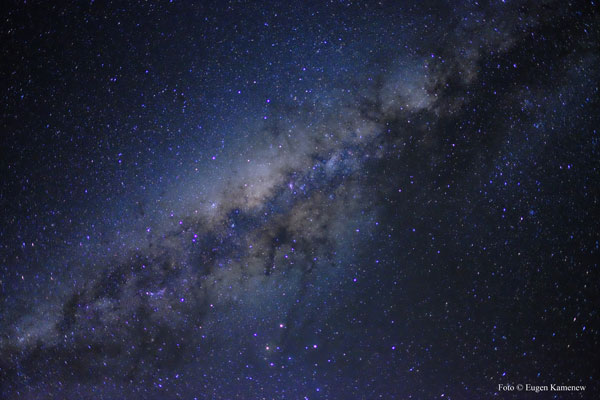
- Explanation of the constellations in the night sky
Practical work after taking the pictures (post-production)
- Image analysis for each individual participant
- Creation of the 4K time-lapse video from the participants' photos (everyone gets their own 4K timelapse video)
- Creating the star trail photos (everyone gets their own star trail photo)
With a starry sky and auroral activity present, photography will take place throughout the night. All locations are within walking distance. The astrophotographers are free to spend their time as they wish during the day. They are located in the Abisko National Park and have the opportunity to go on a discovery tour themselves.
The following program points in lectures
When, where and how can you best photograph Aurora Borelis? Have you ever experienced the unforgettable spectacle of the Northern Lights? When and where can I see the next solar or lunar eclipse? How can I photograph them? Don't want to miss the future opportunity to capture a comet for eternity? These spectacular "tail stars" come into our solar system sporadically and some of them can even be seen with the naked eye, making them easy to photograph at just such moments. Mercury, Venus, Mars, Jupiter, Saturn: these are the 5 planets in our solar system that can be seen with the naked eye. When and in which constellations can they be photographed? What interesting planetary constellations await us in the future? How can the four Galilean moons of Jupiter Io, Europa, Ganymede and Callisto be photographed without a special telescope? Why does the Earth's moon never come across as aesthetically pleasing in my pictures as I can see it with my own eyes? How can I safely photograph a transit of Mercury in front of the sun? The ISS is the international space station. When, where and for how long can you see, photograph and even film the ISS overflights? If you have ever asked yourself any of these questions, then this astronomical expedition photo workshop is the right place for you.
Weather and location
Good weather statistics compiled from over 20 years of satellite data increase the likelihood of visibility and the possibility of photography. Based on this scientific data, northern Sweden, and in particular Abisko National Park, clearly stands out with its good weather conditions.
The western low pressure areas from the Atlantic Ocean are held back by the north-south running mountain massifs of Norway. The break-up of the clouds over the Scandinavian mountain range provides a rain shadow for the Swedish interior.
March is one of the least cloudy and driest months of the entire aurora season. The lowest amount of precipitation in Sweden falls in precisely this month. With a 55.2% chance of an absolutely starry night sky, northern Sweden is the absolute winner in March compared to the other Arctic regions of the world such as Alaska, Canada, Iceland, Norway and Finland.
The moderating influence of the Baltic Sea, the inland lakes and especially the Gulf Stream make the climate in Sweden significantly milder than in other places at the same latitude.
The proportion of day and night hours is kept in an even and pleasant balance. Sunset takes place at around 18:00 and sunrise at around 6:00. Auroral activity occurs slightly more frequently around the equinox on March 20 and September 23 than in the other months during the aurora season. The statistics of aurora frequency show that in northern Sweden, aurora borealis can be seen on a total of 7 nights out of 10 nights with a starry sky.
The anomaly of increasing auroral activity at equinox on March 20, 2020 gives hope for colorful and active auroras.
The carefully selected location in the open countryside of Abisko National Park is ideal for aurora photography. Far away from the disturbing artificial light sources of human civilization, the aurora borealis can be observed and photographed in all its colourful facets on a starry night. The advantage is obvious. As the Abisko National Park has hardly any disturbing artificial light sources, participants can take beautiful pictures at any time. If it is cold, there is the option of warming up in the hotel, because the Northern Lights will be visible literally on the doorstep.
Zielgruppen
- Aurora photographers
- Aurora Borealis enthusiasts
- Astrophotographers
- Travel photographers
- Hobby astronomers
- Space enthusiasts
- Time-lapse photographers (timelapse photography)
- Long exposure and low-light photographers
- Landscape photographers
- People in astrophotography (People in Astrophotography)
Ausr?stung
Any SLR or system camera with a manual "M" setting for aperture and shutter speed and a manual focus is perfect for astrophotography. A sturdy tripod for long exposures, cable or radio release, sufficient memory cards and fully charged batteries should also be brought along. Electronic heating sleeves for heating the lenses are a must for de-icing the lenses at sub-zero temperatures. Such heating sleeves can be purchased in almost any photo store for astrophotography. Since photography is carried out all night under a starry sky, such lens heaters are highly recommended.
Headlamps with red light are very convenient for astrophotography. They have two advantages. Firstly, the astrophotographer has free hands and secondly, the red light of the headlamp does not ruin the adaptation time of the human eye to be able to see faint celestial objects in the night sky. A warm thermos flask is always an advantage if you want to photograph outside for a long time. Weatherproof, warm arctic clothing and extremely warm hiking boots are recommended, as temperatures in the north of Sweden will be freezing at this time of year. Of course, there are no weather forecasts as to exactly what the weather will be like on these days. Accordingly, there is no guarantee of a clear sky.
Please bring your own laptop. Work will be done on the laptop for post-production
Medical advice
To avoid frostbite, special arctic clothing must be worn. You are welcome to borrow these on site for a fee.
Organizational note
Eugen Kamenew is your accompanying photographer and photo instructor. He is not a tour guide and is not responsible for the organization and logistics. All requests and additional services outside the official program should be carried out on your own. Please note that the program schedule may change depending on weather conditions.
Date and price information
Optional services per person
- Single room supplement 380,- ?
- Daily dinner at the hotel 62,- ? per day
- Arctic clothing: approx. 100,- ? per stay (overall, jacket, gloves & hat) by prior arrangement
Not included in the tour price
Tips, other excursions, meals
Weitere Informationen
Minimum number of participants: 7 people, maximum 9 participants
Termin 1
Outbound flight 27.02.2022 from D?sseldorf 06:05 via Copenhagen and via Stockholm to Kiruna 13:10 (same day)
Return flight 04.03.2022 from Kiruna 13:50 via Stockholm to D?sseldorf 19:10 (same day)
Termin 2
Outbound flight 04.03.2022 from D?sseldorf 06:05 via Copenhagen and via Stockholm to Kiruna 13:10 (same day)
Return flight 09.03.2022 from Kiruna 13:50 via Stockholm to D?sseldorf 19:10 (same day)
Flight times are subject to availability and may be subject to change
Book now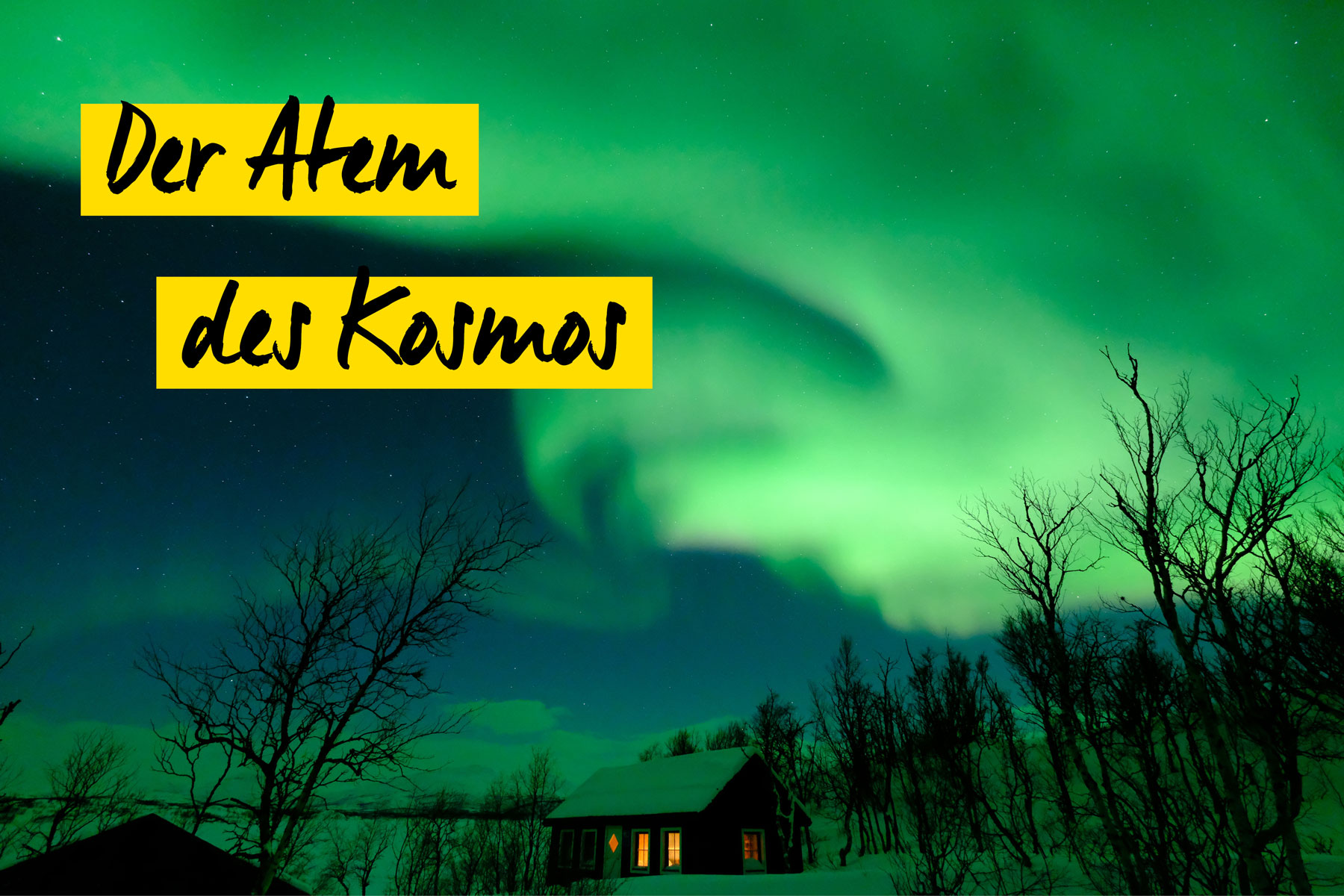
Review: Aurora Borealis - Northern Lights March 2018
One of the first Foto Koch photo trips is over. This astronomical photo expedition was accompanied by award-winning astrophotographer Eugen Kamenew. Experience the beauty of the mystical natural spectacles in an exciting report
Read now
Photo tours: Discover the world with professionals
In theory, it is no problem to take impressive pictures in the age of digital photography. Especially on vacation, you hardly ever see anyone without a professional camera in their hands. But later at home you always realize that one or two photos could be better. On the Foto Koch photo tours, you visit exciting places and go on a discovery tour with professional trainers. In small groups and a pleasant atmosphere, you will learn live in the most beautiful corners of the world how to take better photos learn more
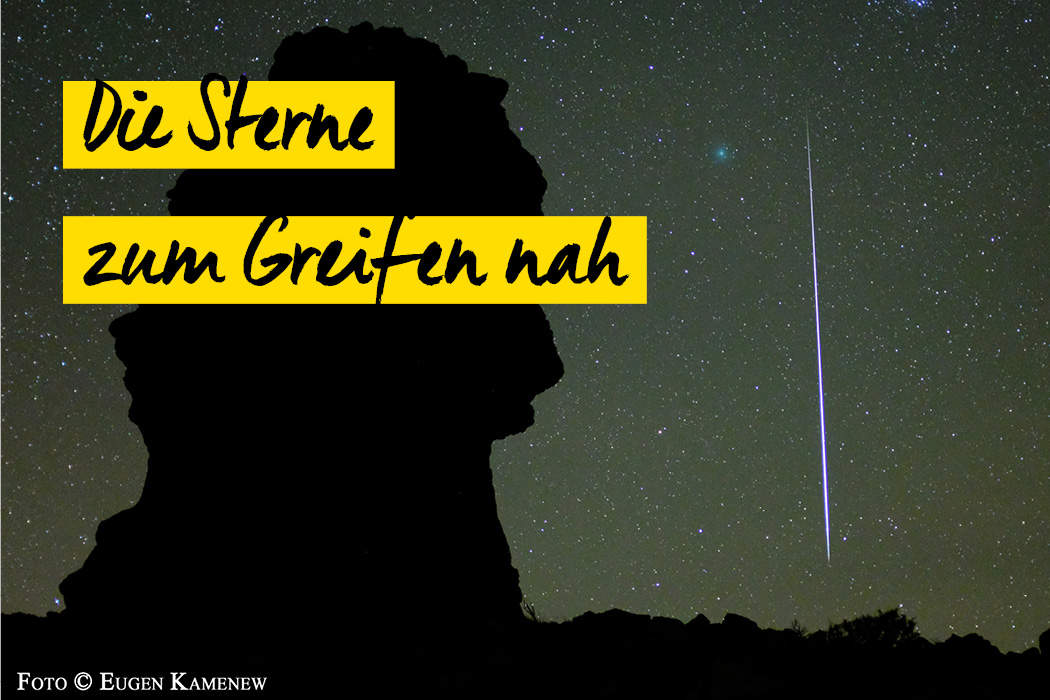
Astrophotography in Tenerife, Spain
Lyrid meteor shower, Milky Way and planet parade: Jupiter, Saturn, Mars The Lyrid meteor stream offers cosmic fireworks in April. The Lyrids are an active meteor stream that occurs every spring from April 16 to 26. For an astrophotographer, the meteors are a perfect photo motif. On the one hand, because they move relatively slowly across the night sky at a geocentric speed of 48 km/sec and, on the other hand, because sometimes relatively bright specimens, the so-called fireballs, can be seen. The name of the meteor shower Lyrids is derived from the constellation Lyra (Latin lyra), the ancient plucked instrument Lyra. learn more
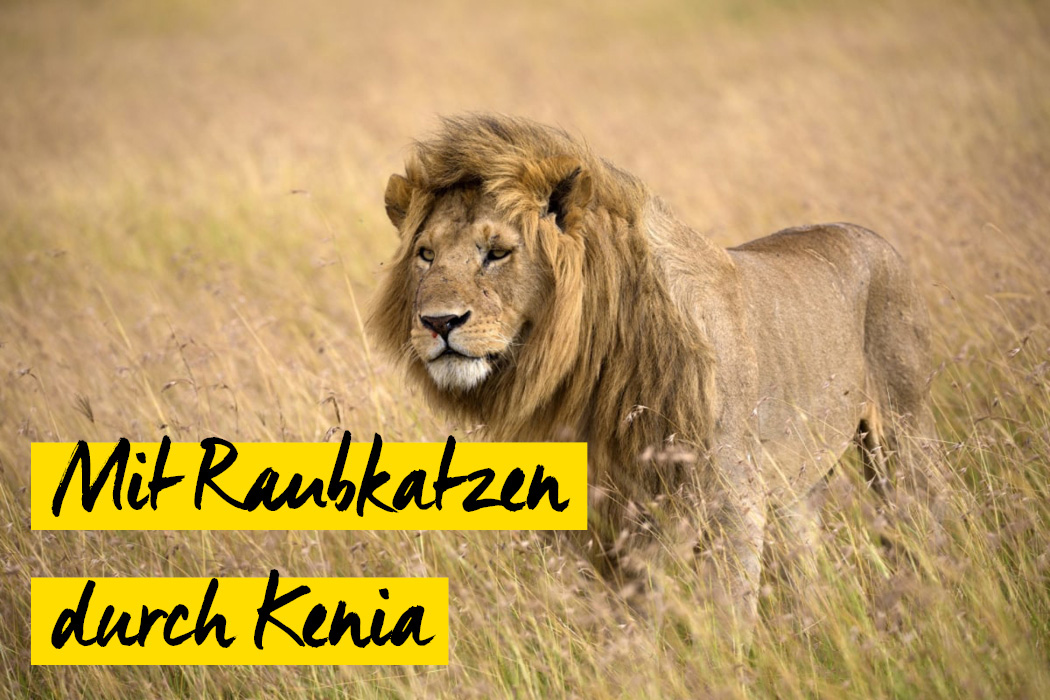
Big cat photography in Kenya
Observing and photographing wildlife in their natural habitat is awe-inspiring and touches the soul. Respect for wildlife and nature should be at the top of every tour operator's list. Instead of destroying what we love, we should all work hard to protect it and raise public interest in our work. learn more