Lumix S1 vs S1H - These are the differences
Reading time: 10 minutes - October 20, 2019 - by Jonas Junk
Panasonic full-frame in comparison
Following the announcement of the LUMIX S1 and Lumix S1R at Photokina 2018, Panasonic has unveiled the third model in the series. Similar to the cameras in the GH series (MFT sensor), the letter "H" stands for the clear focus on video recording. The design is very similar, the sensor looks the same and both have a video function, of course. In this blog post, we present the main differences between the two LUMIX full-frame cameras and show you who should go for the S1H.

Similarities between the Lumix S1 and S1H
- 35 mm full-frame sensor with 24.2 MP
- 5-axis stabilization with Dual I.S. up to 6.5Ev compensation
- DfD contrast-based autofocus with 225 areas
- 9fps continuous shooting (6fps with C-AF)
- 5.76 megapixel electronic viewfinder
Videospezifisch:
- 4K up to 30p with 10-bit 4:2:2:2:2
- 4K up to 60p in APS-C mode
1. Size
The LUMIX S1H is slightly larger and heavier than the S1 and S1R cameras. This is to facilitate heat dissipation. At first glance, this is noticeable in the cooling slots on the side, the larger 1.8-inch shoulder display and two new indicator lights. The space in the Body has made it possible to integrate a fan that dissipates the heat and enables unlimited video recording (regardless of format and frame rate).
In contrast to professional camcorders and cinema cameras, this is unusual for mirrorless system cameras and is a real innovation. The improved cooling options are the first indication of the LUMIX S1H 's specialization in the video sector. The Lumix S1 series is generally very large and massive. Panasonic's product videos already show that the Lumix full-frame camera is extremely robust and can withstand almost anything.
The size is a major advantage when it comes to the feel of the camera, because the Lumix S1 series cameras are very comfortable to hold.
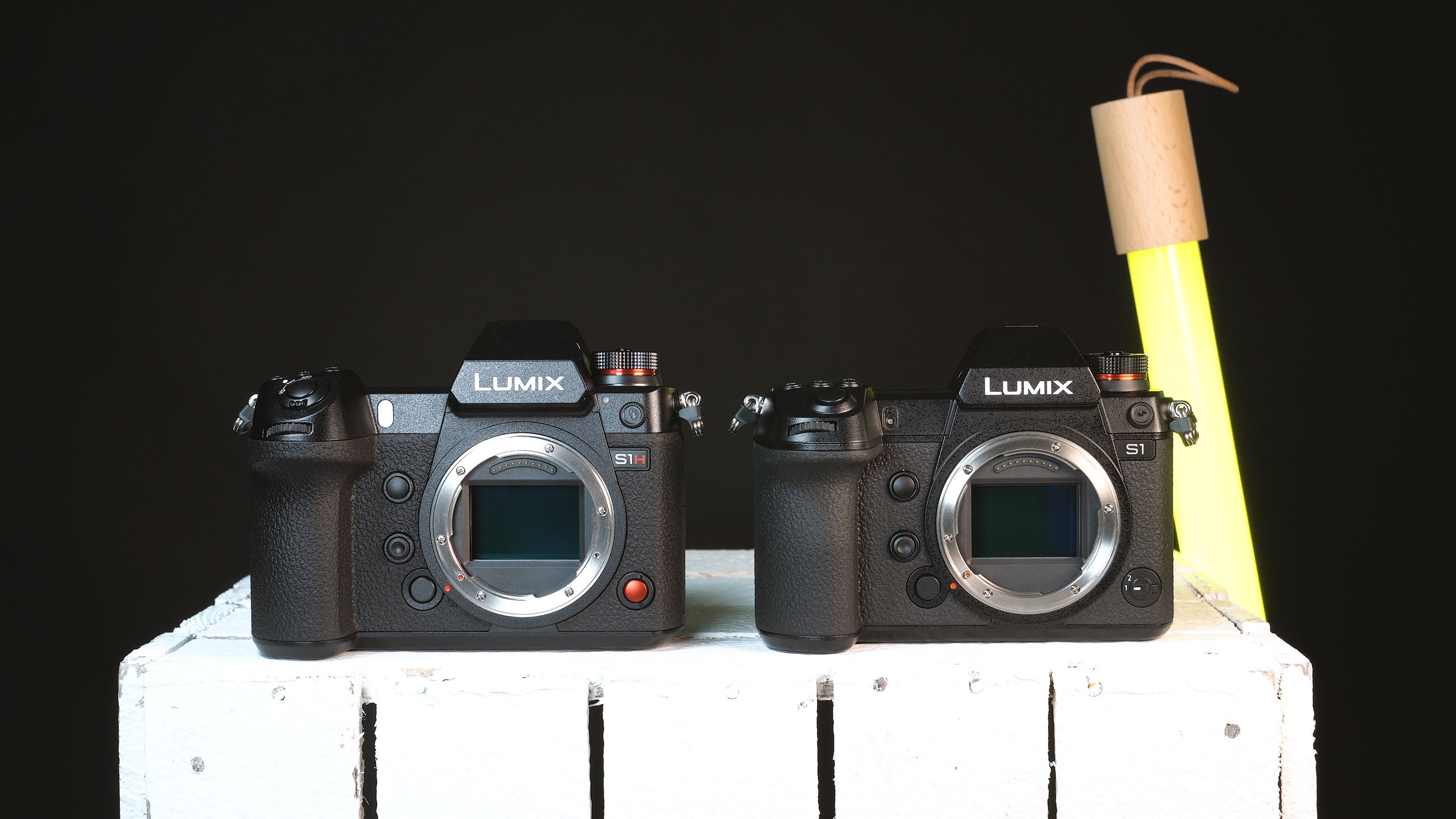
 S1H and the S1 - front side
 S1H and the S1 - rear side
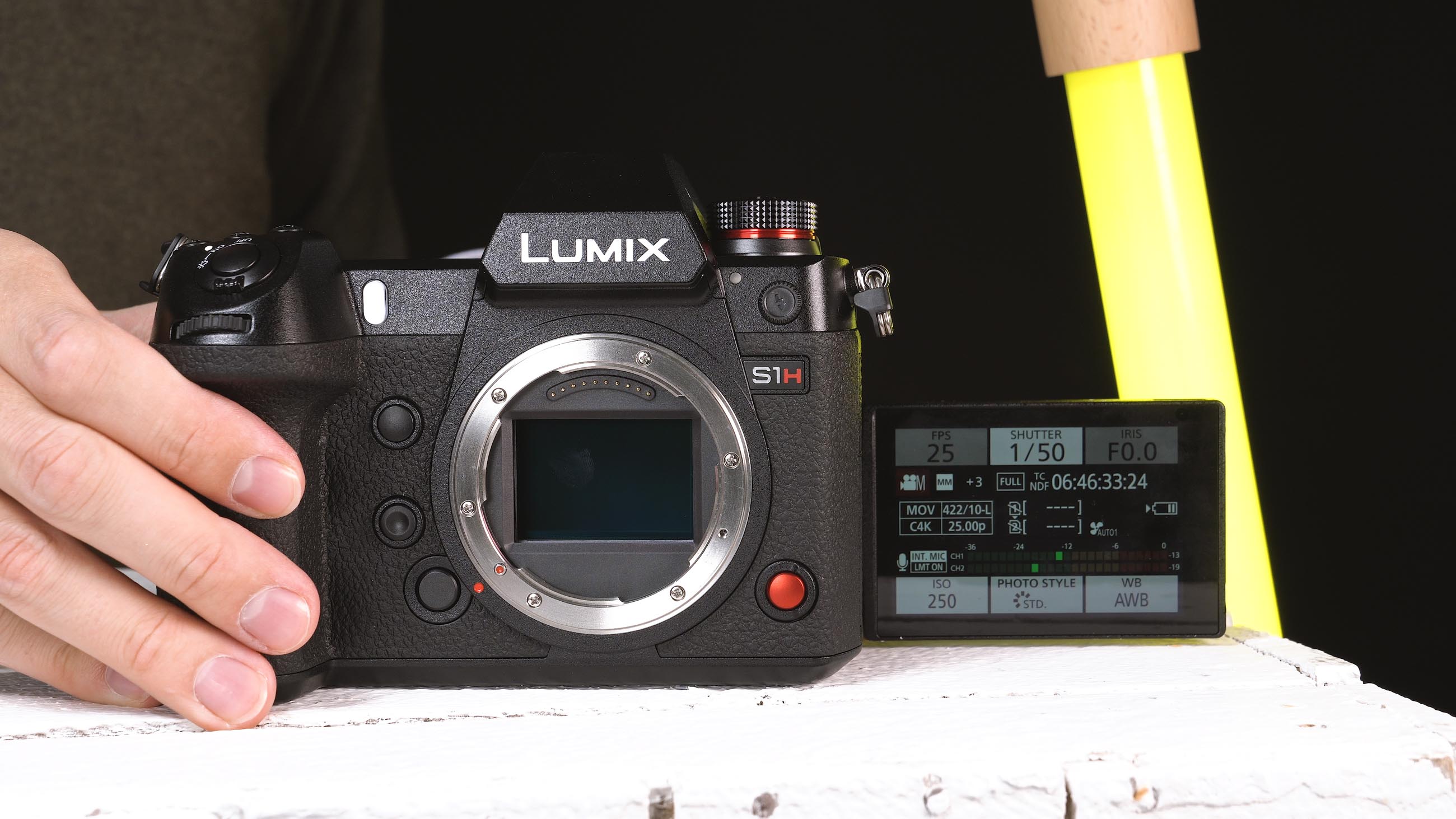 Swivel display of the Lumix S1H
2. Monitor
The LUMIX S1 has a monitor with a 3-way tilting mechanism, so the monitor can be tilted up, down and sideways up to approx. 70 degrees.
The monitor of the LUMIX S1H has a fully rotating and tilting monitor, which can be completely folded down, similar to the GH5. The distance between the display and the Body means that the audio or video connections do not block the screen and can still be reached.
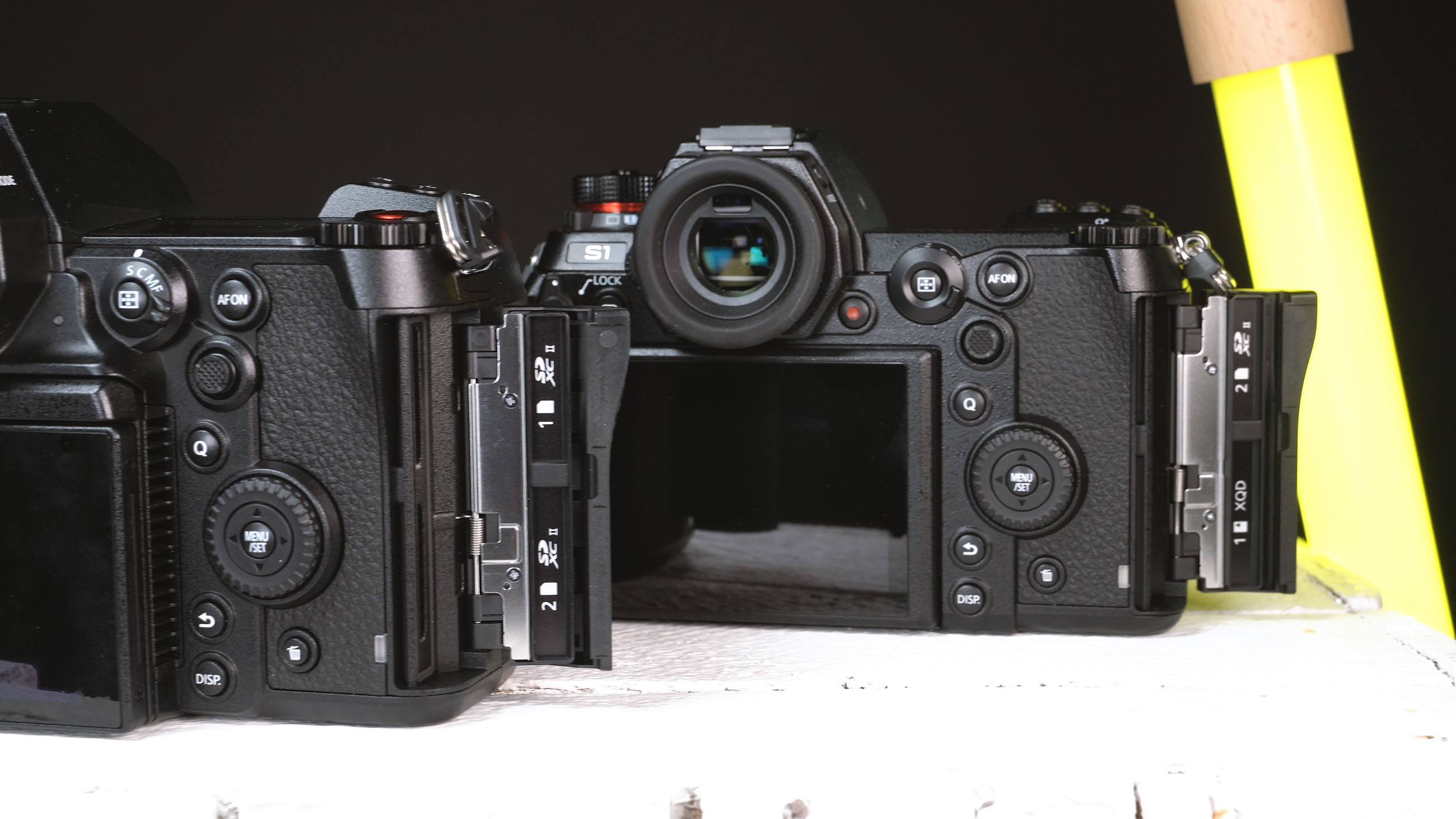 Memory card slots on the S1H and S1
3. Memory cards
Both cameras have two memory card slots. The Lumix S1 has one XQD card slot and a second for UHS-II SD cards. XQD cards have the advantage of being thicker and more robust, as well as having faster read and write speeds.
The Lumix S1H uses two UHS-II SD slots, as the fastest available card is not necessarily needed when recording video, as long as the write speed meets the requirements of the desired bit rate. SD cards or UHS-II SD cards are currently cheaper and more widely available. This makes them an ideal choice for the S1H.
4. Sensor
The sensor of the LUMIX S1H is an updated version of the S1 sensor. The ISO sensitivity is particularly noteworthy for low light photography. The ISO options are the same for both cameras: ISO 100 to 51,200, with extended values up to ISO 50 and up to ISO 204,800. The S1H has a dual-gain architecture, which Panasonic calls Dual Native ISO. We already know this technology from the GH5S.
Panasonic describes the Dual Native ISO as follows: ÂÂThere are two optimal settings for the camera. A camera's native ISO is the sensitivity that produces the best images. Any other setting means that the gain is applied, which increases the noise level. Ideally, you should always use a camera with the native ISO setting.
The Lumix S1H therefore has two native ISO settings, which allows the user to switch between the native ISO settings of 640 and 4,000 without increasing noise. A huge advantage for filmmakers in low light conditions! Another difference is that an optical low-pass filter has been added to the "H" model. Among other things, this ensures that there are no moiré artifacts.
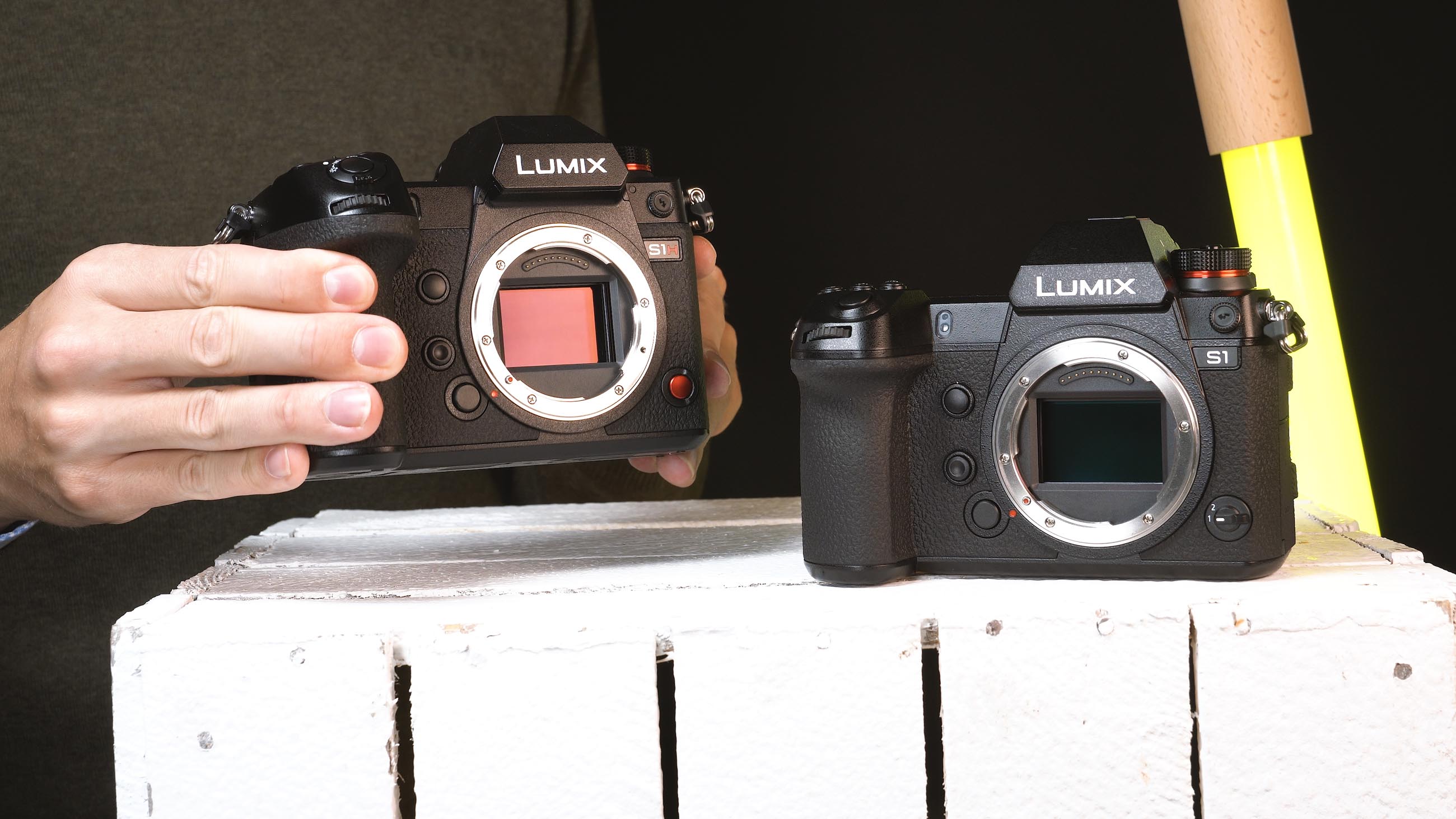 Sensor of the S1H and S1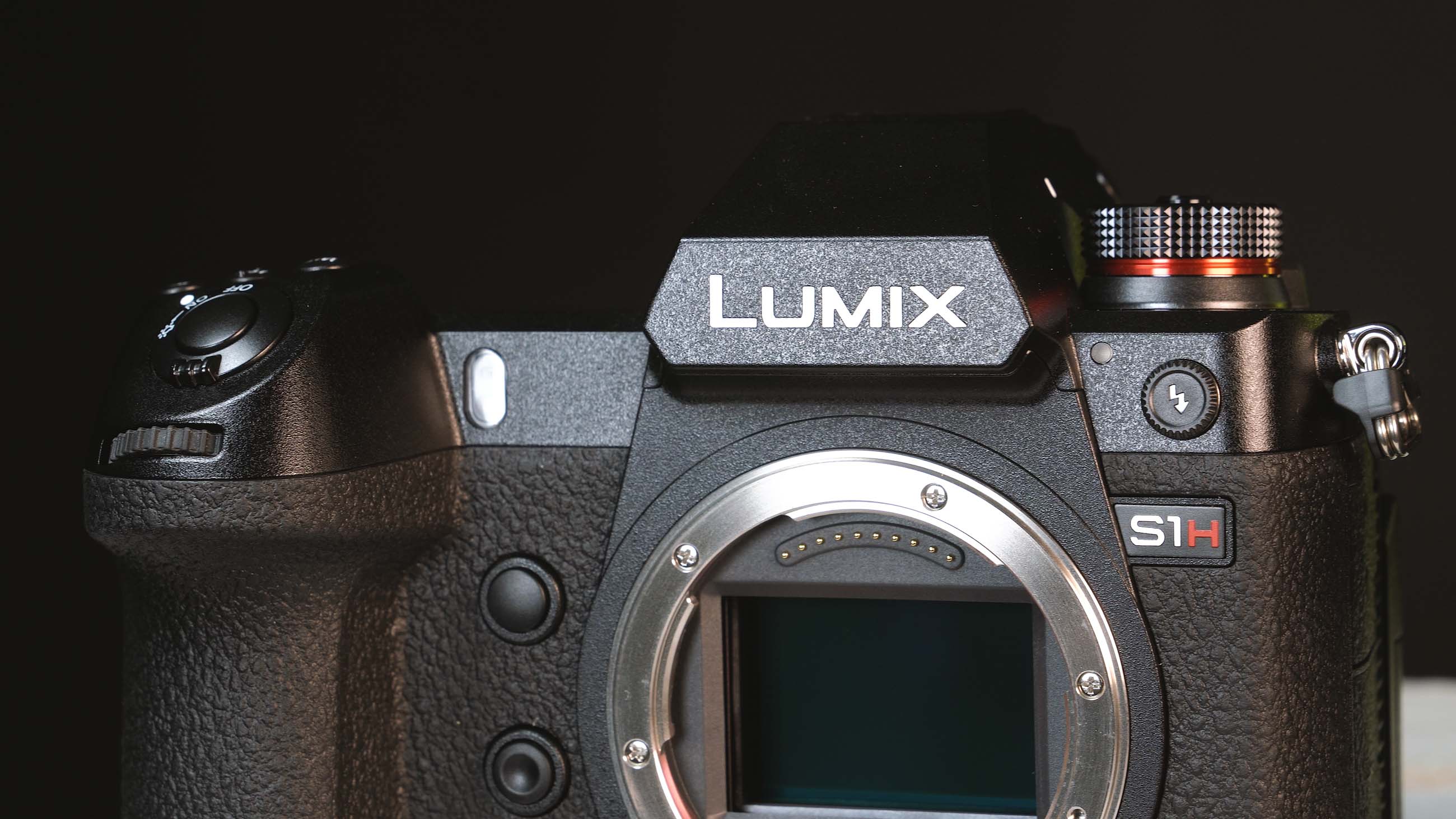
 Source: Panasonic
5. Video resolution
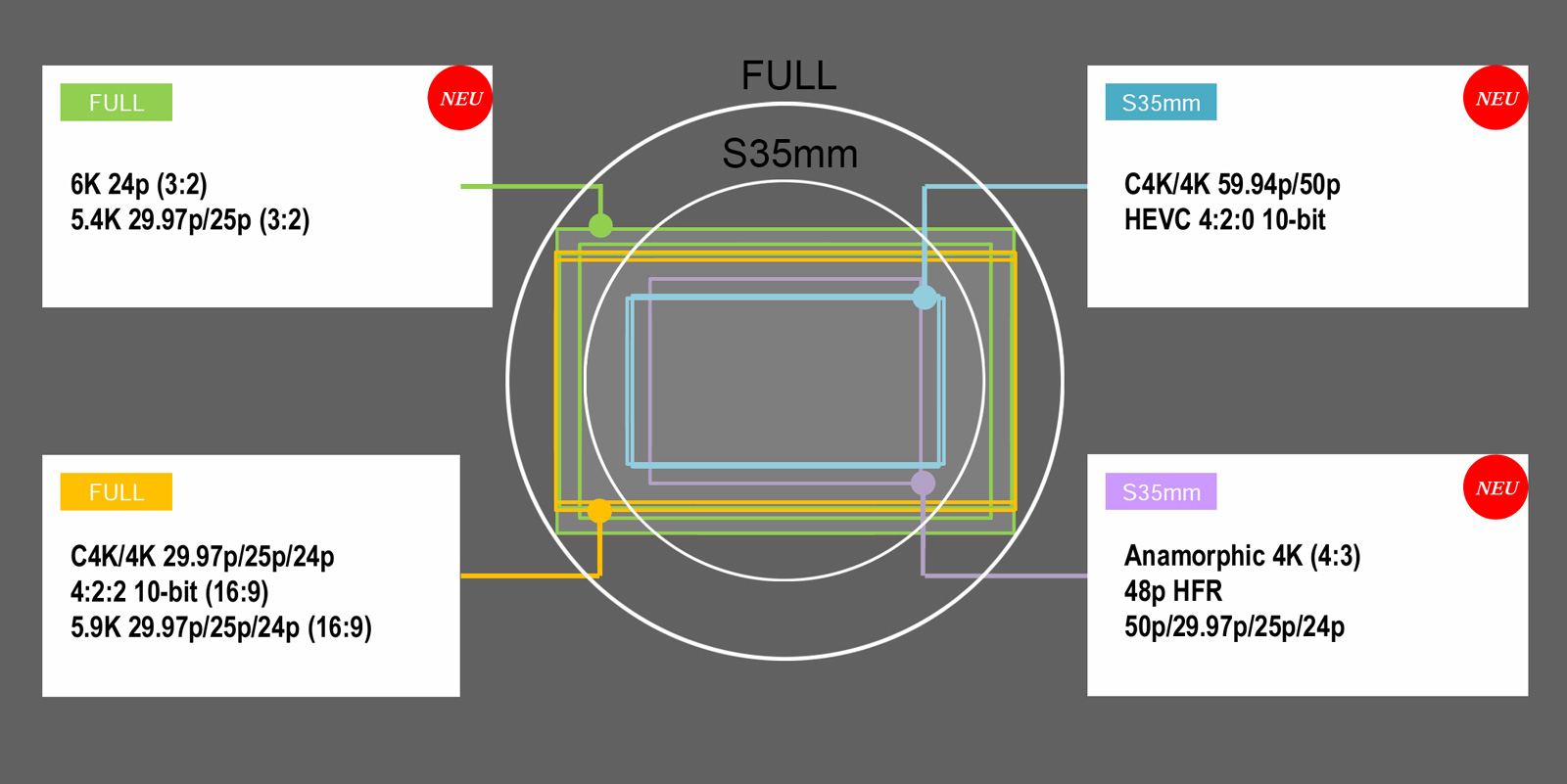
The LUMIX S1 could already record 4K video at up to 30p - or 60p with an APS-C crop. However, larger cameras, such as those used for the production of feature films, have a wider range of resolutions, frame rates, compressions and bitrate options. The new Lumix S1H has brought some of these on board.
What the new S1H can do, but not the S1:
-
6K recording at 24fps in 3:2 aspect ratio (across the entire width and height of the sensor)
-
5.4K up to 30p (3:2)
-
5.9K up to 30p (16:9)
-
Cinema 4K (4096 x 2160) up to 30p and 60p (APS-C)
The Lumix S1H also has anamorphic format options that work in 4K up to 50p.
6. 10-bit recording and bit rate
A chargeable update for the Lumix S1 enables 10-bit 4:2:2:2 internal recording, as well as V-Log and other functions of the LUMIX S1H on the S1. The Lumix S1H can record 10-bit natively internally in 4K and Cinema 4K up to 30p and up to 60p with the HEVC codec. The S1 records at 4K with 50 or 60p only with 8-bit. The higher resolutions of 6K, 5.9K and 5.4K are all recorded in HEVC 10-bit 4:2:0 on the S1H.
When it comes to bitrates, the LUMIX S1H can record up to 400Mpbs with ALL-I compression in 4K up to 30p or at 200Mbps LongGOP at 50/60p. With the Lumix S1, slow motion recordings up to 180p are possible with Full HD. As with the GH5, this is unfortunately associated with restrictions (no audio/no autofocus/only in 8-bit). The S1H gets HFR mode, which means you have to adjust the footage in post to get the desired slow motion effect. However, the advantage is that with the Lumix S1H it works in 10-bit with audio and the autofocus can also be used.
 Cooperation between Panasonic and Atomos
7. RAW format for videos
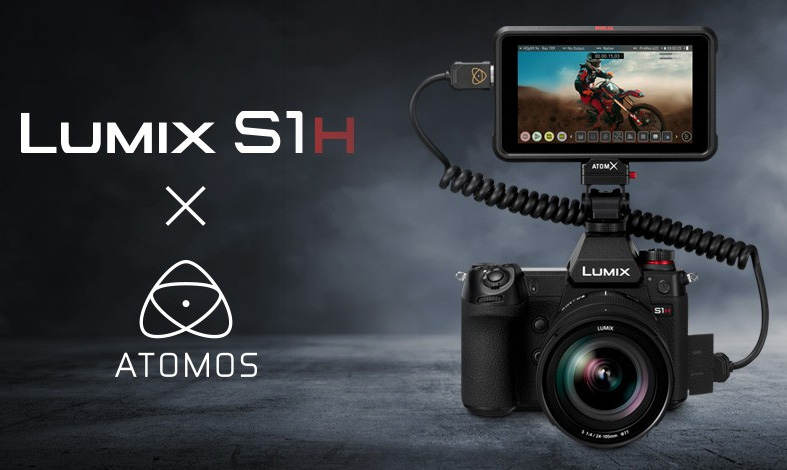
The manufacturer of HDMI recorders Atomos has announced that it is developing RAW data output via the HDMI connection. This will allow S1H users to record video in 4K up to 60p in RAW video format.
The Lumix S1H will not be the only camera to benefit from the feature. Video recording in RAW is definitely the next level. The function was previously only available on larger cameras, such as the BMPC II.
Conclusion
Despite their relatively similar appearance, it is easy to differentiate between these two cameras. The S1H is designed for video and in particular for professional filmmakers who want to find the same high-end specifications, settings and performance as a cinema camera in a mirrorless body. The range of recording formats, frame rates and resolutions is impressive, even if not on a par with professional camcorders. It becomes particularly exciting when RAW recording is possible with the help of the Atomos.
In comparison to smaller mirrorless systems, e.g. the Sony A7 series, the better sensor stabilization is also important, at least for some areas of application. The contrast autofocus unfortunately remains a decisive disadvantage compared to camera models with phase autofocus. The importance of a fast autofocus system ultimately depends on the area of application.
The price difference between the LUMIX S1 and LUMIX S1H is nevertheless a decisive criterion and many users will find the functions of the S1 with the update sufficient. Ultimately, the S1H remains a very specialized version of the S1, with a higher price tag for its benefits. Did you know that we have the LUMIX S1 in our Rent section?
Test the camera in a realistic environment before you buy! Please contact our store team for information on availability.
LumixS1H in the online store

Panasonic S1H Day with Sebastian Armah | November 28, 2019
Experience the full-frame highlight Panasonic Lumix DC-S1H live and exclusively! Professional Sebastian Armah will be our guest and present the full-frame system camera with a focus on video. In addition to a theoretical part, there will be an extensive hands-on part where you can try out the camera and ask the expert your questions.
Register for free