
Canon EOS 90D vs 80D
Reading Time: 5 minutes - September 10, 2019 - by Jonas Junk
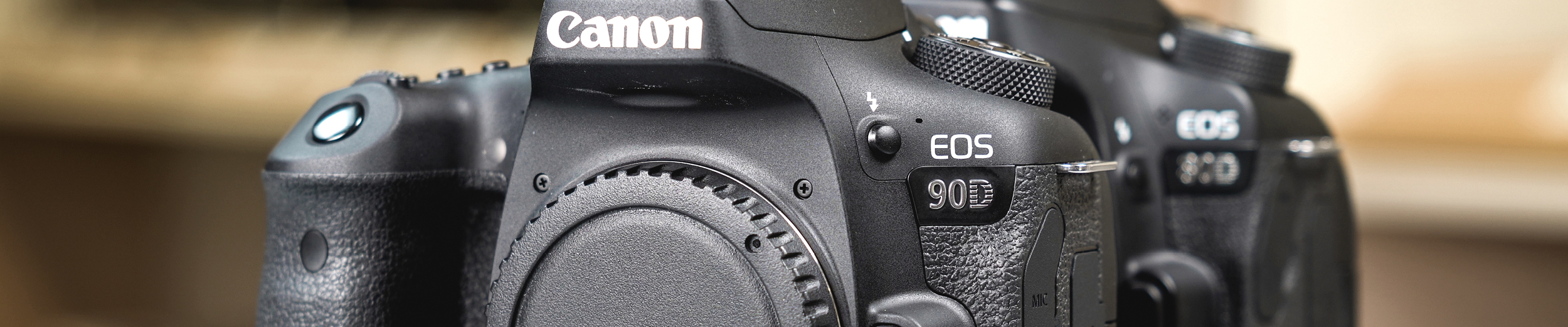
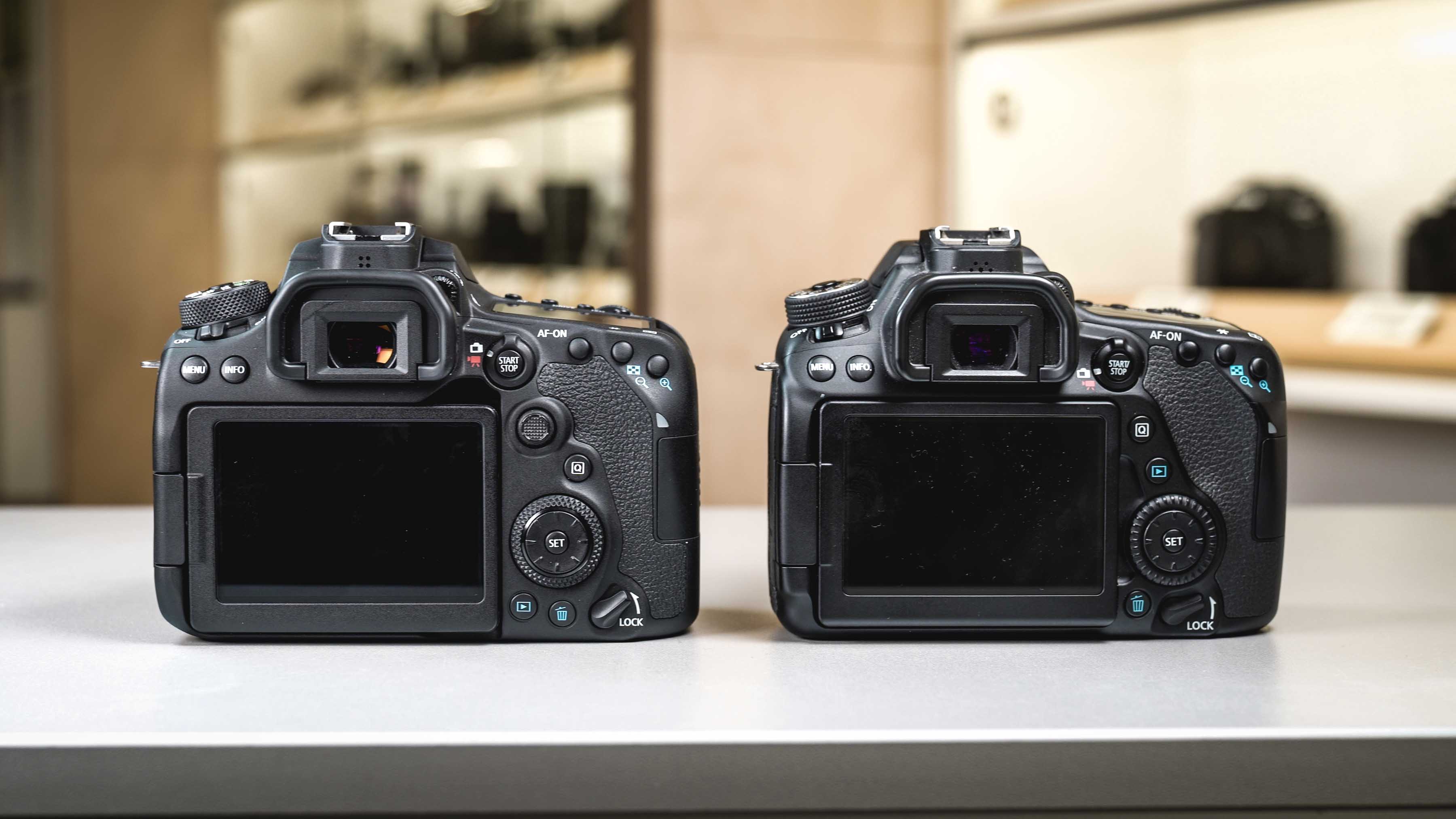
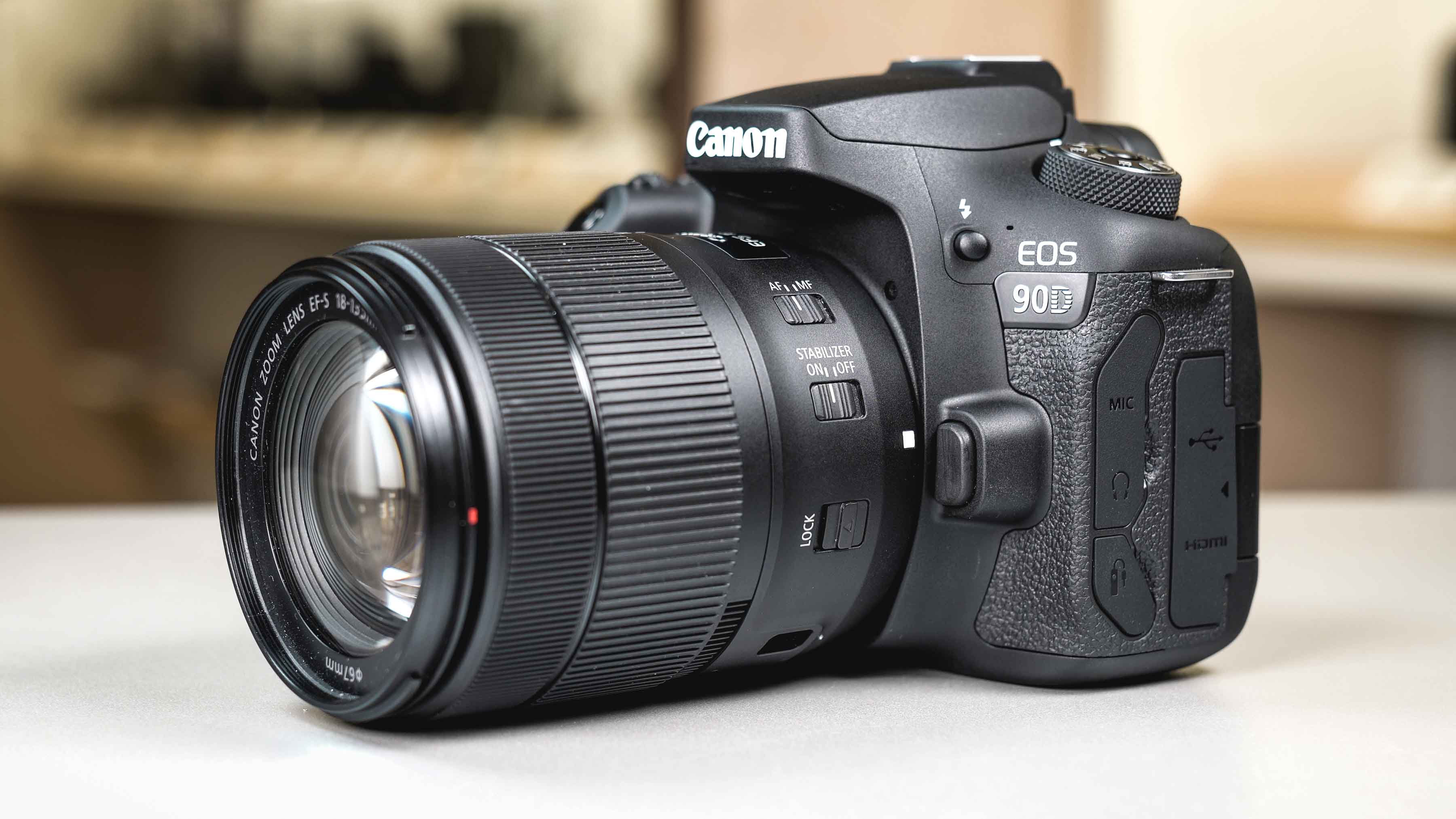
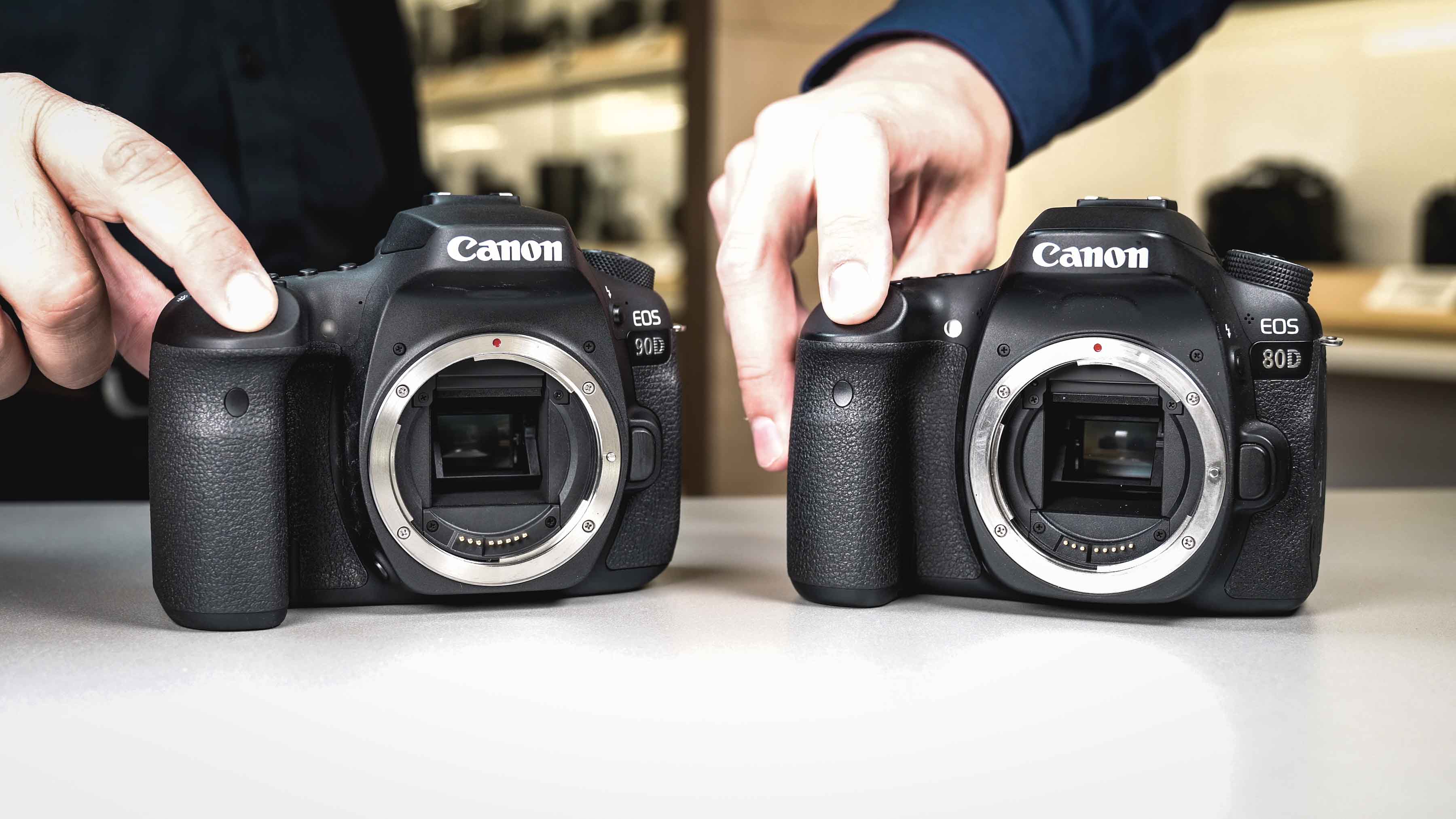
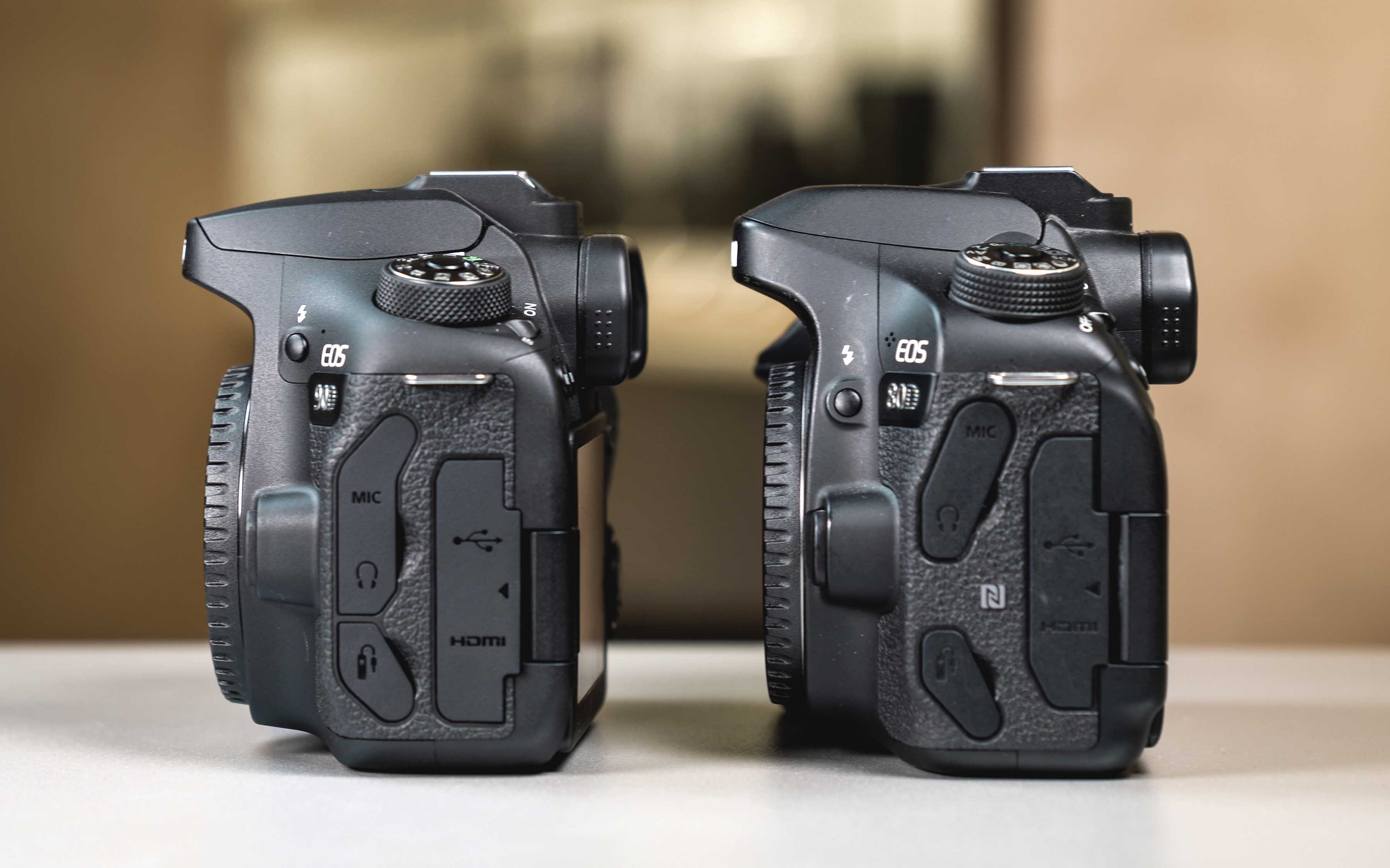
Three years after the release of the EOS 80D, Canon is launching the successor model with significantly improved functions. The EOS 90D will replace the EOS 80D and once again joins the ranks of entry-level DSLR models and full-frame professional cameras. The majority of recent camera releases have focused on mirrorless cameras, but the classic DSLR still has some advantages over mirrorless cameras. Both technically and haptically. Owners of an older DSLR from Canon benefit from the fact that EF Lens can still be used. The EOS 90D looks very similar to its predecessor from the outside, but the technical inner workings have been further developed. What are the differences between the Canon EOS 90D and the Canon EOS 80D?

The sensor
The image sensor is the heart of every digital camera and the EOS 90D still uses a CMOS APS-C image sensor. The image sensor has been completely redeveloped and now has a total resolution of 32.3 megapixels. The sensor of the previous model had a resolution of around 24 megapixels, around a third less. The improved sensor offers the photographer greater creative freedom and enables subsequent cropping and large-format prints. Despite the higher resolution, the ISO range has also been increased. This now extends to ISO 25,600 (EOS 90D) instead of ISO 16,000 (EOS 80D). Extended range ISO 51,200 (EOS 90D) instead of ISO 25,600 (EOS 80D). The captured images are now processed by a DIGIC 8 image processor, which works extremely energy-efficiently. Instead of 960 photos (EOS 80D), the same battery can now take 1300 photos (EOS 90D) on a single charge.

Improved autofocus
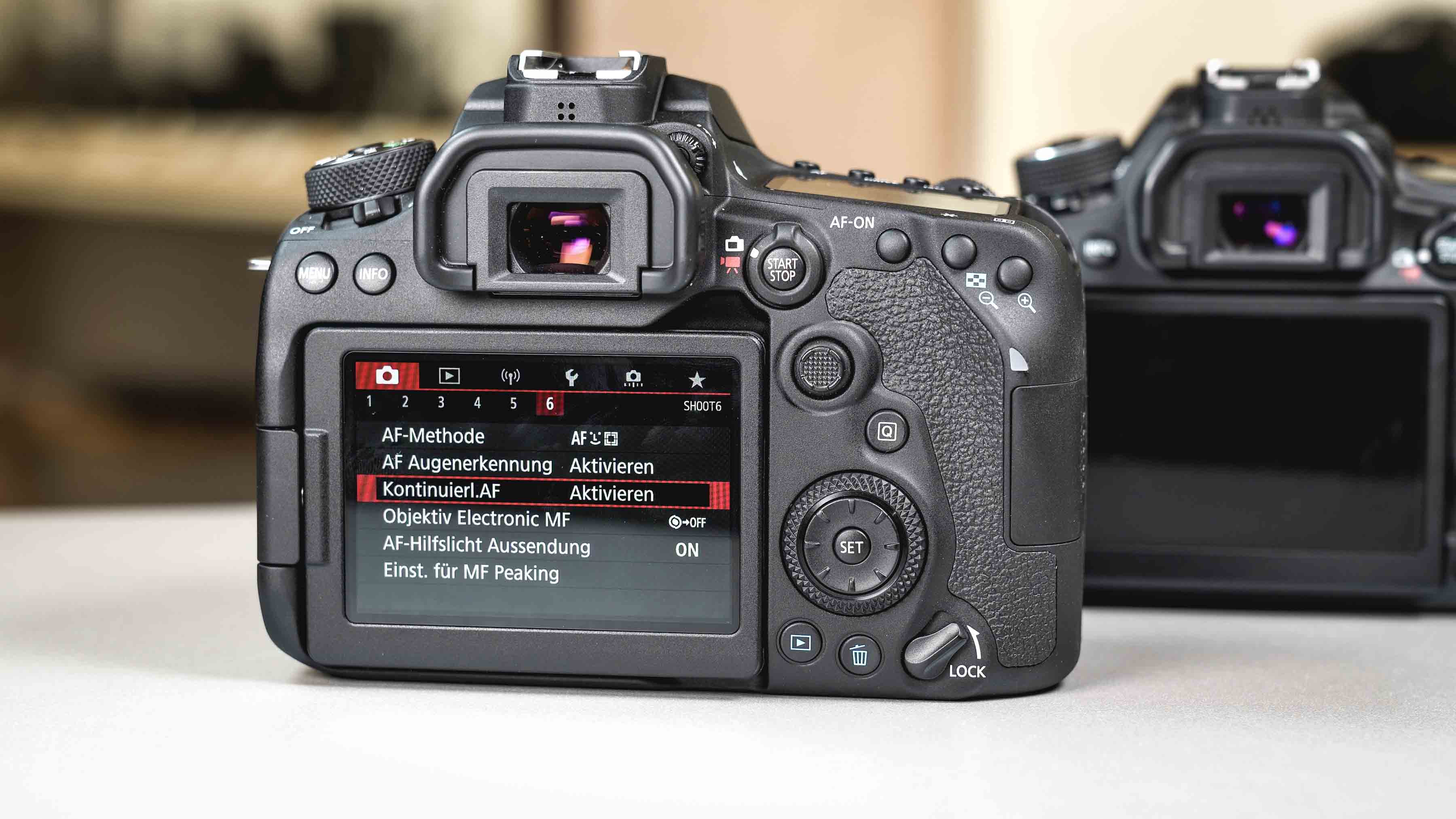
As is usual with DSLR cameras, the EOS 90D has two autofocus measuring systems. Thanks to a revised metering sensor in the mirror box, even very small subjects can now be recognized precisely. The metering sensor, with a resolution of 220,000 pixels, was already used in the expensive professional models Canon EOS 7D Mark II and Canon EOS-1D X Mark II. This technology enables the Canon EOS 90D to use "single-area spot AF" for smaller subjects and "prioritized face detection". The phase autofocus system was largely adopted from the EOS 80D and therefore has 45 cross-type sensors. The autofocus points and navigation in the menu can now be done with the built-in joystick, which we previously only knew from professional cameras. The first-class Dual Pixel AF system has been updated by Canon to the latest generation, so 143 points are available when shooting in Live View and when recording video.

Canon EOS R7 body - successor to the Canon EOS 90D
After the Canon EOS 90D, there will be no successor with a mirror. Canon has closed this gap with the EOS R7 and brought a camera onto the market that offers very good autofocus and many video functions.
- APS-C system camera
- 32.5 MP with up to ISO 32,000 (H 51,200)
- Deep Learning AF with scene recognition and tracking
- extremely high continuous shooting speed with full autofocus and exposure tracking (15 fps mechanical, 30 fps electronic and with Raw Burst)
- 5-axis IBIS
- 2 memory card slots
- rotatable and tiltable touch display
- Focus bracketing + Stacking internal
- 4K 30p with 7K oversampling, 4K 60p without crop
- up to 6 hours recording time at 4K 30p
- Canon-Log 3 + HDR PQ
Video recording
The Canon EOS 90D is particularly aimed at photographers who also film. In direct comparison to the EOS 80D, 4K video recording at 25p / 30p (3,840 x 2,160) is now also possible without cropping. Slow-motion recordings can now be made at 120 frames per second (EOS 90D) instead of 60 frames per second (EOS 80D). Canon has also added a 4K time-lapse function and digital image stabilization. The familiar fully rotatable monitor is a great help, especially for vloggers.
Speed
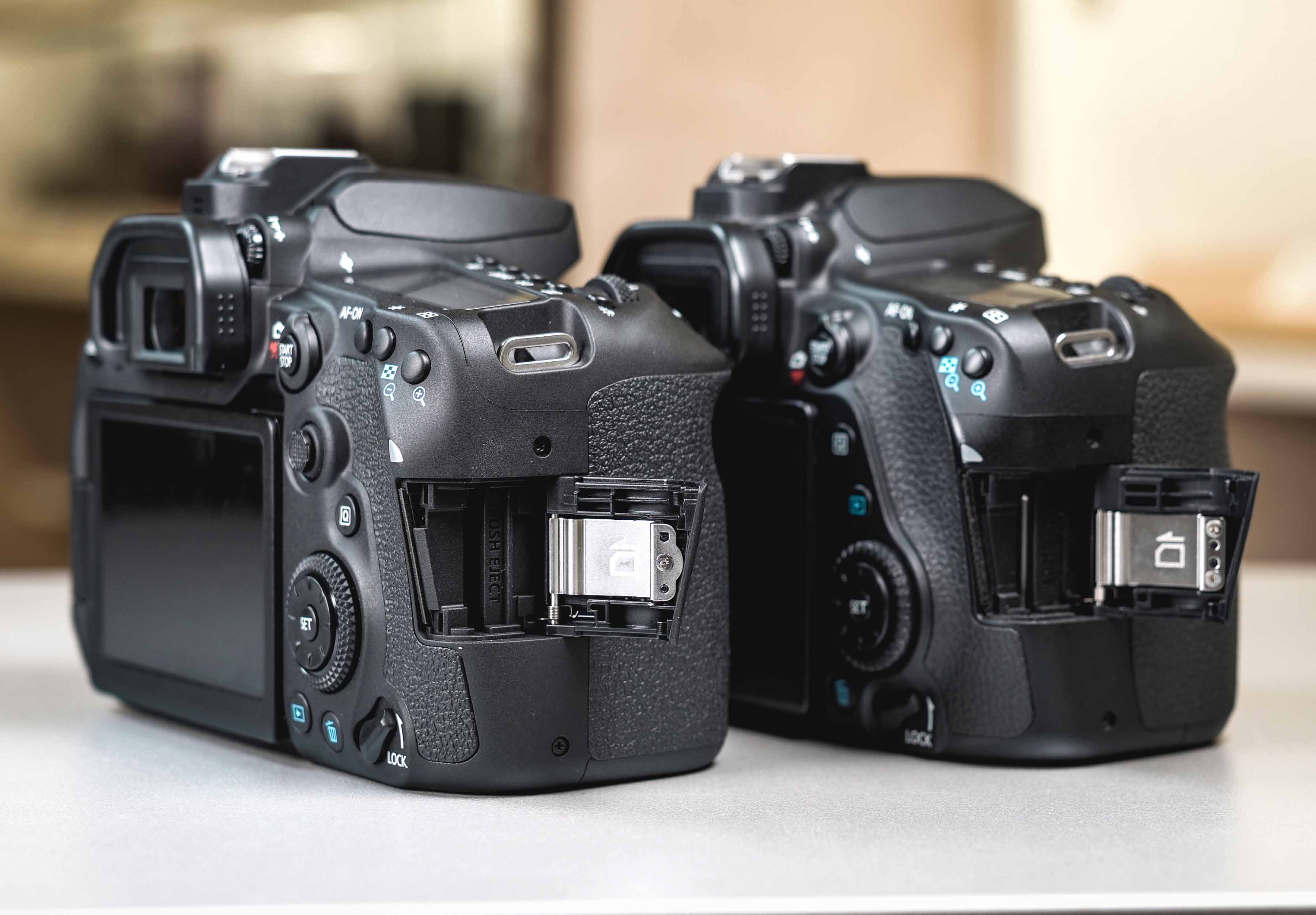
The new DIGIC 8 processor enables a higher continuous shooting speed. The EOS 90D can take up to ten pictures per second with full autofocus tracking. With fixed AF, 11 images per second are possible. The EOS 80D only managed 7 images per second with AF tracking. In the price segment of the EOS 90D extremely few SLR cameras currently achieve this. The 90D can take up to 54 JPEG images at a time. When shooting in raw format, 23 images can be shot at a time. Thanks to the new UHS-II SD card, the images can be saved in just a few seconds. On the subject of speed, let's return to the DSLR factor. Since an optical viewfinder is used, the photographer sees the subject in real time, without delays. In contrast, the digital viewfinder of many system cameras still has a delay or distorts the image during fast movements. Only very expensive system cameras can score with an uninterrupted digital viewfinder image.
Our conclusion on the EOS 90D
Although the sales figures for classic SLR cameras are declining, there is still no question of a complete demise of the DSLR. At the moment, DSLRs in the price range of the Canon EOS 90D still have some advantages over mirrorless cameras.
In addition to the familiar design and the classic DSLR feel, the number of available high-quality EF Lens is enormous.
The Canon EOS 90 is aimed at all photographers who are looking for a DSLR at the cutting edge of technology, whether as a main camera or a second camera in an existing Canon SLR system.
See the feel for yourself and visit us in our Düsseldorf store. If you have any questions, please contact us via our web chat or on the phone. Do you have feedback on our blog post or the video? Feel free to send us a message to content@fotokoch.deat Instagram, YouTube or Facebook.
 Source / Caption