Hybrid or Cinema?
Canon EOS C50 vs. EOS R6 Mark III
There was a big question in the live talk: Canon EOS C50 or Canon EOS R6 Mark III - which camera is better suited to real everyday work? The most exciting answers came not from the data sheet, but directly from practical experience. Marcel Lesch, a photographer from Bochum specializing in tourism and events, tested both cameras in Iceland and talked to us about when he uses which camera.
In this article, you can find outwhen the C50 or the R6 Mark III is the better camera and why Marcel actually ended up buying both.

The short version: Who is which camera for?
The Canon EOS R6 Mark III is the stronger choice if you:
- want to switch quickly between photo and video,
- need a classic hybrid workflow,
- do a lot of spontaneous and mobile work,
- don't want to do without a viewfinder when taking photos.
The Canon EOS C50 is the stronger choice if you:
- Want to shoot video in a more professional way,
- are planning longer video projects,
- are looking for more flexibility with codecs, sensor crop and bit rates,
- or need XLR audio directly on the camera.

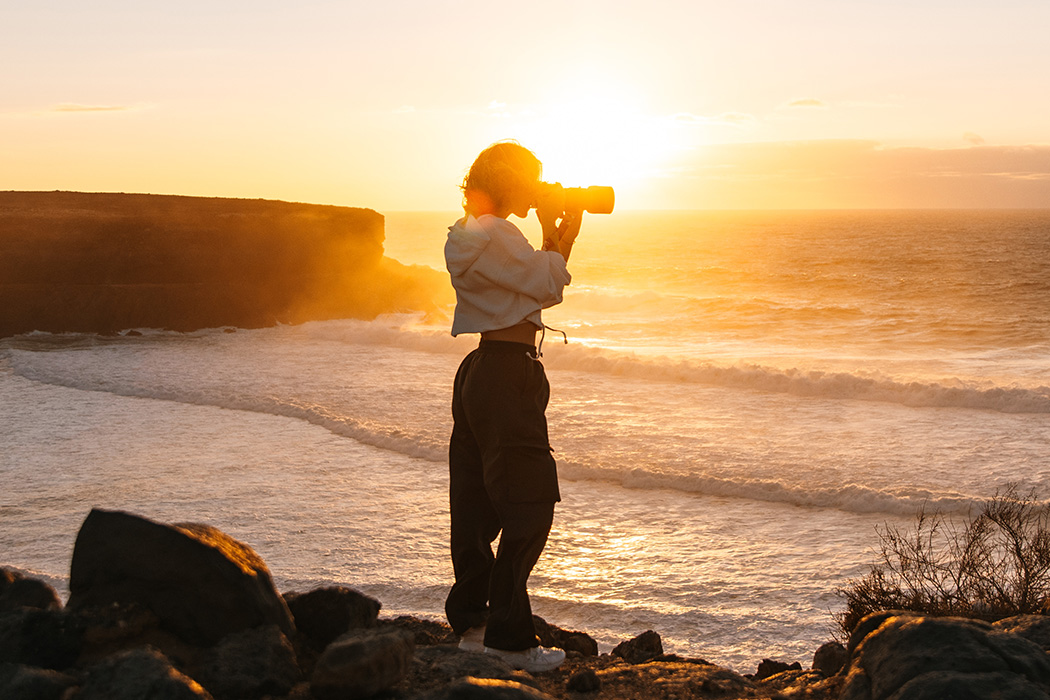
 Picture: Marcel Lesch
Why the comparison between the EOS C50 and EOS R6 Mark III is so relevant
In the live talk, we directly explained why exactly these two models are competing against each other: Both cameras are conceptually close to each other. They are based on a similar approach with a full-frame sensor of around 34 megapixels, photo and video focus and modern autofocus. This is precisely why the technical data is less relevant in a direct comparison, but rather which camera is better suited to which workflow.
Marcel: from photographer more and more towards video
Marcel's view of cameras is so interesting because he doesn't argue from a purely technical perspective. In the stream, he describes how he was almost exclusively a photographer until around a year and a half ago and is now increasingly thinking about video - especially in the event sector, with aftermovies and social content. It was precisely because of this change that the question of a suitable camera became relevant for him.
This is particularly exciting for his work in tourism: today, it's often no longer just about beautiful individual images, but about content that conveys emotion, atmosphere and real encounters. And this is precisely where video is becoming increasingly important in the workflow of many creative professionals.
It's not the data sheet that counts - it's the workflow
Marcel describes very clearly that he was primarily interested in the Canon EOS C50 and the R6 Mark III because of the workflow. An important point was Open Gate. The background: anyone producing for YouTube, websites and social media today often has to operate horizontal and vertical formats simultaneously from one shoot.
In his previous work, Marcel had noticed that a later crop from a classic landscape format video can quickly result in a loss of image detail and quality. Shooting every shot a second time in portrait format is often not possible, especially at events or when working with animals.
Why Open Gate is so relevant for Marcel
Open Gate is particularly exciting for one-man-show productions: record once and edit several formats from it later. In the stream, however, Marcel also makes it clear that this is not automatic for him for every job. If a shot can be repeated, you can also shoot horizontally and vertically separately. For him, the added value lies more in the option to remain flexible in non-repeatable situations.
 Picture: Marcel Lesch
Canon EOS R6 Mark III: faster, more familiar, more hybrid
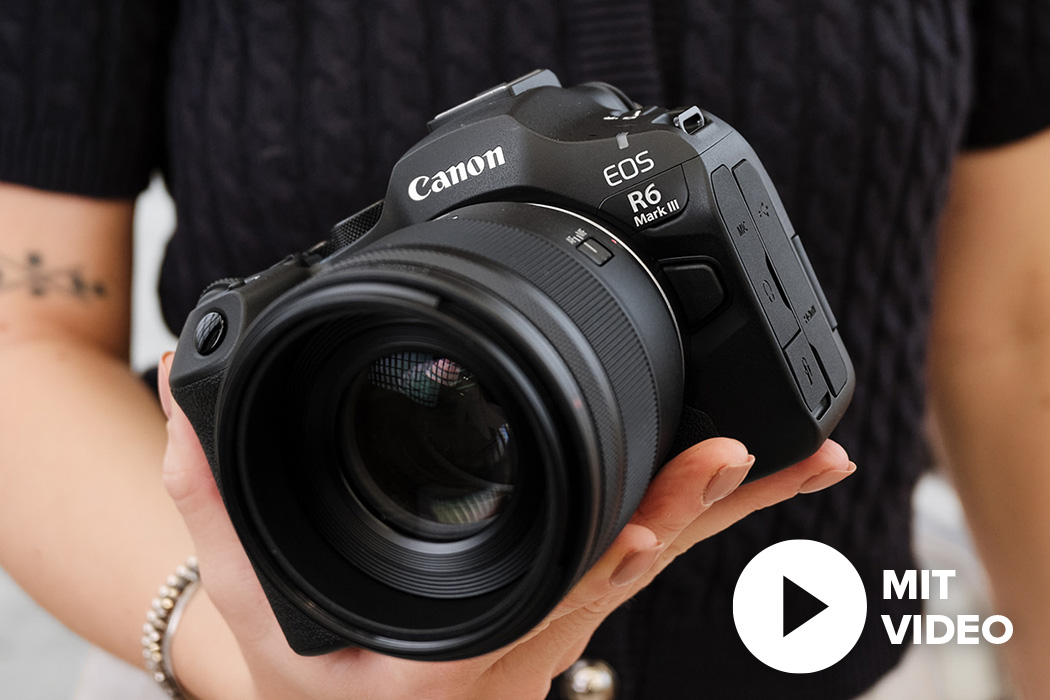
During the trip to Iceland, it quickly became clear why the EOS R6 Mark III was immediately more accessible for Marcel. Its menu feel was much closer to his previous Canon world. He found his way around the video area in particular more quickly, for example with log settings and working with a Rec.709 preview. The EOS C50, on the other hand, took more getting used to.
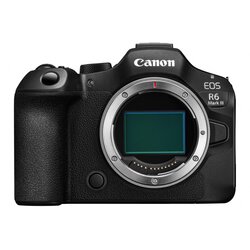
Canon EOS R6 Mark III Body
- 32.5 megapixel resolution in full-frame sensor
- 40 frames per second with pre-capture function
- Videos with up to 7K 60 fps in RAW and OpenGate with up to 30 fps
- 4K 120fps with up to 5-second pre-recording
- Dual Pixel CMOS AF II with advanced people, animal and vehicle detection
- In-camera image stabilization with up to 8.5 stops of stabilization effect
- WLAN and Bluetooth connectivity
- CFexpress and UHS-II SD card slots
There is also a second, very important point: speed when working in hybrid mode. Marcel says in the stream that switching between photo and video works much faster with the R6 than with the C50. This is relevant for creators, event photographers and anyone who doesn't think in terms of clearly separated production phases, but switches spontaneously between still and moving images in the middle of a job.
The R6 also offers many features that support this flexible use: separate operation for photo and video, powerful video functions, pre-record, false color and a run-and-gun design.

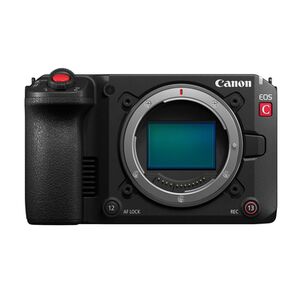
Canon EOS C50 Camcorder
- Full-frame cinema camera
- Cinema-ready 7K full-frame video and 32 MP photos
- Internal Open Gate 12-bit RAW recording
- Extremely compact and ergonomic design
- Dual Pixel CMOS AF II with EOS iTR AF X
- Versatile shooting with high frame rates
- RF bayonet technology
In the stream, he explains that he had already seen overheating warnings with his previous camera during longer event assignments when it had been running in video mode for a long time. It didn't fail, but it was precisely these situations that signaled to him that he needed a setup that was more video-oriented in the future.
There is also the issue of audio. With Griff, the C50 has a much more professional audio setup, including two XLR inputs with phantom power. In the live talk, this was highlighted as a clear advantage for interviews, productions with external microphones and more structured video shoots. The R6 Mark III requires extra accessories for this, such as the Tascam CA-XLR2d microphone adapter.
Important with the C50: resolutions, frame rates, codecs and in particular the crop factor of the sensor can be set much more flexibly and in greater detail. The sensor crop to Super 35 or Super 16 was particularly helpful for Marcel in practice. He was able to extend his focal length via the crop to get shots for which he didn't actually have the right telephoto lens with him.
Where the EOS C50 has disadvantages for Marcel
Despite all its video strengths, Marcel also very clearly identifies the points where the Canon EOS C50 is less suitable for his everyday life.
The first point is the form factor. The grip and XLR setup make the camera more powerful, but also more unwieldy. Marcel describes precisely this advantage as a disadvantage: powerful for audio and video, but not quite as uncomplicated for spontaneous mobile use.
The second point is even more fundamental: the lack of a viewfinder. The C50 does not have an integrated EVF, and this was a real practical factor for Marcel in Iceland. He explains in the talk that he now uses the viewfinder a lot because it allows him to control the composition, rule of thirds and lines more precisely. For him, the R6 is therefore clearly the better camera.
Another major factor in the decision is the lack of IBIS. Unlike the R6 III, the C50's sensor is not stabilized, which can bea disadvantage for handheld photography andwhen working with unstabilized Lenses. For filmmakers, however, this is an advantage because no image artifacts occur due to the IBIS. Anyone who has been working with cinema cameras without IBIS for a while will quickly realize that they can easily adapt their workflow and style - so for many people it is not an exclusion criterion in real-life use.
 Picture: Marcel Lesch
The real conclusion: two cameras, two ways of working
This is precisely why the result of the live talk was so exciting at the end: there was no clear winner, but rather two different tools for two different ways of thinking.
- For Marcel, the Canon EOS R6 Mark III is the camera for speed, familiarity, mobility and hybrid working.
- For him, the Canon EOS C50 is the camera for the deliberate next step towards video, longer shoots, more audio control and greater format flexibility.
The fact that Marcel ended up buying both cameras is therefore not a curious side detail, but actually the honest conclusion: anyone deciding between a hybrid camera and a cinema camera today is often not deciding between better and worse, but between two completely different workflows. Of course, not everyone can simply buy two cameras, but this shows how far apart the cameras are in terms of workflow - even though they are technically so similar.
For Marcel's practice, clearly yes. Above all, the faster switching between photo and video, the more familiar operation and the viewfinder make it the stronger hybrid solution.
Yes, especially when audio, longer video phases and a more cinematic workflow become more important. XLR audio and the overall more video-focused set-up clearly speak in its favor.
Because both cameras solve different tasks better in his everyday life: The R6 Mark III for hybrid and photo, the C50 for the deliberate expansion of his video workflow.
Arrange a free consultation by phone or video chat and ask our experts your questions - from the comfort of your sofa.
 Picture: Marcel Lesch
About Marcel Lesch
Marcel Lesch is a photographer and filmmaker from Bochum with a focus on tourism. He has been working with a camera for over 15 years (full-time for nine years) and realizes photo projects for travel destinations, tourist regions and providers in the industry.
His aim is to create authentic, high-quality images that evoke emotions and tell real stories.
With degrees in Tourism Management (B.A.) and Marketing Management (M.A.), he combines a creative flair with a strategic understanding of brands. This results in visually strong content that is not only aesthetically pleasing, but also has a targeted effect.