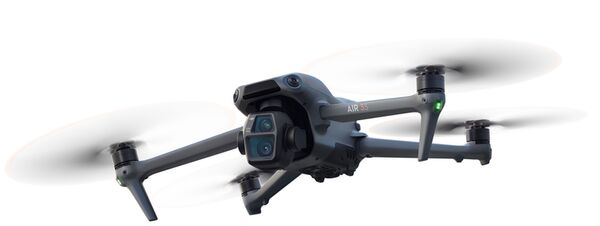
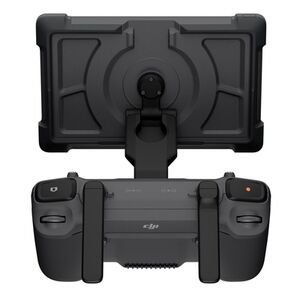
DJI Air 3S Fly More Combo (DJI RC-N3)
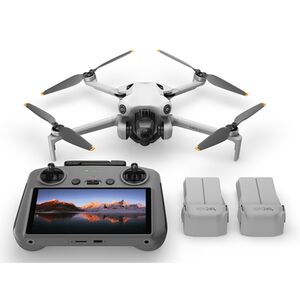
Contains the DJI RC-N3 remote control, an ND filter set, two additional batteries, a battery charging station, a shoulder bag and more.
Scope of delivery:
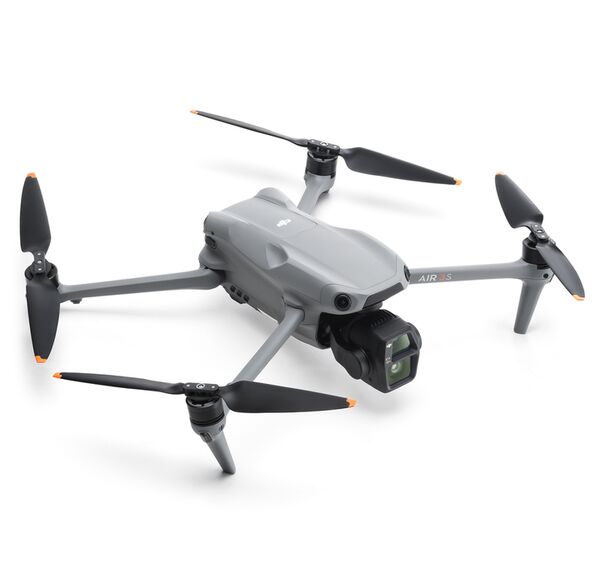
1x DJI Air 3S
1x DJI RC-N3 Remote Control
1x DJI RC-N3/N2/N1 Remote Control Cable (USB-C connector)
1x DJI RC-N3/N2/N1 Remote Control Cable (Lightning connector)
3x DJI Air 3S Intelligent Flight Battery
3x DJI Air 3 Series Low Noise Replacement Propellers (pair)
1x DJI Air 3S Gimbal Protector
1x Documents (Quick Start Guide and Safety Guidelines)
1x USB-C to USB-C PD cable
1x DJI shoulder bag
1x DJI Air 3S ND filter set (ND8/32/128)
1x DJI Air 3 series battery charging station
Dual camera drone for travel
DJI Air 3S - A new perspective
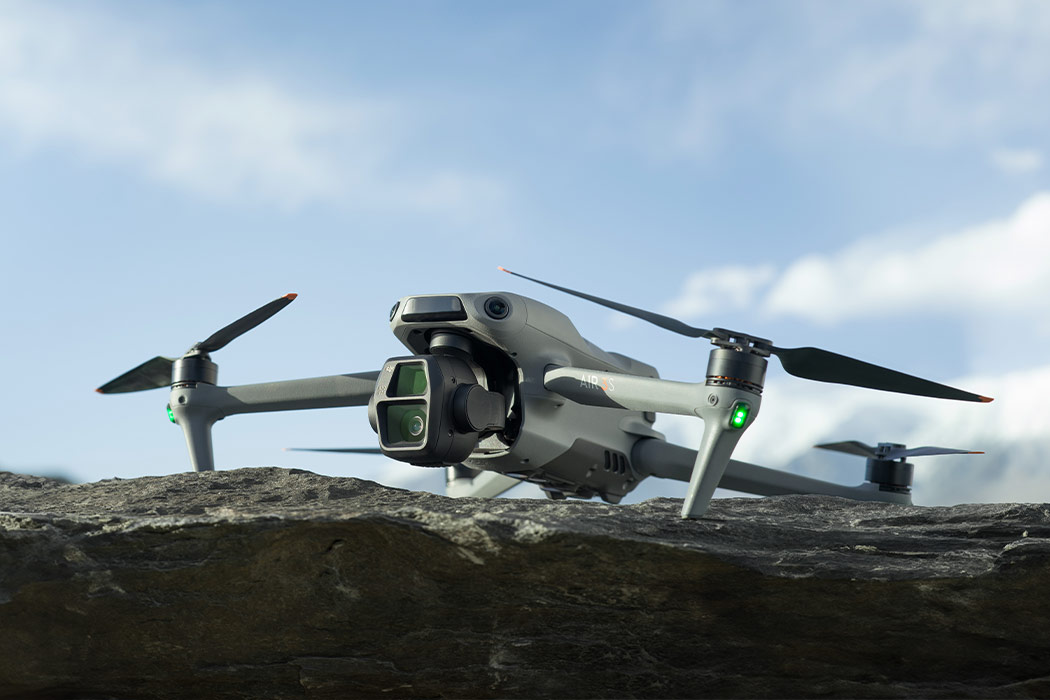
The DJI Air 3S dual camera drone is designed for travel photography and features a range of advanced technologies. Equipped with a 1-inch CMOS primary camera and a 70mm telephoto camera with a dynamic range of 14 stops [1], the Air 3S captures landscapes, portraits and more in stunning detail. Both cameras support the new "Free Panorama" function, which allows flexible selection of the shooting area. Other new highlights include night obstacle detection [2] and next-generation intelligent return for increased safety when shooting at night. The DJI Air 3S is designed in every way to make the most of every moment in the air.
1-inch CMOS primary camera
Dual camera 4K/60fps HDR video + dynamic range of 14 stops [1]
Free panorama, seamless and detailed
Omnidirectional obstacle detection at night [2]
Return-To-Home upgrade for more precision
45 minutes flight time, [3] 20 km video transmission [4]
Dual cameras, unbeatable image quality
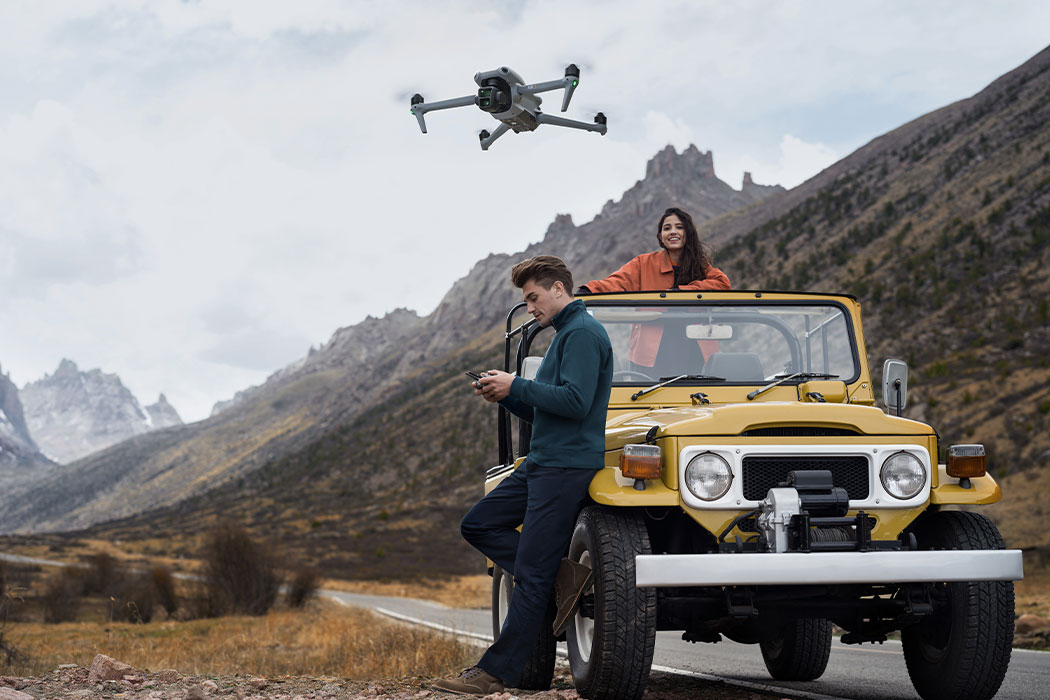
The DJI Air 3S has a dual camera system consisting of a 1-inch CMOS primary camera and a medium 1/1.3-inch CMOS telephoto camera. The primary camera has a larger CMOS sensor and a 24mm Lens, making it ideal for capturing expansive landscapes with increased clarity and a wide field of view. The medium 70mm telephoto camera is great for portrait and vehicle photography, offering a compressed depth of field that makes any subject stand out with a bold, cinematic look.
1Inch CMOS Primary wide-angle camera:
3.2μm pixels [5]
24 mm equivalent focal length
50 MP
f/1.8 aperture
1/1.3 inch CMOS Medium telephoto camera:
2.4μm pixels [5]
70 mm equivalent focal length
48 MP
f/2.8 aperture
1inch CMOS Primary camera:
Impressive details for travel photography
The primary camera of the DJI Air 3S has a 1-inch CMOS sensor with 50 megapixels, which supports 4K/60fps HDR and 4K/120fps video recording [6] as well as 10-bit D-Log M color mode. This large sensor, enhanced by advanced image processing technology and intelligent algorithms, preserves even the smallest details in low light conditions, such as sunsets and night landscapes, delivering images that are simply stunning.
High-quality imaging, spectacular landscapes
4K/60fpsHDR video
The latest HDR video mode offers a dynamic range of up to 14 stops [1], allowing you to capture high-contrast scenes, such as detailed views of cloud textures and other elements at sunrise and sunset.
4K/120fps video [6]
Higher resolutions and frame rates provide a vivid perspective on cultural or sporting events and open up exciting creative possibilities in post-production.
10-bit D-Log M + HLG video
Even in normal color mode, the Air 3S can record 10-bit video with H.265 encoding, allowing for better color performance and more flexibility in post-production. The maximum ISO value has been increased to 12,800. In D-Log M and HLG color modes, the maximum ISO value is increased to 3,200, which provides more brightness and detail in urban night scenes.
Medium telephoto camera:
Unforgettable portraits
The medium telephoto camera with its 1/1.3 inch CMOS sensor and 48 megapixels supports the same video specifications and color modes as the primary camera. This ensures visually consistent images for optimized post-processing. The 70mm Lens offers 3x optical zoom, allowing you to capture unique shots from a distance while highlighting your subject. And when you circle a subject with the Air 3S and shoot 4K video, you can easily capture detailed and expressive close-up portraits.
Focus on details, maximize focus power
4K/60fpsHDR video
When shooting close-ups of vehicles against the sunset, the medium telephoto camera offers a dynamic range of up to 14 stops [1] to vividly capture the rich, vibrant colors of the setting sun.
4K/120fps HDR video [6]
When recording slow-motion video at 4K/120fps while skiing, the medium telephoto camera can record high-resolution video that is slowed down. In this way, the skill of skiers and even the most subtle movements become visible.
10-bit D-Log M + HLG video
The Air 3S medium telephoto camera also supports the recording of 10-bit video in normal color mode with H.265 encoding, offering refined color performance and more flexibility in post-production. In 10-bit D-Log M mode, the camera captures even more color detail and beautifully captures the vivid city lights at dusk.
Free Panorama
Both the primary camera and the mid-range telephoto camera of the DJI Air 3S offer the "Free Panorama" function, which allows you to create seamless panoramic images. Multiple images are stitched together with a manually selected subject or area. The wide-angle camera offers a larger field of view, which increases efficiency when taking panoramic photos. The medium telephoto camera significantly reduces image distortion, transforming your masterpieces into expansive shots with a wide perspective of multiple photos and rich details captured thanks to its focal length advantages.
The DJI Air 3S also supports popular features such as 2.7K vertical shooting, MasterShots, QuickShots, Hyperlapse and more - a comprehensive creative toolkit in a compact drone.
Fly safely at night for more creativity
Omnidirectional vision detection
DJI Air 3S supports the Advanced Pilot Assistance System (APAS). In addition, the Air 3S is the first DJI drone with forward-facing LiDAR to feature downward-facing infrared Time-of-Flight (ToF) sensors and six vision sensors (two each front, rear and bottom) for omnidirectional obstacle detection at night. [ 2] This feature allows the drone to automatically detect and avoid obstacles such as buildings during its flight and on its return path, ensuring robust safety for night photography.
Omnidirectional obstacle detection at night
Next-Gen Intelligent Return
Return without GPS
Thanks to real-time visual positioning and map building technologies, the DJI Air 3S remembers flight routes when there is sufficient light. This ensures a safe return even if you take off from places without a satellite signal, such as balconies. [7]
Return at night
With forward-facing LiDAR, DJI Air 3S can detect obstacles such as high-rise buildings and fly around them even in low-light conditions, [7] ensuring a safer return at night.
Enhanced Vision Assist
The DJI Air 3S Vision Assist feature supports downward vision in addition to forward, backward, left and right vision to help you better understand your surroundings.
DJI Air 3S also offers Waypoint Flight and Cruise Control, among other advanced features, allowing you to preset flight routes and camera actions and quickly lock in stick inputs to let your creativity run wild.
ActiveTrack 360° for a visual pull
A new aerial aesthetic
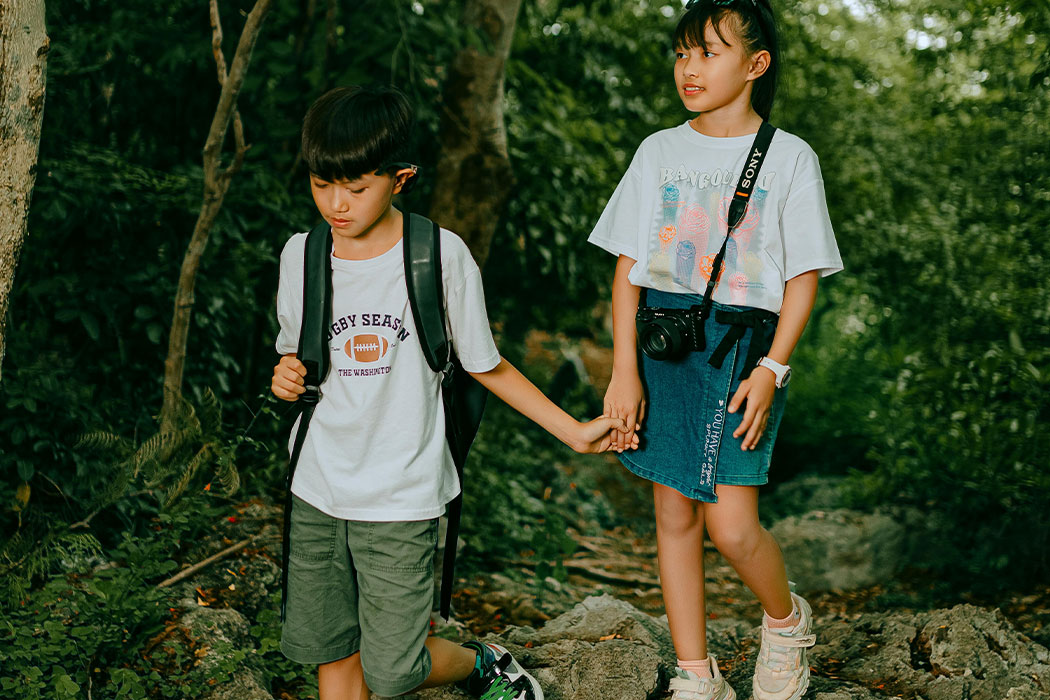
DJI Air 3S features ActiveTrack 360° to keep every subject in frame. Based on the surrounding flight environment, it automatically plans a flight path and adjusts the framing to capture better shots where your subject is always the center of attention.
ActiveTrack 360°
With ActiveTrack 360°, the Air 3S can automatically avoid perspectives with cluttered backgrounds.
Optimized tracking performance
Once tracking begins, the DJI Air 3S can keep the subject in focus even when the lower half of the body is partially obscured by bushes or when standing on a bridge.
Stay focused
The DJI Air 3S introduces a new subject focus feature that keeps the subject in focus, even in manual flight or when the subject moves off-center. This feature allows you to focus on the creative aspects of your shots, such as composition and camera movement.
Extended flight and transmission range
Flight time: Max. 45 minutes [3]
With a flight time of up to 45 minutes [3], the Air 3S gives you enough time to explore locations, set up, take your best shots and repeat it all multiple times.
10-bit O4 video transmission
With DJI O4 FHD video transmission technology, the Air 3S delivers 10-bit 1080p/60fps video transmission over a distance of up to 20 kilometers. [4] Live transmissions are stable and clear, while the controls are extremely responsive, enhancing the overall flying experience.
DJI Cellular Dongle 2 Compatibility
The DJI Cellular Dongle 2 [8] can be inserted directly into the DJI Air 3S for seamless integration without the need for additional accessories. In the event of O4 signal interference or interruption, you can rely on the 4G connection for stable video transmission and drone control. This increases flight safety and reduces the risk of disconnections.
Down to the smallest detail
Always ready:
Integrated memory with 42 GB
DJI Air 3S comes with 42 GB of integrated memory as standard. So you can start recording right away and don't have to deal with microSD cards.
QuickTransfer in off-mode
You can now send files from your Air 3S to a smartphone even when the drone is turned off. [ 9] Transfers to a computer can be done even when the drone is off - just connect the Air 3S with a compatible USB cable.
Battery charging cradle with power accumulation [10]
The battery charging cradle supports PD fast charging and a power accumulation function that allows you to transfer the remaining power of multiple low-power batteries to the battery with the highest remaining power. [10]
Footnotes:
* All videos and images on this page were shot with the DJI Air S3 by professionals in strict compliance with local laws and regulations and edited differently in post-processing. All videos and images are for reference only. Actual results may vary. Follow local laws and regulations and make sure the aircraft has the appropriate certifications before flying.
** All data on this page was captured with a DJI Air 3S production model in a controlled test environment. Actual values may vary depending on environment, usage and firmware version. The DJI Air3S must be activated with the DJI Fly app before use.
*** It is recommended to use the ActiveTrack 360° function in open environments. Refer to the manual for information on unsupported scenarios and those where recording may be interrupted. In complex environments with many obstacles, you should be careful when using Auto mode to ensure flight safety and personal safety.
**** All images, videos and screen content about the product itself on this page are for reference purposes only. Actual product features (including but not limited to appearance, color and size) and on-screen content (including but not limited to backgrounds, user interface and illustrations) may vary.
1a dynamic range of 14 stops is possible for videos in auto mode, but not for vertical or slow motion videos.
2. Conditions for omnidirectional obstacle detection at night: The front, rear, left, right or top of the drone is within range of surfaces with recognizable textures and an illuminance >1 lux. The ground must be textured and diffusely reflective and have a reflectance >20% (e.g. walls, trees or people), also in lighting conditions with an illuminance >1 lux. DO NOT fly in adverse weather conditions such as strong winds (wind speed of 12 m/s or more), snow, rain, thunderstorms or fog. The aircraft must NOT be flown higher than 6,000 m above sea level. DO NOT fly the aircraft in environments with temperatures below -10 °C or above +40 °C. DO NOT take off from moving objects such as cars or boats. DO NOT fly the aircraft near reflective surfaces such as water or snow. Otherwise, the vision sensors may not work properly. If the GNSS signals are weak, fly the aircraft in well-lit environments: The front, rear, left, right or upper side of the drone is within range of surfaces with recognizable textures and an illumination level >10 lux. The ground must be textured and diffusely reflective and have a reflectance >20%, also in lighting conditions with an illuminance >10 lux. The vision system may not function properly in dark environments. DO NOT fly in areas with magnetic or radio interference. Common sources of magnetic or radio interference are Wi-Fi hotspots, routers, Bluetooth devices, power lines, large substations, radar stations, mobile base stations and transmission towers. Take care when taking off in the desert or on the beach so that no sand gets into the aircraft. Fly the aircraft in open terrain away from crowds. Buildings, mountains and trees can block the GNSS signal and interfere with the internal compass.
3. Measured with a DJI Air 3S flying at a constant speed of 32.4 km/h in a windless environment at sea level, with obstacle avoidance action set to "Brake", in photo mode and a battery level of 100% to 0%. The figures are for reference only. Always pay attention to the warning messages in the app during your flight.
4. Measured in an open outdoor environment without interference and with FCC standard. The above data shows the longest communication range for a one-way flight, excluding return flight. Always pay attention to the warning messages in the app during your flight.
5. Achieved with QBC (Quad Bayer Coding) techniques that combine four pixels into one. Not supported when recording at 48 MP or 50 MP.
6. 4K/120fps video recording is only supported in slow motion mode.
7. Conditions for memorizing flight routes: The front, rear, left, right and top of the drone is within range of surfaces with recognizable textures and an illumination level >10 lux. The ground under the drone must be textured and diffusely reflective and have a reflectance >20% (e.g. walls, trees or people), also in lighting conditions with an illuminance >10 lux. If the drone takes off from a balcony, make sure that the usable area is at least 2 meters by 2 meters and the height above the ground is less than 30 meters to ensure a safe return to the take-off point. If the drone reaches its maximum height when ascending around obstacles, it will hover at this height. In this case, the drone must be flown manually.
8. Sold separately. Only available in the EU.
9. DJI Air 3S maintains Bluetooth connection for 12 hours after powering off, allowing direct smartphone connections without the need to power on the drone again. Bluetooth is automatically deactivated 12 hours after the drone is turned off.
10. DO NOT connect the charger and external devices, and DO NOT insert/remove batteries while using the battery backup function.