The right binoculars for hunting
Finding an animal at a distance is not always easy, whether stalking or driven hunting. Binoculars as the perfect companion for hunting must meet a wide range of criteria, such as weather resistance under all conditions, whether heavy rain or fog. Perhaps with the right binoculars they would have been able to distinguish the wild boar from the lioness in Berlin in the summer of 2023 ;)
Table of contents
The versatility of hunting and binoculars
The perfect magnification for stalking
The objective lens diameter for stalking
The perfect magnification for hunting from a hide
The objective lens diameter for hunting from a hide
The objective lens diameter for hide hunting
The perfect magnification for driven hunts
The objective lens diameter for driven hunts
The twilight factor for binoculars
What features / functions should hunting binoculars have?
The versatility of hunting and binoculars
Anyone who has obtained a hunting license already knows that every hunt has its own requirements, which have an impact on the binoculars and other factors.
The perfect magnification for stalking
When stalking, the binoculars should have a magnification of 8x to 10x . This is because the wider the field of view, the better the field under observation can be observed. Binoculars with an 8x magnification offer a good view over all types of terrain, whether open fields or wooded areas. Binoculars with an 8x magnification offer a good balance of weight and compact design. Binoculars with 10x magnification and a good field of view of 115m to 1000m are perfect for hunting in the mountains.
The advantage of heavy binoculars: Heavy binoculars offer a better grip, making the optics rest more comfortably in the hand.







The lens diameter for stalking
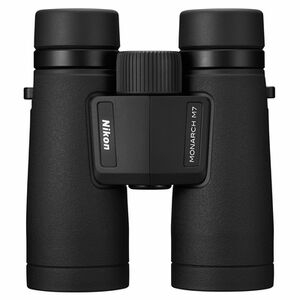
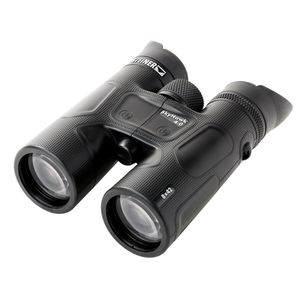
It is important to note this fact in advance. The larger the diameter, the heavier the binoculars become, but the twilight performance also increases. Therefore, a lens with a diameter between 32mm-45mm is ideal, this size offers the perfect compromise between weight and twilight performance. With a diameter of 45mm, the stalking binoculars still reach into late twilight and are therefore a very good all-rounder.
The larger the diameter, the more the binoculars tend to lose color rendition, which, however, significantly increases the twilight performance. So if you only want to use binoculars as a hunter, you will have to live with these compromises.
The perfect magnification for hide hunting
If you are hunting from a hide, you don't need much more magnification than 8x magnification. Since you don't move from the spot, you don't really need more magnification, but rather something with a large diameter, which makes it easier to observe or spot the prey depending on the light conditions.
The lens diameter for hunting from a hide
When choosing the right lens diameter, you should consider the time of day when you are most likely to visit a raised hide. A 50mm diameter is particularly suitable for twilight conditions. This is also good for observing the stars.

The perfect magnification for driven hunts
For driven hunts, you need binoculars that guarantee the widest possible field of view and also have a high optical contrast. The magnification should therefore not be greater than 8x . In order to guarantee a field of view of 120m-150m at 1000m.
The objective lens diameter for driven hunts
The diameter of the objective lens of the hunting binoculars should be no larger than 42mm to ensure a good weight-to-weight ratio. On a driven hunt with several hunters, these binoculars can really come into their own when the other hunters move on and one of them can follow the movement of the game across the entire width.
What features should a pair of hunting binoculars have?
Binoculars differ not only in diameter, weight, etc., but also in their features, which make them particularly suitable for hunting:
- Lotus effect, rain and other wetness beads off the binoculars
- Rangefinder, how far away is the animal from the hunter
- Ballistic calculation, on which point the rifle has to be corrected
- Filling of the binoculars; is the binoculars filled with nitrogen or argon to prevent fogging from the inside
The twilight number for binoculars
When hunting, wild animals that can only be observed at dusk are usually targeted. However, the light conditions at this time of day are anything but ideal for the naked eye. It is therefore essential that hunting binoculars are particularly powerful in order to be able to see details even at dusk in the morning or evening hours.
The ability of hunting binoculars to make observations at twilight is indicated by the so-called twilight index. This is a standardized value for comparing optical devices in terms of the ability to see details, especially in low light conditions. The higher the twilight factor, the brighter the device is theoretically
However, the twilight factor alone says nothing about the quality of the hunting binoculars. Binoculars costing ?2,000, for example, can have the same twilight factor as binoculars costing ?200, provided they both have the same magnification and the same objective lens diameter. This parameter can therefore only be used as a comparative value for binoculars from the same series.
It is important to understand that the twilight value is a calculated value; when choosing binoculars, it is important to ensure that the transmission value is high, i.e. above&nbs>80-90% is a value for high-quality binoculars.
What features / functions should hunting binoculars have?
Binoculars differ not only in their diameter, weight and so on, but also in their features, which make them particularly suitable for hunting:
- Lotus effect, rain and other wetness rolls off the binoculars
- Rangefinder, how far away the animal is from the hunter
- Ballistics calculation, to which point the rifle must be corrected
- Filling of the binoculars; are the binoculars filled with nitrogen or argon to prevent fogging from the inside?