Date:
April 21 - 26, 2020
Location:
UNESCO World Heritage Site Teide National Park, Tenerife, Canary IslandPhoto trainer
Eugen Kamenew ("Astronomy Photographer of the Year 2014")Airport
from D?sseldorf, incl. Rail&Fly ticket for fast arrival by trainPrice
Book now
Lyrid meteor shower, Milky Way and planetary parade: Jupiter, Saturn, Mars
The
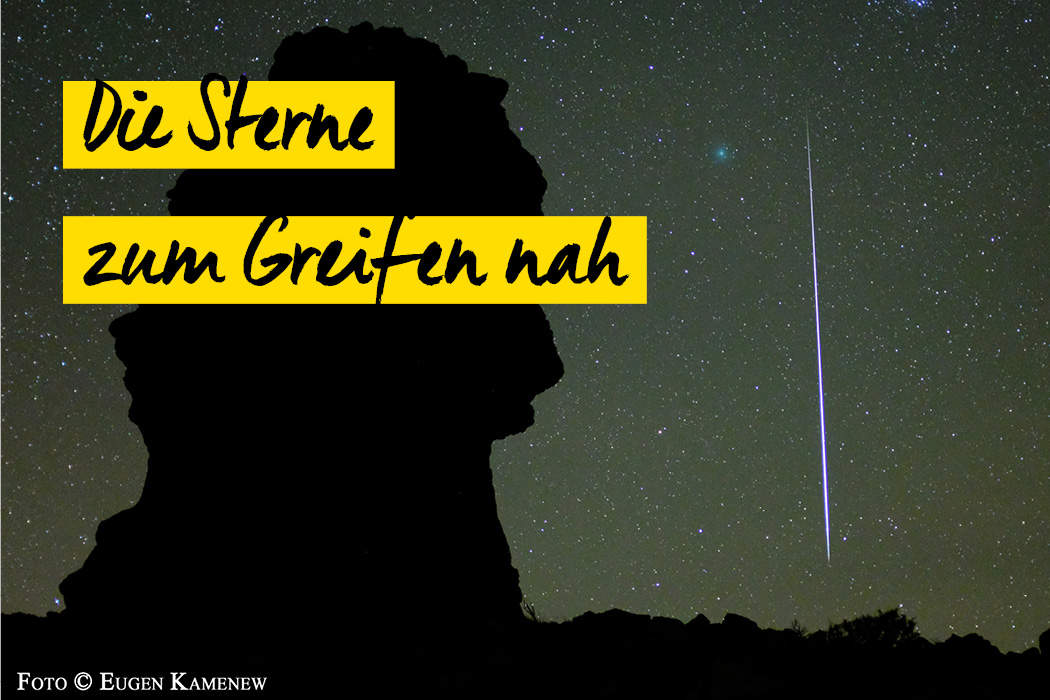
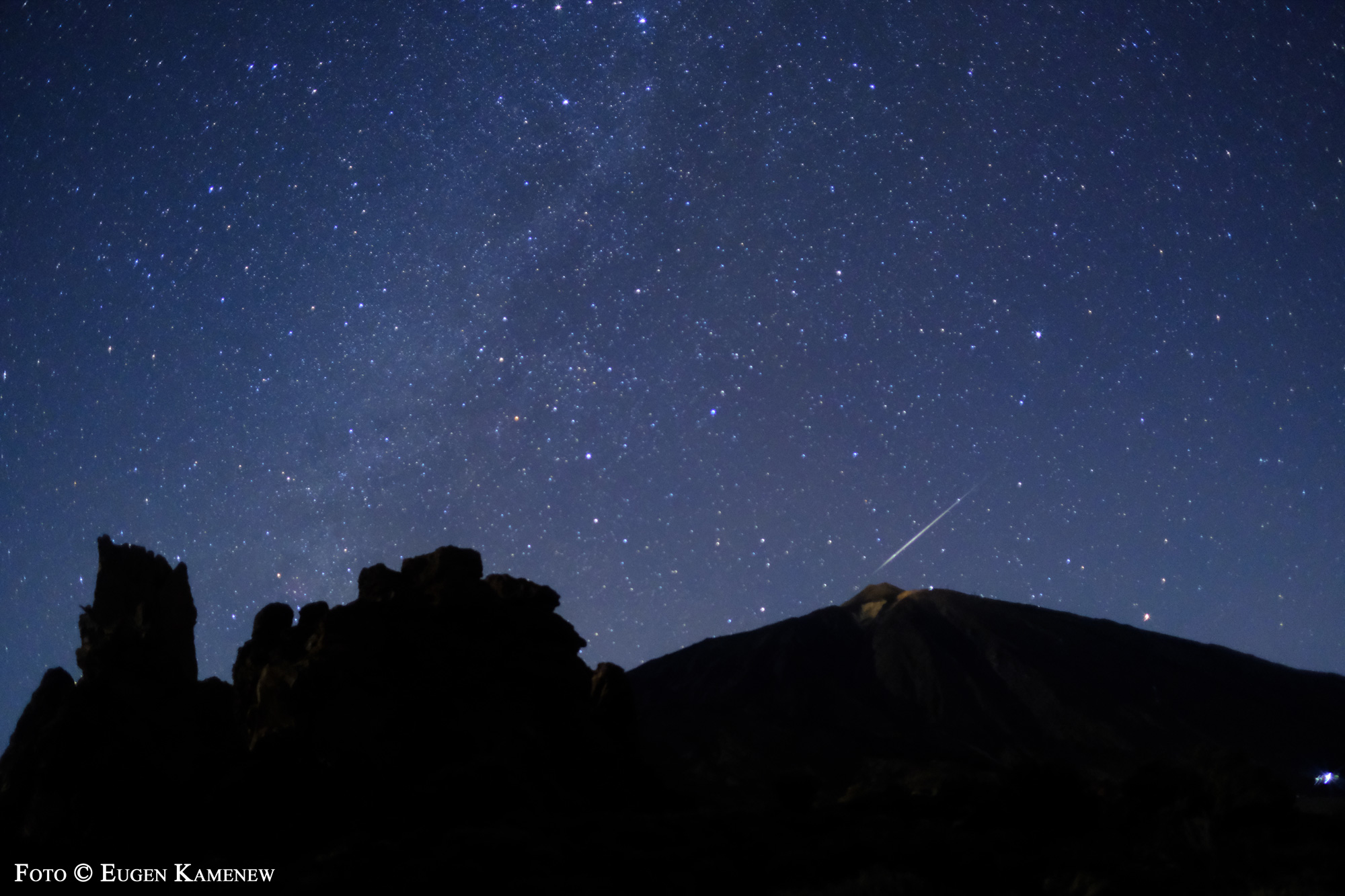
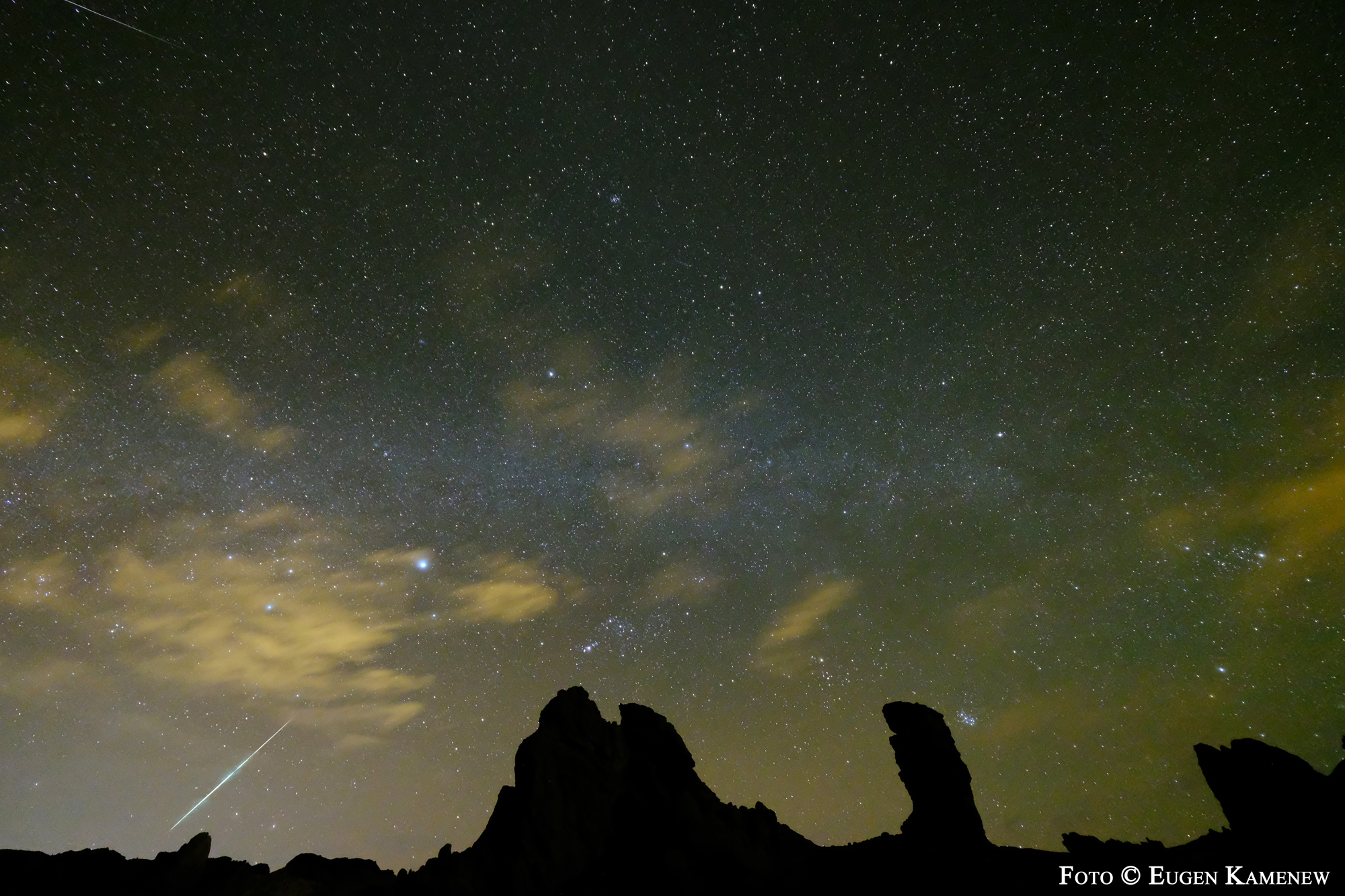
The Lyrid meteor stream offers cosmic fireworks in April. The Lyrids are an active meteor stream that occurs every spring from 16 to 26 April. For an astrophotographer, the meteors are a perfect photo motif. On the one hand, because they flit relatively slowly across the night sky at a geocentric speed of 48 km/sec and, on the other hand, because there are sometimes relatively bright specimens, the so-called fireballs, to be seen.
The name of the meteor shower Lyrids is derived from the constellation Lyra (Latin lyra)' the ancient plucked instrument Lyra. The Lyrids (also known as the April Lyrids) are a meteor shower that has been known to occur for several centuries before our era. The first recorded observation of the Lyrids dates back to 687 BC in the Chinese historical work Zuozhuan. This is the oldest historically dated record of a meteor stream. Chinese astronomers reported that stars fell from the sky like rain. On the night of 21 to 22 April 2020, 18 shooting stars per hour are expected, which corresponds to a maximum of activity. The parent body of the Lyrids is comet C/1861 G1 (Thatcher), which takes 415 years to orbit the sun.
This astronomical photo expedition is accompanied by award-winning astrophotographer Eugen Kamenew. The freelance expedition photographer was awarded the "Astronomy Photographer of the Year 2014" award by the Royal Greenwich Observatory in London and the BBC Sky at Night magazine. The space agency NASA has published his pictures on its official website APOD (Astronomy Picture of the Day). As an aurora photographer, Eugen Kamenew has been to Scandinavia several times to capture this unforgettable natural spectacle.
Eugen Kamenew studied "Cinematography & Photography" at the Hawaii Pacific University and at the Philipps University of Marburg he received the academic title Diplom-Soziologe with a focus on media studies.
Ablauf
Tag 1 (Dienstag, den 21.04.2020) Arrival: Welcome at the UNESCO World Heritage Site Teide National ParkFlight from D?sseldorf to Aeropuerto Reina Sofia, Tenerife.
Evening program (2 hours):
Eugen Kamenew welcomes you and introduces you to the photographic program for the coming days.
Night program (8 hours):
Astro and star trail photography under a starry night sky.
Day 2 (Wednesday, 22.04.2020) Lyrid meteor shower photography
Evening program (2 hours):
Creating the star trail images for each individual participant.
Introduction to meteor photography: learning all the tips and tricks for successful shooting star photography.
Night program (8 hours):
Photographing the maximum of the Lyrid meteor shower under a starry night sky.
Day 3 (Thursday, 23.04.2020) Astronomic Tour - Visit to the observatories
Day program (2 hours):
Creating the time-lapse videos for each individual participant.
Evening program:
"Astronomic Tour - Visit to the observatories" (approx. 8 hours)
An eight-and-a-half-hour excursion on which the Starlight Guide will accompany you at all times. Your Astronomic Tour to Teide includes a guided tour of the world's largest solar observatory, the Teide Observatory, in the afternoon and - after sunset - astronomical observation with wide-angle telescopes under the starry skies of the Teide National Park, the most visited national park in Europe.
Night program (8 hours):
Photographing the center of the Milky Way in the constellation Sagittarius. From 2:00 a.m., the Milky Way rises in the east and culminates vertically above the southern horizon in all its splendor. The new moon phase is an ideal time for Milky Way photography. Thanks to the 28th northern latitude of the island of Tenerife, the constellation of Scorpio is completely visible, which can never be the case from Germany.
Day 4 (Friday, 24.04.2020) Whale and dolphin photography
Daily program:
On the open sea from a boat you will observe and photograph whales and dolphins during a sighting.
Evening program (2 hours):
Image analysis for the participants according to aesthetic design rules.
Night program (8 hours):
Since it is new moon phase, this time is ideal for long star trail photography throughout the night.
Day 5 (Saturday, 25.04.2020) Sunset & Stars - Visit to Mount Teide by cable car
Day program (2 hours):
Creating the 4K timelapse video from the Star Trails recordings.
Evening program:
"Sunset & Stars" (approx. 8 hours)
Enjoy the Teide National Park and its colors at dusk with Sunset & Stars in the guided night excursion, where you can admire the dusk light show and the stars. Experience the feeling of seeing the sunset on the highest peak in Spain (3718 m). Combine astronomical sky observation with a breathtaking cable car ride and let your mind wander.
Night program (8 hours):
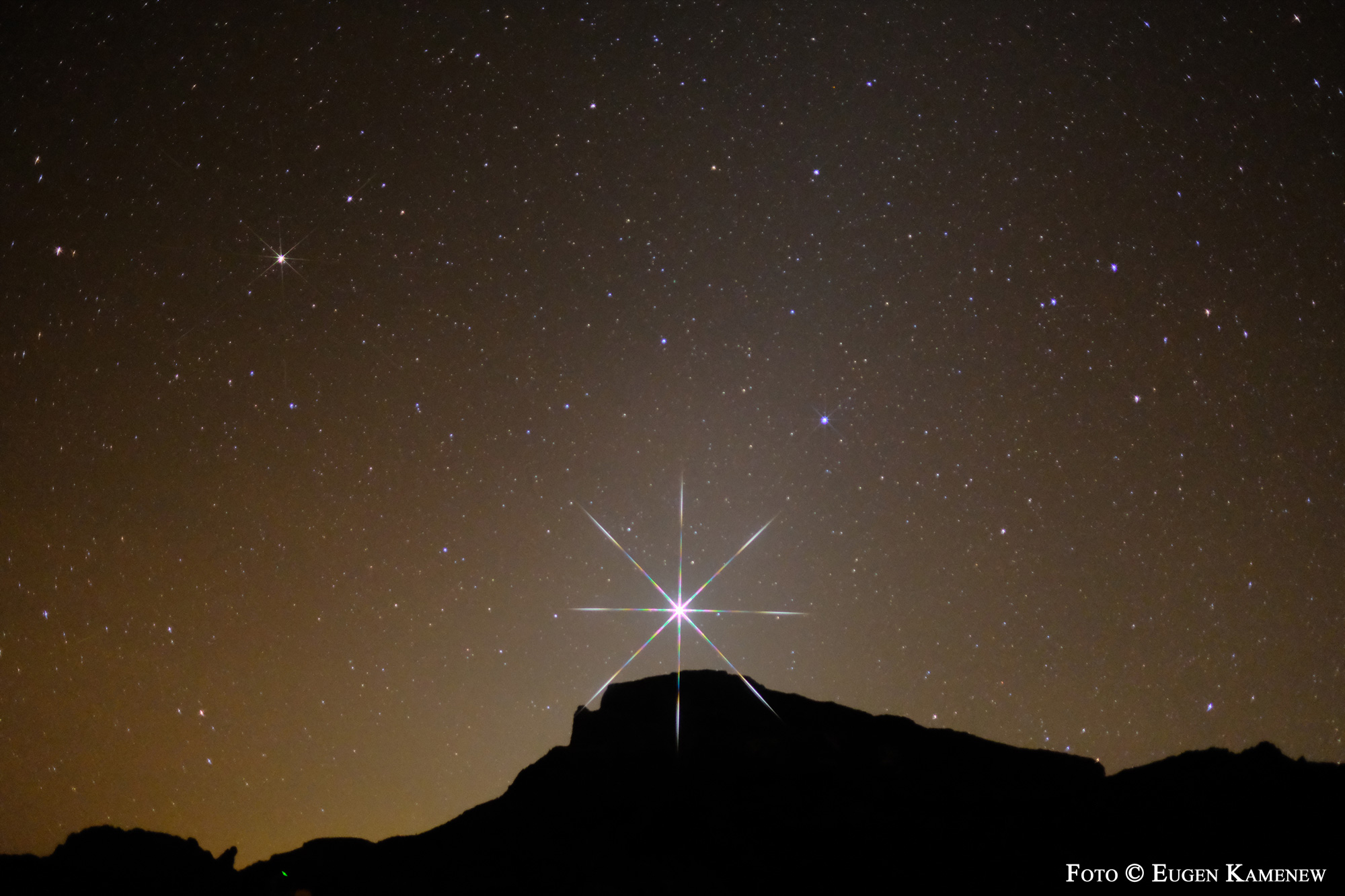
Photograph the three outer planets of our solar system that can be seen with the naked eye: Mars, Jupiter and Saturn. The red planet Mars, the "Lord of the Rings" Saturn and the largest planet in the solar system - Jupiter - line up in a planetary parade on a line east of the galactic center of the Milky Way.
Day 6 (Sunday, 26.04.2020) Departure
Last hours together in the Teide National Park - then return flight to D?sseldorf.
Important note: Please note that the program schedule may change depending on the weather. Despite promising weather statistics, there can be no one hundred percent guarantee of a clear night sky. We therefore accept no liability for possible bad weather.
What you can expect:
Theoretical preparation time (pre-production):
- Lectures on relevant astronomical topics every day
- Current weather forecasts for the coming night every day
- Every day work with the photos of the participants (star trails, time lapse)
- Tips & tricks for successful meteorite, Milky Way, planetary, satellite, star trails and time lapse photography
Practical outdoor work (production): - 5 nights of practical astrophotography with 8 hours each under starry skies (no weather guarantee)
- Individual supervision of each individual during the photographic work (a small group of at least 7 and a maximum of 9 people allows intensive coaching of each individual on site)
- Explanation of the constellations in the night sky
- Image analysis for each individual participant
- Creating the star trail shots (everyone gets their own star trail photo)
- Creating the 4K time-lapse video from the participants' photos (everyone gets their own 4K timelapse video)
The following program points in lectures
When and where can I see the next solar or lunar eclipse? How can I photograph them? Don't want to miss the future opportunity to capture a comet for eternity? These spectacular "tail stars" come into our solar system sporadically and some of them can even be seen with the naked eye and it is at moments like these that they are easy to photograph. Mercury, Venus, Mars, Jupiter, Saturn: these are the 5 planets in our solar system that can be seen with the naked eye. When and in which constellations can they be photographed? What interesting planetary constellations await us in the future? How can the four Galilean moons of Jupiter Io, Europa, Ganymede and Callisto be photographed without a special telescope? Why does the Earth's moon never come across as aesthetically pleasing in my pictures as I can see it with my own eyes? How can I safely photograph a transit of Mercury in front of the sun? The ISS is the international space station. When, where and for how long can you see, photograph and even film the ISS overflights? When, where and how can you best photograph Aurora Borealis? Have you ever experienced the unforgettable spectacle of the Northern Lights? If you have ever asked yourself any of these questions, then this astronomical expedition photography workshop is for you.Weather
The promising weather statistics compiled from various satellite data over the years increase the likelihood of clear starry skies and the possibility of photography. Based on this scientific data, the Las Canadas del Teide plateau clearly stands out with its good weather conditions. Nowhere else in Europe can you find better weather statistics. With around 3500 hours of sunshine a year and an average cloud cover of just 23%, the Teide National Park is our biggest favorite.Location
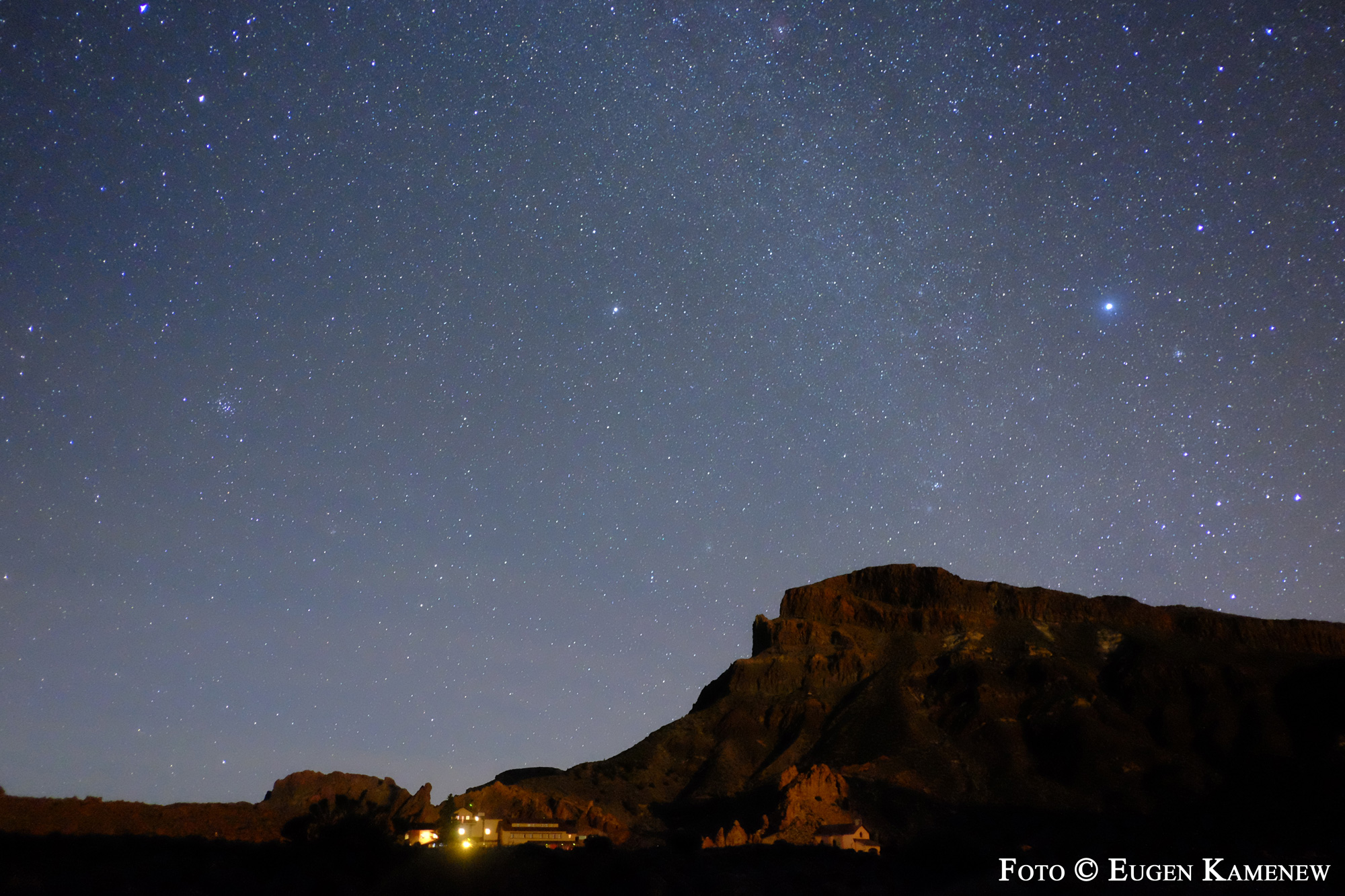
The only freely bookable accommodation on the Las Ca?adas plateau is the Hotel Parador de Las Ca?adas del Teide. The hotel is located 2152m above sea level and in the heart of the Teide National Park. This altitude is ideal for visual and photographic astronomy. There is hardly any artificial light pollution. The advantage of the location also lies in the transparent-clear air masses of the Canary Islands.For astrophotography, the treeless plateau of the Ca?adas offers some impressive rock formations. It is not for nothing that the epic movie "Star Wars" was filmed here. Roque de Garcia is a bizarre rock formation. The most famous of the towers made of sculpted volcanic rock is Roque Cinchado, which is just 400 m from the hotel.
Target groups
- Astrophotographers
- Travel photographers
- Amateur astronomers
- Space enthusiasts
- Star trail photographers (Star Trails Photography)
- Time lapse photographers (Time Lapse Photography)
- Long exposure photographers (low light photography)
- Landscape photographers
- People in Astrophotography
- Shooting star photographers
- Milky Way Photographers
- Planetary photographers
Equipment
Any SLR or system camera with a manual "M" setting for aperture and shutter speed and a manual focus is perfect for astrophotography. A sturdy tripod for long exposures, cable or radio release, sufficient memory cards and fully charged batteries should also be brought along. Electronic heating sleeves for heating the Lens are recommended. They prevent dew from forming on the lenses. Such heating sleeves can be purchased in almost any photo store for astrophotography. Since photography is carried out throughout the night under a clear sky, such lens heaters are highly recommended.Headlamps with red light are very convenient for astrophotography. They have two advantages. Firstly, the astrophotographer has free hands and secondly, the red light of the headlamp does not ruin the adaptation time of the human eye to be able to see faint celestial objects in the night sky. A warm thermos flask is always an advantage if you want to photograph outside for a long time. At an altitude of 2200 m, the average night-time lows are relatively fresh at 6 degrees Celsius, so warm clothing is highly recommended.
Of course, there are no weather forecasts as to exactly what the weather will be like on these days. Accordingly, there is no guarantee of a starry sky.
Please bring your own laptop. For post-production, work will be done on the laptop.
Your Hotel Parador de Las Ca?adas del Teide
This cozy hotel in the Teide National Park is a 4-minute walk from the Roque Cinchado rock formation and 11km from the Teide volcano. The stylish rooms with wooden floors feature a flat-screen TV, minibar and views of the mountains. The upscale rooms offer a four-poster bed, a sitting area and/or a terrace. Facilities include an elegant restaurant with a stone fireplace and mountain views, as well as a bright bar and a cozy lounge. There is also a fitness room, an indoor pool, a sauna and a terrace. Conference rooms are also available.Included services per person:
- Rail & Fly ticket from/to all German train stations
- Flight from D?sseldorf to Tenerife and back
- Transfer airport-hotel-airport
- Airport taxes and security fees
- 5x overnight stay in the booked room at the Hotel Parador de Las Ca?adas del Teide
- Daily breakfast
- Lectures on relevant topics in the field of astronomy, meteorite, Milky Way, planetary photography, image analysis and design, etc.
- 5 x use of the seminar room, 2 hours each, i.e. a total of 10 hours of work with the participants' photos (creation of the 4K time-lapse video and star trails)
- 5 x outdoor work under a starry night sky for 8 hours each, i.e. 40 hours of photographic work under the starry sky in ideal weather conditions
- "Astronomic tour" to the largest solar observatory in the world (approx. 8 hours)
- "Sunset & Stars" sunset on the highest peak in Spain, Teide (approx. 8 hours)
- Shuttle service to all activities listed in the program
- Accompaniment and provision of photographic tips and tricks by Eugen Kamenew
Optional services per person
- Single room supplement ? 315.00
- Daily dinner at the hotel per day
Not included in the tour price
- Tips
- other unnamed excursions
- Meals
Minimum number of participants: 7 persons, maximum 9 participants
INBOUND FLIGHT 21.04.2020 from D?sseldorf to Tenerife (same day)
RETURN FLIGHT 26.04.2020 from Tenerife to D?sseldorf (same day)
Notes
Eugen Kamenew is your accompanying photographer and photo instructor. Please note that he is not a tour guide and is not responsible for the organization and logistics. All requests and additional services outside the official program should be organized and carried out by each individual on their own.
Please note that the program schedule may change depending on weather conditions.
Hotel classification according to national category.
Entry requirements
German nationals require a valid identity card or passport to enter Tenerife. The travel documents must be valid for three months after the trip. For the exact entry requirements of the respective country, please refer to the information at www.auswaertiges-amt.de.
Medical advice
The ascent of Mount Teide is prohibited for people with cardiovascular problems and for pregnant women or children under 2 years of age, as the altitude could lead to health problems. Remember that you must carry enough water with you and the use of sunglasses is recommended.
Price
2.249,-for accommodation in a double room, single room supplement 315,- ? The booking is made with our partner African Dreamtravel. Minimum participants: 7, maximum 9 participants
Book now
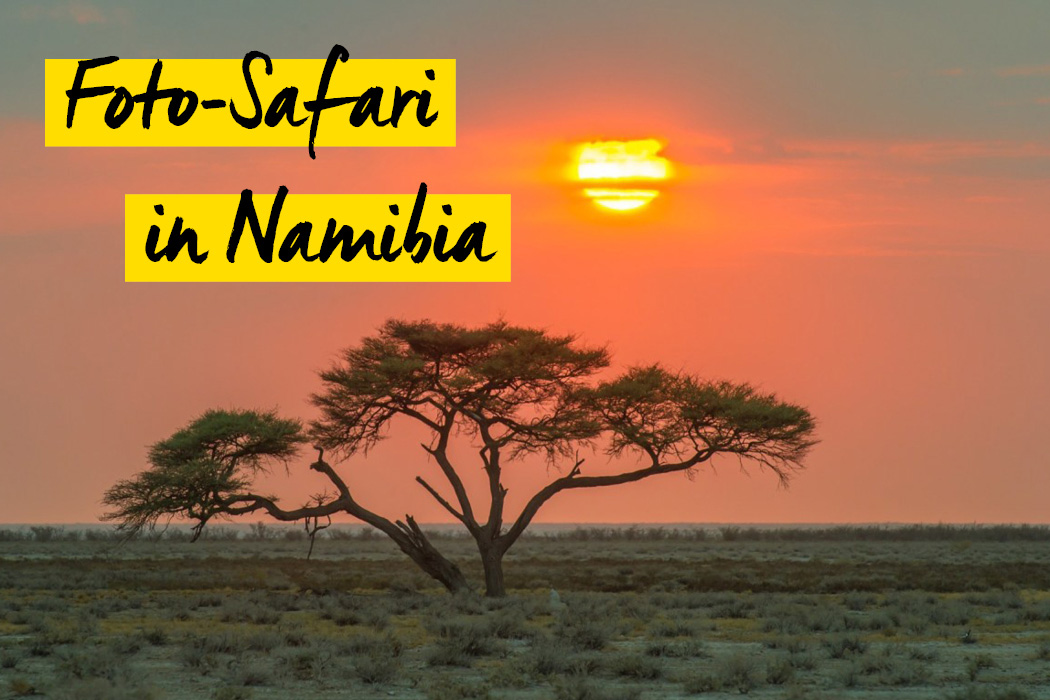

Photo safari in Namibia, Africa
Experience the highlights of Namibia with an experienced Namibia expert
You will experience wildlife and landscape photography in one of the most beautiful countries in Africa! On this photo tour we travel to the photo hotspots in Namibia
At certain spots where there is a good chance of a good photo, we can stay for a few hours at the request of the photographers. On our game drives, we will take our time and be on tour in the best light. We will also be out and about at night to see the big cats, such as lions and leopards, possibly hunting. The focus of this photo tour to Namibia is on photographing special motifs, i.e. creating images that evoke emotions. We will start as early as possible each day to take advantage of the best light learn more
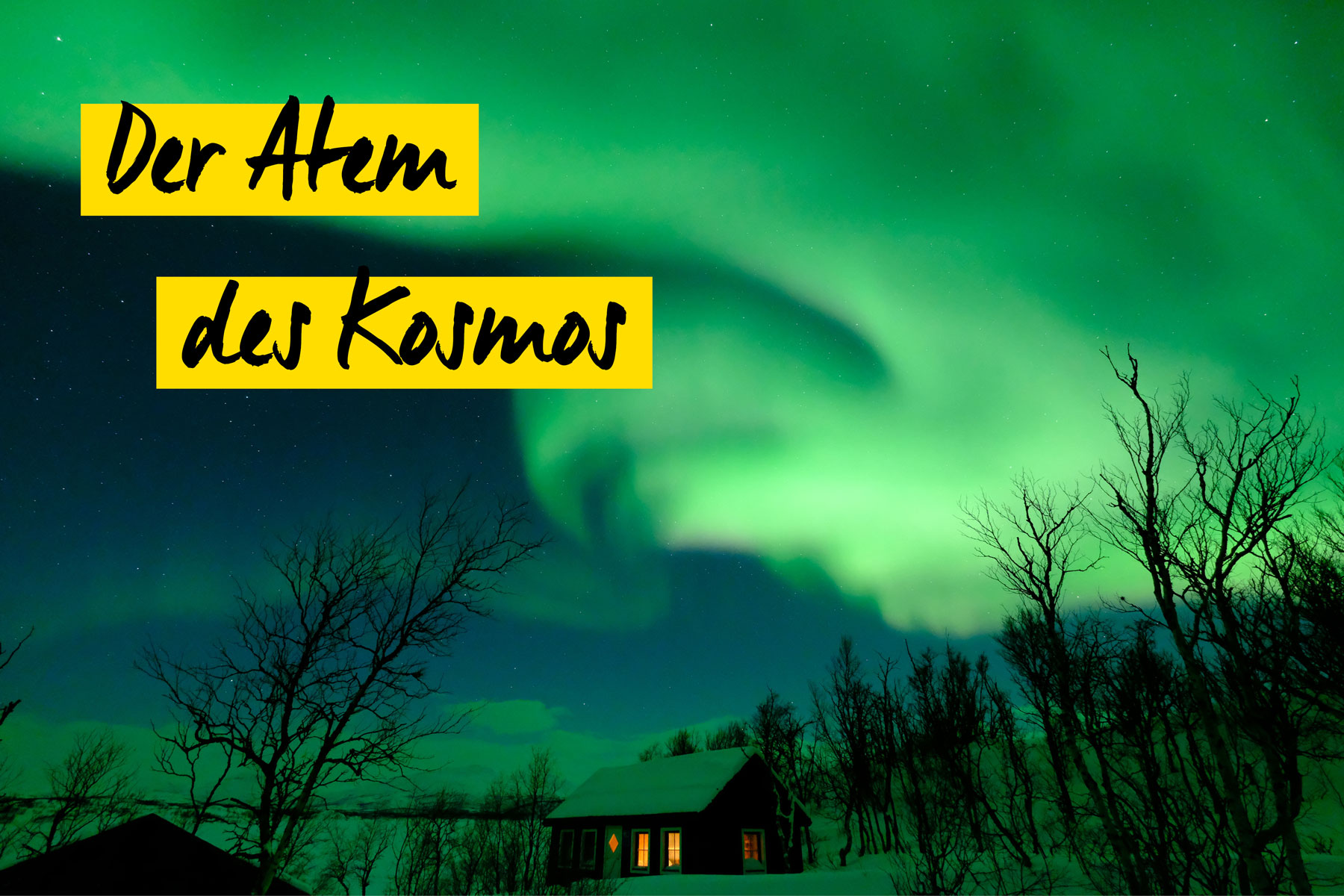
Aurora Borealis photo tour (aurora borealis photography) in Abisko National Park, Lapland, Sweden
Aurora Borealis is one of the most fascinating astronomical natural phenomena. To experience the impressive aurora borealis, it is best to travel to the far north of Scandinavia. Because here a golden rule applies: the further north you go, the higher the probability of being able to admire the Northern Lights, even when the sun's geomagnetic activity is low. learn more
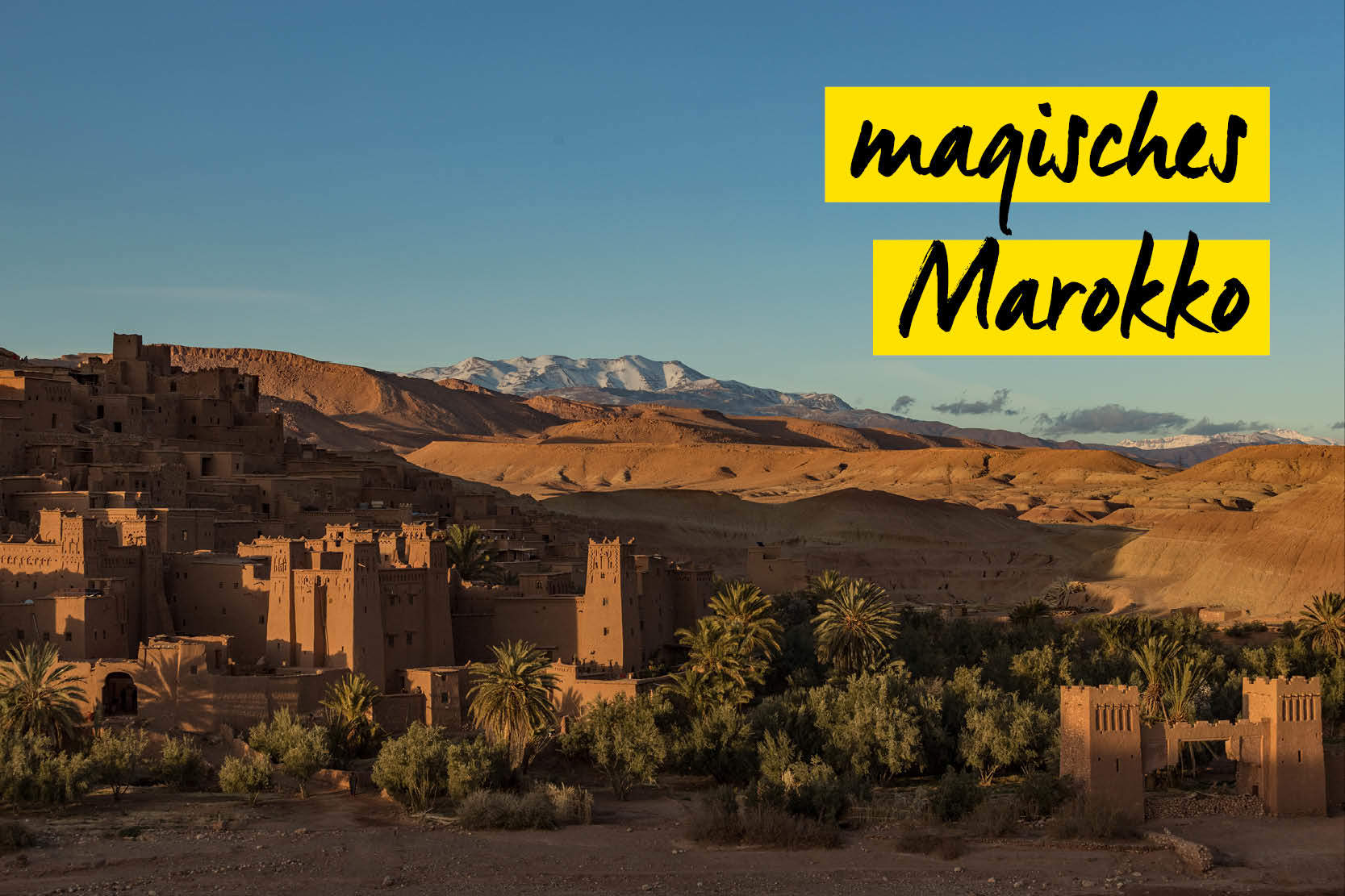
Magical Morocco
Accompany Jens Landmesser to the Kingdom of Morocco. Experience the capital Marrakech and let yourself be seduced by the colors and smells, the lively streets, the souks and narrow alleys, the warm nights and the unique atmosphere. The camera always at the ready and your trainer always with you, it couldn't be better, could it? learn more