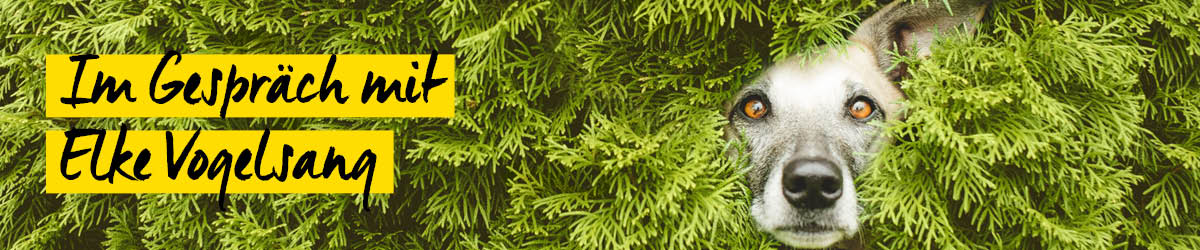
 In conversation with Elke Vogelsang
In conversation with Elke Vogelsang about her book "Workshop Hundefotografie"
We had a chat with Elke Vogelsang. Elke has been working as a freelance photographer for 10 years and specializes in dog photography and pet photography in general.
For several years she has worked almost exclusively with companies including Pedigree, Fujifilm and Fluff&Tuff. She and her images have also been published in many major magazines, including Times Magazine, National Geographic and Die Zeit.
How did you get into animal photography and what fascinates you about it?
A few years ago, in 2009 to be precise, I decided to look for a creative balance to a very stressful time. My choice fell on photography, which I practiced sporadically as a hobby. As a New Year's resolution, I started a one-picture-a-day project. This was an attempt to maintain some normality and to create a kind of photo diary for my husband, who had been admitted to the hospital at Christmas with a severe brain haemorrhage. I took photos every day and posted one picture online. Fortunately, my husband made a full recovery, but photography had become a kind of healing activity for me. The project ran for a whole year, during which I learned how to use my camera and had to try to find new ideas every day. It soon became clear that my dogs were my most frequently photographed subject.
More and more people in my area asked if I could photograph their dogs too, so I decided to change my life a little and registered a business as a photographer. That was exactly 10 years ago this year and I couldn't be happier about that decision. I can now spend my time with photography and animals, which is a dream come true and one that I put a lot of time and fun into.
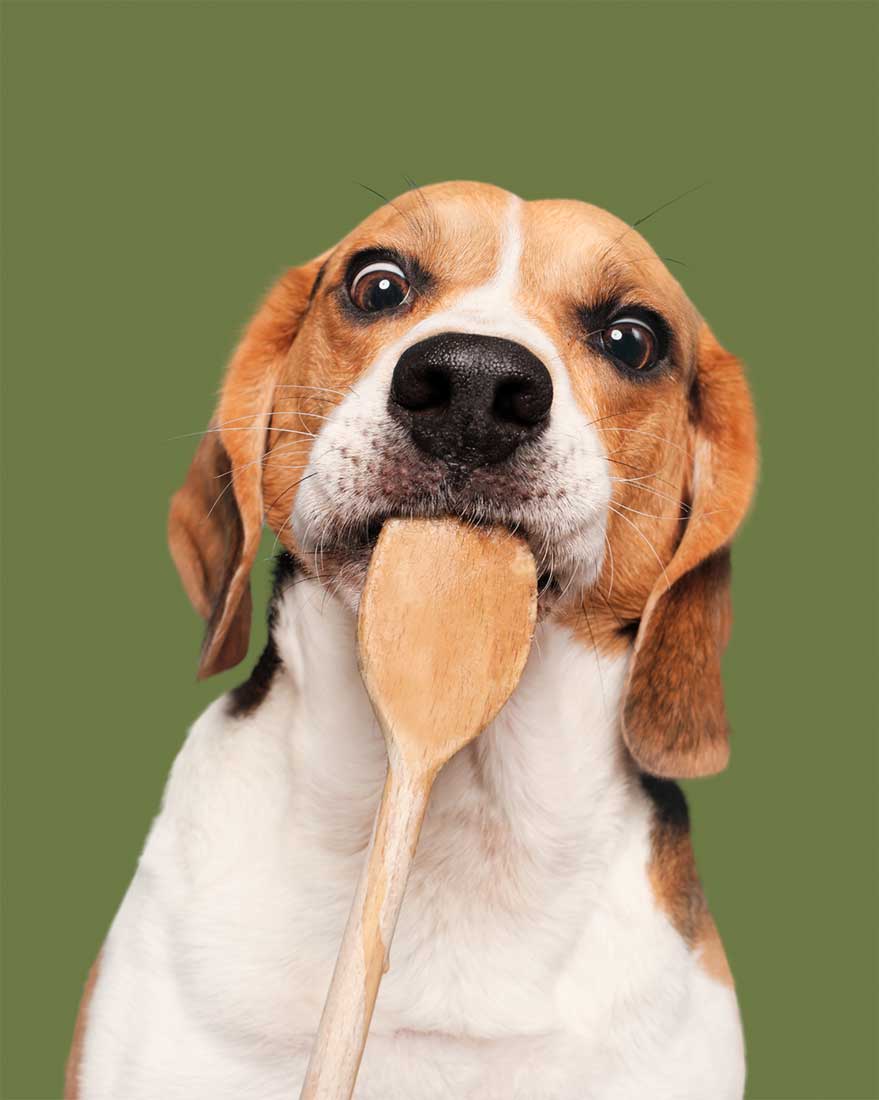 Elke Vogelsang dog photography
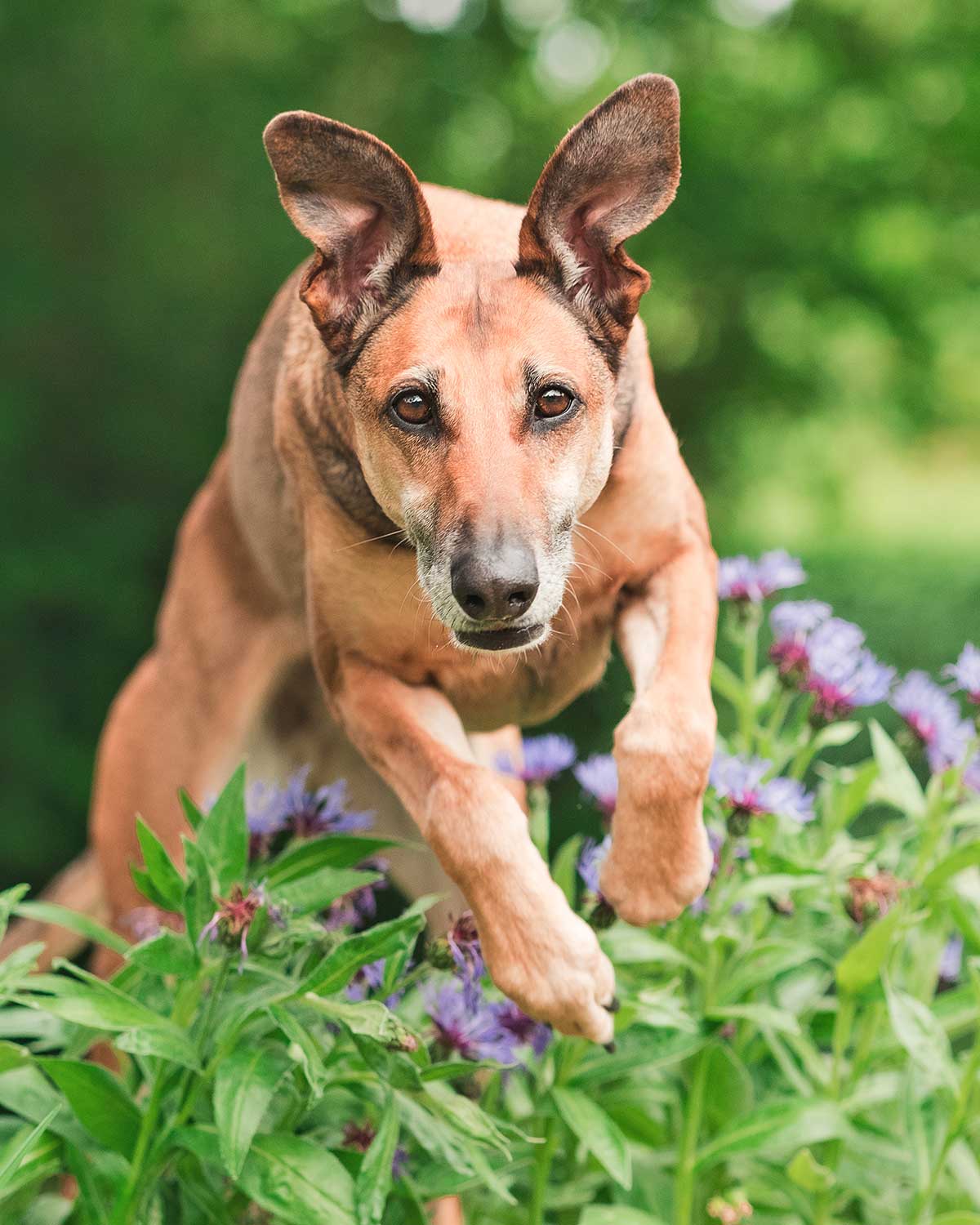 Elke Vogelsang dog photography
Who is your book "Workshop Hundefotografie" aimed at?
The book is primarily aimed at beginners in dog photography, but also at ambitious amateur photographers who want to learn a lot more about handling dogs, the right settings and tricks from the everyday life of a dog photographer.
Is the book more theoretical or practice-oriented?
It not only covers the technical basics in detail, but also provides lots of practical tips. In particular, the more than 50 workshops from all areas of dog photography should provide plenty of motivation and inspiration for your own projects and make you want to pick up the camera.
What should you pay particular attention to when photographing dogs? Which settings are important, what light should you use and can you do it alone?
Every dog has its very own character. I learn something new with every dog I meet. They all present me with different challenges. There's the stubborn senior who seems to ignore my strange noises with pity at best. Is he perhaps deaf after all? Or the timid animal welfare dog who first has to gain my trust and then poses as if he's never done anything else. The ignorant dachshund who isn't interested in anything except exploring my studio. All of these dogs need a different approach to make them happy for pictures.
Outdoors I like to shoot with an open aperture to blur the background and make the dog stand out. In the studio, I usually use a small aperture to get as much of the dog in focus as possible.
While I usually use a zoom in the 24-70mm range in the studio to shoot quirky, rustic faces at around 24mm and more elegant portraits at around 70mm, I often use a telephoto lens outdoors to capture situations and action at a distance. Here, a zoom in the 70-200mm range is a wonderful lens.
Although you should usually hold the reciprocal of the focal length safely without blurring, I also use a minimum shutter speed of 1/400s for portraits of dogs. We have a subject that is lively and many a puppy likes to move back and forth excitedly, even when it should be sitting well for a portrait. In combination with the continuous autofocus, I make sure that portraits are sharp, no matter how excited the dog is.
When taking pictures of movement, I use a shutter speed of at least 1/1000s to freeze even the fastest dog in motion.
Personally, I'm a big fan of bright, overcast days so that I can take pictures outside at any time of day. Here I can fully focus on the dog. If you want to take photos in the sun, the early morning and late evening hours with wonderfully soft light and low sun are the best times.
Dogs are often very active. What tricks are there to tame them?
The top priority is that the shoot has to be fun for everyone involved. The dogs are rewarded and pampered. They feel like stars. And they show their gratitude with joyful participation and bright looks. Some of them can't believe that they are bombarded with treats and praise just for looking at them. I'm constantly telling my three dogs how great they are anyway and they're eager to have their turn because there are treats galore. Unfortunately, the pampered L?rken also think they are the kings of the road. So my dog photography has little to do with education. It's a bond-building activity and joyful exercise.
I adapt my motivational aids to the individual dog. One may value exercise more than another. Most do a lot for treats. And there are also those who are more cuddly and quiet and will even happily join in for verbal praise. Every dog is different. And every dog teaches me something new.
The trick is patience, calm and lots and lots of rewards.
We already know you from Schnappschuss magazine. The dog portraits there came from the studio and had a very special and creative look. The book is more about shots where the dogs are in everyday life and look authentic. Do you have a personal favorite style of photography or do you make no distinction at all?
I came to studio photography by chance. At the time, I was taking photos every day and wanted to continue doing so in winter, even though the gray weather and slushy snow outside didn't make me want to. So I tried studio photography, which I always thought was very boring from a distance. I imagined bored dogs on cardboard. So I tried to find something that I found exciting. My focus was always on the dogs' expressions. It was precisely these pictures that were well received and went viral, so that I was suddenly being considered as a studio photographer. I love being out in the woods and fields with dogs. In the meantime, however, I've really taken studio photography to my heart
Since I swear by specialization professionally, I continue to show primarily my studio photos. However, I love the versatility of photography in general and I still take pictures of all kinds of things in every situation in my private life.
When I admire the pictures of others, they are often street photographs in which someone captures what is happening as a silent observer in graphic and compositionally appealing pictures.
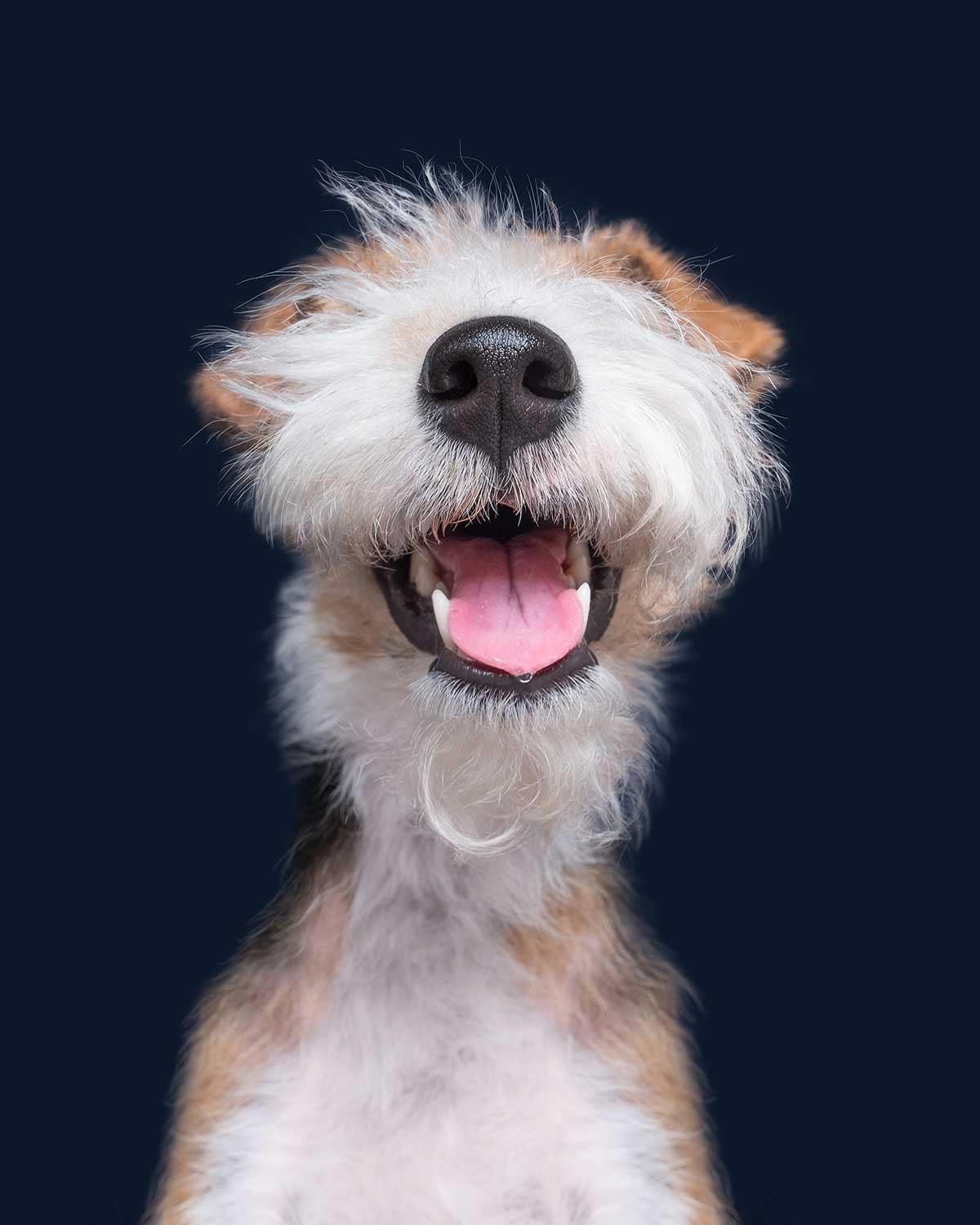 Elke Vogelsang dog photography
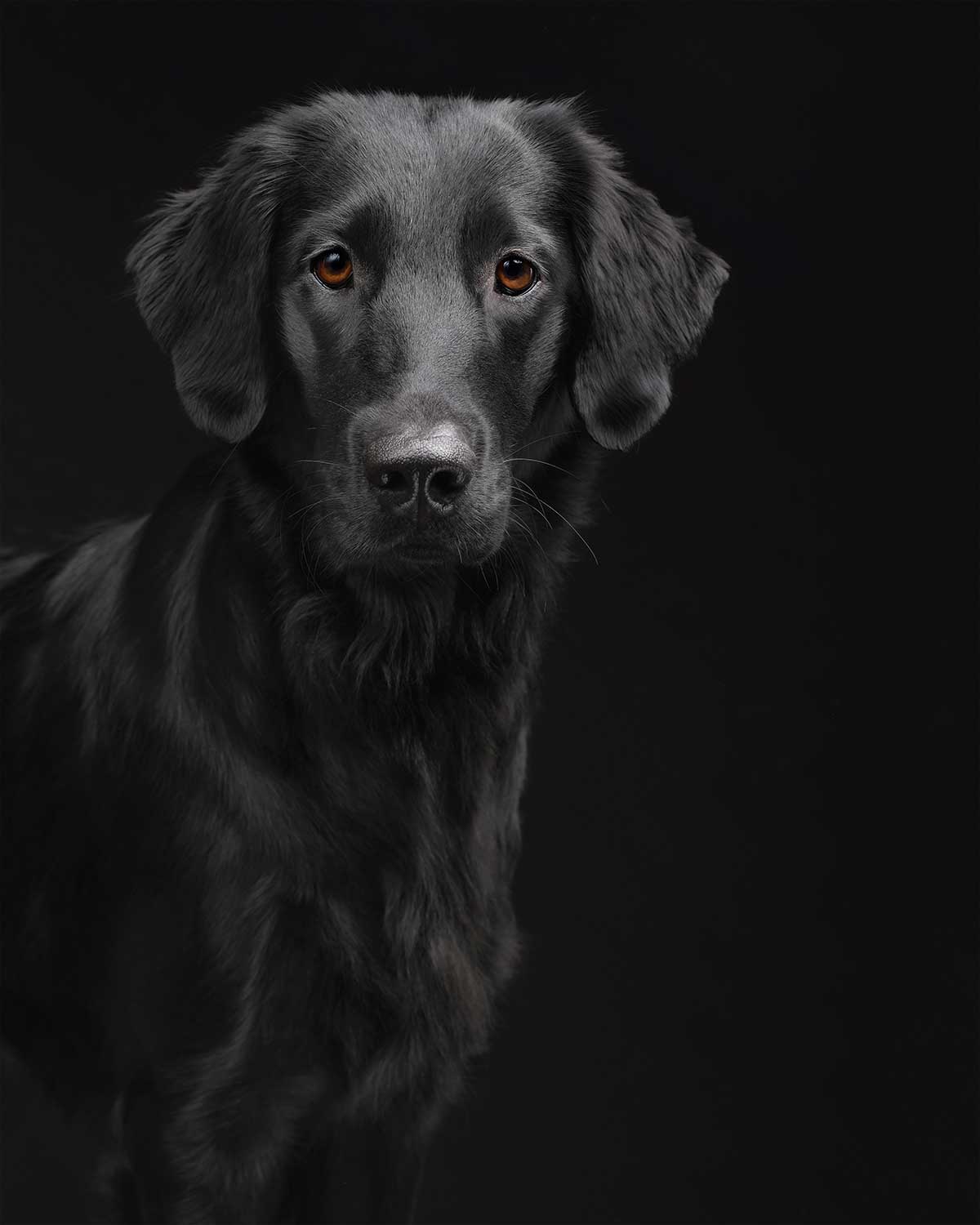 Elke Vogelsang dog photography
Do you mainly work with your own dogs or do you also have a lot of commissioned work?
My dogs are very willing models and have to "serve" for many things. But my image archive consists largely of other animals, including cats and horses.
For large, commercial products, models including trainers are also booked.
Dogs are certainly often unpredictable. Are there any situations that you particularly remember?
There were the two boxers who jumped into an adjacent pond as soon as they got off the lead in an area I didn't know (chosen by the owners). And the word "pond" is putting it kindly. It was a cesspit. They both stank and were covered in mud up to their necks. I laughed a lot, but we had to postpone the shoot to another date in another location
But it's often precisely these moments that lead to the best pictures. Some dogs have a different understanding of fun and jump into water or roll around in horse manure if you're not careful. It is advisable to know the terrain and to realistically assess the dog's attention span and obedience
As a rule, owners are real lovers. How can the book help them turn their joy over their four-legged friends into impressive photos?
There are many tips for capturing the peculiarities of your own four-legged friend, even without an assistant. Not everyone has professional equipment, so you can achieve great results with simple means. This is what the book aims to encourage. As all the workshops and examples are from everyday life and easy to copy, you will learn how to capture life in emotional and personal pictures and at the same time learn photography creatively.
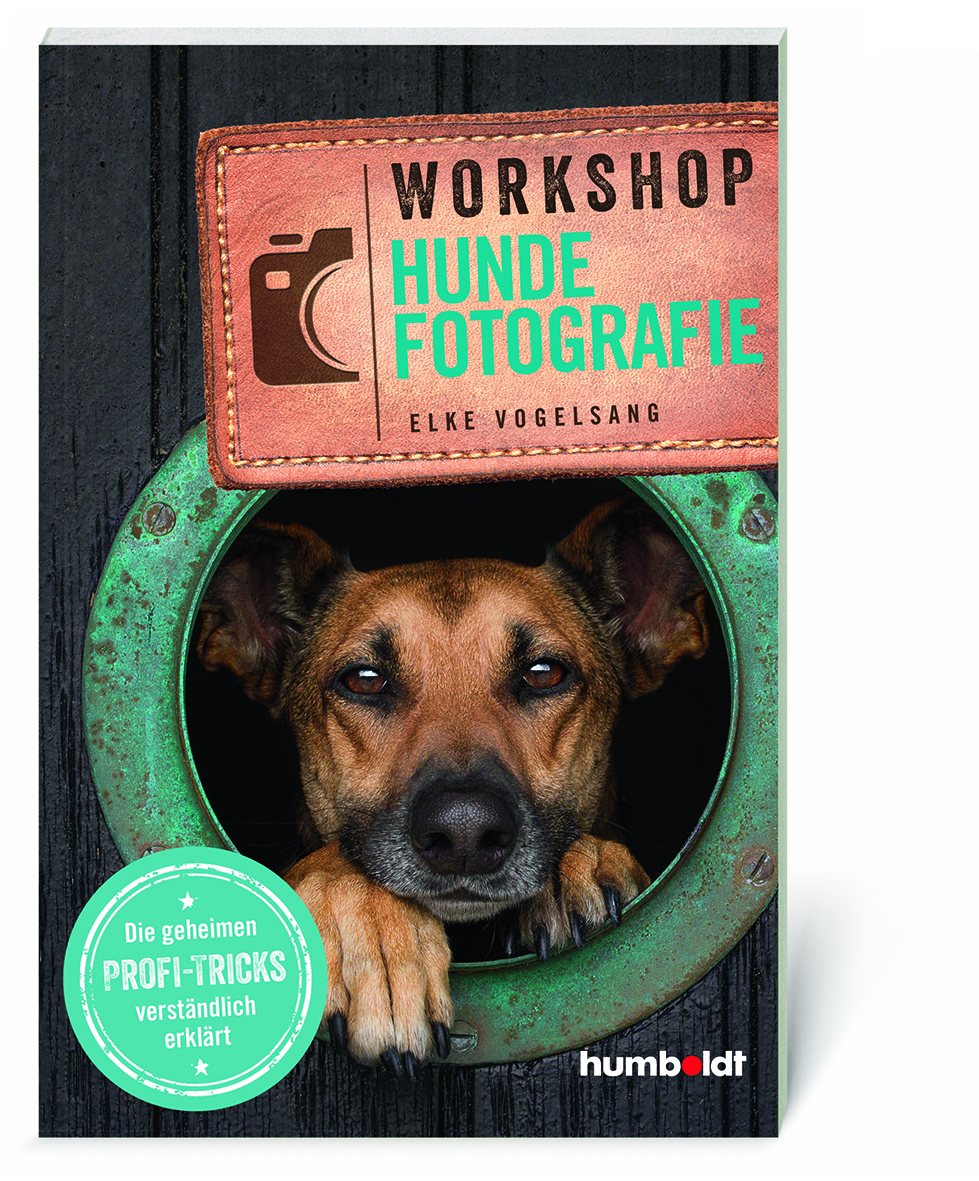 Book Photo Guide Workshop Dog Photography - Elke Vogelsang
Book Photo Guide Workshop Dog Photography - Elke Vogelsang
"How do I take razor-sharp and well-exposed photos of my dog? How do I take emotional pictures that reflect the character of my four-legged friend? How do I manage to get pictures that radiate energy and joie de vivre, even without an assistant? Elke Vogelsang answers these and many other questions in her guide - as simple as possible, as comprehensive as necessary, straight from the everyday life of a dog photographer. From the technical basics of dog photography to 50 workshops - beginners and experienced hobby photographers alike will learn here how to stage dog personalities, develop creative image ideas and implement them optimally and in a dog-friendly way. "
To the book