Camera Basics #18: More megapixels for better photos? Megapixels explained in detail
Everyone needs 100 megapixels! Or do they? Many photographers or smartphone owners are always discussing megapixels. In this article, we want to give you the hard facts with practical examples, because if you're looking for a new camera, these factors can help you make the right decision about whether the extra cost is worth it for you.
We welcome your feedback on this article! Just drop us a line at content@fotokoch.de
Table of contents
Detail sharpness through more megapixels!
Megapixels and the real sharpness on the sensor - The lens dilemma
Advantages & disadvantages of megapixels
How big can I print?
How many megapixels do I need for a 4K video?
How many megapixels did the first digital camera have?
Conclusion - Who is this amount of megapixels suitable for?
Detail sharpness through more megapixels!
No, it is not that simple. Megapixels stand for the number of pixels in the image, which means that one megapixel = one million pixels. In theory, more pixels = more details, but this is not always the case, because all other parameters would have to be correct.
A megapixel monster lives on perfect ratios, which affect the overall performance of the camera.
Physics limits by diffraction blur
You surely know the effect from lenses, if you take a photo with an aperture of f/22, it is muddier than with an aperture of f/8 or f/4. This effect is due to diffraction blur. It also plays an important role in the choice of camera when it comes to the megapixels of the camera.
The higher the megapixels, the faster the diffraction blur comes into play, so you can still work up to f/9 on a camera with 18 megapixels or up to f/8 on a 24 MP camera without the effect occurring.
So a landscape photographer can work with a 24 megapixel camera to get maximum detail and aperture flexibility without an ND filter. With a megapixel bolide with 50 megapixels, the effect already occurs at f/4.
Megapixels and the ISO
Megapixel cameras don't only have advantages, especially when the lighting conditions get worse, the disadvantages quickly come to the front and overshadow the advantages.
If you take pictures in the evening with a megapixel monster, you will directly experience a higher ISO noise, which is the downfall of a smartphone. The small sensor develops more heat due to the megapixels and the ISO, i.e. the increased sensitivity, drastically worsens the noise behavior. Especially since the 100 megapixels of your smartphone are simply of a much higher density than would be the case with a full-frame sensor.
So megapixel heavy APS-C cameras often tend to produce more noise in the dark than full-frame cameras do, if you were to compare them with the exact same megapixel count. Meanwhile, AI algorithms are increasingly trying to suppress or factor out this behavior, but you can't beat physics as easily as that.
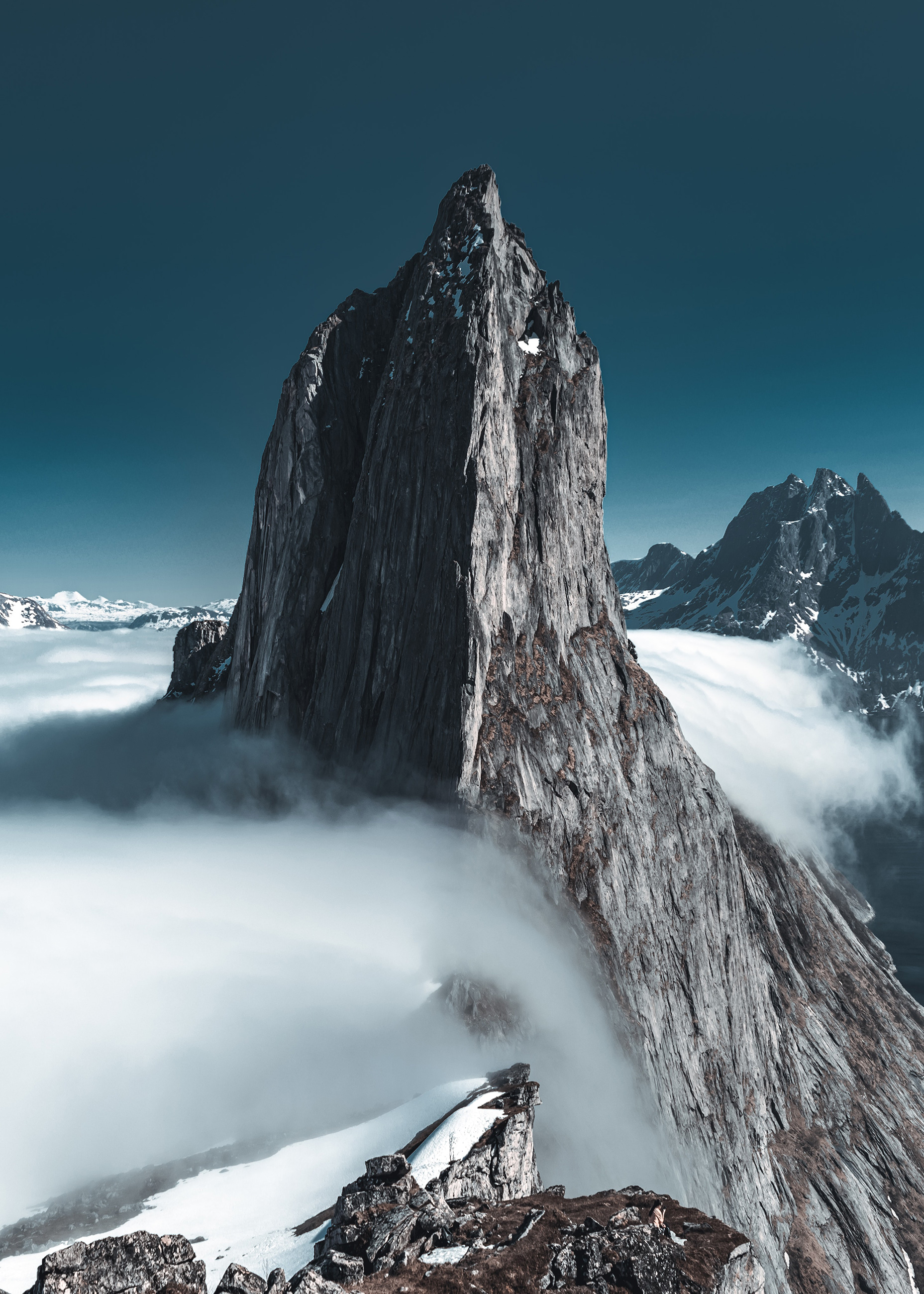
 A landscape shot that is cropped has fewer megapixels
Megapixels and the real sharpness on the sensor - The lens dilemma
If you own a camera with 40, 50 or 60 megapixels, you can no longer use your kit lens. That's a harsh statement, but let us explain it to you. Inexpensive lenses usually sacrifice a lot of quality factors that end up making the megapixels of the sensor actually capture the full potential.
Once, it was possible to say that lenses under 1000? do not manage to capture the exposure performance of the cameras. In the past, third-party lenses were also said to have inferior image quality, but this has long been obsolete, as Sigma Art lenses and also Tamron SP lenses were the best way to disprove this.
Nevertheless, many lenses are calibrated and tuned to certain megapixel numbers, so especially cheaper lenses do not reach the demands of 40 or megapixel hungry cameras for sharpness. Of course, this can also be a stylistic device, but you have to ask yourself if you really want to spend that much money for the extra megapixels.
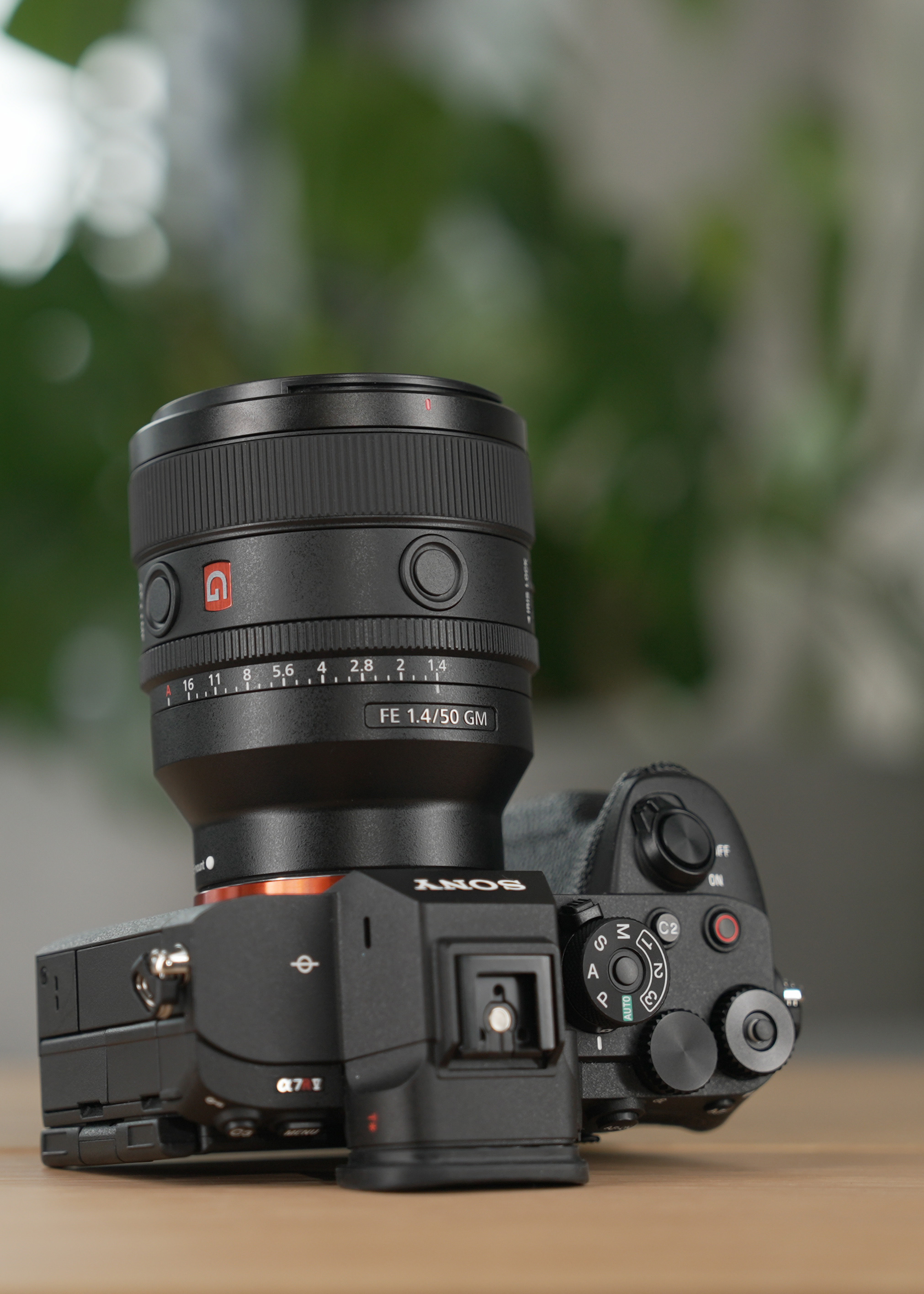 High quality glass like that of the G Master lenses for maximum image quality
Teleconverters cost megapixels
Using teleconverters costs megapixels because they change the angle of view at which the lens would normally operate. Thus, most lenses are not optimized for this angle and can no longer provide the necessary exposure performance due to the magnification.
Filters can cost image quality
UV filters or "cheap" filters that don't even have real glass, but are made with plastic, cost your image sharpness because they scatter the light that would otherwise fall into the lens and thus not fall properly on the sensor.
Quality factors
- Glass quality
- Coating & compensation
- Number of glass elements
Modern lenses have been produced and calibrated very precisely, there is much more development behind a lens than you might think. More glass, for example, does not mean that the quality is getting better and better, the same is to be understood under the coatings. But it helps to pay attention specifically when describing them.
 Megapixel Resolution for Illustration
Advantages & Disadvantages of megapixels
Advantages
- Sharpness of detail
- More cropping flexibility
- Denser pixels
Disadvantages
- Larger files
- Stronger ISO noise
- No detail without proper lenses
- poorer low light autofocus performance
- Faster diffraction blur effect
- The megapixel bolides are more likely to blur
How big can I print?
This question is always difficult to answer in a generalized way. The required megapixels always depend on the selected and desired format, measured by the DPI, the dots per inch. Surely you also know that large prints look pixelated from time to time? This does not depend on the megapixels, but on DPI, if a file is printed with 72 DPI, then this is too low resolution for a two meter print on an advertising space, if the edge length of the image is only 800x400.
For DIN A4 you need about 10 megapixels, a camera doesn't really exist below 20 megapixels anymore, unless they are specialized video cameras like the Sony FX series. With 20-24 megapixels you can still print in A3 format without worrying.
Don't worry, even above that you won't directly see very strong quality loss. Because you always have to think about the viewing distance you have with your picture, if you look at it from 10cm up close, it will surely pixelate a bit, but in an exhibition or on the wall most shots are rather viewed with a distance of 1-3m, except in the photo album where the distance is maybe about 60cm.
How many megapixels do I need for a 4K video?
You will laugh, but if you look at cameras that are only built for videography, then megapixels are not interesting. We have created a list for you:
- HD 1280x720 pixels = 0.92 megapixels
- Full HD resolution 1920x1080 = 2.07 megapixels
- 4K video resolution: 2096x2160 = 8.8 megapixels
- 6K video quality: 4992x3744 = 17.9 megapixels
Important to note in the specifications are the aspect ratios, so the real number of megapixels needed may differ. An open gate video format needs more megapixels than a 16:9 video needs.
How many megapixels did the first digital camera have?
The first digital camera had a resolution of 0.1 megapixels and a format of 4:3, with a CCD sensor in black / white.
Conclusion - Who is this amount of megapixels suitable for?
We think a sweet spot for the vast majority of photographers is something around 24-32MP, because this is where you have room to go for detailed shots. You still have some leeway with the aperture and lens before diffraction blur kicks in. People who need a lot of megapixels are maybe portrait photographers who still want to crop into the depth of the image, architecture & landscape photographers if you use this monster properly, with appropriate filters. Who buys these megapixel-strong cameras should know its usecase, in which case the advantage is in the freer cropping of images.
Sometimes certain functions are tied to the megapixel bolides, which are withheld from the "consumer" cameras, because the megapixels are such a myth and you are quickly considered a professional with 50MP, even if the theory & physics say the opposite.
A little task for you:
If you live nearby, come by with a memory card and try on the different cameras and different lenses to evaluate the sharpness on your computer, or even play around with high-resolution cameras. If you're looking for a new camera, always ask yourself if you really need the amount of megapixels!
Show us your pictures on Instagram and/or Facebook and tag us @fotokochde! We look forward to seeing your results!

Thanks for reading this article. If you're interested in more photography basics, then check out the other camera basics
Get to know your camera ? Discover the fun of photography
You bought a camera and are taking your first steps in photography? With the automatic mode you miss a lot of potential! Photography is only really fun when you understand your camera and know exactly which settings you need to set to get the photo you want. Learn the importance of the functions and ignite your enthusiasm for photography!
Go to all camera basics