Camera Basics #19: Tilt shift lenses and the effect explained
The tilt shift effect is certainly an old shoe for many photographers, but this effect is very interesting to consider because it can be found in many facets of photography, so the use of tilt shift lenses is not only at home in architectural photography. They can also be found in videography and product photography.
We look forward to your feedback on this article! Just send us an e-mail to content@fotokoch.de
The history of tilt and shift lenses
At that time, view cameras / bellows cameras were still used in analog photography, where the bellows was moved, thus enabling the tilt/shift. Today it is still a very cost-efficient method to work with a bellows. At the time of bellows cameras, the lens was sometimes permanently attached to the camera.
Over time, the technology was built into lenses where the lens elements can be moved and various brands now produce these lenses mainly in the wide-angle range, as the optics are most commonly used in architectural photography.
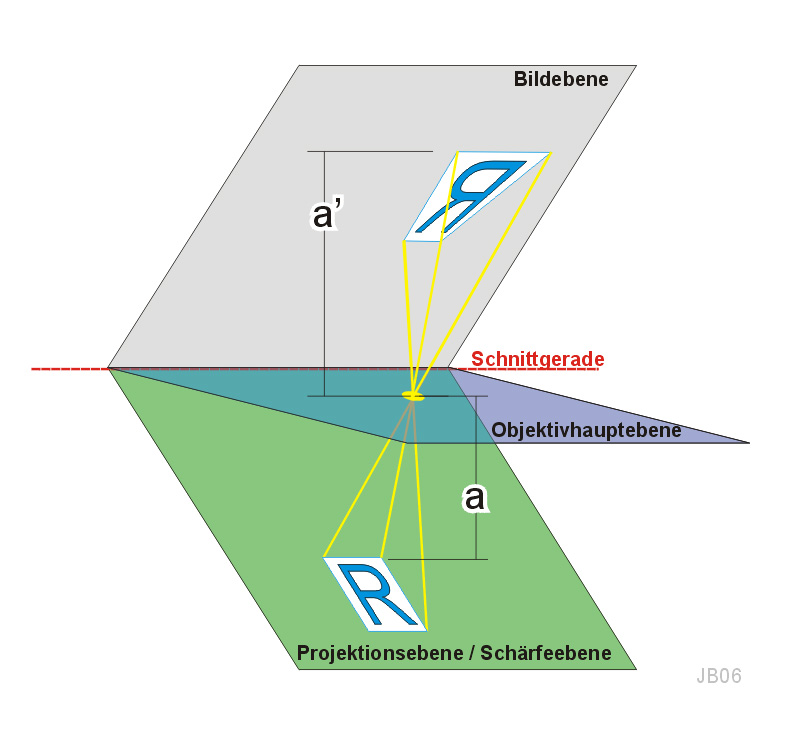
 Scheinpflug condition - Created by Joachim Baecker 2006-08-13 WikimediaScheinpflug condition - Created by Joachim Baecker 2006-08-13 Wikimedia
Scheimpflug's rule
Established by the cartographer Theodor Scheimpflug in 1907 under the title of the underlying work:"The production of maps and plans by photographic means". It states that"object plane, objective plane and film plane must meet at a common point of intersection (or rather) a common edge of intersection" in simpler terms, this theorem means that three things: "object plane", "objective plane" and "film plane"/focus plane must meet at a certain point or along a common line.
The theory of this rule was already known before Theodor Scheimpflug's discovery and was relevant to photogrammetry, which we still use today in a modernized form in certain areas.
The whole purpose was to be able to get by with as few aerial photographs as possible in order to create a map, these photos were taken with standard cameras, so the images are through the distance to infinity, which meant that the images had to be rectified.
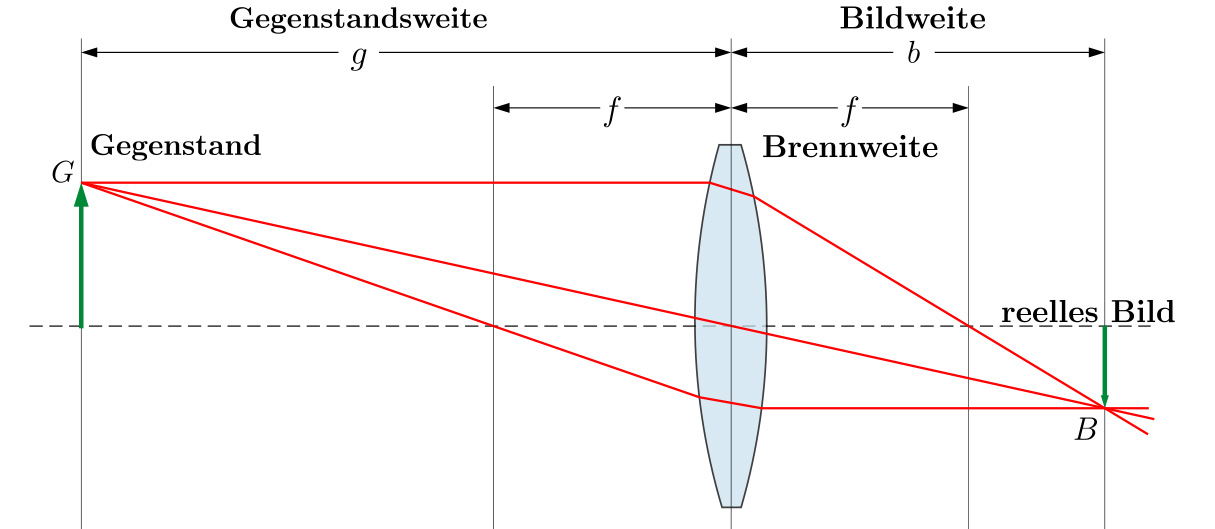 Collecting lens - Created by: JanB1605 - WikimediaCollecting lens - Created by: JanB1605 - Wikimedia
How does Tilt Shift work? How is the effect created?
Tilt shift is the shifting of the position of the lens plane in relation to the image plane, which can then be used to avoid perspective distortions caused by the camera panning. Within the 10 degrees in which most lenses can be set, light can still be transported from the exit point of the last glass element on the lens over the entire image area of the sensor / film in order to expose the image.
Shift explained
This is the height adjustment of the lens and ensures the correct representation of the front surface of the lens, such as a skyscraper. The Shift functionality is most commonly used in architectural photography, because here we almost always find falling lines through buildings, due to physics, distortions (cushion-shaped, barrel-shaped) occur, which are compensated for by the different height of the axis.
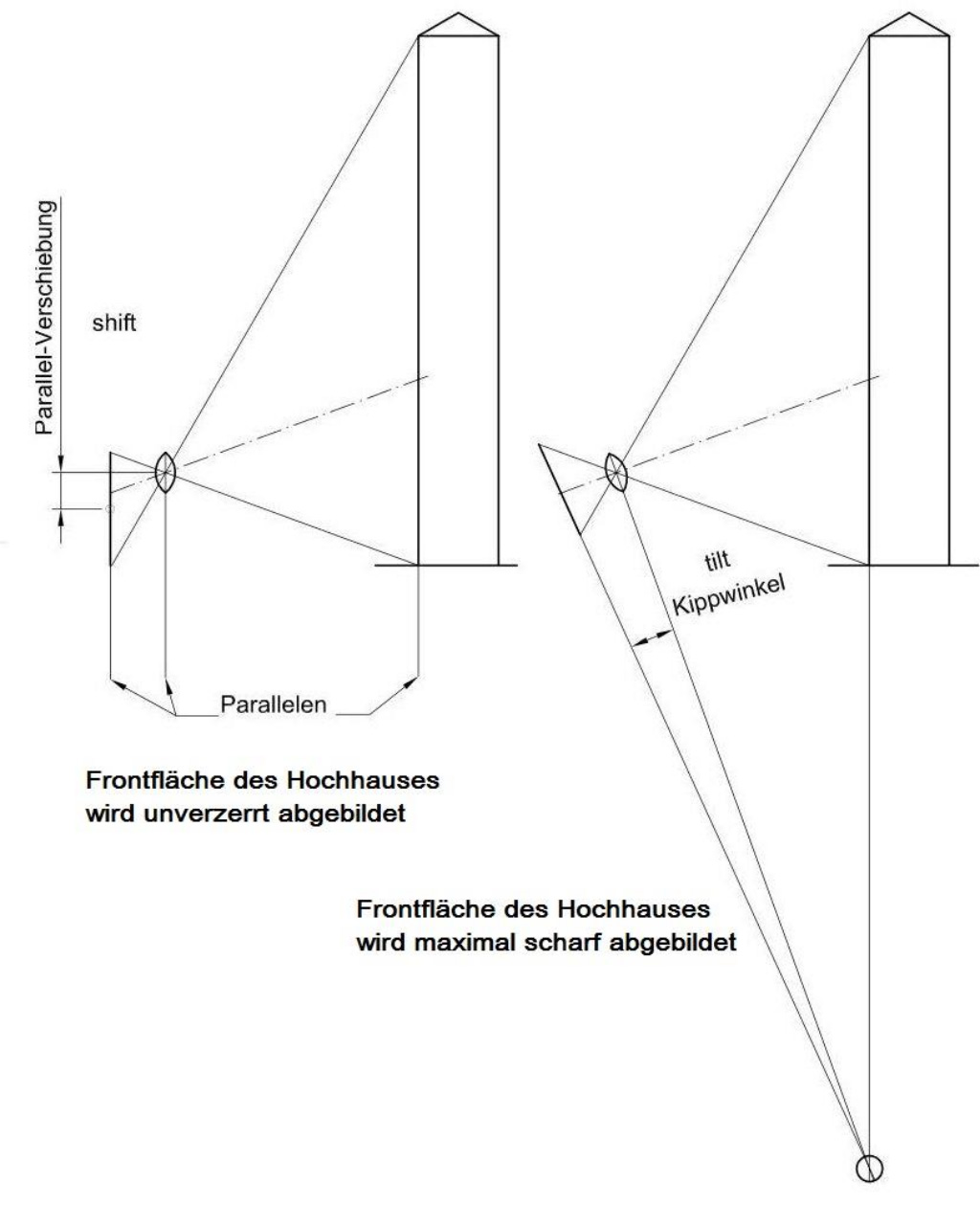 Principle representation for the illustration with shift or tilt function, image by S.Wetzel - WikimediaPrinciple representation for the illustration with shift or tilt function, image by S.Wetzel - Wikimedia
Tilt explained
Tilt allows the focal plane to move and rotate so that you can, for example, move the focus diagonally through the image without having to bring an image into Dutch Angle.
If you take a picture from above at an angle, for example 45° from above, you can use the tilt function to move the focus so that it shifts to the object below. In our video below, we move the focus to the cutting board.
Tilting also creates the miniature effect, and there is also a bit of psychology at play here, because we associate this tilt shift focus gradient with macro photography, where the proximity to the object creates a very impressive and recognizable depth of field gradient.
Optional rotation of the tilt on the lens
If you have the option of rotating your tilt shift lens by 90° at the front, the tilt of the lens no longer shifts the focus horizontally, but starts to rotate vertically.
 Using the miniature effect with tilt and shiftUsing the miniature effect with tilt and shift
 Effect of the tilt on the lens on the sharpness gradientEffect of the tilt on the lens on the sharpness curve
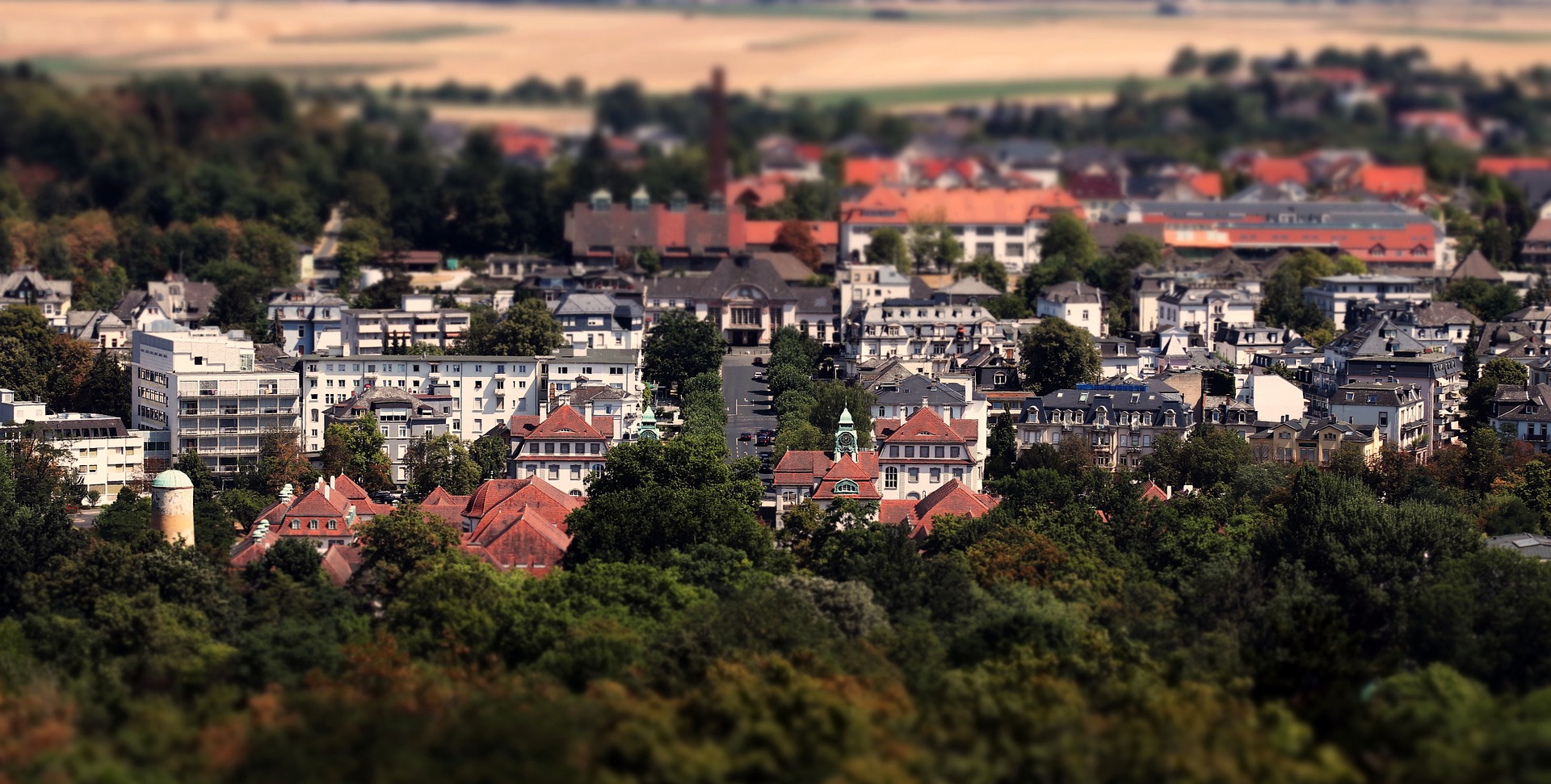 Miniature effect of the Tilt Shift in practical useMiniature effect of the Tilt Shift in practical use
Tilt Shift in practice
At the Fototage in November 2023 we showed a practical application of the Tilt Shift function for product photography in the Fujifilm GFX system, the recording is available here:

Prominent use cases
An example that some people may not have been aware of can be seen in the 2010 film The Social Network. In the scenes about rowing, perspectives are captured several times where the focus and the miniature effect were played with.
Notable tilt-shift lenses
As a dealer, we have had a number of lenses from various manufacturers in our warehouse over the years, and we would like to present a few special lenses here.
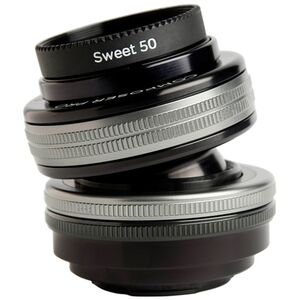
Lensbaby Composer Pro II incl. Sweet 50 - Tilt lens
Lensbaby is one of the manufacturers that build and offer quite experimental lenses. The lens in this case is the Composer Pro II and the Sweet 50, determines the focal length and the look of the bokeh, which makes it quite an interesting lens to play with.
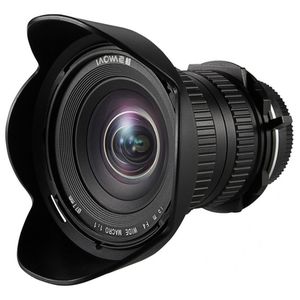
LAOWA 15mm f/4 Macro 1:1 Shift
The LAOWA Shift lens not only offers a wide angle, but also a 1:1 macro magnification. Although it lacks the tilt function, it offers the best conditions for all macro photographers who would like to do without falling lines.
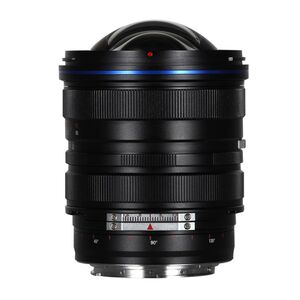
LAOWA 15mm f/4.5 Zero-D Shift
The advantage of this shift lens for architectural photography is that they are still particularly sharp and distortion-free at the edge thanks to a very low dispersion.
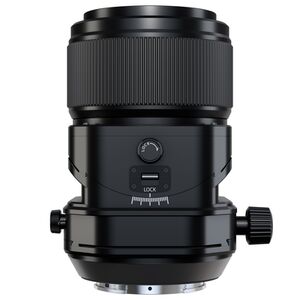
Fujifilm FUJINON GF 110mm f5.6 Tilt Shift Macro
This telephoto lens developed for the Fujifilm GFX system sets standards outside of classic architectural photography, as this lens is also suitable for macro photography and is perhaps also particularly interesting in food photography, when the demand for unusual shots is particularly high.
Advantages of Tilt Shift technology
One of the biggest advantages of this type of lens is that there is no need to crop by using the correction function in the image editing software. This works according to the keystone correction principle. In some cases, the use of tilt shift lenses results in fewer chromatic aberrations, as the angle of the incident light changes.
Alternative ways than a tilt shift lens
There are various ways to achieve the same effect as with a tilt shift lens without an expensive tilt shift lens.
Lens adapter
With this adapter, almost all lenses can be used as tilt shift lenses, but you usually lose the autofocus and have to rely on manual focus.
Post-production / post-processing
In post-production, you can use the correction function depending on the editing program, as mentioned above. In Lightroom, you draw in the corresponding lines and Lightroom then calculates the distortion from the image.
The miniature effect can also be imitated in this way, because you can draw the blur into the image with a linear gradient and thus achieve this effect. However, it does not look as realistic in some cases, as the lens blur would behave differently and softer, especially if there are reflective, luminous objects in the blur.
With Adobe Photoshop, you can imitate the effect using the tilt-shift filter and produce a quite respectable result.
Conclusion - Who is Tilt Shift suitable for?
Let's be honest, most photographers don't need a tilt shift lens, because the price is very high in most cases and if you don't use it regularly, then it's almost not worth buying, as the technology has become very good. In applications such as our presentation at the Fototage, it makes sense to use a tilt shift lens if the customer is looking for maximum quality. The history of tilt shift and how the technology works is exciting.

A small task for you:
Try the correction in your image editing, if you like the theme of the miniature, then it makes sense to try out a tilt shift lens.
Show us your pictures on Instagram and/or Facebook and tag us @fotokochde! We look forward to seeing your results!
Thank you for reading this article. If you're interested in other photography basics, then take a look at the other camera basics

Get to know your camera ? Discover the fun of photography
Have you bought a camera and are taking your first steps in photography? You're missing out on a lot of potential with automatic mode! Photography is only really fun when you understand your camera and know exactly which settings to use to get the photo you want. Get to know the importance of the functions and ignite your enthusiasm for photography
To all camera basics