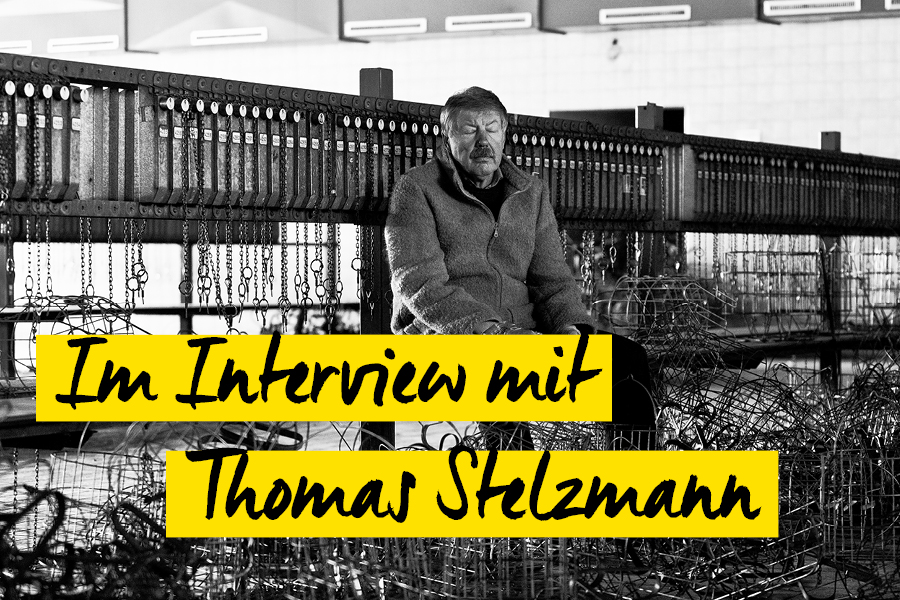
Interview with Thomas Stelzmann
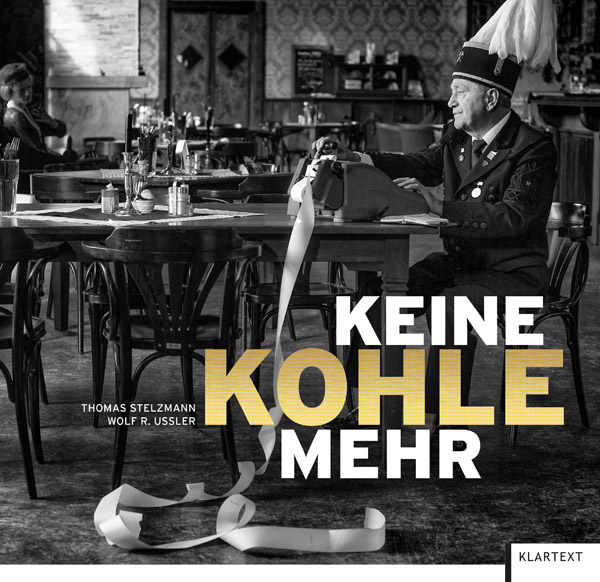
For their project "No more coal", D?sseldorf photographers Wolf R. Ussler and Thomas Stelzmann brought 51 former miners back to the ground of their former pits and staged them there photographically. Each of these unique black and white compositions tells a piece of personal history. The works reveal what shaped the life of each person portrayed and often gave it meaning. The two photographers invested almost four years of work in this project and their book "keine Kohle mehr" was recently published.
In this interview, we ask Thomas Stelzmann about the idea, the approach and his experiences during the project.
Your book "No more coal" has finally been published. What can readers expect in the illustrated book? The illustrated book is a distillation of almost four years of work that my colleague Wolf Ussler and I have invested. 51 motifs combine the past, present and, in some cases, the future of both the person and the place depicted. The strength of photography to capture moments has already become apparent during the project, because some of the places that can be seen in the book no longer exist. Unfortunately, this also applies to the people. So the reader can expect a mixture of the human and the personal in the form of pictorial excerpts from the life stories, coupled with the history of the place. I don't think this has ever been done before.
"I don't think this has ever happened before."
How did the project come about? There was originally the idea of simply portraying up to 100 miners at their former workplace, all the same, always in the same light. Then we put the concept of staging important parts of their lives like a foil over it and found that it worked. After the first few shoots, we quickly reduced the desired number "100" to 80, 70 and finally 50. It was impossible to manage, the effort was immense. But since we didn't want an anniversary number in the project, we went one better and stopped at 51 people.
Who was involved in the project? Apart from the miners? There are a large number of supporters who were instrumental behind the scenes. RAG Montan Immobilien coordinated the dates on its sites and provided us with an escort, and we also asked companies and private individuals for access. People and companies who lent us props and equipment are also among them. There really are a lot of them, but we have listed them all on our homepage.

How long did it take? The preliminary planning alone, which followed the brainstorming and the concept, took several months. We first had to organize who we wanted to photograph, where and how, which also required the interviews. We also had to obtain the necessary permits. We had the first shoot in January 2012 and the last one in March 2015. While the photos were still being taken, the first twenty pictures were exhibited in the state parliament.
The final exhibition then took place in the German Mining Museum in 2015. A good four years have passed, which is a lot of time for one topic. Not including the work on the book.
You can purchase the illustrated book about the photo project "No more coal" here.
Were there any interesting events during this time that particularly fascinated you? Yes, of course. A lot happened on the human side. There were tears during the interviews because events from difficult times came up again, so you had to react carefully. The return of some miners to their workplace also caused very emotional moments. But there were also things that couldn't be explained. There was one miner who suddenly canceled his participation in the project the night before the shoot. We never found out why. That was a pity because everything was prepared and we then needed someone else for this location. A powerful experience was visiting the Auguste-Viktoria mine several times, where we shot one of the motifs at a depth of over 800 meters. According to the state parliament, the opening of the exhibition in the state parliament was the most successful in 30 years. 1400 people saw the exhibition during the Night of the Museums alone. There were many anecdotes that come to mind piece by piece when you see individual pictures.
What do you want to convey with the project?
As a coal and steel region, the Ruhr has always been a scene of forced change, then as now. The people there have always been forced to react. Things will continue to change there in the future, and the structural transformation will take a very long time. In our opinion, the change cannot be depicted by only photographing industrial ruins.
Of course it doesn't take much effort, but whether there is still a headframe there now or whether it will be demolished 10 years later is irrelevant. It is the people and their stories that make up the Ruhr region, that have shaped it. Their stories will disappear very soon, and that's what we wanted to preserve. We wanted to create an awareness of these people.
"There were many anecdotes that come to mind piece by piece when you see individual pictures."
How did you proceed?
In very small steps. Once we had the idea, we had to find the people. We did this in a roundabout way, because RAG couldn't give us any contact details of its employees for data protection reasons.
Then we went to the place where the colliery was located. That wasn't always easy, because nothing stays the same. Where the collieries once stood is now often forest, scrubland, residential areas and industry. Google Earth was a powerful tool, as were the websites of colliery fans. We then did the interview, filtered out an idea and then implemented it in another appointment. On average, we traveled to the Ruhr area three times for each photo, plus the trips for props, equipment etc.. Occasionally, however, we were able to combine two interviews and photo shoots.
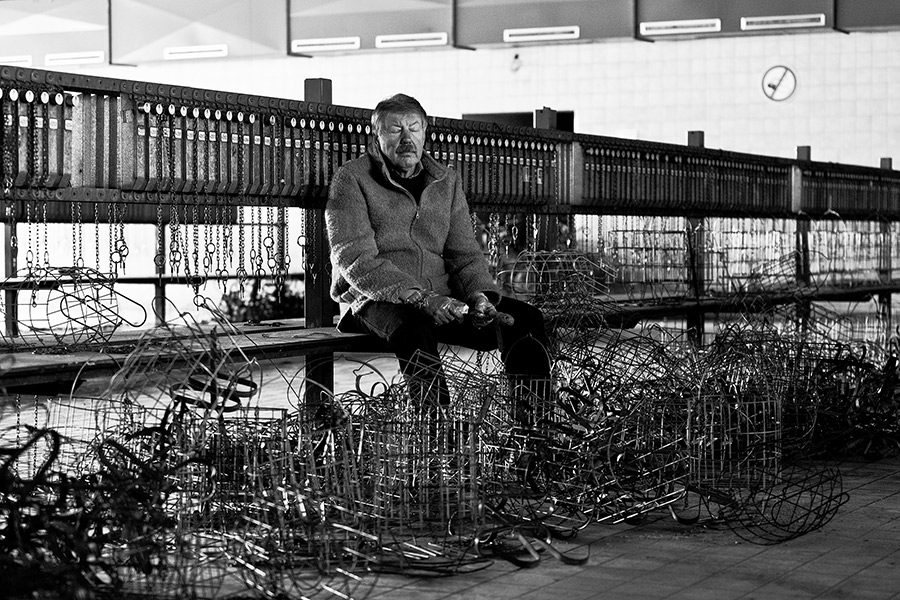 Josef Penkalla from "No more coal"
What did you attach particular importance to in the photographs?
Reduction and authenticity. Despite the huge task of bringing together different aspects of the past, present and future of both the person and the place in one picture, it was important not to get bogged down. "Omitting" was an important recipe. In addition, the photos had to be genuine because they had a historical claim. Apart from the classic darkroom work, there was no messing around with Photoshop, we owed it to the motifs
Were there any difficulties or did everything go smoothly?
We had 51 photo shoots, everything never goes smoothly, no matter how well you plan ahead. Sometimes really stupid things happen. We had a model series of studio flashes that absolutely could not be operated on our (expensive) power unit, while other models from this manufacturer worked without any problems. Who is supposed to know this, and above all: who builds these things? We then used 15-year-old flashes without digital technology, which worked perfectly. Then there was a camera that had received a firmware update during servicing and could no longer control flashes. Props broke before the shoot when loading them into the car. Things like that. But nothing happened that we couldn't "improvise away".
The really complicated shoots with a lot of technology and effort all went off without a hitch.
Good planning pays off.
What do you expect from the project/book?
Firstly, we want to create an awareness of how "the pot" is changing. Structural change is brutal, almost ruthless, but unstoppable. Familiar things are disappearing and, at best, being replaced by something new. Whether this is good or bad is something everyone has to decide for themselves. On the other hand, as photographers we want to leave a clear mark.
Dealing with a topic for four years and publishing a book has a different quality than an exclusively online presentation. We appeal to bibliophiles with a good product, with pictures and stories that don't require a computer, that will still be relevant in 20 years' time.
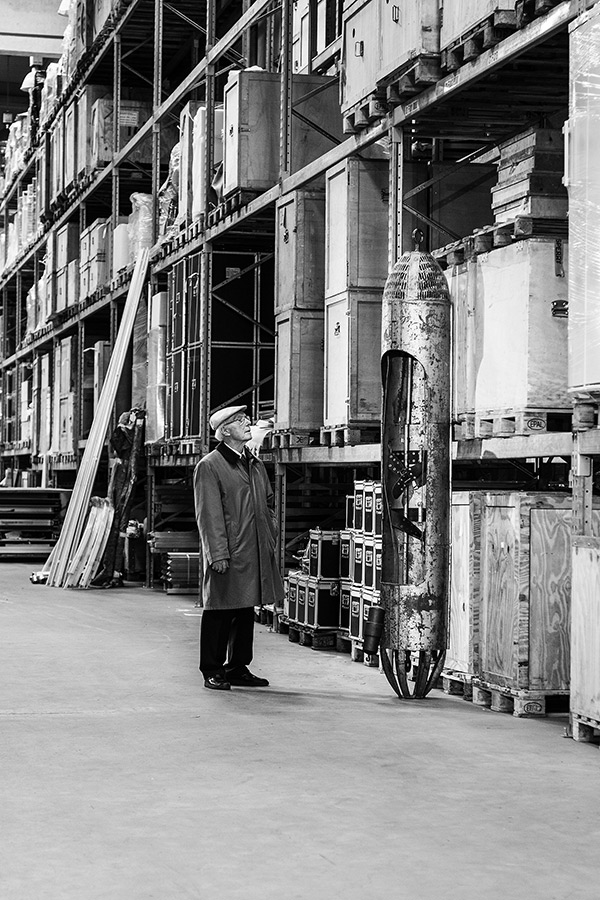 Wilhelm Tax from "Keine Kohle mehr"
What advice would you like to give other photographers for their own projects?
I can only speak for myself, but I think that projects and larger series have far more substance than pictures on social networks that are forgotten after a few seconds. This feeding of the online community for a few likes is the modern Tamagotchi. Images and the story behind them really need to be seen, they need to stand out from the crowd, they need to be brought to the people. "Do things that aren't easy" would be a message to the photographers out there. The world is full of superficiality, you don't need any more of that. Make something that lasts and put it on walls or on paper. Because it will stay there for many years to come.
What are your next projects? We don't have any projects planned at the moment, although we do have a few ideas. That has to mature. At the moment we each have our own projects and work. But I would do a project with Wolf again at any time.
"Make something that lasts and put it on walls or on paper. Because it will stay there for many years."
Related topics
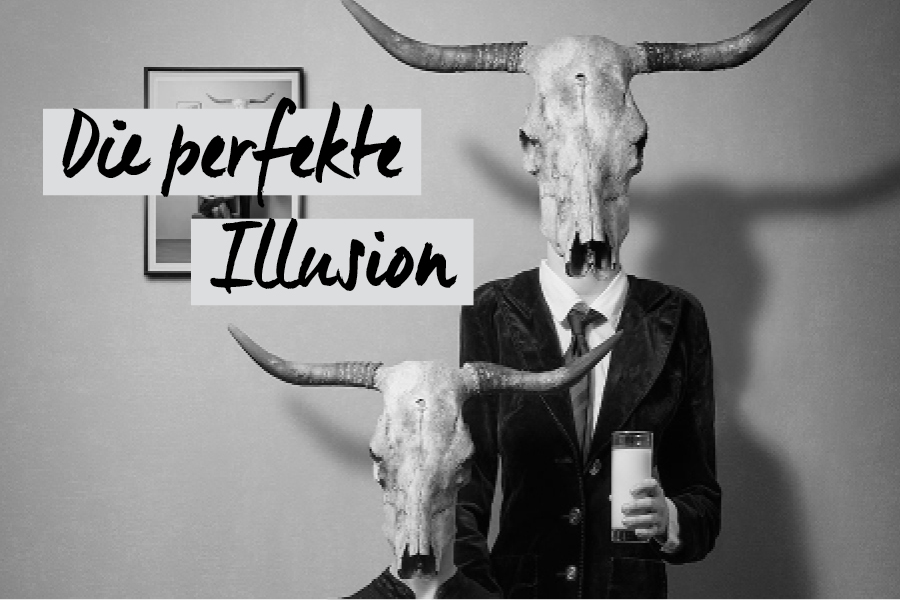
Melancholic imagery and surreal stories
The young artist Mrs. White talks about her own, very personal and unique photography. further information
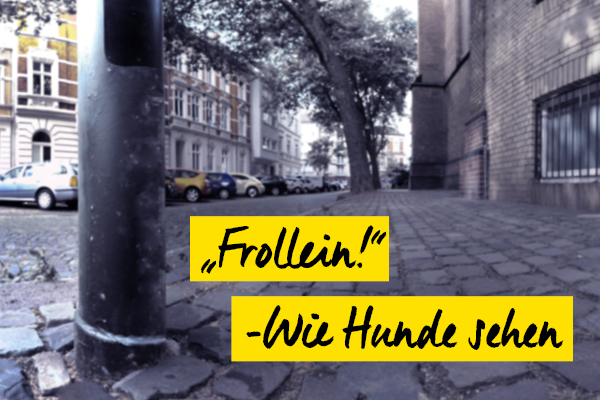
The world from a dog's point of view
Thomas Stelzmann decides to conduct an experiment and photographically depict the world from a dog's point of view. further information