Stark contrasts -
playing with light and shadow
Learn how to create great image compositions with light and shadow in today's article. All you need is a camera, a lens and a little curiosity. The possible motifs are right on your doorstep. After a bit of theory, you can get started right away.
It's vacation time! Still! Some people are on vacation, and now and then the sun is even shining - what more could you want?
How was that? Bored? What do you mean, you're bored??
Okay, wait, there's something you can do about that. If you have a camera, you're not completely immune to boredom, but there are a few ways to pass the time and produce something nice at the same time. Let's talk about our eyes first. No, not a biology lesson, that's part of the plan, so sit down and read.
Our eyes really do a number on us. Not just them alone, of course, but the trio eye number 1, eye number 2, in close cooperation with our brain. Hardly a day goes by without the three of them showing us the world differently than it actually is. Most of the time, we don't even notice this because, firstly, we don't know any different and, secondly, it doesn't occur to us to question what we see and whether it could all be completely different. Our brain in particular is constantly making adjustments to what we see (or think we see) and linking what we see with experiences, i.e. with conclusions from the past.
Want an example?
Stand at a crossroads in bright sunshine. Yes, I know, bright sunshine has been in short supply so far this summer, but try it. What do you see? Streets, people, cars, bright spots, deep shadows. There are light and dark contrasts, but you'll have everything in view, you'll be able to see everything perfectly, even in the shadow areas. Nothing will be "invisible".
Then take a photo now, with full automatic if you like. I won't tell anyone else. You'll notice that the picture looks completely different from what you saw. Where the sun shines, areas of the picture will be very bright, perhaps even washed out. Drawing is lost, the cracks in the pavement merge with the cobblestones to form a closed surface, house facades made of rough natural stone become a single bright surface and so on. Other areas will be so dark that you get the impression that someone has spilled ink there.

Well, what do you say now? You certainly didn't perceive it like that, did you? That's because your brain adjusts these differences in brightness, it does a life HDR, so to speak, all day long. Dark things get lighter, light things get darker. Experience says: "Yes, it's dark back there, but there's still something there." And then we can see it."
This ability probably dates back to the past, when wild animals had a taste for humans under the cover of bushes and undergrowth and it was extremely advantageous for them to notice this. Preferably before the attack. After all, you are much slower when hunting and picking berries if you are missing a leg. However, the pre-sorting and processing of what we see in our heads also ensures that some beautiful and aesthetic things remain hidden from us. It gets lost in this processing because our brain doesn't consider it important.
And here we come. We know that there is more to see if the editing doesn't take place, but we can't switch it off. This is where the incorruptibility of a camera comes into play. It has no experience to fall back on, it records what it "sees". That's what we need. With its help, we bring a few things to light that we wouldn't expect and also break one or two photographic "rules"
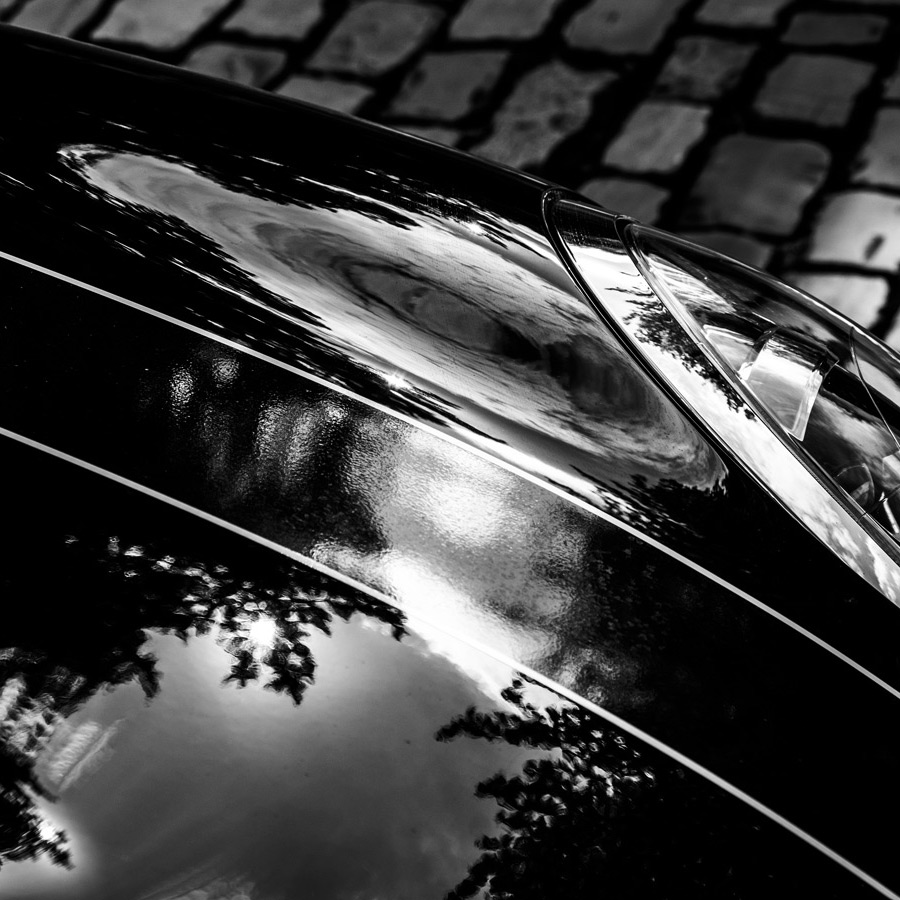
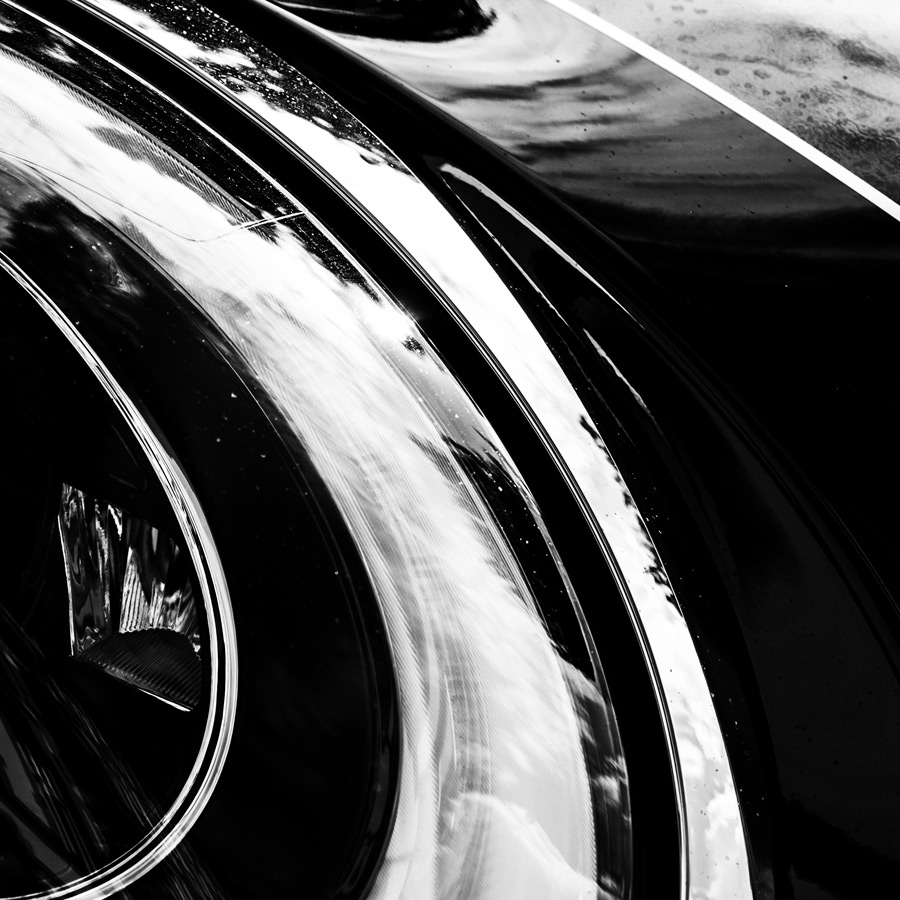
"...and break one or two photographic rules."
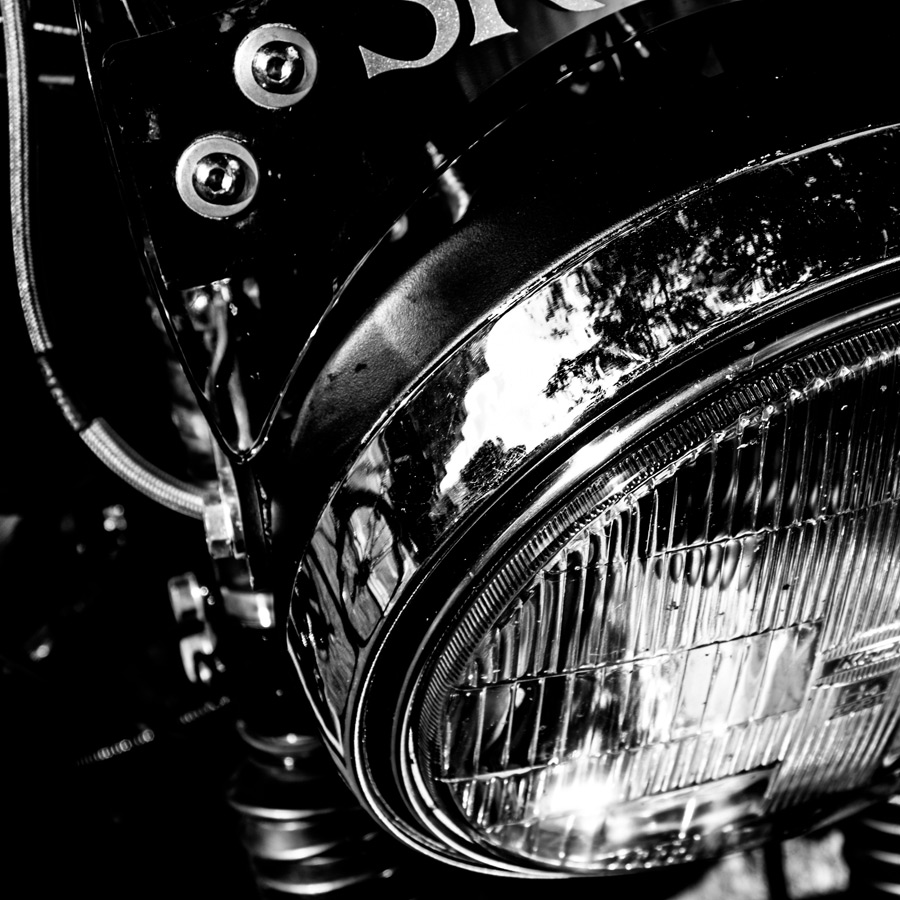
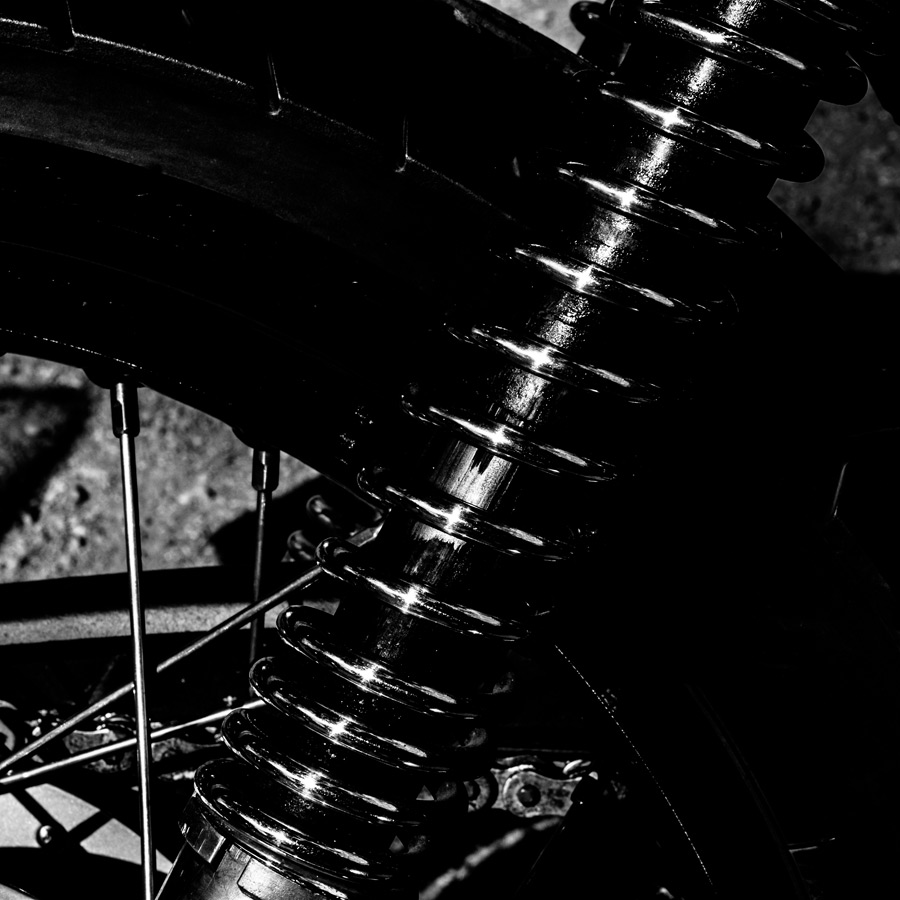
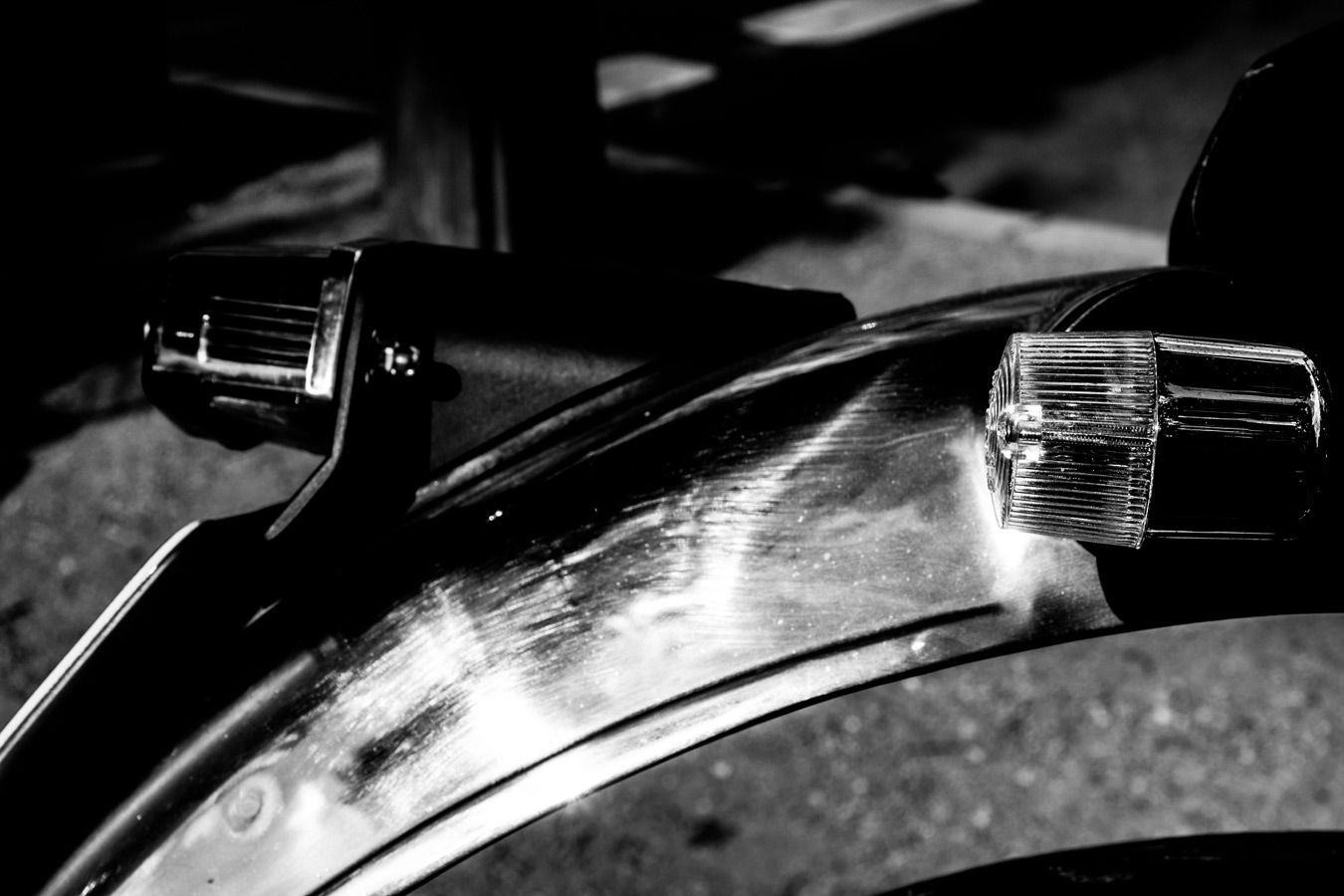
To this end, we try to pay attention to objects that shine in the sun and have curves and edges. Here you can find hard reflections of light, so-called highlights. Polished and chrome-plated components of beautiful motorcycles, for example, are very suitable for this. By "beautiful" I don't mean those plastic-clad racing bikes in aggro design that sound like slurry pumps on steroids, but something real, a Harley for example, or something old.
Norton. Royal Enfield. Triumph. You know the ones. Okay, the polished handlebars and bell of a nice Dutch bike will do in a pinch. You'll also find what you're looking for in the four-wheeled sector. Folds and edges in the sheet metal of cars are great. The darker the cars are, the better it works, and it works best in bright sunshine. I know you don't normally take photos in bright sunshine, but we'll make an exception here and do it anyway. Breaking the rules Before we get started, however, we set the camera to take RAW images in addition to the usual JPEG images. On the one hand, this makes sense because of the expected wide range between light and dark tones, which is what we are interested in. After all, a RAW file can depict significantly more gradations between light and dark than a JPG file before overexposure or underexposure occurs. On the other hand, pre-processing the images in the RAW converter, i.e. the program that "develops" and saves the RAW files, is often easier than in the editing program itself. Have you set the RAW mode? Great.
Then we look for something nice, shiny, dark-painted with edges and chrome. In D?sseldorf, I was completely surprised to find something like this on the K? and in the nearby old town area. Depending on how we stand and look at the bodywork, we will see that the light edges stand out. Sharp edges are more conspicuous than round sheet metal. The task now is to concentrate in your mind only on these bright edges and imagine what it would look like if everything except them were dark. You have to take your time and withstand the critical looks of passers-by ("What's he doing there?" Is that allowed?"). Most people today no longer understand that good photos are not taken on the side, but are the result of looking and thinking. Move around, walk around the lens, get down on your knees, even if it cracks and bangs.
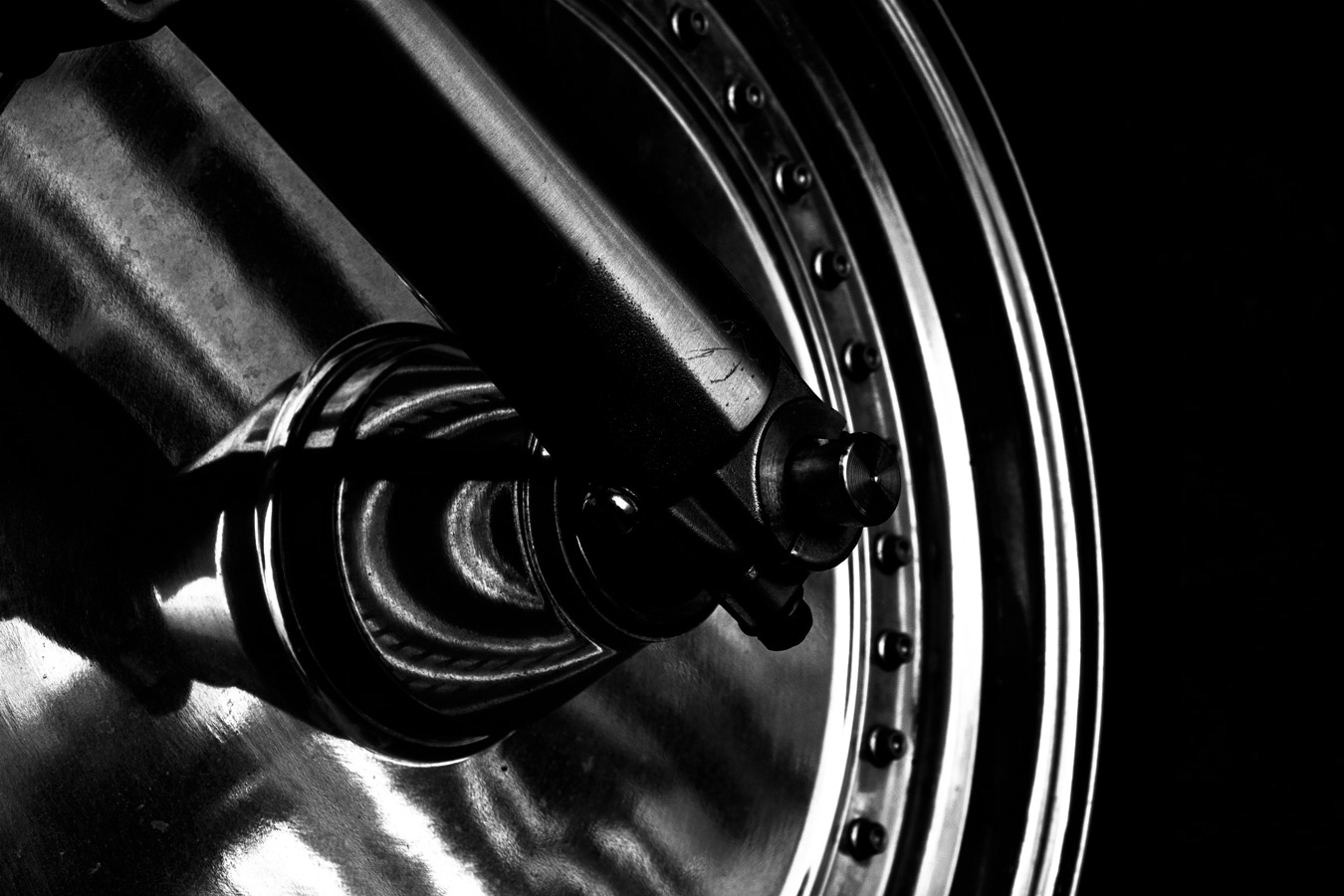
The object should only be described by light edges and lines, and the term "object" should become part of our plan: We don't want to provide the viewer with a finished image, but rather a visual task, something along the lines of "What is this...?" Photography does not always have the task of showing reality, as sharply and closely as possible to the original. It can also play. It can unsettle and obscure, it can blur and symbolize, but above all it can reduce and thus produce the abstract. In our case: pars pro toto, a part for the whole. Leave the rest to the viewer.
The settings you need to make on the camera depend on the result you want to achieve. As we are working in bright light, the ISO number should be as low as possible. And switch off the automatic ISO, as it usually produces nothing but nonsense anyway. If you want a sharpness gradient in the edges of the light, you should consider where it should start and where it should end. An open aperture, a little more focal length and a smaller distance between you and the precious metal will help. Experiment with the exposure time. Take several pictures and choose a shorter and shorter time. The edges of the light and reflections will and should always be visible, because that is what we are interested in, but if possible everything else should be allowed to remain. Rotate the camera and hold it at an angle to arrange the lines in the section. As you are only taking a section, the real "top" and "bottom" can differ from the one in the picture. Because summer is also on vacation this year, you can now spend the less beautiful days editing the pictures you have taken. As part of the reduction process, I suggest working in black and white and reducing the saturation for this purpose. You should then try to pull down the dark areas and increase the contrast. You can also brighten up the very bright areas of the image ("highlights"). This works wonderfully in the usual RAW converters. Do it according to your taste and you will create truly black and white images in which individual dark areas may well "drown ".That would be the second photographic rule that we break: We deliberately let the depths sink in favor of the graphic effect between the dark and the very light areas. Let the silver streaks of light come into their own, work them out!
"Let the silver lining of light come into its own."
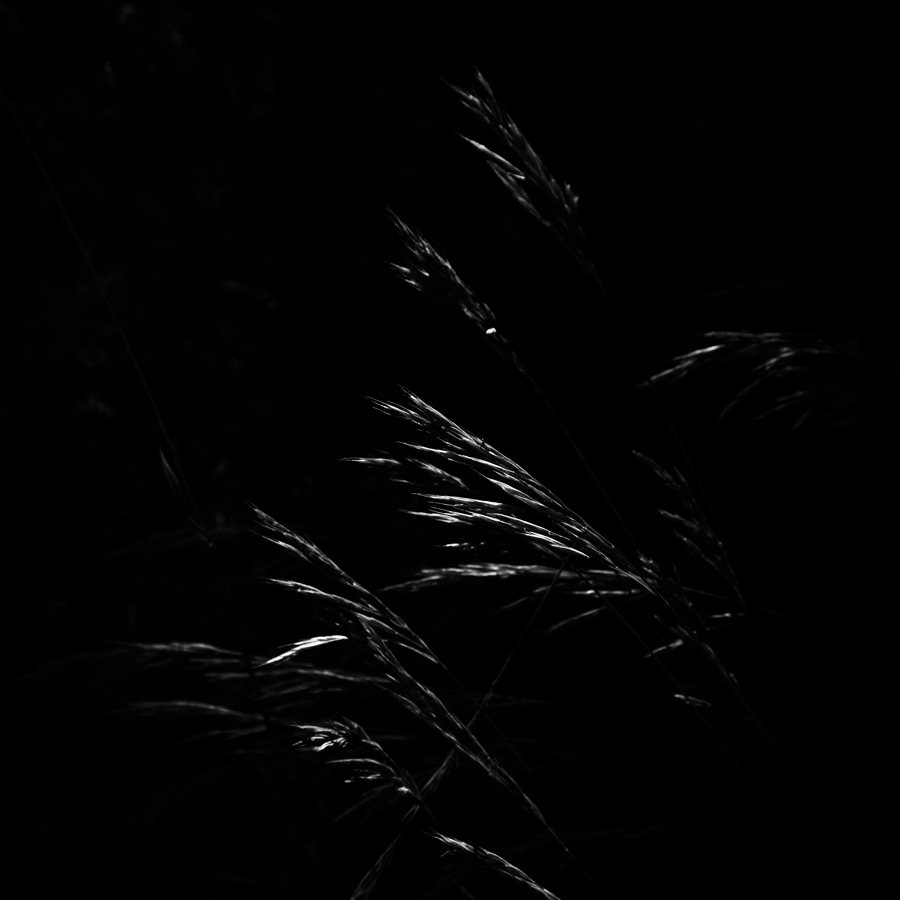
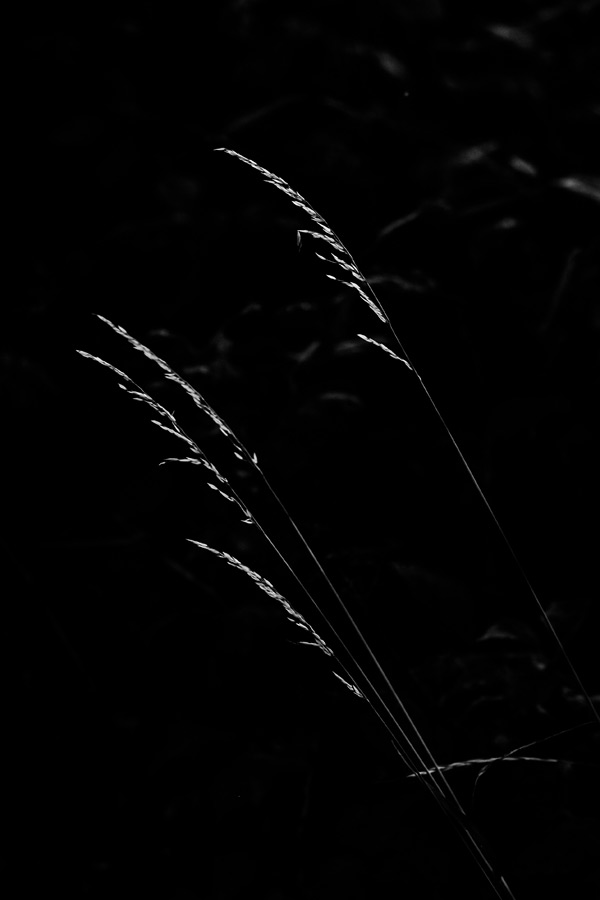
If you don't feel like photographing inanimate objects, you're welcome to go into the forest - that's not meant to sound like "Then go if you don't want to take part!", I'm serious. Plants standing in front of a dark background (dark earth, but not a meadow) and illuminated by the sun shining through the foliage produce similar effects, albeit not quite as strong. This works quite well with grasses and other plants whose components such as stems or leaves are smooth and firm. You are unlikely to find really hard light edges on plants, but the effect of reduction is also clearly visible here - just try it out! Leave out everything you don't need. After all, photography means leaving everything out until you have everything left Have a nice rest of your vacation!
Related topics
Symbiosis of man and environment - a portrait of Thomas Leuthard
In this article, we talk to Swiss photographer Thomas Leuthard about his very special kind of street photography Read now
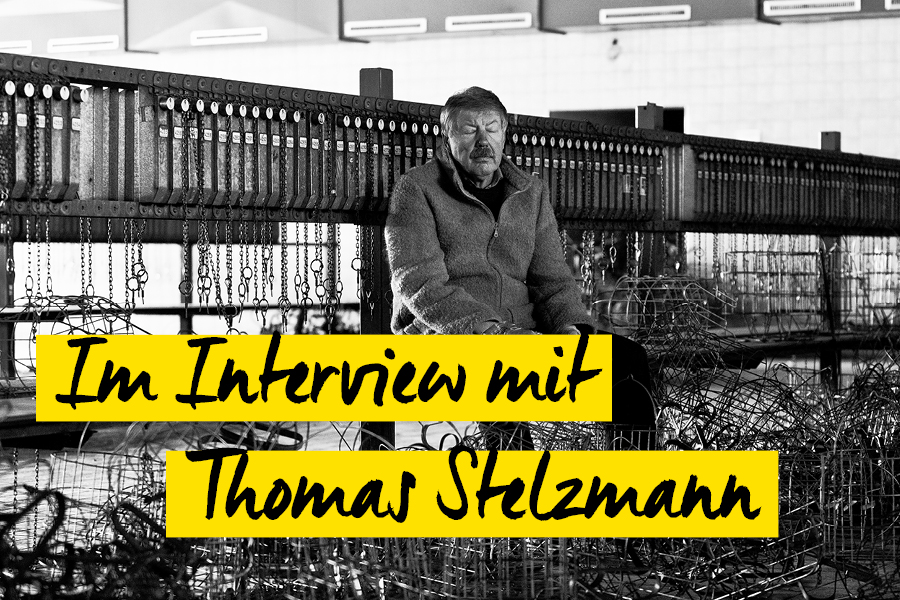
Interview with Thomas Stelzmann
In this interview, you can find out more about the "No more coal" project and get an insight "behind the scenes." Read now