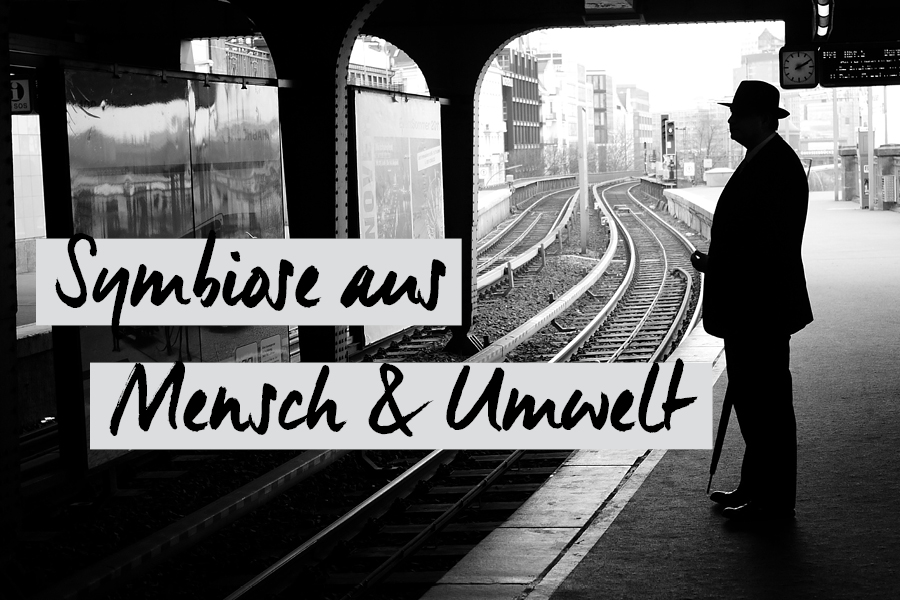
 Hitchcock, Hamburg
Symbiosis of
human and environment
From the magazine Schnappschuss No. 55
The passionate photographer from the heart of Switzerland travels to the world's biggest cities to document life on the street. He works with a mirrorless system camera to capture the essence of ordinary life in public. The camera serves as a black box for him to capture the moment as seen through his eyes. In our article, we talk to
Thomas Leuthard, who answers more important questions about street photography than equipment
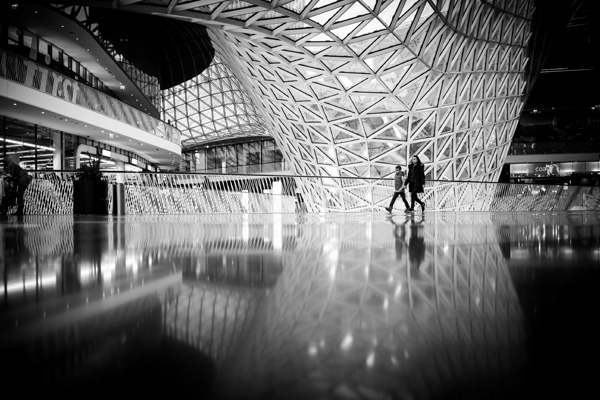 My Zeil, Frankfurt
For Thomas Leuthard, the focus has always been on the "normal" person, whom he tries to photograph in their natural environment, in the wild, so to speak. It is important to him that he does not stage a scene, does not ask the person and always tries to create something special from normal everyday life. The appeal of street photography is clearly the challenge of going out on the street with very little equipment and no expectations, without knowing what you will come back with. Apart from the camera position and the camera settings, you can't influence anything. But that's exactly what makes this type of photography different for him. Thomas loves being independent of models, studio availability, weather and other influences. You can go out and look for motifs at any time, because there are always motifs everywhere.
"Showing people and their environment in a symbiosis."
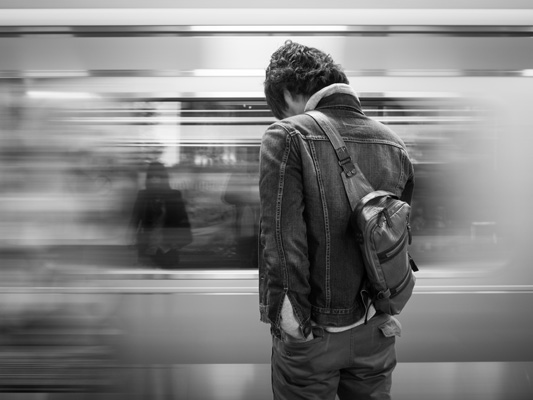 Texting her, Tokyo
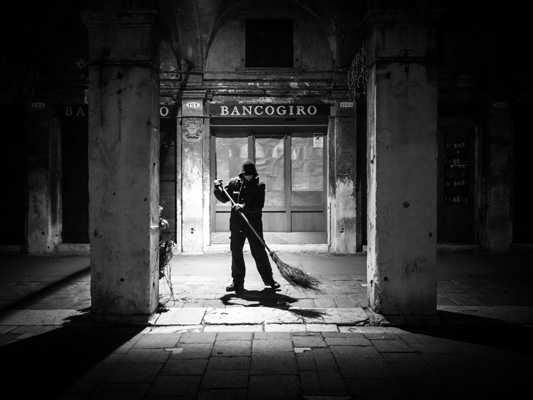 Bancogiro, Venice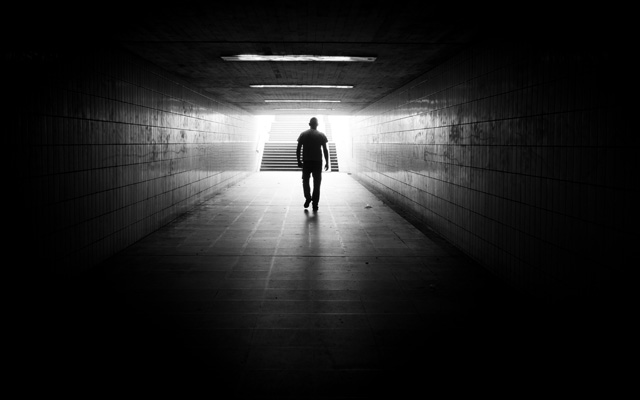
 Light at the end of the tunnel, Cologne
Thomas Leuthard is a dedicated street photographer from the center of Switzerland. At the beginning of 2008, he bought the cheapest SLR camera available at the time out of an interest in technology. A first photography course taught him the basics, and a 3.5-week stay at the Summer Olympics in Beijing brought him closer to life on the street. It then took him almost another year to focus solely on street photography. During a photography course, he quickly realized that conventional photography was too elaborate, too posed and too normal. Leuthard photographs 99% in black and white, even if some people think it's easier. That may be the case, but for him, monochrome photography automatically reduces a motif to its content, emotions, structures and shapes. "This makes it easier for the viewer to concentrate on the essentials," says the Swiss photographer. "After all, life on the street these days is far too colorful to limit oneself to just one motif. It's almost impossible not to have distracting colors in the picture. Much more important than the color is the context in which the person is depicted."
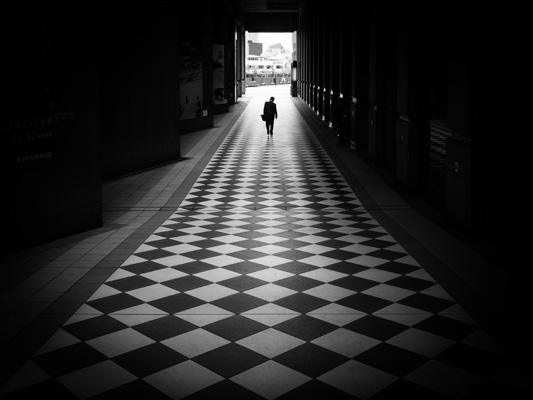 Museum of Photography, Tokyo
Leuthard absolutely needs a person in his pictures, because otherwise the picture is dead to him. And it is precisely this person that is important. They
are supposed to be depicted in a story. And you can only show them authentically if you don't capture the people too close, but not too far away either. The urban space in which the person is located tells the story and the photographer decides from what distance to depict it. As soon as the photographer uses a long focal length, the viewer of the photo feels like an observer opposite the person in the picture. However, if the photographer shoots with a short focal length of around 35 mm, the result is pictures that make the viewer feel like they are right in the middle of the action. And it is precisely this closeness that Thomas Leuthard's photography is all about. Thomas Leuthard always tries to show people and their surroundings in a symbiosis, even if his pictures are taken both at close range and from a distance. The artist makes use of a wide variety of stylistic elements and photographic techniques. For this very reason, you can take pictures on the street at any time of day or night, because you can always fall back on a way to take a picture even in difficult situations. The time of day dictates the method. If the sun is shining, you can work with shadows, if it is low, there are silhouettes, if it is foggy, you can use this to take close portraits, etc.
"The good street photographer has mastered many techniques and is so flexible that he immediately applies the right one to every scene. And if he is also creative and innovative, he will find a way to capture the subject in a different way," leuthard tells us. This is important because there is already too much irrelevant mainstream in this genre. It's not for nothing that street photography is called the Champions League of photography, says the Swiss photographer. A lot of things happen in a very short space of time and the photographer can only intervene through his point of view and the camera settings. He has to leave everything else to chance. Staging it would be like heating up a ready meal from the supermarket freezer. The fantastic Swiss "street artist" talks to us about the very special feeling of street photography. Ultimately, for him it's about getting out and meeting like-minded people. The longer and more often, the more pure photography fades into the background and networking and communication between photographers takes center stage. The reason for this is probably the loneliness of this type of photography, which for many offers a balance to their job. But when the job is no longer so intense - Leuthard only works 60% of the time - maintaining contacts becomes more important again. Of course, it's also about exchanging information, giving feedback on pictures and discussing current and future projects. Normally you start out alone with your camera and over the years a small family of street photographers forms that meets regularly at photo walks or regulars' tables. The aim of such meetings is also to have a discussion about pictures and not about technology.
"For Leuthard, a person is essential in his pictures, otherwise the picture is dead for him."
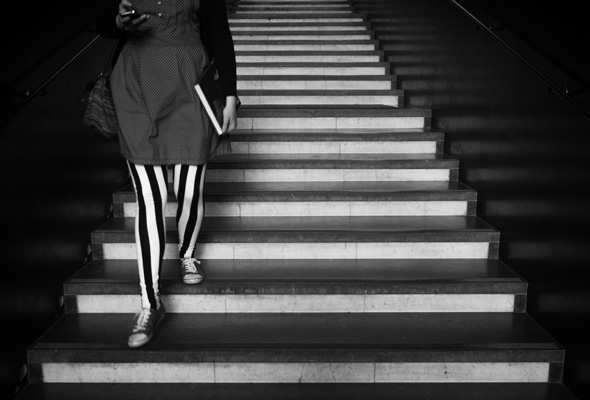 Stripes I, Stockholm
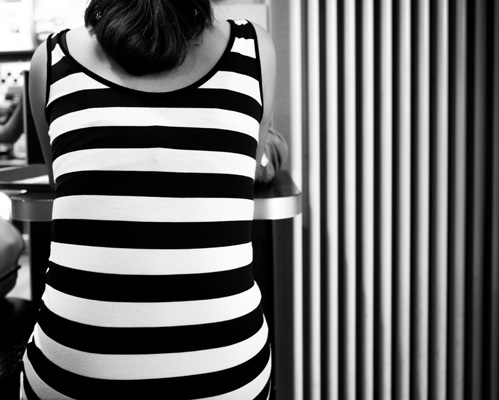 Stripes II, Zurich
Unfortunately, technology is still far too much in the foreground, says Leuthard. A camera on the street has to be as small and discreet as possible. A folding display allows him to take pictures from many more positions and much less conspicuously than through the viewfinder of a DSLR. Of course he also edits the images on the computer, but the same applies to him here: less is more. If he has to tinker with an image for more than a minute, he should actually delete it, says the street photographer. Because then he has done something wrong in the camera that cannot be corrected on the computer. For this reason, the activities before the shutter release are the most important for him. The same applies after editing. Here it is elementary where the pictures are distributed.
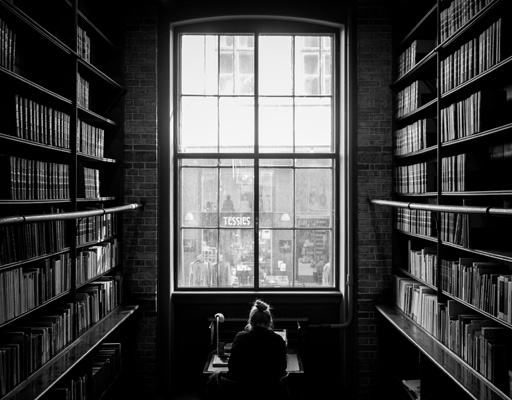 Tessies, Koppenhagen
Leuthard is active on the most important social media platforms and uploads his pictures without restriction. Anyone who is afraid of data theft should stay offline, because once online, an image can no longer be controlled. The Creative Commons license makes it very easy to distribute his images very widely. "No, you can't earn money with it, but a good reach is much more important today than money. At the end of the day, it's about the fun you have walking around the city with your camera. Whether you do it alone or in a group is less important," Leuthard tells us at the end. "Getting out, moving around and capturing life. That's what street photography is all about." Info and more works by the artist: Thomas Leuthard
www.thomas.leuthard.photography Note
Exhibition "Streetphotography " Until September 30, Foto Koch in D?sseldorf is hosting a small exhibition on the subject of "Streetphotography" in collaboration with Olympus. Here the Swiss photographer is showing some of his work. Further information can be found at:
fotokoch.de/exhibition
Related topics
Melancholic imagery and surreal stories
The young artist Mrs. White talks about her own, very personal and unique photography further information
Interview with Thomas Stelzmann
In this interview, you can find out more about the "No more coal" project and get an insight "behind the scenes." Read now