
The Pink and Blue Project
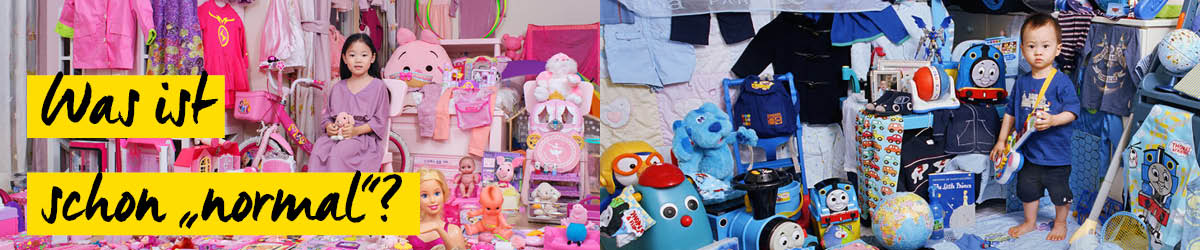
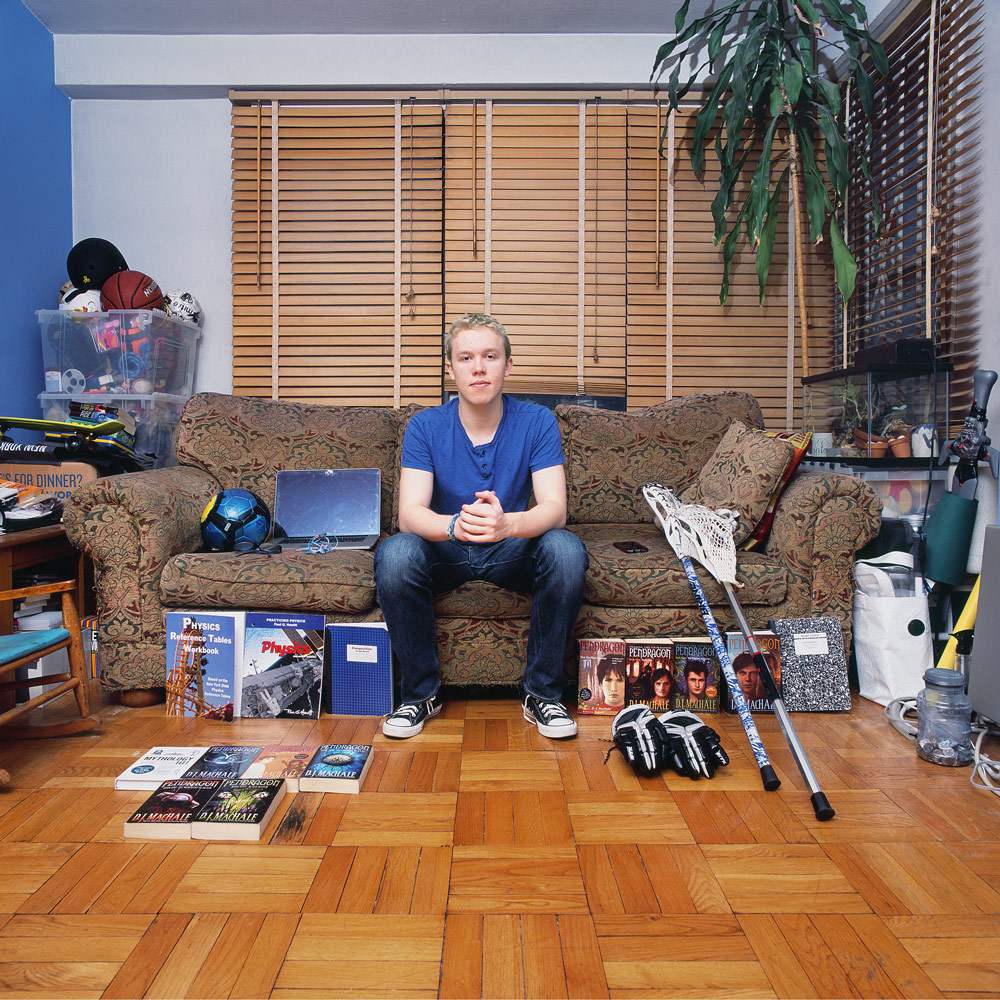
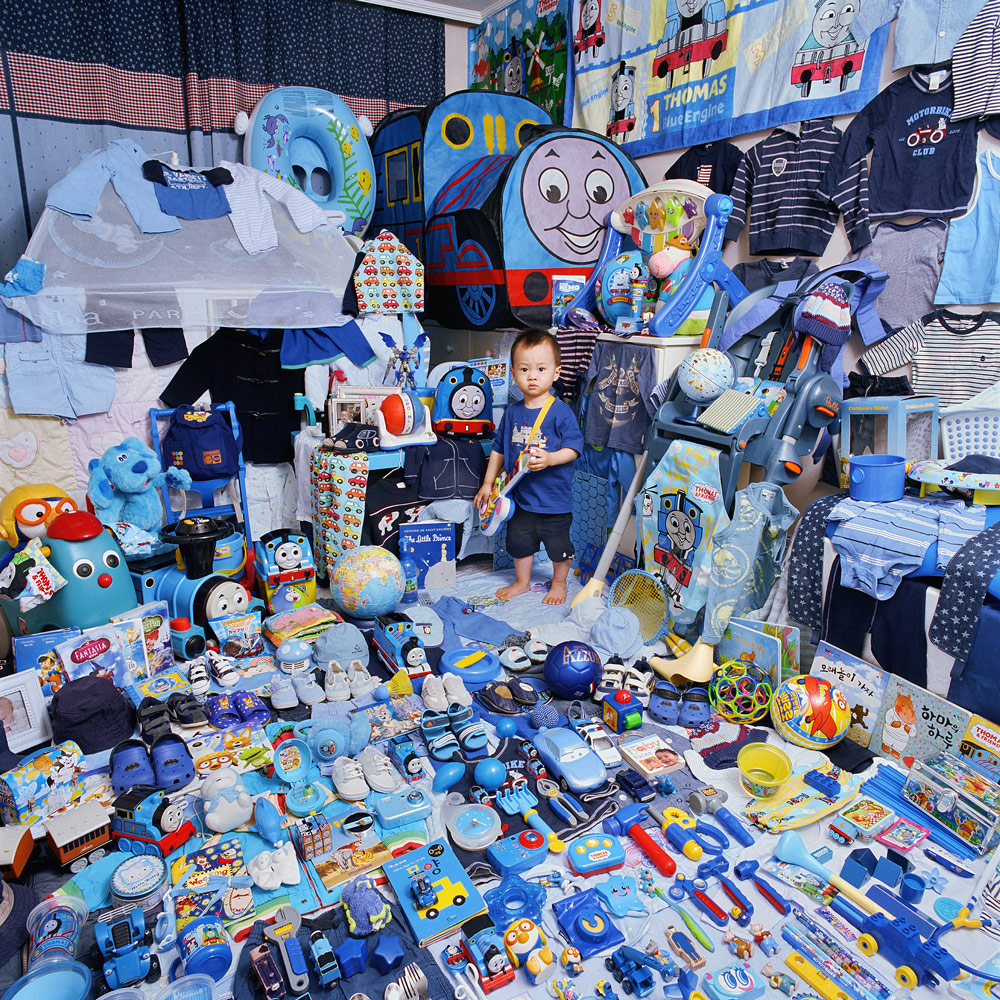
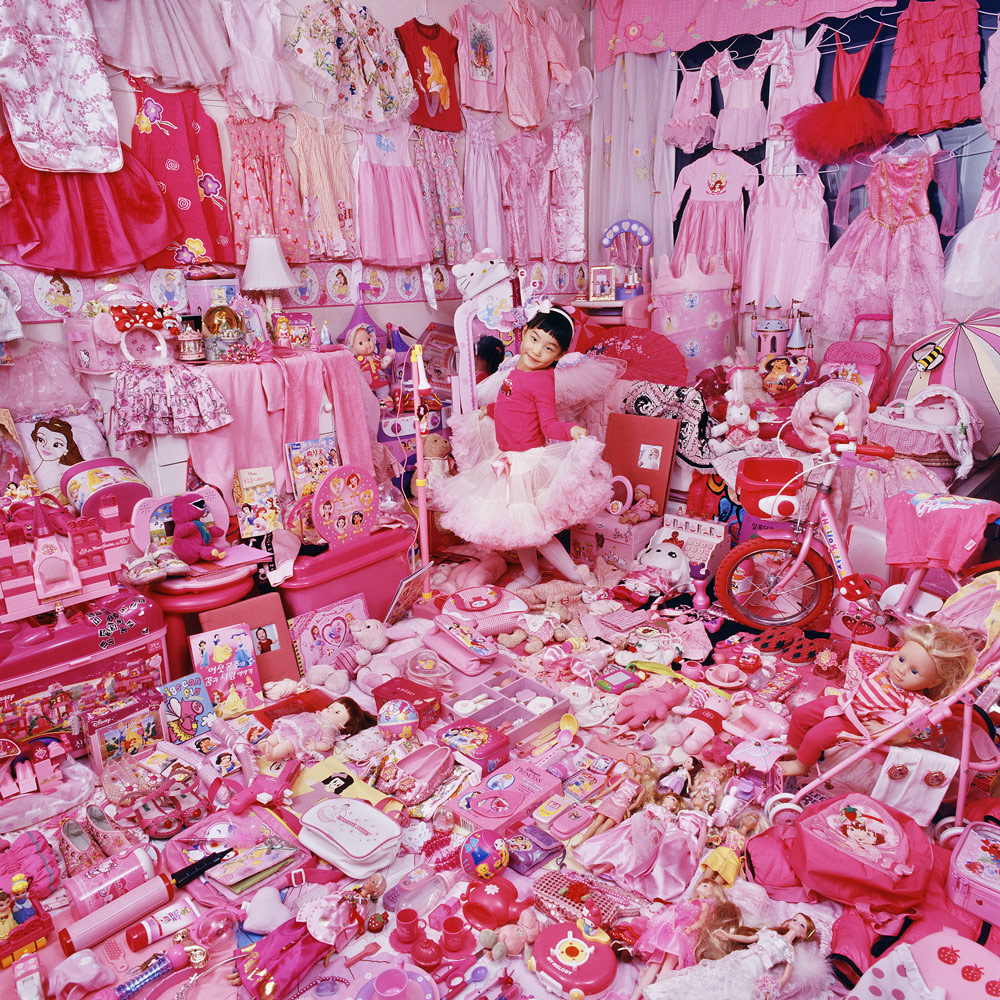
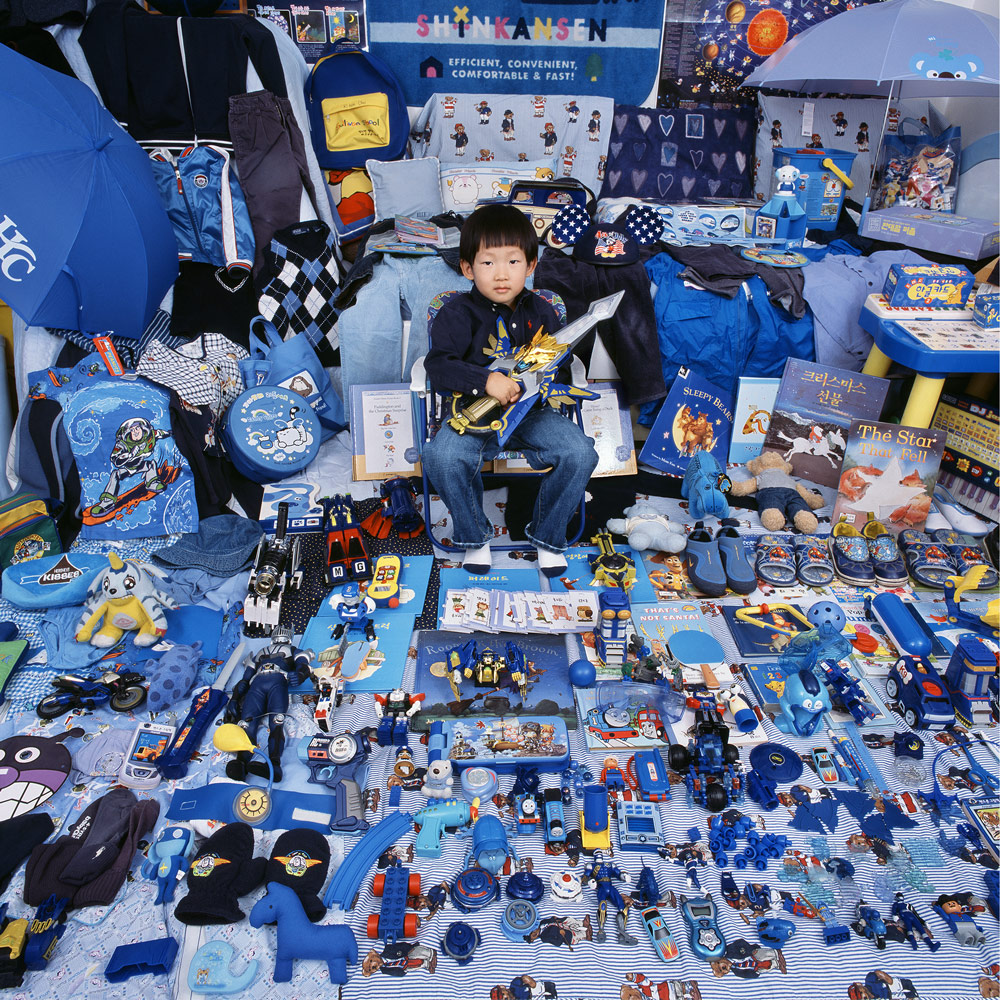
A glance into a child's room reveals a sea of pink objects. The objects are lined up with almost manic care, while somewhere in the room a small, innocent-looking child sits and looks into the camera. Jeongmee Yoon has set herself the task of photographically capturing the almost obsessive gender color division of children and questioning its causes, because as we all know: Boys like blue, girls like pink... that's just the way it is, isn't it?
by Niels Stiefeling
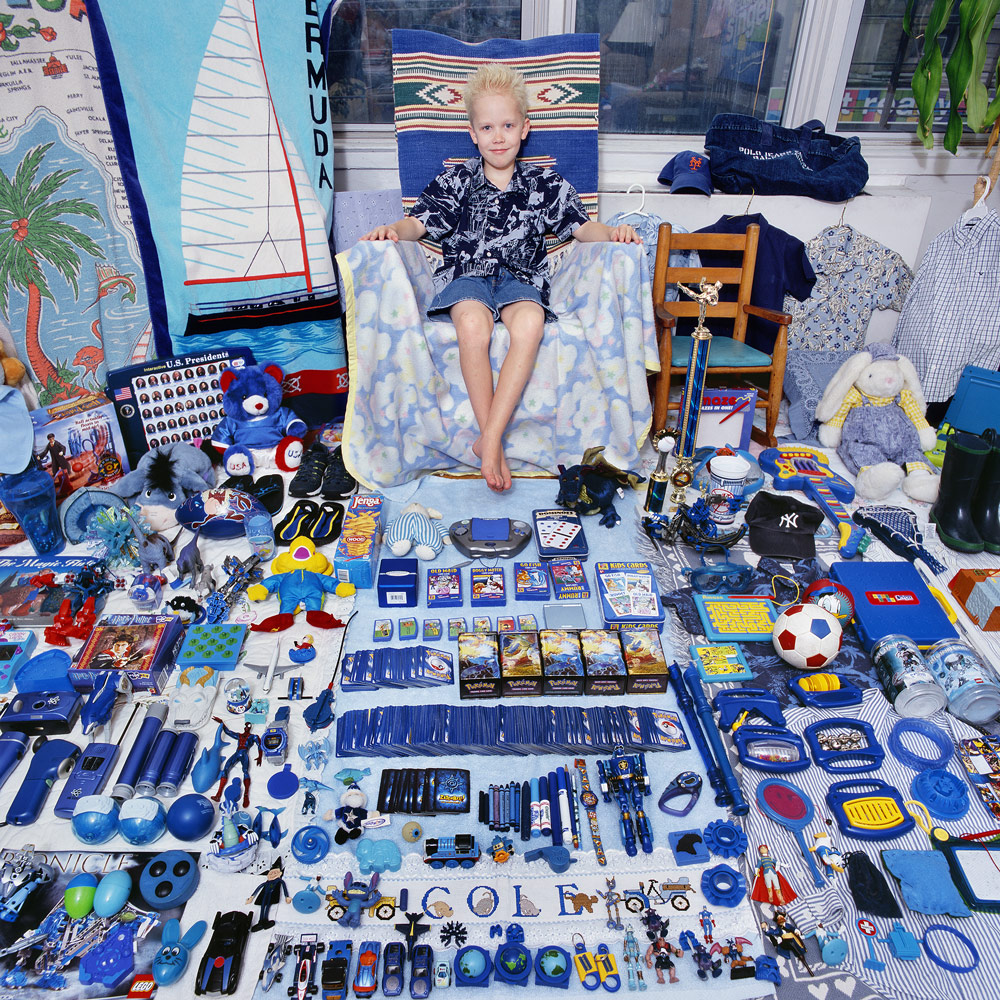 Cole - 2006
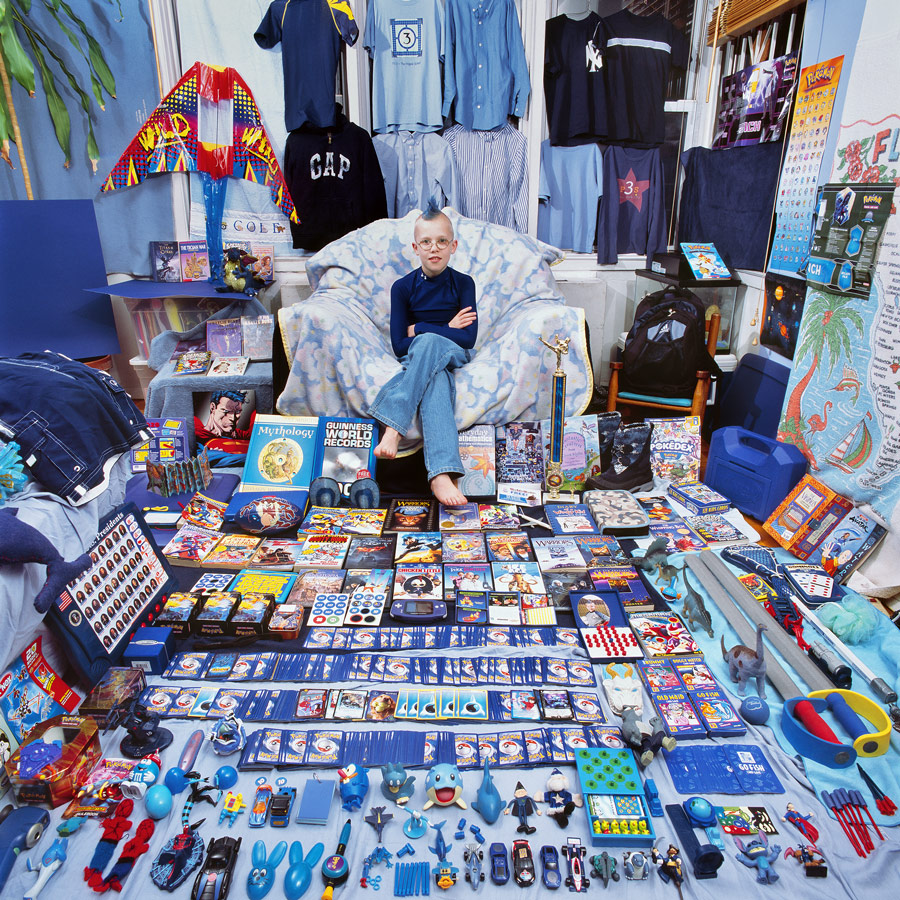 Cole - 2009
 Cole - 2015
A project is born
Yoon first became aware of the topic when she noticed that her five-year-old daughter almost exclusively preferred pink items when looking for new clothes or toys. After a little research, it seemed clear: this clearly assigned color division seems to be a worldwide phenomenon, because regardless of the culture and ethnicity of the children and their parents, one thing always seems certain: pink is for girls and blue is for boys.
Blue has even developed into a symbol that is supposed to stand for strength and masculinity, while the color pink clearly seems to be made for cute, innocent girls. The trend is clear. When it comes to color preferences, the main question is therefore the cause. Are color preferences really determined by genetics and gender or is this more a result of years of media influence and the resulting pigeonholing?
Yoon has therefore launched the long-term project "The Pink and Blue Project". Her intention: to show the extent to which consumers are subject to the manipulation of media influences - whether consciously or unconsciously. To substantiate her statement, the photographer visits various children in South Korea and the United States of America. On location, she arranges all their belongings in the children's rooms and thus creates completely overloaded children's rooms that almost overwhelm the viewer with their variety of details, their monotonous color schemes and a crazy accumulation of objects. In her early days, the photographer had her arrangements arranged without a clear structure. However, Yoon realized from her very first attempts that the effect of the rooms depicted is all the stronger when small objects are clearly placed in the foreground while large objects form the basic structure in the background. She learned this principle from museums in particular, which arrange their exhibits according to the same principle. The artist says that she is fascinated by the accumulation of objects, and this attraction is transferred to her pictures. The children often fade into the background and almost disappear amidst all their treasures. Yoon often provokes a neutral, almost doll-like staging. This is primarily intended to draw attention to the objectification of the children.
How Jeongmee Yoon works
The use of an analog medium format camera stands out as a special feature of her working method. She uses a Hasselblad in 6x6 format. The square orientation of the pictures helps to make the fullness of the rooms in her pictures look particularly strong. As children don't always manage to hold their concentration or the required poses long enough, around five to eight rolls of film are used per child. This results in between 60 and 90 pictures in which various masculine or feminine poses are requested. However, spontaneous, unexpected gestures often manage to reflect the child's character particularly well. At first glance, the pictures taken all seem very similar, but the small details reveal character traits and differences.
The artist often works with the smallest possible aperture for her hyper-realistic image look. She takes her pictures with an aperture of f/22. With such a closed aperture, sufficient illumination is of course particularly important. Diffuse light is therefore used to illuminate the rooms evenly. The children in the pictures sit proudly amidst all their belongings. The clear color scheme of the rooms seems almost whimsical; individuality and character fall by the wayside. Her work has now developed into a long-term project; the artist visits children at regular intervals and documents their obvious development.
Clear classification
A clear stereotypical development is particularly noticeable in girls: up to the second grade, pink is clearly the predominant color, from the third or fourth grade onwards, the pink craze often shifts towards purple, while color preferences change over the course of adolescence. However, a strong attachment to pink
often remains. This change alone in the course of the development of such young people is evidence of externally determined inclinations from an early age.
A closer look at department stores reveals that the manipulation of children is not limited to their choice of favorite color. The departments for boys and girls can be clearly identified by the predominant colors, but there are also clear demarcations in terms of content. Divisions that certainly influence children's behavior and development. Girls are still mainly confronted with make-up, pretty clothes and household chores such as cooking, while boys come into contact with technology, science or industry from an early age.
The fact that all these demarcations are not based on genetics, but rather on conditioning and media influences, becomes particularly clear with regard to various publications from the 1910s. For example, a quote from the Ladies Home Journal, one of the most influential magazines for women at the time, roughly states: "The general rule is that pink is appropriate for boys and blue for girls. For the reason that blue is a rather decisive, strong color, while pink is more playful and delicate.
The "pinkification" of our time
Abi Moore, a freelance TV producer, also comes to the conclusion that the world is undergoing a pinkification of girls. Children are taught one thing above all: conformity and that there is only one way to be a decent boy or a decent girl. From a very young age, girls learn that beauty is valued more than intelligence in women.
This limits ambitions and forms artificial boundaries from an early age. A circumstance that no longer seems appropriate in our world in 2019, a world that is working more and more on gender equality and equal opportunities and, above all, shows time and again that there are masses of strong women who achieve an incredible amount in their lives... precisely because they cross boundaries that shouldn't exist in the first place.
Even if pigeonholing and the division of genders into areas of interest or even small, seemingly insignificant things like your favorite color may seem completely natural and self-evident: sometimes it is necessary to question conventions and break through normalities. For more diversity, for more development opportunities away from clearly defined, prefabricated paths and forced conformity.
 Kihun - 2007
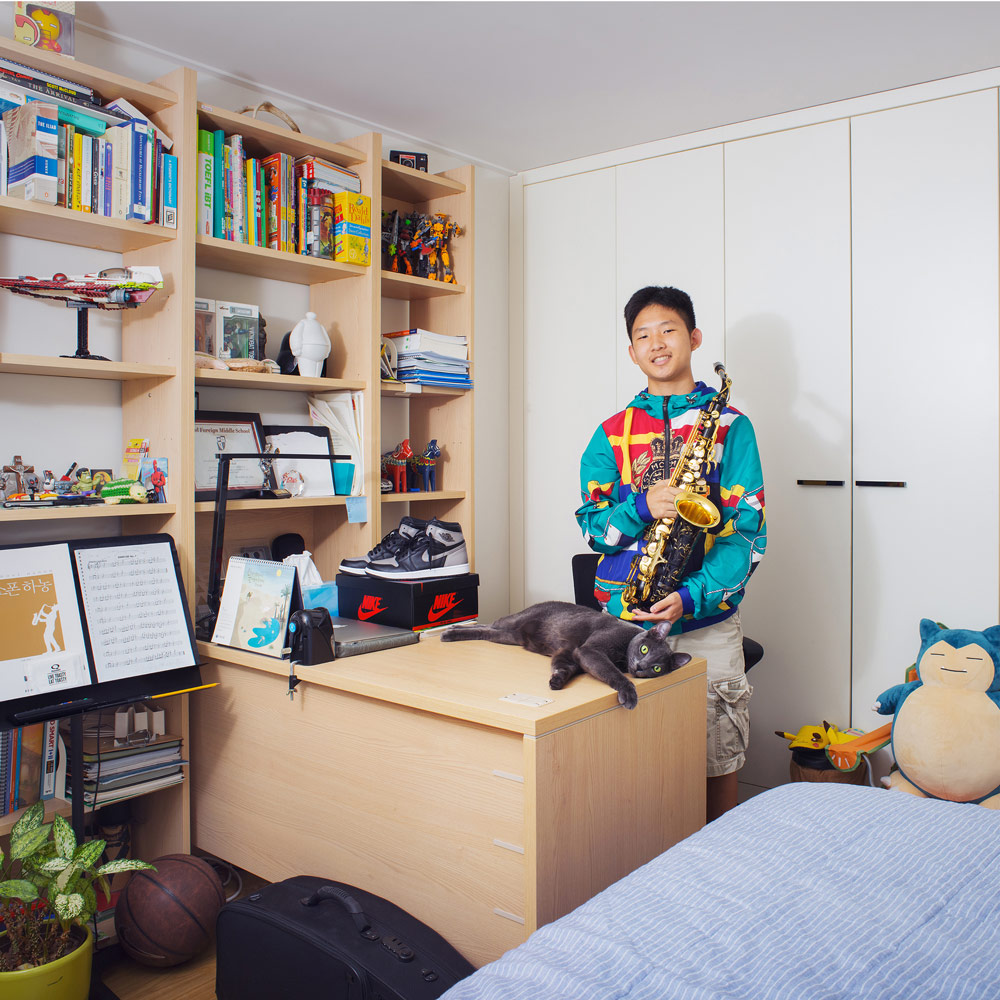 Kihun - 2018
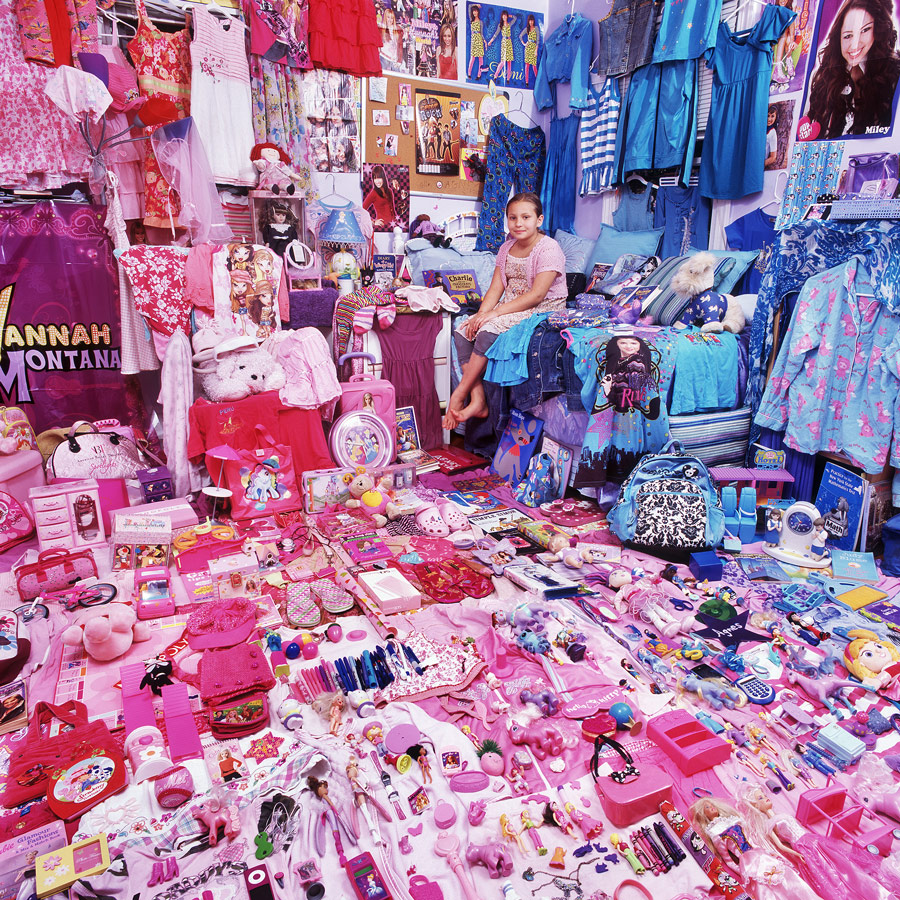 Agnes - 2009
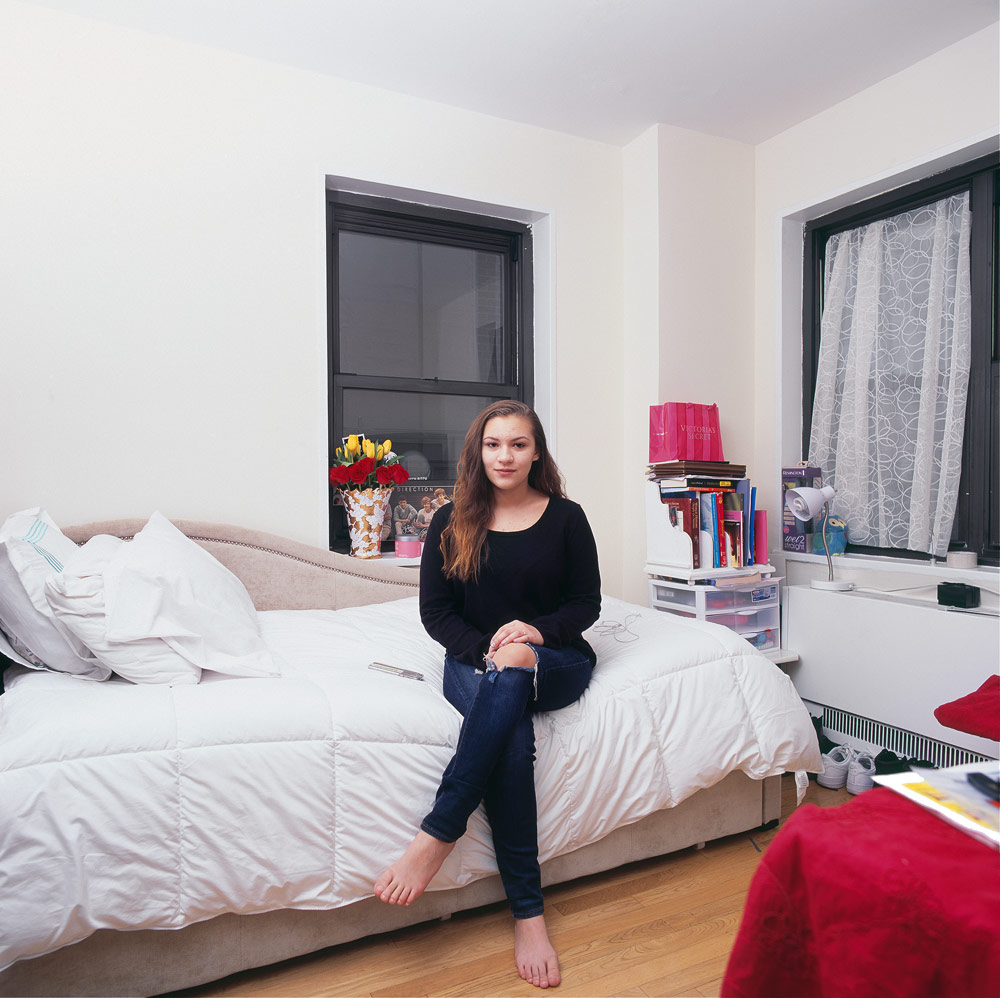 Agnes - 2015
"Schnappschuss" magazine
The Foto Koch magazine is modern, creative and unique in terms of design and content.
more information
More of Jeongmee Yoon's work can be found on her website or via her Instagram channel. It's worth stopping by there too!
www.jeongmeeyoon.com
Instagram: @jeongmeeyoon