Sony 70-200mm f/4 G II - telephoto or macro?
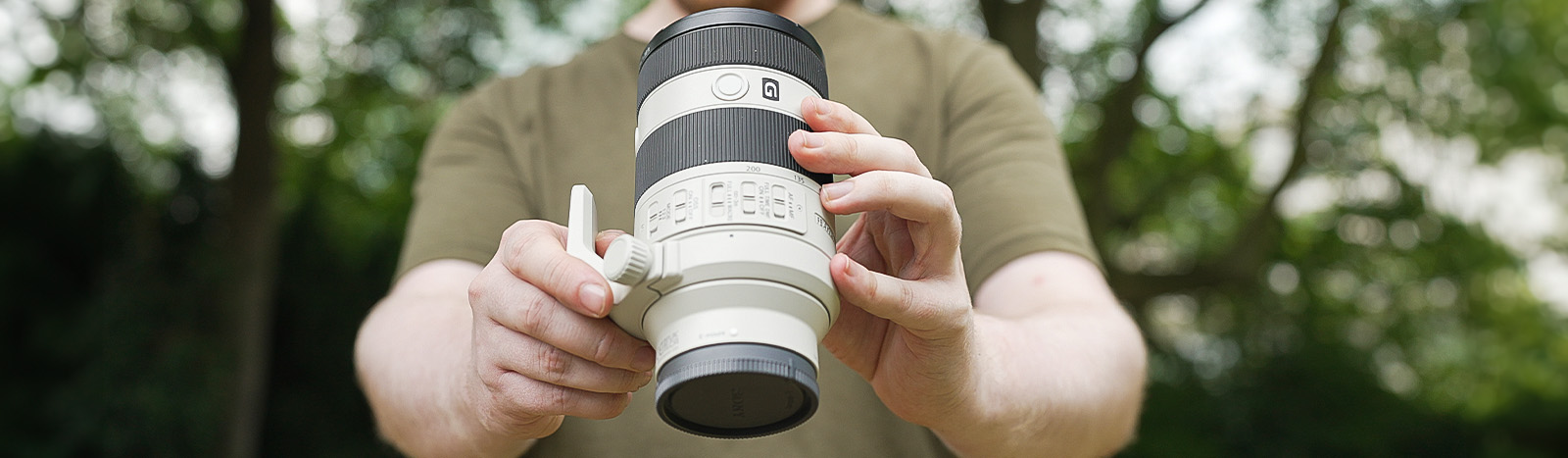
Use a 70-200 as a macro? Now it's possible! Today we would like to introduce you to the new Sony 70-200mm f/4.0 OSS G II, Sony's 73rd E-mount lens with an interesting twist.

1. Size and weight
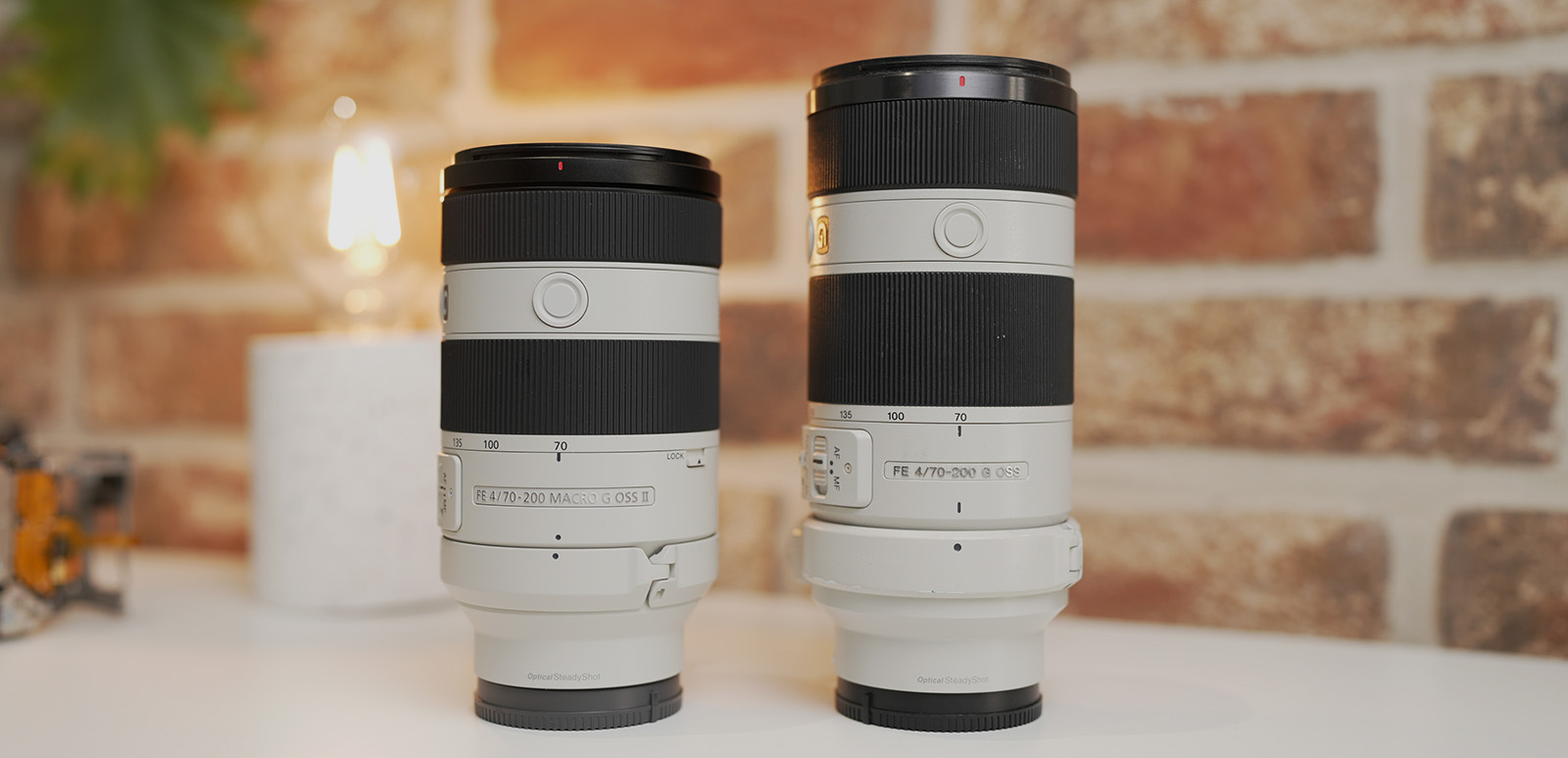
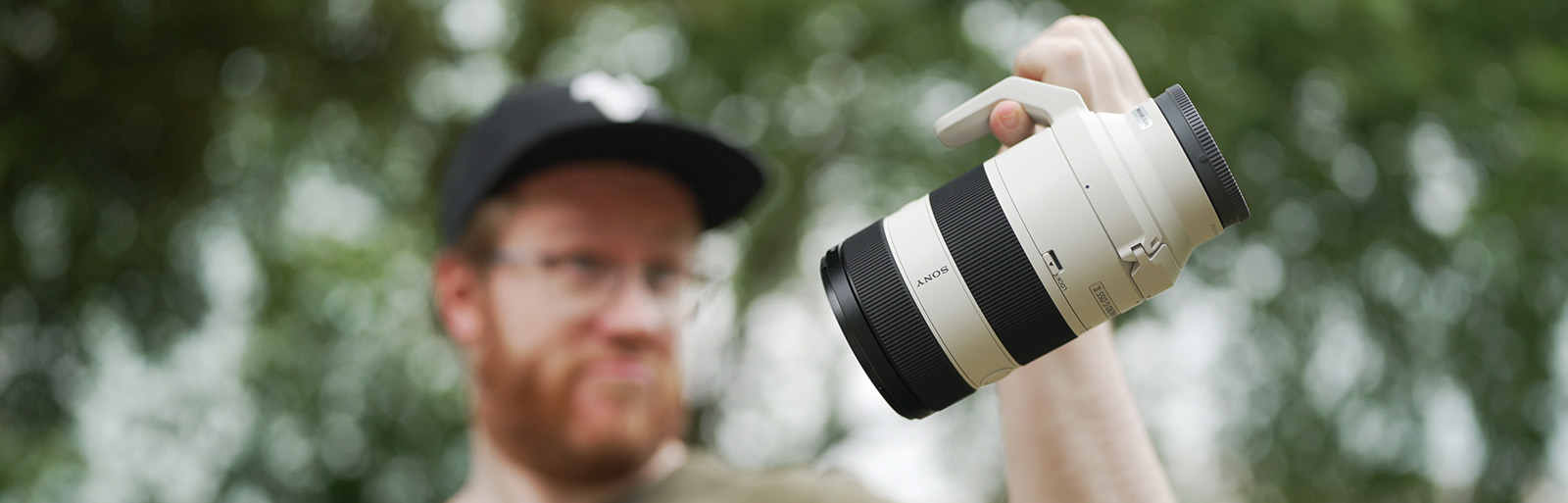
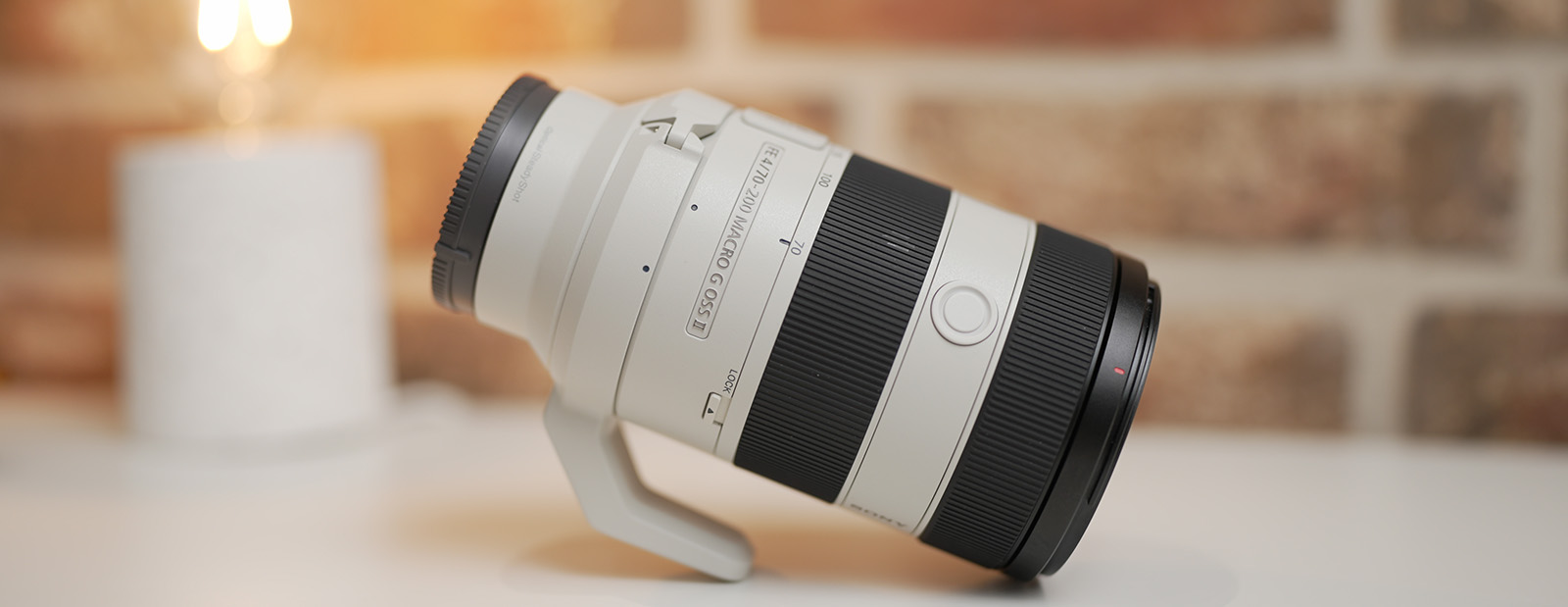
With the new SEL 70-200mm f/4.0 OSS G II, Sony has for once opted for a different design. The zoom no longer runs inside the body as usual, instead the lens extends when zooming. As our shake test showed, it does not extend accidentally during transportation.
The lens is therefore just under 15% shorter at 70mm. This is roughly the size of the 2x teleconverter, so a significant difference in size compared to its predecessor. Of course, at 200 mm it is no longer quite as compact, but the pack size is much more important for many people. And while we're on the subject of packing: At 794 g, the new 70-200mm is almost 50 g lighter than its predecessor

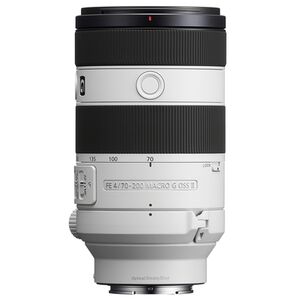
Sony SEL 70-200mm f/4.0 OSS G II
- Full frame lens
- Internal Focusing
- lightning-fast focus tracking
- fast and precise autofocus for photos and 4K videos
- Close-up range 26cm (70mm) - 42cm (200mm)
- perfect for nature shots, portraits and more
- impressive macro functions
- breathtaking, clear close-ups
- lightweight, robust and dust-resistant
- Teleconverter compatible (optional)
2. Performance
However, the fact that the lens has become smaller and lighter does not mean that nothing has changed in terms of image quality. New lens arrangements with improved coatings ensure almost perfect image quality and imaging performance. With the four new XD-Linear motors, the lens achieves a 20% faster autofocus performance, which can absolutely keep up with the 30fps of an Alpha 1, even with autofocus tracking when zooming. And although breathing has already been kept to a minimum here, the lens is compatible with the breathing correction of the new Alpha cameras. Breathing can therefore be completely avoided.
We have already mentioned the teleconverter: unlike the old one, the new 70-200mm is now also compatible with teleconverters!
3. Why a macro?
With the new design of the lens, we have not only improved the size and weight, but also the closest focusing distance. As with the Sony 70-200 F2.8 GM II, we can now get much closer to our subject with the new editions. Where we previously had a closest focusing distance of one or 1.3 m, we can now get 27 cm in the wide-angle and 42 cm in the telephoto range, depending on the focal length.
The result is a much better image scale and better magnification.
When we use the new 70-200mm f/4.0 G II, the distance to the camera and the resulting enlarged image are immediately noticeable, giving us a much more detailed view of the camera and individual components.
But it gets really cool when we add the 2x teleconverter. In addition to the greater range, this also improves the magnification. By the way: with the teleconverter, our close-up limit only changes by the size of the converter, i.e. by 3 cm, which also allows us to get very close to the subject.
This gives us a real macro with a 1:1 scale, allowing us to capture even the smallest details to fill the entire format and again across the entire focal length range. No other lens in the Sony lineup offers this and it's a really exciting feature.

Sony SEL 70-200mm f/4.0 OSS G II + Teleconverter 2.0x
4. Conclusion and comparison with the SEL 70-200mm f/2.8 GM II
The new 70-200 G II is more than just a small update. Sony has seen the opportunity here to use the now "normal" improvements of a 2nd generation lens for a new feature that will be of great interest to many. The 70-200mm G-Master II has also received new autofocus motors, lens elements, coatings and improvements in terms of weight. As they had more freedom with the new 70-200mm G II due to the f/4 aperture, they were able to achieve this outstanding close focusing distance with the reproduction scale.
But who is which 70-200mm intended for? It's no coincidence that Sony introduced this lens together with the Alpha 6700, because that's exactly what it's made for. Although it is a full-frame lens, in terms of size & weight, it naturally fits perfectly on a compact APS-C camera, which extends the focal length even further thanks to the crop. On APS-C and with a teleconverter, we can turn the 70-200 mm f/4 into a 210-600 mm with a continuous aperture of f/8, with which we also have a closest focusing distance of just 45 cm.
Of course, if you need a wide open aperture, you have to go for the G-Master, but this costs a whopping €1,000 more than the new f/4 G. From this point of view, we get an extremely powerful telephoto lens for €2,000, which is also compact and extremely flexible thanks to its magnification and the optional teleconverters.