Sony Alpha 7 IV - hands-on test
The update everyone has been waiting for!
With the Alpha 7 III, Sony launched a photo/video hybrid camera on the market in 2018 that left little to be desired for the price segment. The a7 III was not only a good and frequent choice for amateur photographers and videographers, but was also highly praised and used by many professionals. It is still our best-selling camera. However, many have been waiting for a successor to the popular system camera for some time now. The rumor mill has been churning year after year, but Sony has always pulled something else out of its hat. This year the time has finally come - Sony presents the Alpha 7 IV!
What new features the camera has and whether the upgrade is worth it, you can find out in our video.

Everything new on the outside!
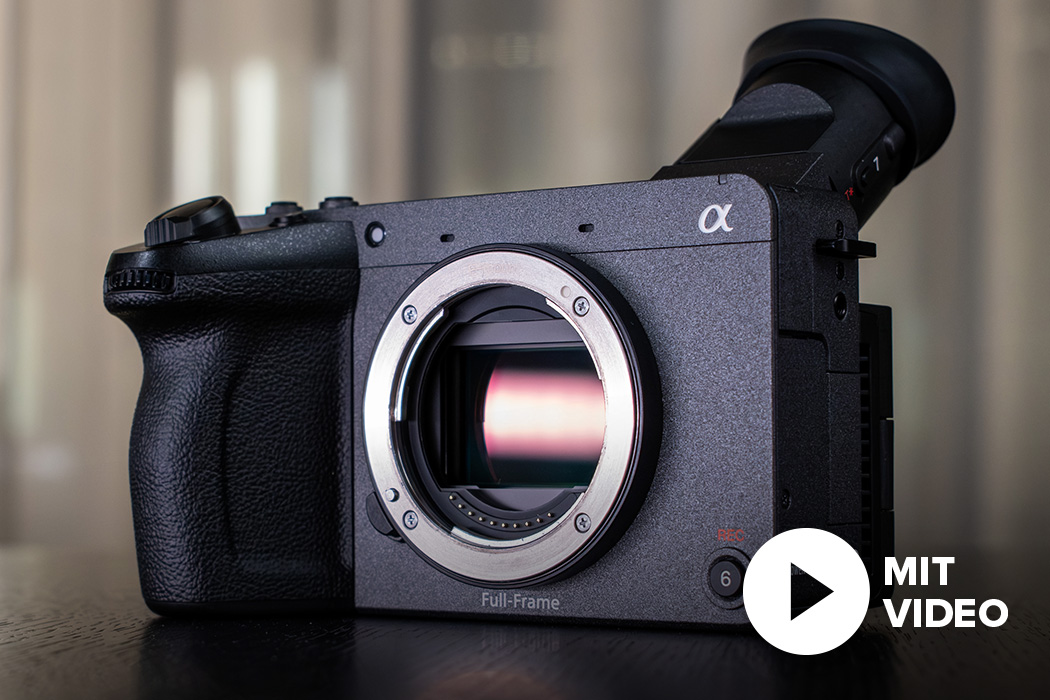
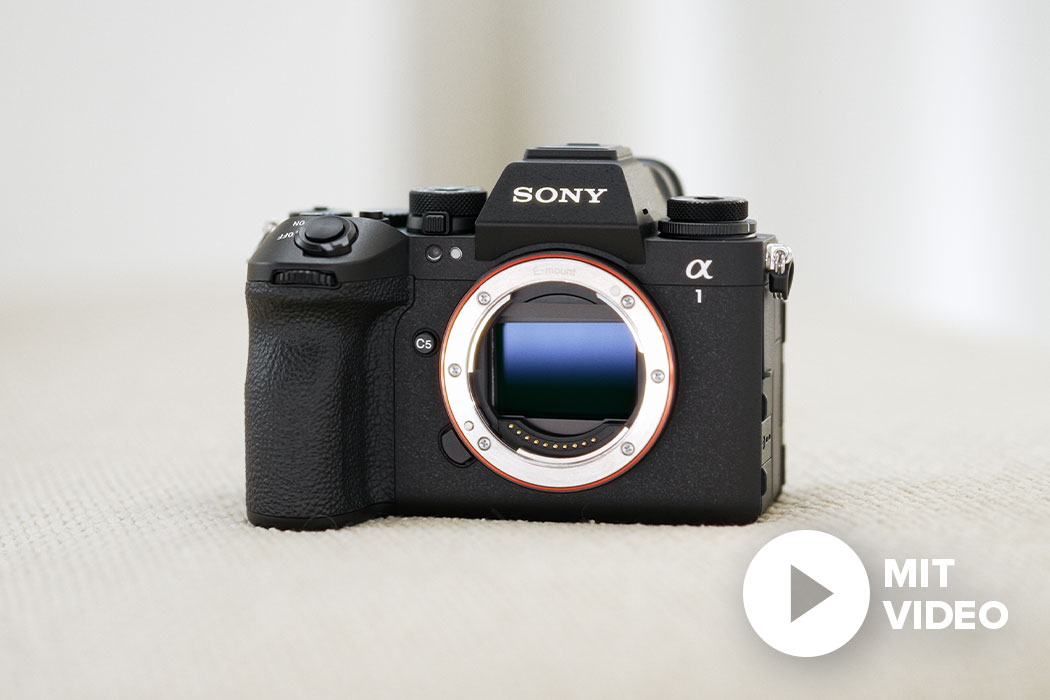
Well, new for the normal Sony 7 series at least. We have the revised body here, which was also used on the Sony Alpha 7s III or Alpha 1. You either hate it or love it, but there is also a tilting display. The mode dial is now split for quick switching between photo and video with the same settings. The video record button has also moved to a place where you won't accidentally press it and where it makes more ergonomic sense. But where we really made a leap for joy was with the ports. We FINALLY have a full-size HDMI port. Thank you Sony!
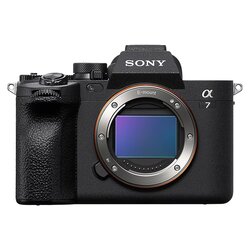
Sony Alpha 7 IV
- mirrorless full-frame camera
- 33 megapixel full-frame sensor
- 2x BIONZ XR image processors
- Real-time autofocus
- 10 fps with up to 800 frames (JPEG + RAW) in constant continuous shooting
- 7.62 cm swivel and tilt touchscreen
- up to 5.5 f-stops shutter speed thanks to integrated optical 5-axis image stabilization
- latest real-time tracking technology and autofocus with eye detection for people, animals and now also birds
Differences between the Alpha 7 III vs Sony Alpha 7 IV in a nutshell
If you're short of time, here are the most important differences between the Sony Alpha 7 IV and the Alpha 7 III in a nutshell:
- New user interface, for more intuitive operation
- New Alpha 7 IV body for better ergonomics
- New sensor with 33 megapixels, compared to 24.2 megapixels in the Sony Alpha 7 III
- The Sony Alpha 7 IV has a 94% coverage of the AF fields 759 to the predecessor with 693 phase autofocus points
- New viewfinder with 3.68 million dots compared to 2.36 million dots of the 7 III
- New display, which has a higher resolution and can be rotated and tilted
- Video functions have improved: S-Cinetone, 4K60p - previously 4K30
New sensor, new experience
Since the update to the Sony 7 III was so long in coming, the manufacturer wanted to make sure that an update was really worthwhile. To achieve this, a new 33 MP full-frame sensor was developed. This comes with many features that we know from the larger cameras such as the Sony A1 or Sony 7s III - the Exmor XR. You could say that it is the child of an A1 and 7S3, because we have also installed the Bionz XR processor twice. Let's take a detailed look at what all this entails.
More pixels, higher speed, more photos!
The predecessor has 24.2 megapixels, but now it has 33 megapixels. Slowly but surely, we are approaching the realms of the Sony 7r series. The amazing thing here, however, is how quickly the camera processes this higher resolution.
The camera still manages 10 frames per second, as before. What we mean by speed is the processing of the images. If you want to take a series of pictures and display a sequence, the 7 III stopped after approx. 250 pictures. The buffer could not be emptied and everything came to a standstill. With the a7 IV, however, we can shoot a good 800 photos RAW + JPG in succession without any dropouts. This was made possible by the new hybrid slot with CF Express Type A and UHS II, as well as the computing power of the two image processors.
 Sony Alpha 7 IV
Autofocus of the Alpha 1?
No matter how much dynamic range or resolution a photo has, if it is not sharp, it will not be used. A lot of improvements have been made here. In recent years, Sony has introduced many innovations and features in the area of AF.
Here we have 94% coverage of the sensor, which makes a total of 759 AF points. The real-time tracking feature has also been adopted from other cameras ⦠and even improved. Realtime autofocus (RT-AF) has been available from Sony for some time. The categories of people, animals and, with the introduction of the Alpha 1, birds were added later. However, the Sony a7 IV takes it one step further. Unlike the A1, the new model can also use all of these RT-AF features in video.
Last but not least, a pleasant feature for photographers. When working in Single AF mode, refocusing is now almost invisible. In the Sony Alpha 7 III, this was still clearly noticeable, as the autofocus scanned a large part of the image to find the correct focus point again. You were never sure from the feeling whether the same point was really in focus again, the problem has now been solved and it is a soft focus.
 Sony Alpha 7 IV
Colors, colors, colors
RAW processing is always all well and good, but when it comes to video or fast image editing / distribution via social media, you need solid basics. The manufacturer has made further improvements here.
Portrait photographers and filmmakers can look forward to new, improved skin tones. But that's not all. Sony has now also taken up the 10 Creative Looks from its sibling models. So if you want, you can shoot and film directly with a color style.
Videographers can also look forward to the S-Cinetone color tone, which originally came from the large cine cameras such as the FX9 and has enjoyed great popularity since its release.
Video like the a7s III
First of all: No, the camera does not have 6K or 8K. It doesn't need that either. In our opinion, 6 or 8K is currently too high a resolution. It creates massive amounts of data and is difficult to edit. Heat is also always a problem with such a high resolution. That's why we're glad that the emphasis was placed on a better 4K.
The mode that most people will use is 4K at 30fps. The good news here is that it is a full sensor readout, as with the Sony 7s III, but since the sensor now has 33MP, it is now possible to downsample native 7K footage to 4K. This provides an extremely high level of information / detail in the 4K video. To put it simply in numbers, what is possible: 10bit 4:2:2 All-I with 600Mbps.
Anyone who wants to use more frames per second can do so in 4K 60fps. However, the camera then switches to S35 mode. Alternatively, Full HD with 120fps as usual.
Conclusion
In our eyes, it is a very worthy successor to the Sony Alpha 7 III. If it doesn't have to be an Alpha 1 in terms of speed, then a Sony 7 IV is the perfect choice as an all-round camera. We have more resolution than before, faster image processing, much faster autofocus and the video features of a Sony 7s III, without RAW video output.
The wait was worth it here. It's not a minor update, but a complete overhaul.


Also new: Two Sony flash units
In addition to the new Sony Alpha 7 IV, two new flash units were also presented: Sony Flash HVL-F60RM2 and Sony Flash HVL-F46RM. Both are extremely fast and can flash 200 times in succession at 10 frames per second. They can also be controlled via the camera menu. Another highlight is certainly the fact that the subject recognition is also used by the flash. The face recognition algorithms influence the flash light and thus ensure the right color temperature and illumination.

Sony HVL-F46RM Flash
- powerful and compact system flash
- wireless flash via infrared or radio
- ideal for triggering flashes wirelessly over longer distances (max. 30m range)
- Flash can be used as a transmitter or receiver
- up to 60 consecutive flashes at 10 FPS
- Protection against overheating
- Memory function
- tiltable flash reflector unit: 360° horizontal, 150° up and 8° down
- protected against dust and moisture
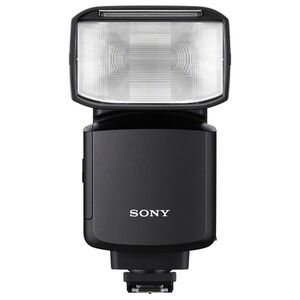
Sony HVL-F60RM2 flash
- external high-performance flash
- with wireless radio control GN60 power
- Multi-flash high-speed flash
- 10 frames per second
- Quick Shift Bounce
- integrated wireless radio control system
- Multi/Micro USB connection
- tiltable flash reflector unit: 360° horizontal, 150° up and 8° down