
"On Rusty Ground" - an interview with Thorsten Zimmer
Reading time: 10 minutes - January 25, 2020 - by Niels Stiefeling and Thorsten Zimmer
Who is Thorsten Zimmer?
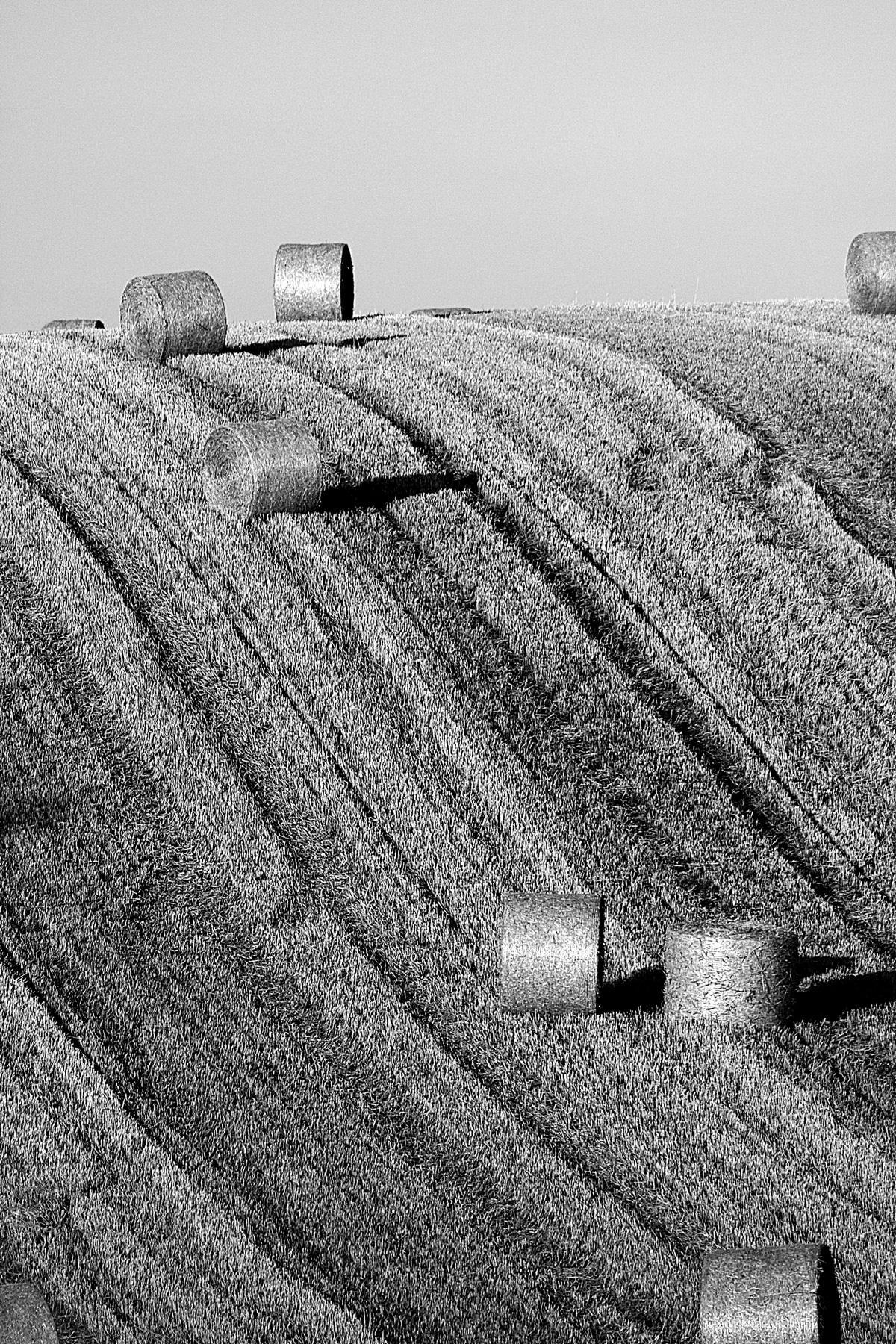
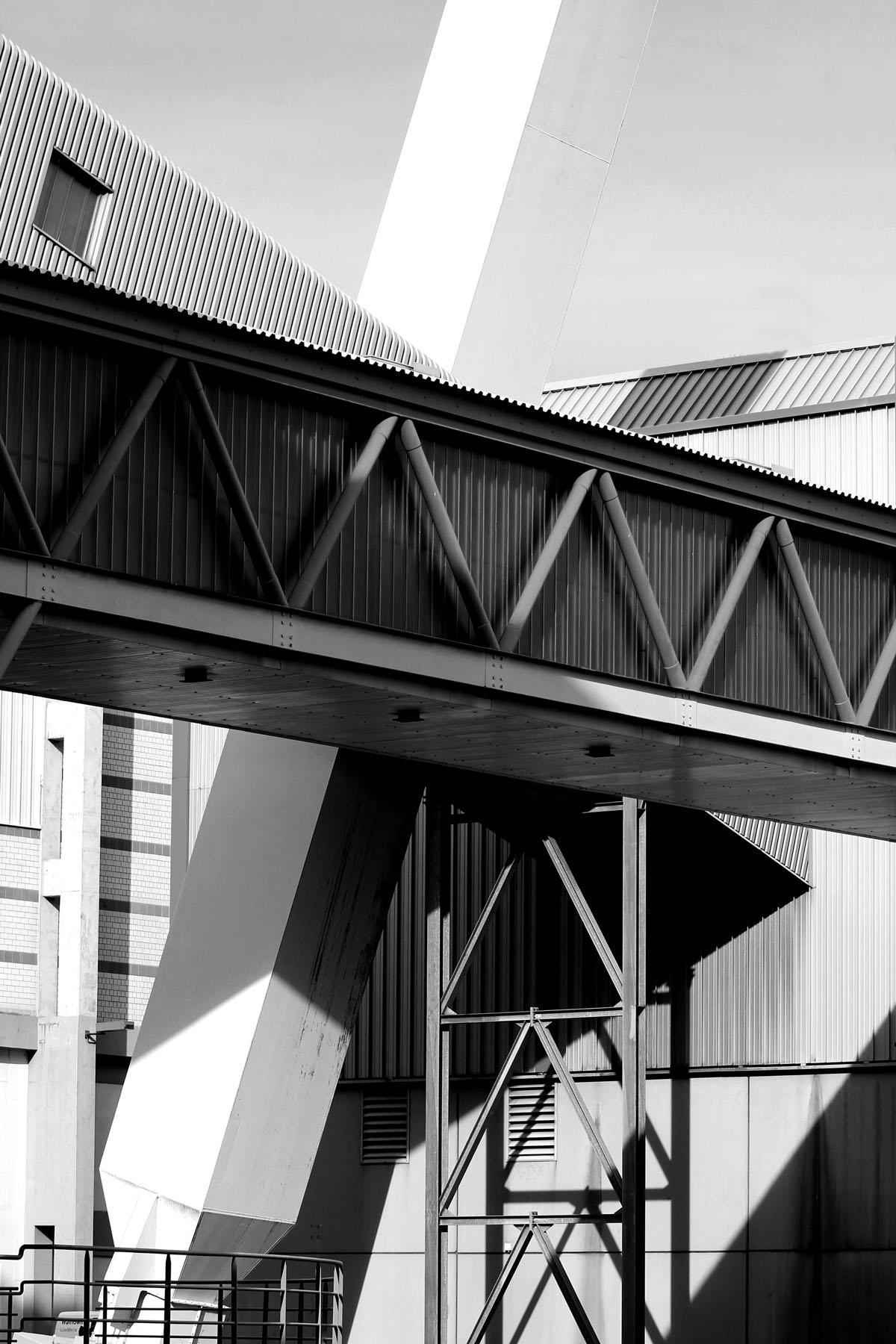
Photographer Thorsten Zimmer is currently presenting his photo series "On Rusty Ground". The project depicts his home - the Saarland - in a very rough and tough way. For him, his pictures have a personal connection to various pieces of music - he realizes what he already sees in his mind's eye when he listens to them. This is one of the reasons why he initially made them primarily for himself.
The majority of the series of pictures is in raw black and white, which Zimmer himself calls "reduction to the maximum".
We took the interesting pictures with their high contrast as an opportunity to ask him a few questions about his photographic life and his works.
How did you get into photography?
I came to photography in its professional dimension through my press work during and after my studies. I was a freelancer for national newspapers and at Saarl?ndischer Rundfunk - also in the editorial field. My focus was on society, industry and structural change as well as landscape - all areas from which the majority of my current photographic work originates. It was common to provide a photo alongside your own text - for example for online content.
After graduating, I deepened my work in both text and image. As a communications officer, I was responsible for all the content of a medium-sized company in the automotive sector - this also brought me closer to product photography and an eye for detail, especially in the area of technical motifs with landscape as a setting. To put it bluntly, you could say that it all started with a student job.
What do you want to achieve as a photographer?
From the very beginning, one of my major concerns was my personal desire to combine my hobby of flying with my career. I have achieved this goal. Regular commissions in the field of aerial photography for local authorities and independent organizations (such as in tourism marketing) make it possible.
Another ambition is to contribute to the fact that photography will not hide behind painting in the public perception in Germany or Europe as a whole for all time. Just compare the availability and status of black-and-white and monochrome photography in the USA - especially on the West Coast!
Have your photographic preferences and "photographic eye" changed over the years?
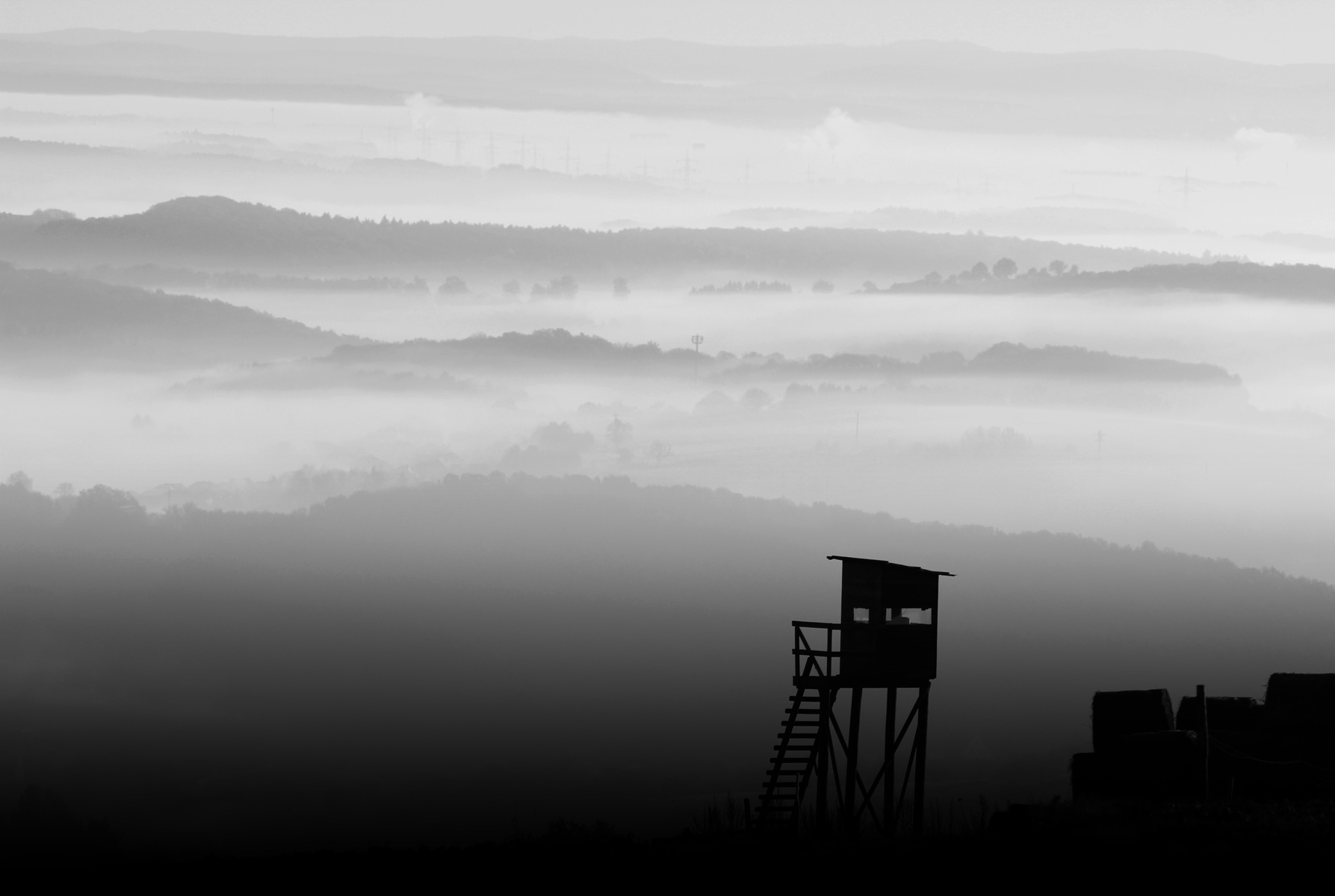
I can answer the first part of the question with more certainty than the second, to which I usually quote collaborators, curators or buyers of my photography. My photographic preferences have developed more and more towards a focus on landscape and industry (the two subjects usually in close connection). On the one hand, this has to do with the increasing number of commissions in the field of aerial photography; on the other hand, it is also due to my interest in an essentially social issue, the value of work.
As far as my "photographic eye" is concerned, I have already been told by curators and presenters at the vernissage of the first exhibition of the "ON RUSTY GROUND" series, for example, that my motifs with the (in)direct fusion of landscape and industry in particular have developed a special expressiveness over time. The opening words of the town of Soltau in the town hall gallery, for example, or the words of the first chairman of the KulturForum Bomlitz, laudator Torsten Kleiber, who described me in photographic terms as an "industrial romantic" - a term on which one cannot rest and which stimulates reflection, which by no means only praises - which drives and delights me to this day.
What factors play a particularly important role in your work? How can one imagine the process from brainstorming to a finished project? How did the current project "ON RUSTY GROUND" in particular come about?
On the one hand, the idea for "ON RUSTY GROUND" developed from my aforementioned journalistic work, which repeatedly took me to sites of the coal and steel industry in the Saar-Lor-Lux region. Ultimately, I saw most of these sites in operation during my childhood and youth and know from personal family experience how much the work of the miners in particular provided a social superstructure - and at that time also cohesion (!). My grandfather was a miner, which still fills me with great pride today. It was the social commitment in particular that inspired me as a child among the miners - a handshake still counted, relationships lasted for decades, reliability was the top priority and good.
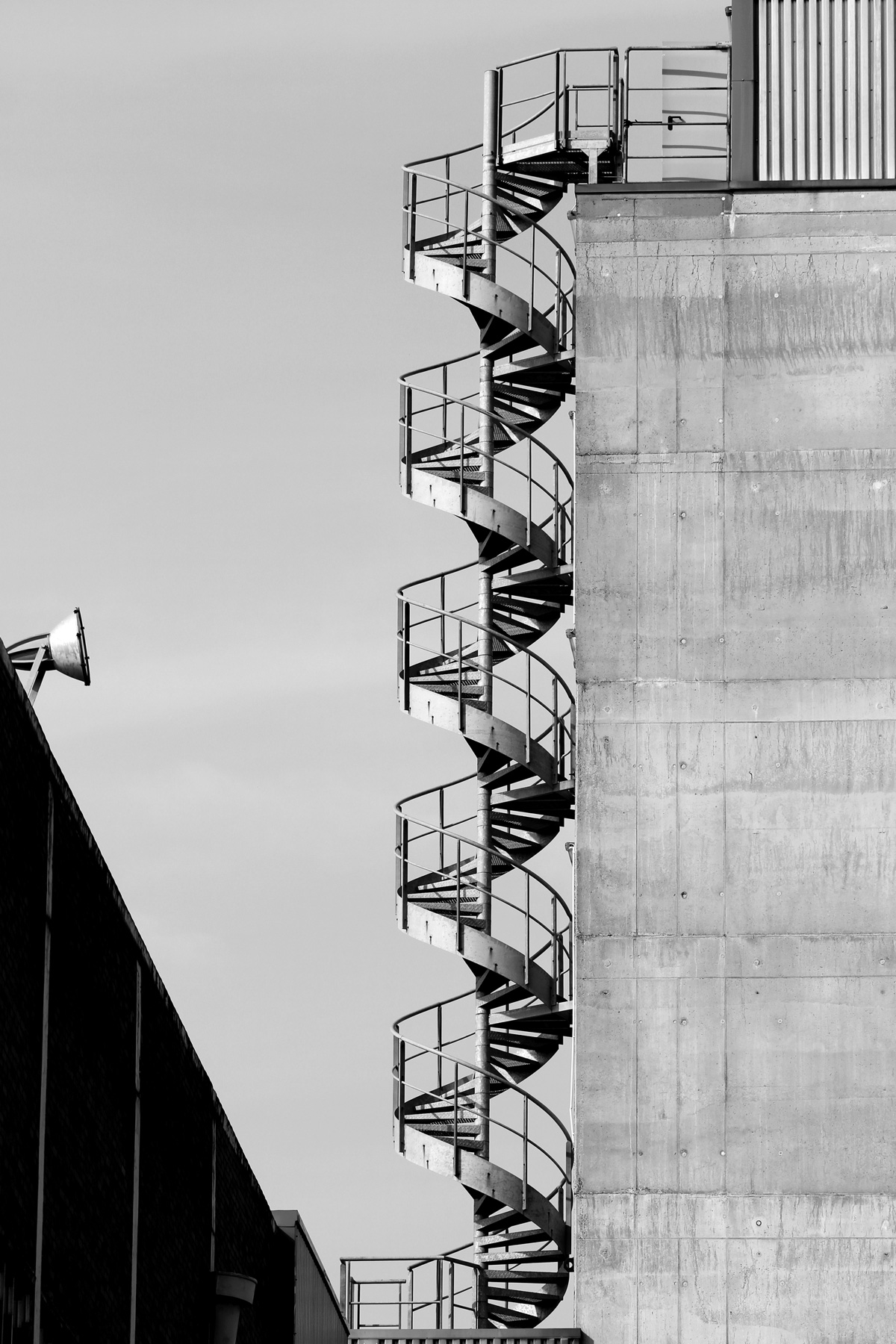
However, my series is sometimes misunderstood in terms of the concept - it doesn't show a single mine. During my time in corporate communications, I worked a lot and in detail with product images in the metal sector - that's when I started to develop my own toning palette and put together the palette for my work in black and white/greyscale from the many warm and cold tones between black and white. At that time, I also photographed a Saarland mine from a vantage point; the main buildings of the mine (as a coal mine in southwest Germany is called) provided me with the palette from bright white to a brilliant deep black with a whole range of finely differentiated aluminum tones; all on a landscape format. I work through the entire series with these shades.
To further enhance the effect of the interplay of form - light - contrast, I have built the actual black and white series around a single color image, namely the title image of the series. The title is ambiguous. On the one hand, a model wearing shoes from a well-known Spanish cult brand posed on a rusted cover of a machine on a mine site; on the other hand, the title is intended as an honorific reference to all the important sites where the series was created - and will be continued. Nevertheless, the series also includes photographs that were taken neither in mines nor in Germany, such as 'Midday Seaside'. I flew to Italy for this photograph.
So the series as a whole is held together by the palette of toning, which I derived from the aforementioned dynamics of the overall shot of a mine. It wasn't about the motif - but about the dynamic range derived from it.
In the current series, you are concentrating primarily on black and white images. Where does the passion for black-and-white photography come from? What role does color or the absence of color play in photographs?
I already appreciated black-and-white photography as a teenager; I well remember the inner "Sturm und Drang" I felt from the age of 13 to about 17, after which it became much more pleasant. However, back then, black-and-white works and black-and-white music videos provided me with the concept of a timeless, unobtrusive elegance that could and did inspire me in my early years (and still does later on). When presented in color, most viewers will inevitably categorize it according to epoch or era - black and white, on the other hand, lives up to a universal claim by emphasizing form.
Since you are relatively critical of the excessive image processing of many photographers:
How are your photographs created? Do they remain completely unedited or are some small adjustments made?
In the area of my freelance work, image editing only involves a subtle increase in contrast (until the impression of what is actually seen is consolidated) and possible cropping of the image. Then the colors are removed.
Are there other photographers who have inspired you in your ambitions as a photographer?
It's not so much photographers and their works that have inspired me, but rather film. Frederico Fellinis La Dolce Vita is still a treasure trove for me today - and I am not referring to the much-cited fountain scene.
Are there already (vague) plans for upcoming projects?
This spring, the work "Midday Seaside" is to be presented to the public - the photograph extends my series "ON RUSTY GROUND" and is a two-part concept, which will be complemented by a drawing currently being created by the painter and art teacher Sabrina Giancotti, who has accompanied me as a friend in life for as long as I can remember.
The work "Structures I", in which I photographed rust in the style of an abstract painting, is also currently being created - now the photograph is being reworked on canvas by the Colombian painter Soraya Heuer to make the structures appear even more tactile. It is therefore a collage technique.
And an aerial calendar will be published, for which I photographed the industrial town of Bomlitz-Benefeld in collaboration with the AeroClub Hodenhagen and the KulturForum Bomlitz, using the most suitable aircraft for various motifs. We photographed an outdoor swimming pool with a Rotax Falke motor glider due to its low noise level and slow flight characteristics, while a 150 Cessna was used for motifs such as panoramas of the town, in which the door can be opened wide to allow the photographer a clear view and sufficient mobility - as well as rapid changes in altitude.
You can find more of his works and the complete project "On Rusty Ground" on his website at:
www.contrast-foto.info
or his Instagram channel.