
Peter Neill - The best tips in music photography / concert photography
Reading Time: 4 minutes - April 30, 2020 - by Peter Neill in an interview with Sony
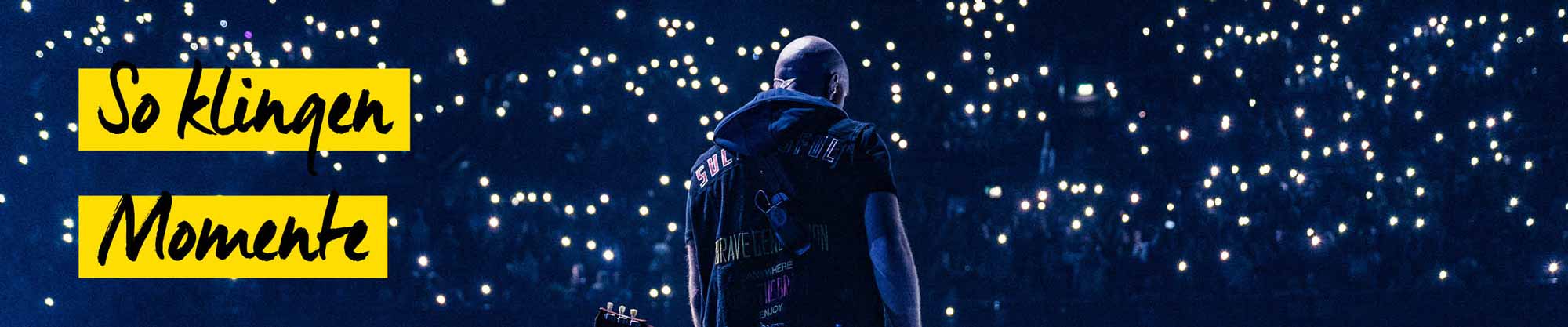
In the midst of music, spotlights and self-promotion, there is a job away from the stage. For music photographer Peter Neill, taking pictures of some of the world's greatest artists is part of his everyday work. He told us what he looks for when setting up his Sony cameras to get the best shots of the concert.
This blog post was provided by Sony. Peter Neill is a Sony Europe Imaging Ambassador. Find out more about his work here: ]Peter Neill. We look forward to your feedback on this article! Just send us an e-mail to content@fotokoch.de
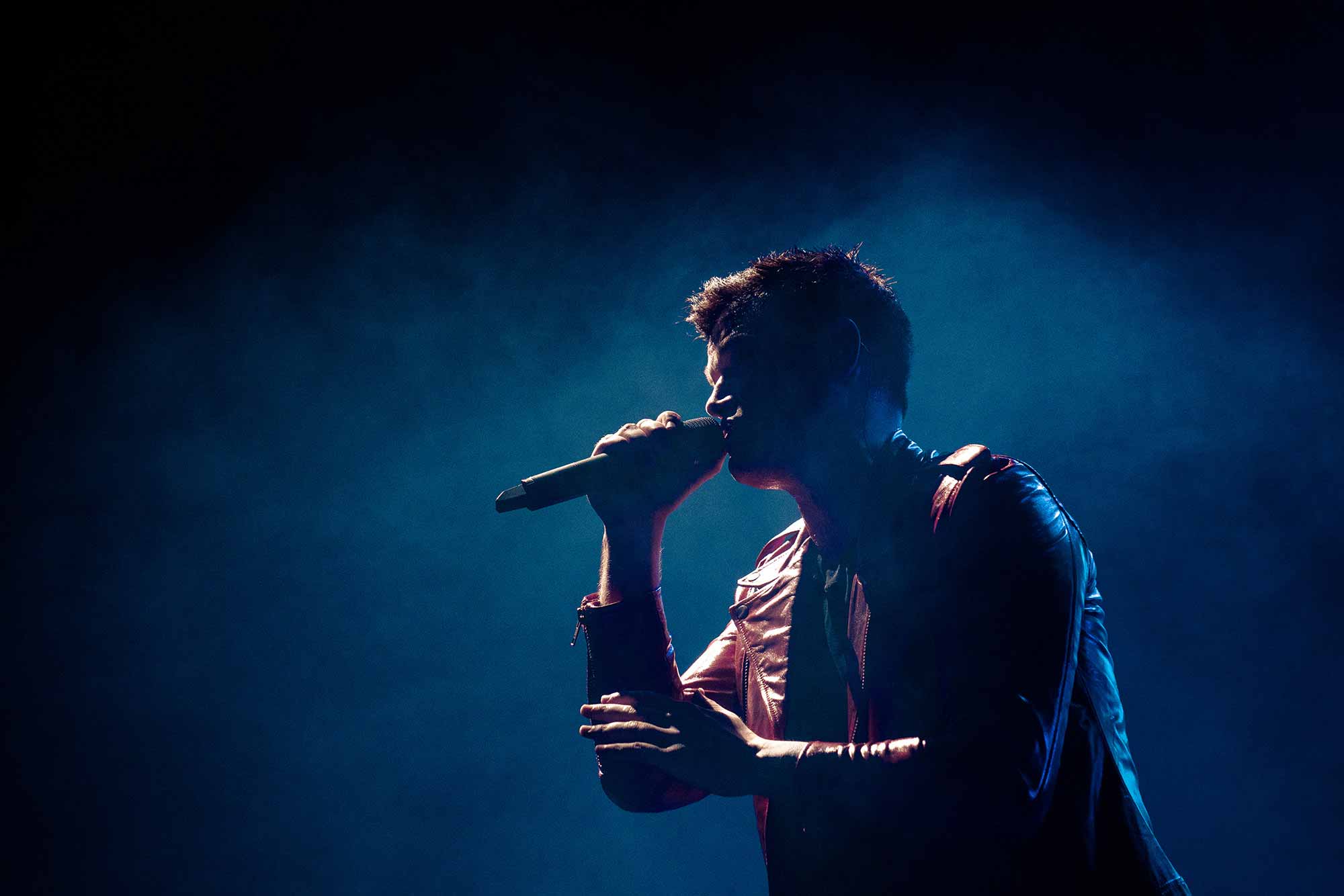
The right Lens
When it comes to choosing a lens, there are two obvious choices: the Sony 24-70mm f/2.8 and the 70-200mm f/2.8 from the G-Master range. With these Lens, Peter is flexible enough to take many different shots. The f/2.8 aperture also lets in enough light for him to set a fast shutter speed and freeze the moment of movement. However, there are a few other Lens that Peter uses for very specific shots. First and foremost is the Sony 12-24mm f/4.0 wide-angle lens. The enormous focal length range allows Peter to capture the entire stage from the pit or pan the camera into the audience to capture the size of the event.
In second place comes the Sony 85 mm f/1.4 GM. This lens is usually used for portraits and is also often used on stage. The focal length allows Peter to capture the lead singer from a comfortable distance, while the f/1.4 aperture lets in plenty of light. This enables him to freeze movements with a sufficiently fast shutter speed while keeping the ISO sensitivity at a low value. This is also recommended for smaller events, which often do not have the impressive stage lighting of larger shows.
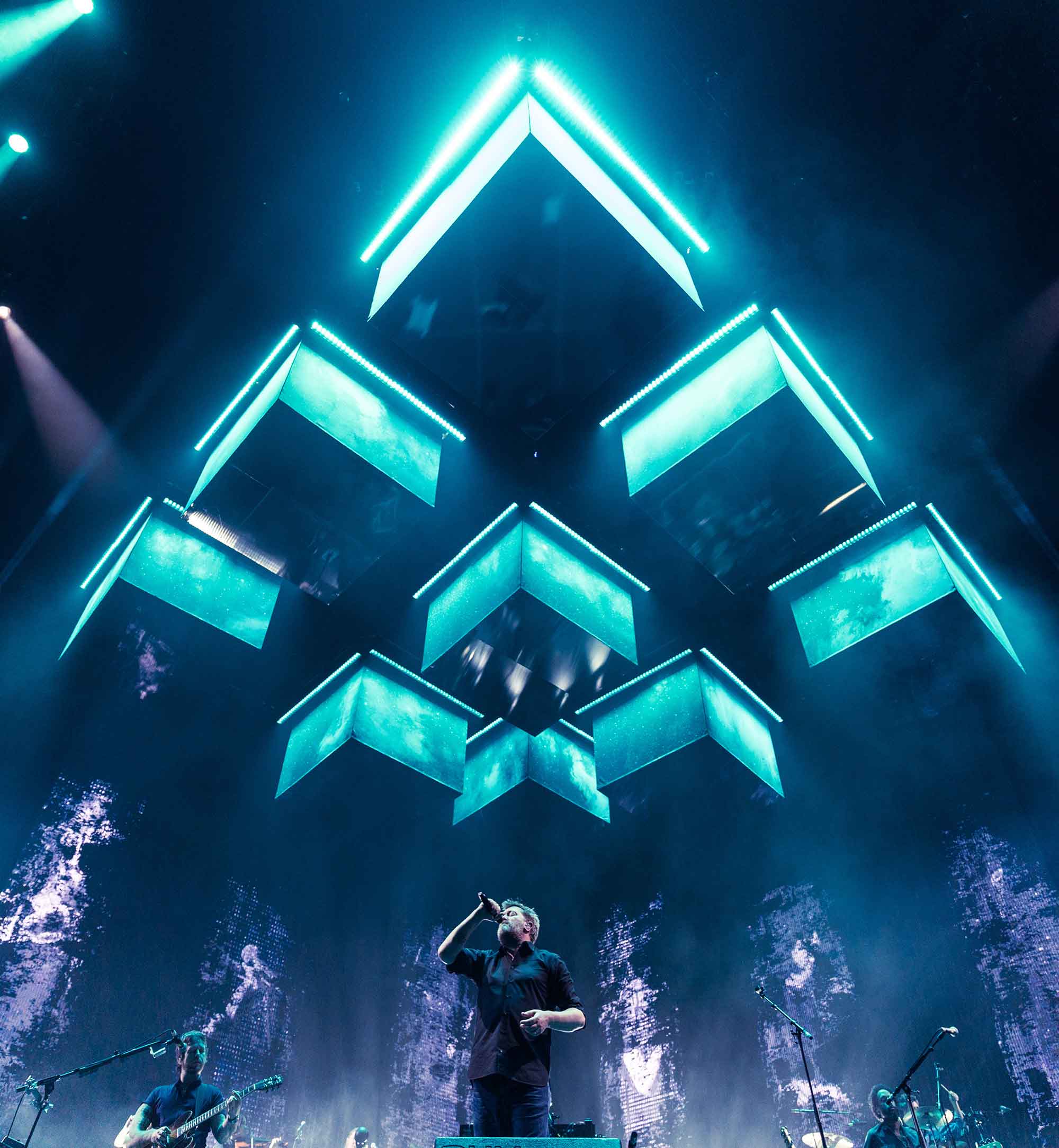
According to Peter, limiting yourself to one fixed focal length lens can even be beneficial for creativity: "Sometimes I only use the Sony 85 mm f/1.4 lens. It's very interesting to limit yourself to just one Lens, because you focus more on the details and look for more creative settings."
The Sony a7 III and Sony a7R III 's eye detection autofocus allows Peter to ensure that the artist's eyes are always in focus - even when using an extremely shallow depth of field Lens, such as the Sony 85mm f/1.4. However, there are also moments when Peter prefers to focus manually to be even more creative. He uses focus peaking to ensure that the desired areas in the shot are in focus. This function highlights focused edges in the image and allows the focus setting to be changed quickly. Focus peaking is also highly recommended when using older lenses that have been attached using adapters.
Exposure
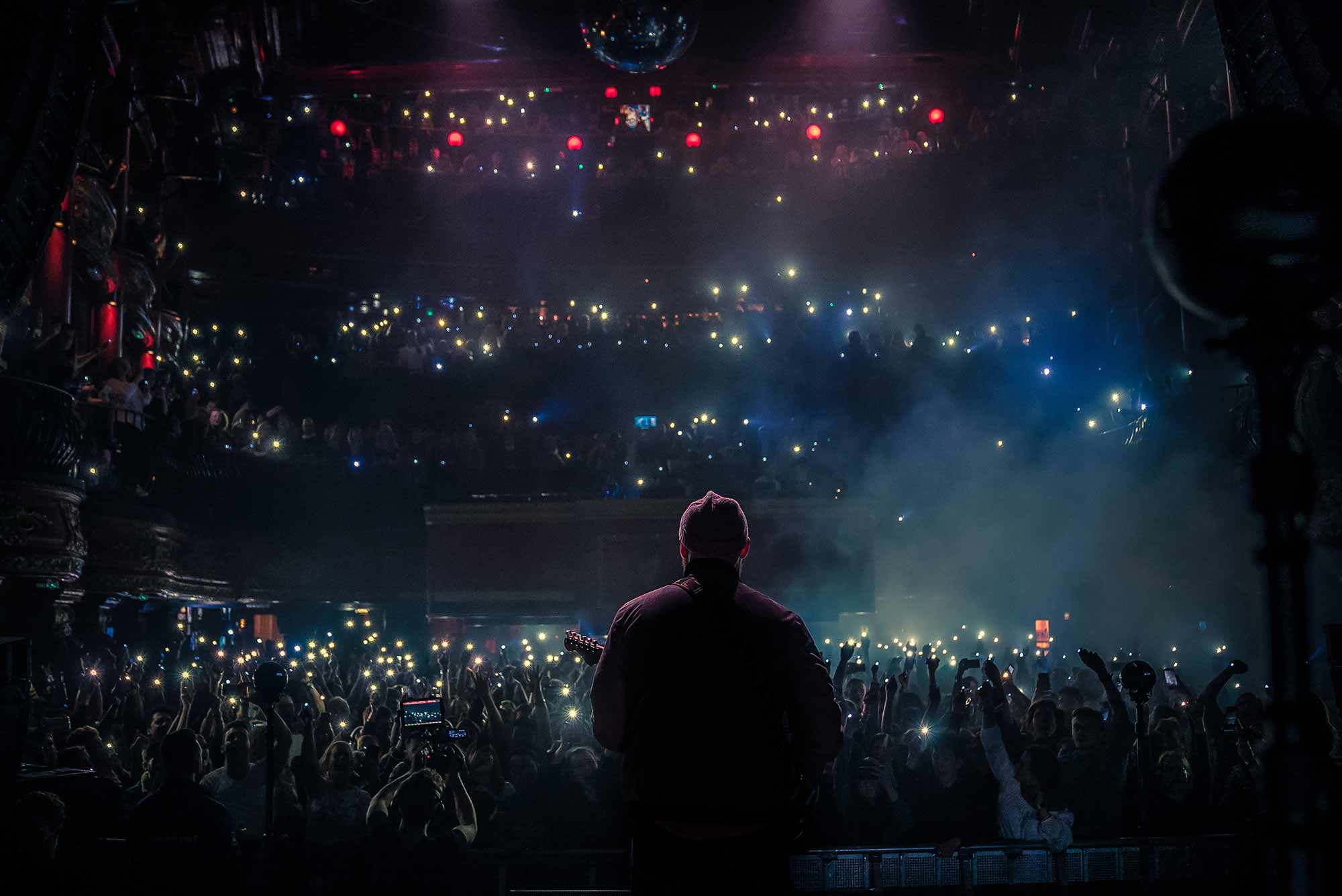
"Depending on the shot, there are a few key objects that I expose, but usually the artist's face is the main subject," explains Peter. With constantly changing colors and flashing lights, Peter uses his Sony a7 series cameras in full manual exposure mode. He relies entirely on the rear display and histogram to ensure that his shots contain as much detail as possible in overexposed areas. Peter explains: "I don't mind tiny dots or the spotlight going out, but on a large flat surface I would definitely avoid it. I think it's much more effective to emphasize the shadows than to create too much exposure." The choice of aperture particularly depends on Peter's use. Shots for a tour poster, for example, require a greater depth of field so that all band members are in focus. An aperture value of f/5.6 is better suited to this than a fully open aperture such as f/2.8 or f/1.4. There is also an important point to consider with the shutter speed, namely motion blur. Artists are constantly in motion, even if it is barely noticeable. That's why Peter doesn't set his shutter speed lower than 1/160 sec. "Of course, motion blur also depends on the artistic aspect," he explains. "But if I want to avoid it, I can't exceed a shutter speed of 1/160 sec - regardless of the lens."