Sony Alpha 6700 - Does Sony APS-C live on for photo fans?
This year, we've already introduced a few new Sony products, only so far the focus has been heavily on content creators and vloggers. That is about to change, as we have tested a special new camera. Find out whether the Alpha 6700 lives up to the high expectations in this blog post and in our video.


Sony Alpha 6700
- Sony Alpha 6700 (ILCE-6700)
- 26 Megapixel - Exmor R Sensor
- AI supported autofocus system with advanced subject & tracking functions
- 4K 120p video recording (with 6k oversampling)
- 5-axis optical image stabilization
- compact and lightweight and suitable for any adventure
- swivel touchscreen
- high resolution viewfinder with XGA OLED technology
- robust, dust- and splashproof construction

1. Simply better from the outside
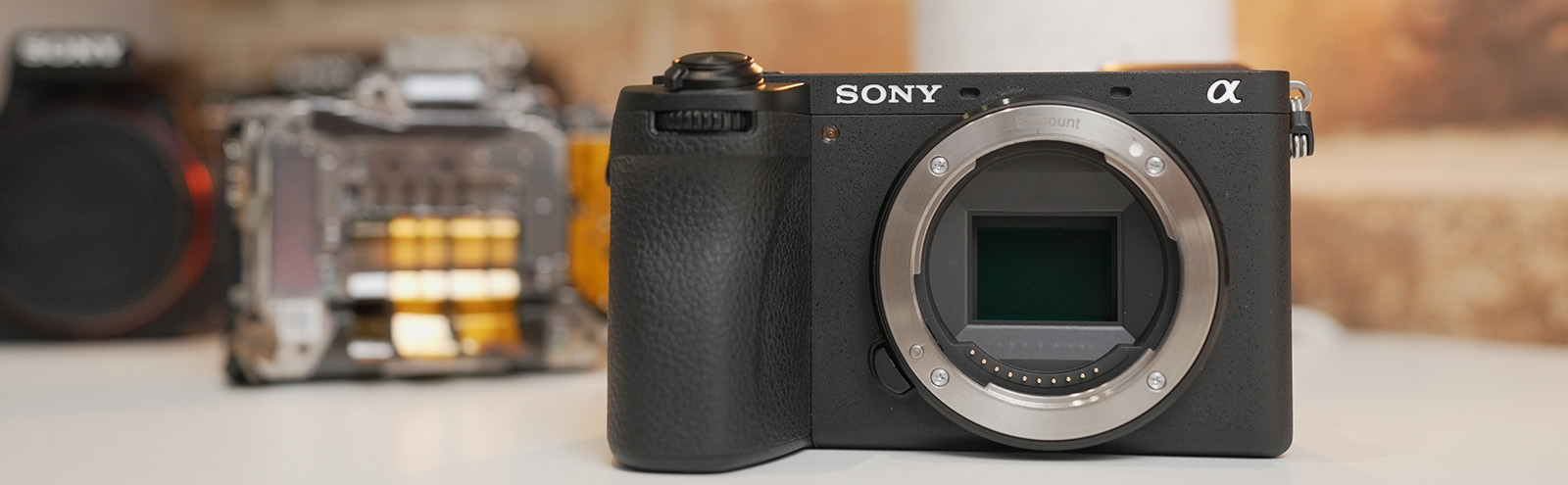
After Sony introduced the a 6600 in 2019, nothing more happened in the APS-C sector for photographers. For filmmakers, there was another very important camera in the meantime, for example, the FX30, but in the cinema sector. Hybrid use was therefore not possible. But now there is finally good news for photo fans: a new APSC camera primarily for photographers.
Those who like to film from time to time, however, need not worry, of course. As is typical for Sony, the video area has not been neglected, but more on that later.
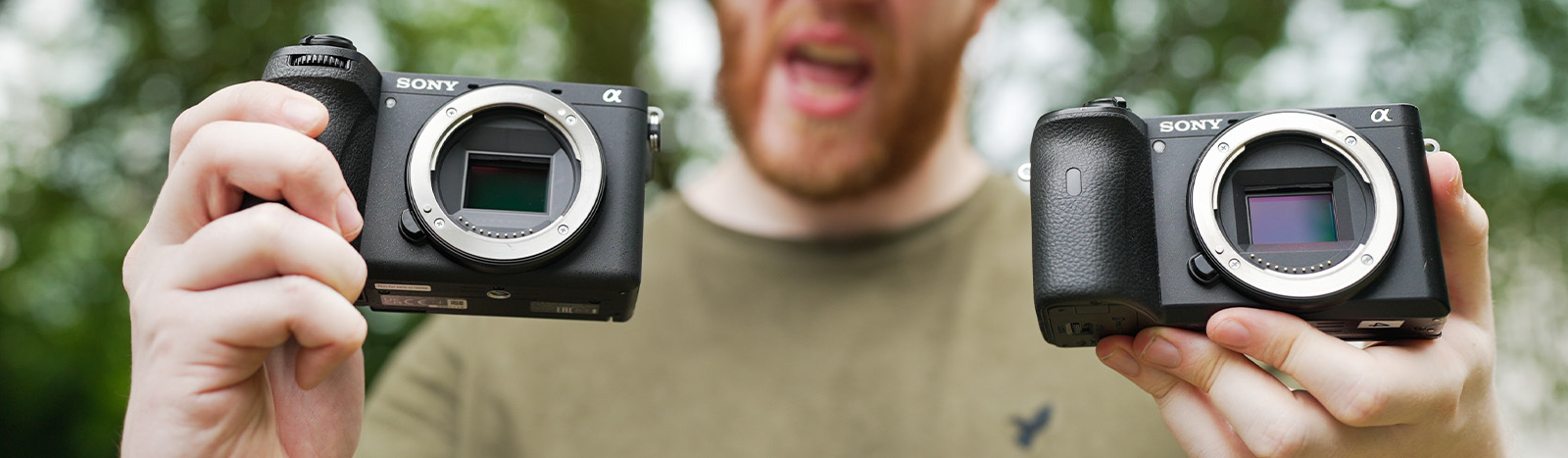
When we look at the external changes, we immediately notice that Sony has listened to user feedback and made some, partly small, partly big changes compared to the predecessor.
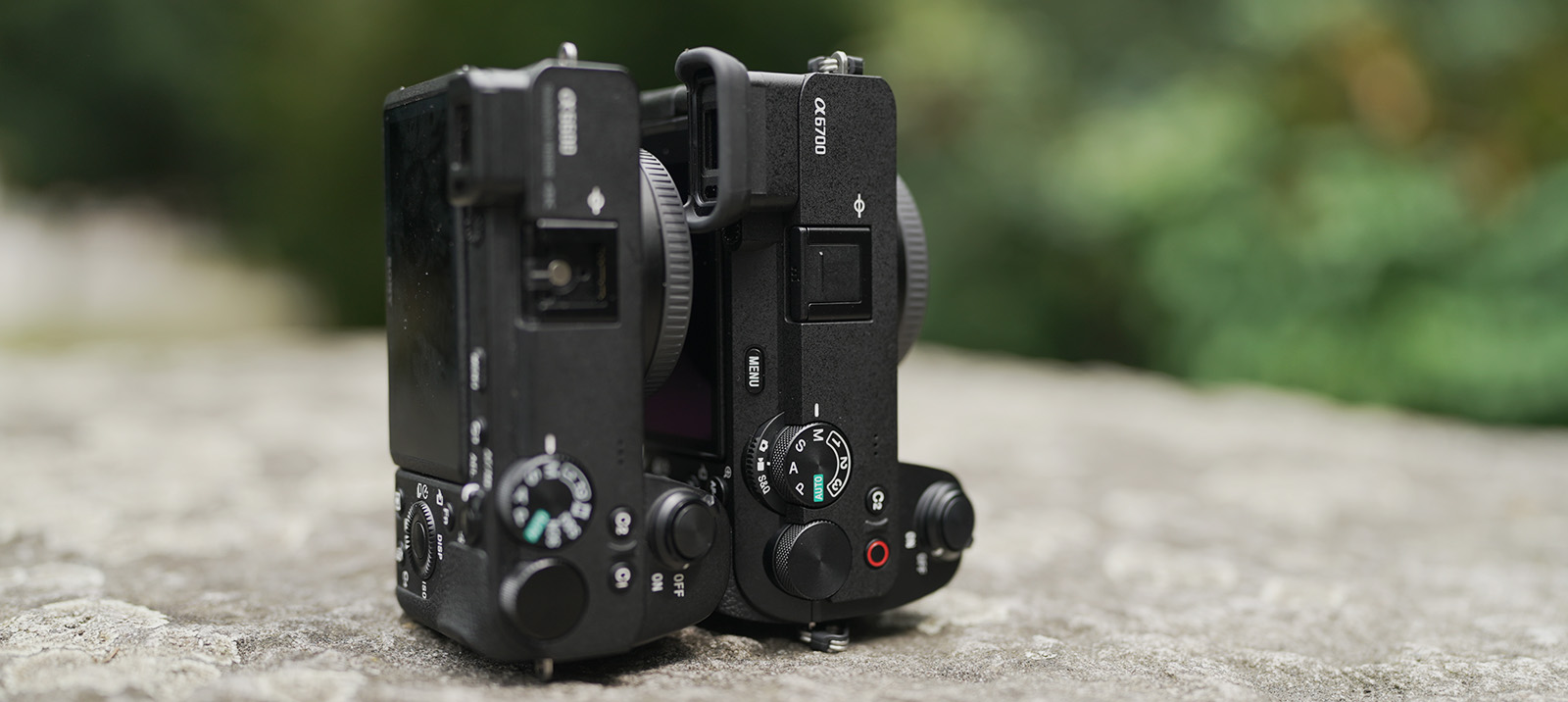
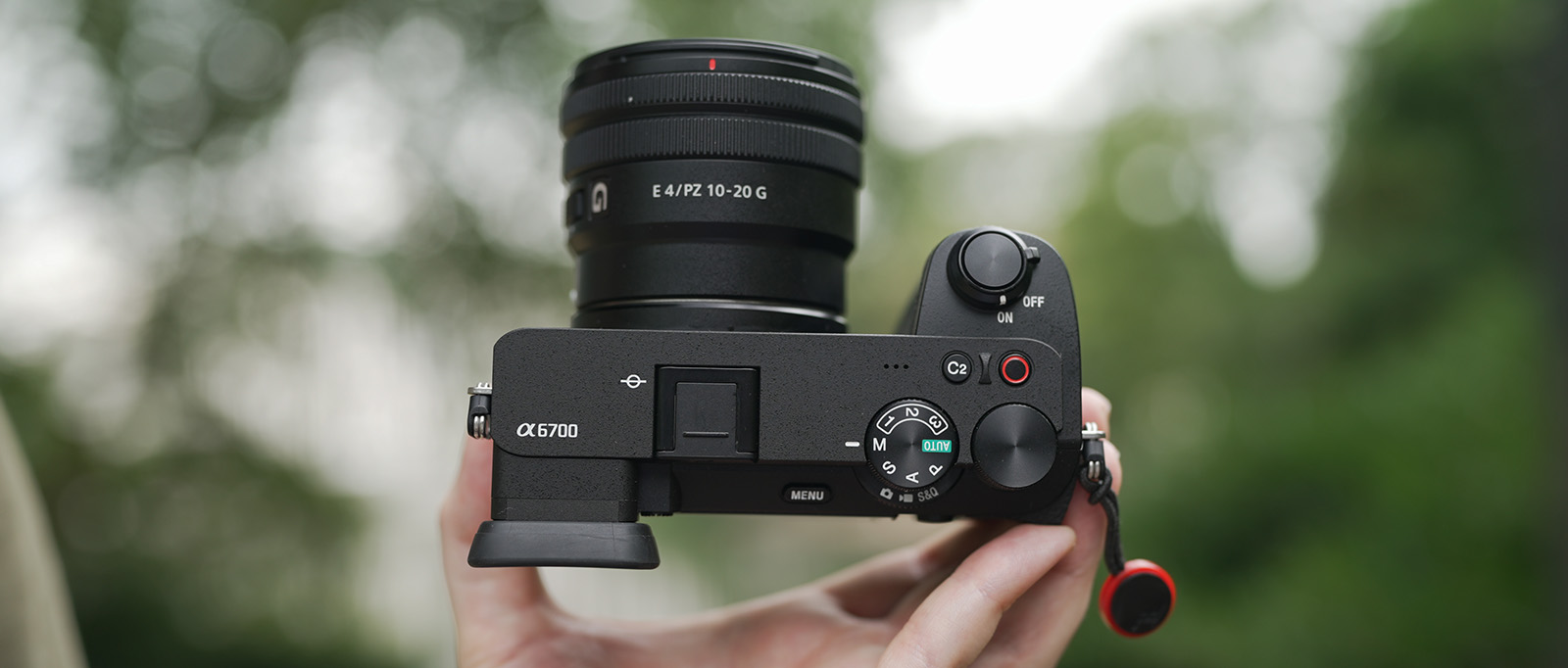
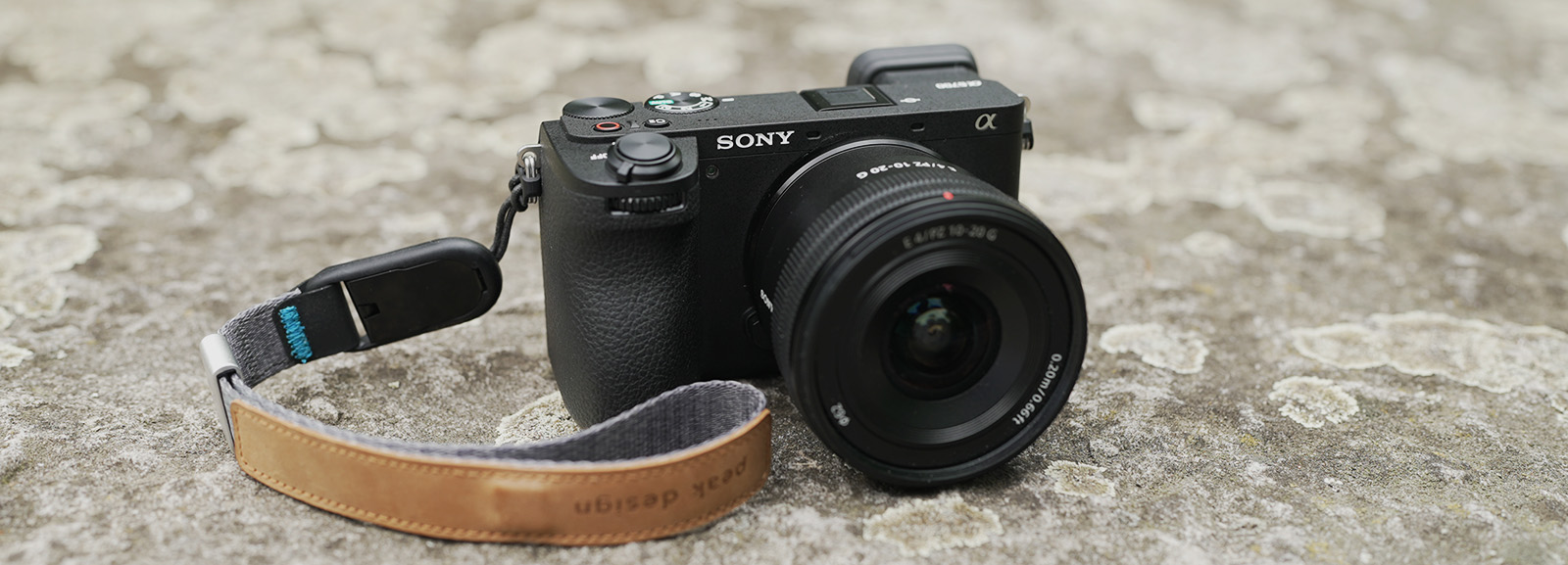
In direct comparison to the Alpha 6600, the new body has changed quite a bit in terms of form and function. The first thing that stands out is the new button layout, as Sony has now added an additional dial to the mode dial for selecting between photo, video and S&Q. Finally, separate settings for photo and video.
The record button has now also moved up here from its odd position on the side of the camera, making room for a function button. In the front, we've gotten another dial to more quickly fine-tune our exposure; the new power button is right above it. However, we really don't understand why this is angled so oddly.
Due to the beefed-up interior, however, some space had to be created in the body overall, and so Sony has reinforced the body by just under half a centimeter. The recessed grip has also been revised and is a bit thicker, but also more ergonomic. Both sounds negative at first, but it actually provides a better feel and improved grip in practice, so it is a good change overall.
For the first time in the 6000 series, we have the flip-out screen instead of the pure tilt screen, which makes selfie shots from many angles and situations a bit easier.
Ports and now also the SD card slot are found on the left side of the body. Microphone, USB-C, micro-HDMI and headphone ports are hidden behind weatherproof flaps here.
The viewfinder, while the same in resolution and magnification compared to the predecessor, now looks sharper and takes up more space, which is probably due to the new XGA OLED technology. So basically a positive change here as well.

2. Sensor
But what is actually under the hood? Well, the sensor should look familiar to many, because Sony already installed the 26 megapixel APS-C sensor in the FX 30 last year. Now, as expected, it is also coming to the a 6000 series - Photo First cameras. Behind the stabilized sensor, however, we still need the appropriate processors to manage the data. As usual in the last cameras, Sony installs the two Bionz XR processors here and now also the new AI chip. This is the maximum computing power that is possible in Sony cameras.
This leads us directly to the autofocus. This is virtually identical to the autofocus of the A7r V and the ZV-E1. Virtually every necessary detection and tracking function is included. Animals, birds, cars, trains, airplanes and even insects are recognized in addition to people. If you are interested in the topic of AI autofocus in more detail, take a look at our detailed livestream on the topic.
At the same time, the general AF potential has also increased somewhat. In addition to the better low-light capability of -3 instead of -2 EV, even more focus points have been added. In numbers, there are now 759 instead of 425 points covering 93% of the sensor - again 9% more than on the a 6600.

3. Photo First?
There are small updates in the photo area that are very welcome. Besides the aforementioned new autofocus, the camera still manages 11 frames per second in both mechanical and electronic shutter, just like before. So it's good for everyday life or smaller sports and wildlife photography, especially when paired with the new small Sony SEL 70-200mm f/4 G Mark II, which we also did a blog post with video on. Feel free to check it out here.
Finally, new additions are bracketing functions for landscape and macro photographers. Regarding focus bracketing, it should be said that you can create up to 299 photos for fine shifts of the focus plane. However, you have to add up both HDR and focus stacking yourself, as the camera does not create this automatically internally. In a further update, we would of course very much like to see this. Just like a pre-capture function, as known from other manufacturers.
4. But also for video?
We can film with the new Alpha 6700 in 4K with 6K oversampling in Super35 format, i.e. with a 1.04x crop. Slow motion recording is possible up to 120fps, but with a 1.6x crop at this point, which is of course helpful for wildlife.
Auto framing
In addition to autofocus, auto-framing is another of the AI-powered features that we already know from the ZV-E1. Here, the camera tracks any subject, cropping into the image in three selectable stages and reliably tracking it with the image frame. In addition to automatically detected subjects, we can of course also simply set a manual tracking point and have it tracked.
Where the ZV-E1 and the a6700 differ at this point, however: With the ZV-E1, we have the additional option of using an image stabilization mode, in which the IBIS is supported by a digital stabilization focus on stabilizing the subject. With the Alpha 6700, we only have Active IS, in which the IBIS is supported by a "normal" digital stabilizer that does not take the subject into account.
5. Conclusion
As you can see, Sony has not only delivered a performance upgrade with this camera, but above all has also made a lot of improvements to the handling, which we very much welcome!
All in all, the camera is really very important for the Sony system and also absolutely necessary. Sony has treated APSC cameras very stepmotherly in recent years. Thus, innovations in the areas of wildlife, travel or even reportage were missing, since the crop factor and the compact form factor can be very exciting especially here.
The price is also absolutely reasonable - if you buy the Alpha 6700 as a kit, you get the 16-50mm for only 100€ extra.





Last viewed articles