Camera Basics #12 - Getting started with macro photography. Our tutorial with tips, creative ideas and the perfect settings
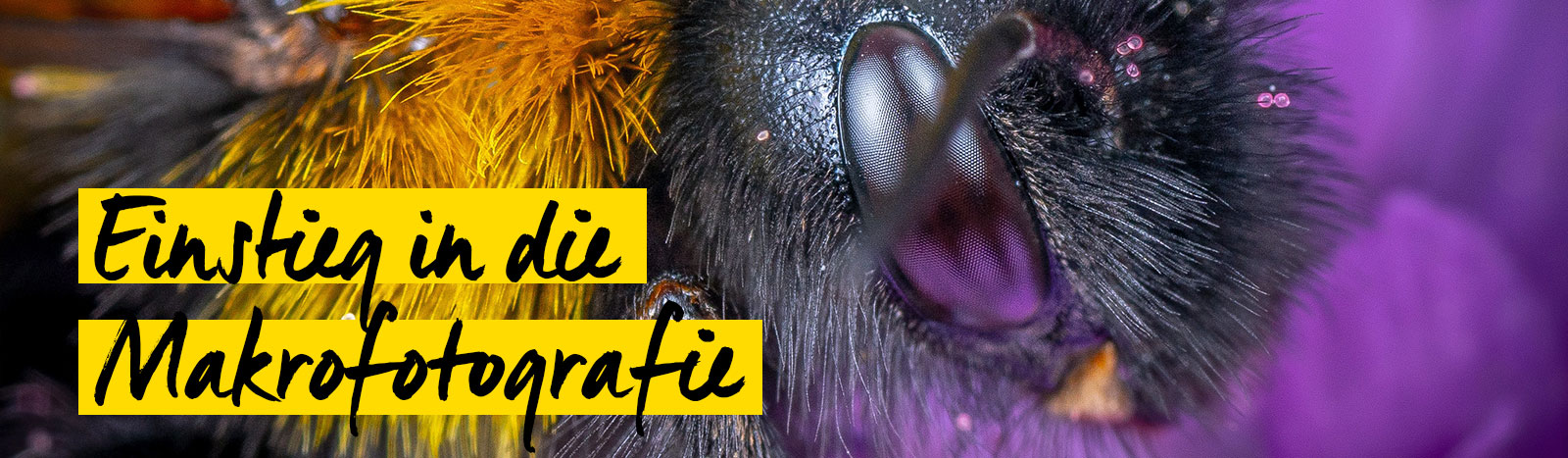
Capture small objects and details on a large scale! That describes macro photography very well! But what exactly could be a subject for this type of photography? Soap bubbles, insects, flowers, snowflakes and much more could be the subject of your photos. If you start with macro photography, you will begin to look at the world with different eyes.
In this article, we would like to give you an impression and a feel for macro photography and provide you with a few basics to help you take your first successful macro shots. But we may also have a few tips for experts! Because starting out in macro photography is easy, but mastering it is hard!
We look forward to your feedback on this article! Just send us an e-mail to [s-t-r-o-n-g]content@fotokoch.de[e-n-d-s-t-r-o-n-g]
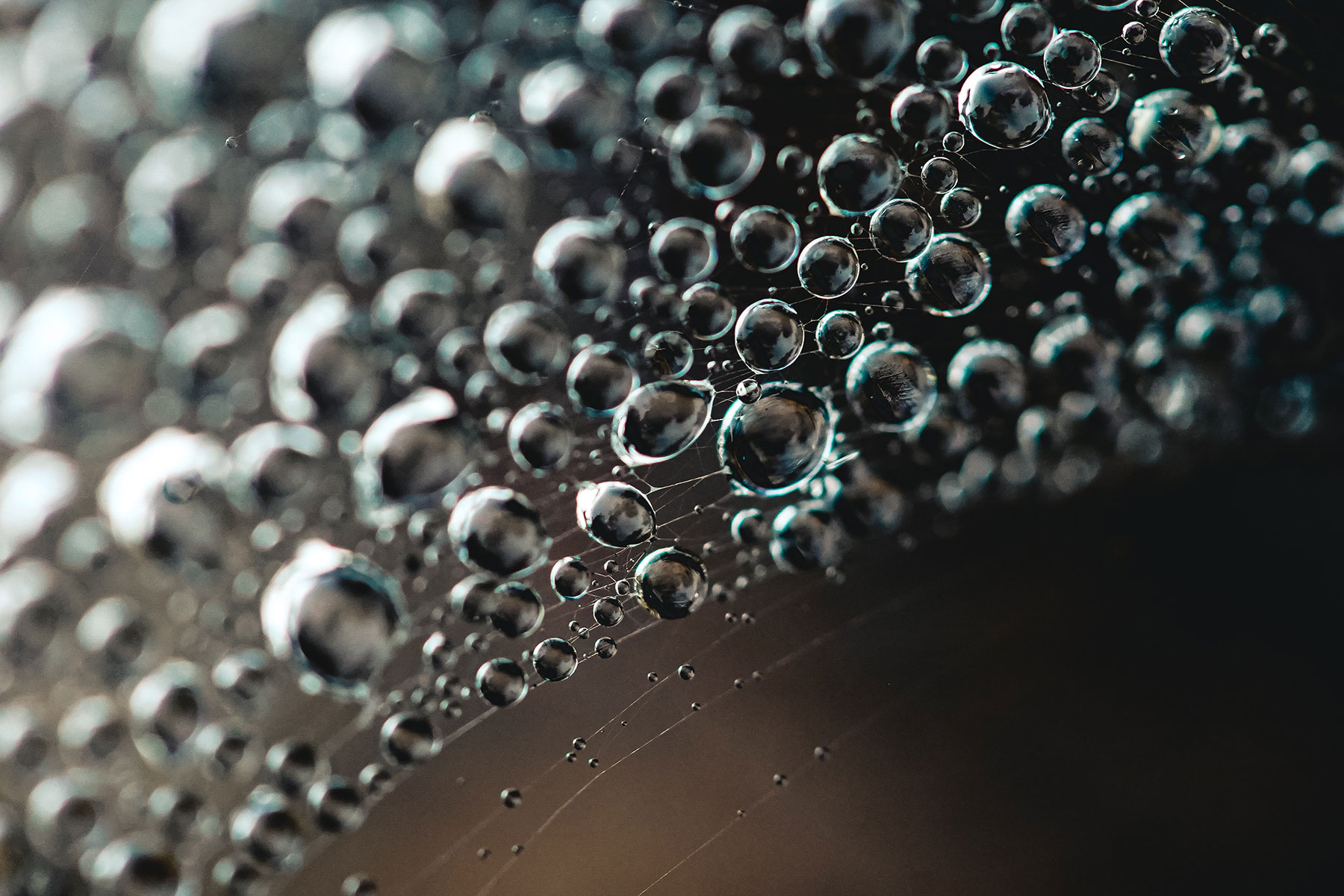

Macro photography according to DIN?
In the past, there was even a DIN standard for macro photography, but this is no longer valid. To be precise, it was DIN 19040, which defined the reproduction scale of 10:1 to 1:10 for macro photography. Many people may also be familiar with this scale from model making, where the respective model was depicted in the corresponding reduction.
Many photographers discover the explorer in themselves, find something new every day in the world of small details with their close-ups and thus also gain knowledge that is not known to everyone.
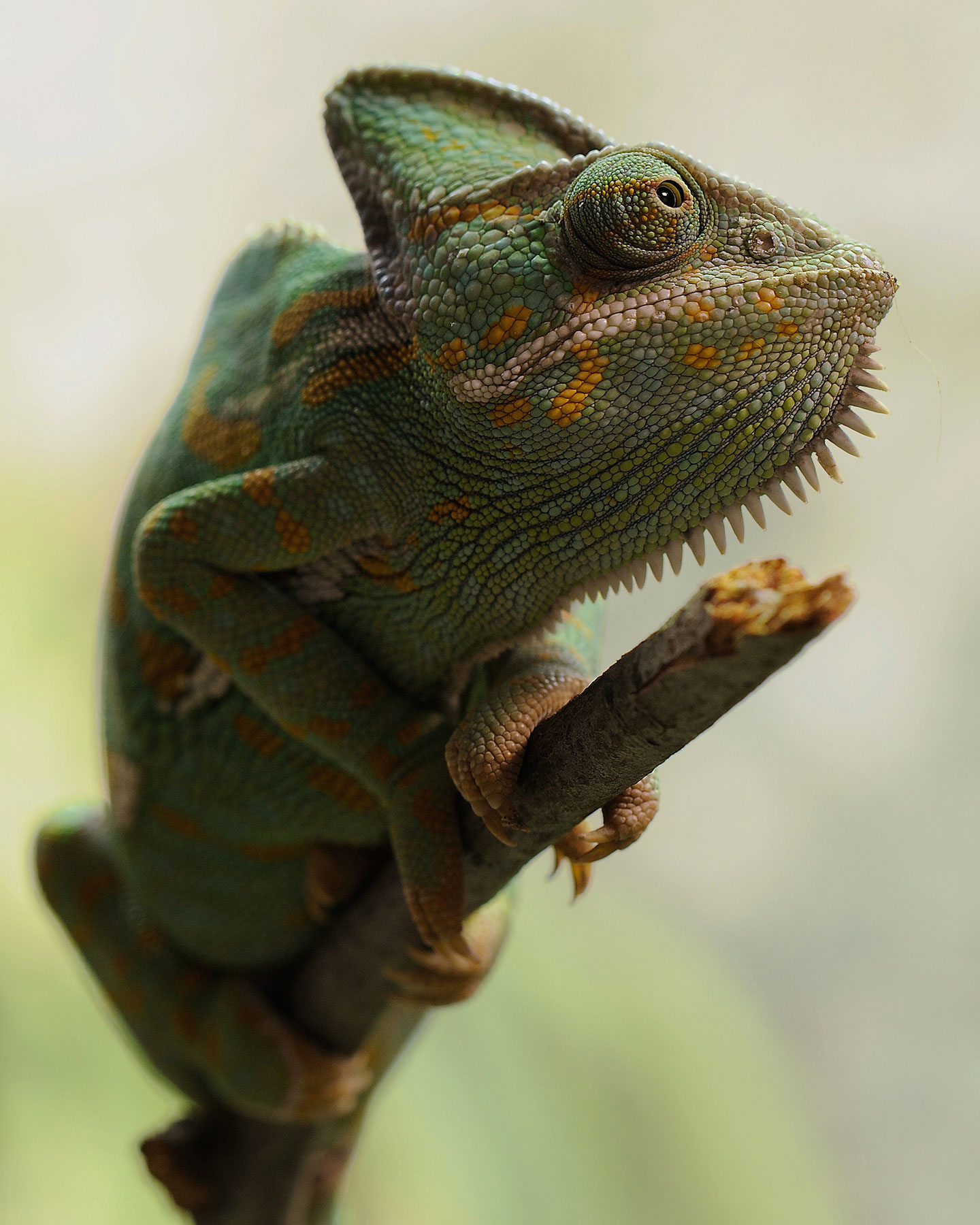
Characteristics of macro photography
In macro photography, the focus is on the detail. The calmer the background, the more the subject becomes the focus of the shot. Another detail that characterizes macro photography is the sharpness / depth of field, which emphasizes the object. Techniques such as focus stacking / focus bracketing are used here.
Lens in macro photography
Lens are the be-all and end-all of photography. The crux of close-up photography of this kind lies in the focusing or close-up limit of the Lens. Macro lenses have a particularly short focusing distance. This close-up limit also determines the possible image scale of the Lens. Each brand has its own range of macro lenses, but there are also manufacturers such as Laowa, which have made a name for themselves in the field of macro photography +amp; videography, especially in the macro wide-angle range.

Ideas for macro photography
Macro photographers are always on the lookout for the small details of life. Some subjects are particularly suitable for this type of photography:
- Insects
- Tabletop figures
- Model railways
- Flowers are suitable not only because of their colors, but also because of their structures +amp; shapes.
- Textures of plants
- Jewelry such as rings or earrings
- Coins offer fine details and are contemporary witnesses of our everyday life
- Fruits such as oranges offer interesting structures, whether on the outer skin or the flesh of the fruit
- Workshop utensils such as nails, screws or tools.
- Drops of water in plants or on various surfaces
Tips for macro photography
After the ideas, we come to the best tips. There are lots of things you can do to make your macro shots even more immersive:
- Pay attention to the light, such as incoming rays of light
- Play with different perspectives
- Use a muck filter to create a dreamy look for your macro shot
- Use dry ice or a SmokeGenie, for example, to add fog effects to the image and set the mood
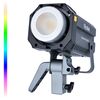
- Use artificial light to play with reflections and structures. We recommend using continuous light at this point, as this is where the direct changes in the light become apparent. Otherwise, macro ring flashes are particularly suitable for macro photography
- When using a tripod, you can work with an aperture of f/16 to f/22
- When choosing the background, make sure that it is as still as possible. This way, the background does not distract the viewer from the subject. If you are photographing jewelry, Caruba's backgrounds can also be interesting
- Work at the eye level of the subject
- Use reflectors. Small reflectors around 30cm are particularly suitable for small objects
- Use spray bottles for water to create more dynamics / drama in the picture with the applied water
- Try out focus stacking / focus breaking if your camera supports these functions
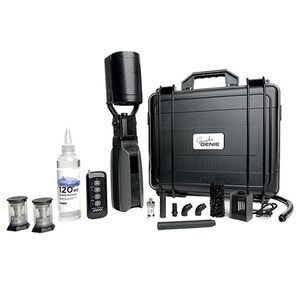
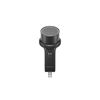
SmokeGENIE Handheld Professional Smoke Machine Pro Pack
- compact smoke machine
- up to 4 hours battery life
- 25 different settings for the spread and quantity of smoke
- various attachments
- ideal for creative photos, film productions and performances
The best settings for macro photography
Stopping down is always a good idea in macro photography, because due to the very low close-up limit, the distance to the subject is very large with an open aperture. However, this does not help if you are trying to focus on a beetle: An aperture of 2.8 is often not recommended here. Use an aperture of 8 or higher (up to aperture 22) to achieve a sufficiently large depth of field.
Start at a low ISO of 100 and gradually work your way up. If you are using an APS-C or MFT sensor (micro four thirds), you need to see how far you can go before the subject is overshadowed by ISO noise. We recommend using a tripod and a macro ring flash.
Advantages of MFT sensors in macro photography
Many people are familiar with the rumor/prejudice that MFT sensors are better suited for macro photography. It is generally more difficult to find information on this, so we have listed the most important factors here:
- Faster processing of images when stacking
- Higher crop factor, which results in a greater depth of field
- Larger image scale than with full-frame sensors
- Large variety of macro lenses
- Extreme weather resistance (OM system related)
- Versatile use, also for photographers who are also interested in bird photography
- Compact Lens +amp; cameras
- Lower focusing distance

A little task for you:
Try to find interesting subjects on a walk by looking closely at which small details you want to capture in large detail. If you already have a macro lens, try using these tips.
Show us your pictures on Instagram and/or Facebook and tag us @fotokochde! We look forward to seeing your results!
Thank you for reading this article. If you're interested in other photography basics, then take a look at the other camera basics
Get to know your camera ? Discover the fun of photography
Have you bought a camera and are taking your first steps in photography? You're missing out on a lot of potential with automatic mode! Photography is only really fun when you understand your camera and know exactly which settings to use to get the photo you want. Get to know the importance of the functions and ignite your enthusiasm for photography!
To all camera basics