Guide to handball photography
Fast attacks, powerful throws and close duels characterize the game. Handball is a fast-paced team sport in which two teams try to throw the ball into the opponent's goal and is one of the most popular indoor sports in Germany alongside volleyball and basketball.
It is also a very physical sport that moves at a correspondingly fast pace and, in combination with the often rather modest lighting conditions in the narrow halls, presents a great challenge for us photographers.

 How to photograph handball matches - Image: Oliver T. Rubert
Camera requirements
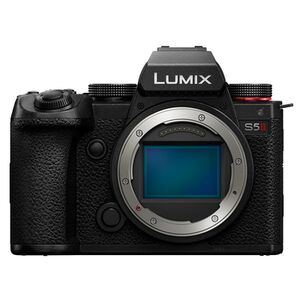
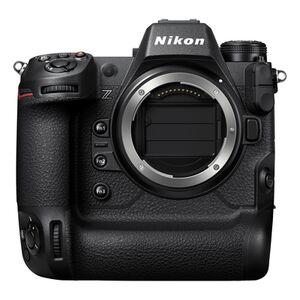
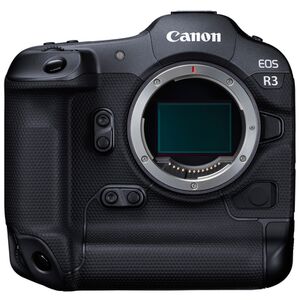
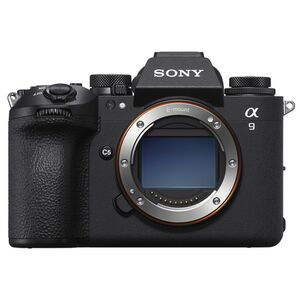
Handball is mainly played in sports halls (with the exception of beach handball). Apart from the top leagues, you will mainly encounter smaller halls with poor lighting. You will need very fast shutter speeds (usually faster than 1/800s) and usually a higher ISO value.
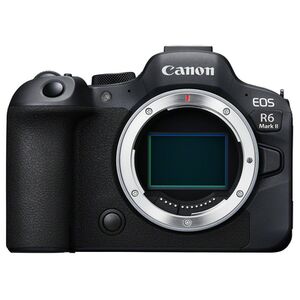
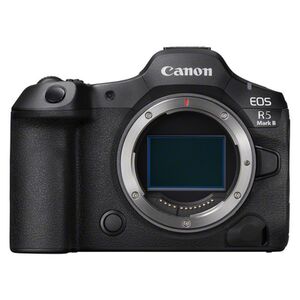
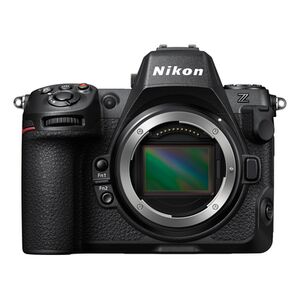
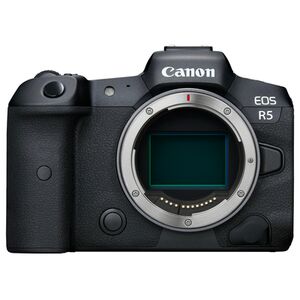
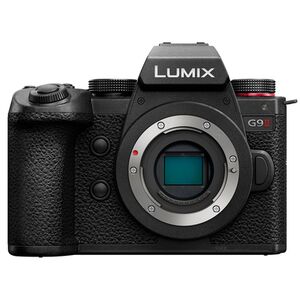
In short: above all, you need a camera that works well in low light. Due to the technical developments of recent years, I would clearly recommend mirrorless system cameras instead of DSLR cameras, precisely because they can generally handle higher ISO values better. Of course, this also raises the question of whether full-frame or crop sensor. The clear advantage of full-frame cameras is that with the same number of pixels (in most cases around 24 MP), the area per pixel is larger, which means that more light can fall on the individual pixel. This means that you can achieve significantly better performance with the camera in the given low light conditions. This is also due to the high ISO, which is associated with less background noise in full-frame cameras.(More information on the advantages of full-frame cameras here)
An integrated image stabilizer (IBIS) is rather less necessary due to the very fast shutter speeds. Another, if not the most important criterion, is the camera's autofocus system! Because only if your autofocus can adjust quickly enough can you keep up with the fast changes in the situation.
But even with slower AF systems and entry-level cameras, you are not necessarily at a loss! So don't let yourself be put off by the technical data (only), because as is so often the case in photography, experience is the decisive factor here.
The right Lens for your subject
As already mentioned at the beginning, in handball, whether amateur or professional, we often have to deal with rather poor lighting conditions in combination with fast movements and correspondingly short exposure times. That's why you should work with the fastest possible Lens. Most people would probably go for fixed focal lengths with an aperture of f/1.8 or even f/1.4, such as the SIGMA 85mm f/1.4, but I would personally advise against this. Of course, the amount of light that hits the sensor with such an open aperture is good for us at first. However, you face two challenges with these Lens: Firstly, you're not as flexible with the fixed focal length.
In handball, it can always happen that the action from the other side of the pitch suddenly shifts a meter in front of you. If you are then sitting 2m away with 85mm on the camera, you will most likely see very little of the player and / or the ball. In addition, due to the significantly shallower depth of field at such a high aperture, you have much higher demands on your autofocus and therefore have a much higher risk of your images not being sharp due to the fast movements. Another problem, especially with wide-angle shots, is that the wider the aperture, the smaller the plane of focus.
Therefore, I would generally always recommend the standard zooms for sports photography, i.e. a 24-70mm 2.8 and (ideally on a second body) a 70-200 2.8. Lenses such as the 14-24mm 2.8 can also be quite nice, depending on the purpose, but are more nice accessories than real must-haves.
Always consider the size of the hall when choosing your Lens! A 70-200mm Lens won't do you much good in a small school gym where you're practically sitting on the sidelines. Conversely, only the 24-70mm will be of much less use in a Bundesliga match where you are at least 3m away from the touchline. If you have both Lens (or comparable focal lengths) available, you are very flexible and can also react well to rapidly changing game situations with the zoom.
 Seeing handball situations and capturing them photographically - Image: Oliver T. Rubert
In addition, due to the significantly shallower depth of field at such a high aperture, you have much higher demands on your autofocus and therefore have a much higher risk of your images not being sharp due to the fast movements. Therefore, for sports photography in general, I would always recommend the standard zooms, i.e. a 24-70mm 2.8 and (ideally on a second body) a 70-200 2.8. Lenses like the 14-24mm 2.8 can also be quite nice, depending on the purpose, but are more nice accessories than real must-haves.
Always consider the size of the hall when choosing your Lens! A 70-200mm Lens won't do you much good in a small school gym where you're practically sitting on the sidelines. Conversely, only the 24-70mm will be of much less use in a Bundesliga match where you are at least 3m away from the touchline. If you have both lenses (or comparable focal lengths) available, you are very flexible and can react well to rapidly changing game situations with the zoom.
What is the best way to find a game?
Of course, this mainly depends on which league you are looking for. In general, I would recommend the lower leagues to start with, as the game runs a little slower there and is therefore easier to photograph. It's also useful to familiarize yourself with the rules beforehand so that you already know roughly what to expect from a sporting perspective. So it's best to simply look for clubs in your area, check their website or social media channels to find out when the next home game is. Then simply send a friendly email or social media message asking if you can come along. In the vast majority of cases, this is not a problem unless it's a cramped school gym, but more on that in the next point.
If you already have experience in sports photography and want to try your hand at higher leagues (1st + amp; 2nd Bundesliga, everything below that is still as described above), the situation is a little different. On the clubs' websites, you will usually find either a contact person for the press or even a ready-made form to obtain accreditation, i.e. a "photographer's pass", so to speak, for the relevant match. Depending on the size of the club, however, accreditation may only be available to press photographers due to limited capacity and appropriate proof may be required. In case of doubt, however, there is never any reason not to send a friendly email and ask if you would simply like to try your hand at it.
For national and international competitions, i.e. German Cup, European Cup, European Championship or World Championship, it becomes more complicated, because here the request for accreditation is only possible via the press portals of the German, European or international handball association and the registration alone may already require proof of press work. However, as this is unlikely to be relevant for most of us, I will focus my tips below on the national leagues and below.
 Seeing and photographing situations on the sidelines - Image: Oliver T. Rubert
 Monitoring situations on the sidelines - Image: Oliver T. Rubert
The procedure on site is usually quite simple: for the smaller clubs, you can simply come into the hall before the start of the game, find your place outside the pitch where you won't disturb the referees (in the lower leagues, I tend to talk to the referees beforehand and clarify with them what is okay for them) and start taking photos. In the national leagues, you either start at the ticket office or (if available) at the press desk, where you will receive your accreditation, mostly to wear around your neck, which shows that you are allowed to enter areas where spectators are not allowed to go. More detailed information will usually be given to you on site, i.e. which areas may be off-limits to you or whether you need to pay attention to anything in particular (e.g. pyrotechnics at the kick-off). It's best to use the time while the teams are still warming up and playing in to test your settings.
Then you're ready to go!
The perfect location! The choice of location
In general, there is of course no "one" spot in handball from which you can take the perfect photos, but it always depends on which game situations (attack, defense, counterattack, cheering, 7 meters, etc.) you want to capture. So let's start with a brief overview of how the pitch is set up:

The pitch measures 40x20m, is separated in the middle by a center line (usually still with a center circle). The timekeeper's table and the respective team benches are located at the height of the center line, from where the teams can change at any time without interrupting the game.
Before the start of the game, the captains of the respective teams draw lots to decide which team will kick off first. The game lasts 2x30 minutes and the team that has scored the most goals by then wins.
However, only 3 steps may be taken without bouncing; there is no "star step" as in basketball . Players are not allowed to enter the area in front of the goal that is separated by a solid line, not even on their own side. Jumping into this area is permitted as long as the goal is scored before the player has landed again.
But where is the best place to take photos?
Personally, I prefer to focus on the following situations: Goal kicks, 7-meter shots, tackles and goal celebrations. You can capture the latter from pretty much any side of the pitch, as long as you're not standing right behind the team bench.
 The right location for handball photography - Image: Oliver T. Rubert
 Handball photography in the series Photographing and delivering Image: Oliver T. Rubert
 Handball photography tells a story in series Image: Oliver T. Rubert
In general, you usually want to see the athlete's face in sports photos, as the face shows the most emotion to the outside world. Roughly speaking, this means that you should stand somewhere in the players' field of vision.
For goal finishes, the area behind the goal line, just inside the intersection of the goal line and the circle, is ideal. However, it is particularly important here to coordinate with the referees, as they are also regularly in this area right next to the goal and we as photographers do not want to disturb them!
Ideally, depending on how close you are to the line, you can work with a wider angle (24-70mm) and more from below. Most goal kicks are taken on the bounce, which we can make look even more impressive when photographed from below.
Duels can also be captured well from this perspective.
 Handball photography guide - duel - Image: Oliver T. Rubert
Which accessories do you need?
My personal must-have accessory for all (ball) sports is the lens hood for my Lens! Not because they are absolutely necessary due to the lighting conditions in the halls, but mainly to protect my Lens. If you do get hit by a ball on the lens, the lens hood acts a bit like a predetermined breaking point and can therefore prevent a lot of damage to the lens.
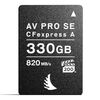
Otherwise, you should of course also make sure that you have a suitably fast memory card with you, as you will be taking a lot of continuous shots and the faster they can be saved, the faster you can follow the next situations again - sometimes a lot of photogenic situations happen in quick succession! That's why the memory card should have a storage capacity of at least 128 GB. Especially if you have little experience in volleyball and sports photography in general, you will most likely shoot too often rather than too little and should have a corresponding buffer. It happens very quickly that you come out of the hall with 3-4000 photos!
Personally, I always shoot in RAW, simply because I like to keep a lot of leeway in post-processing (especially with the white balance) and a nice to have is definitely a small stool, as seating such as beer benches are rarely provided for the photographers. But you don't usually need one of these, as you can - if you want - change positions a lot to get the most varied shots possible. Otherwise, you will most likely spend most of the time kneeling, as the jumps in particular are shown to their best advantage from below.

- swedish quality stool
- sit comfortably on the go
- can be folded up small
- lightweight
Some colleagues also like to have a monopod with them, but this only really makes sense if you are working with high focal lengths, i.e. 300-600mm. You don't normally need it for the "standard telephoto" 70-200mm f./2.8, except for video, as you don't have to hold it up for long periods of time and the magnification is not so strong that a small jerk will ruin your entire composition.
In the end, it is also important that you can transport your equipment easily. It won't do you any good if you end up arriving in the hall loaded down like a pack mule and don't have a hand free for the camera. That's why investing in a good photo backpack is a good recommendation.

Walimex FT-1502 Aluminum Pro Monopod 177cm
- robust and very stable monopod made of aluminum
- max. load capacity: 10 kg
- ideal for sports and animal photography with long focal lengths
- high ease of use thanks to practical Fliplock quick-release fasteners
- Sponge rubber coating on the handle
- incl. wrist strap and transport and storage bag

Manfrotto Monopod Alu 4 Sec
- Aluminum monopod
- with fluid base
- Cold protection handle with optimum grip
- Quick-release leg locks



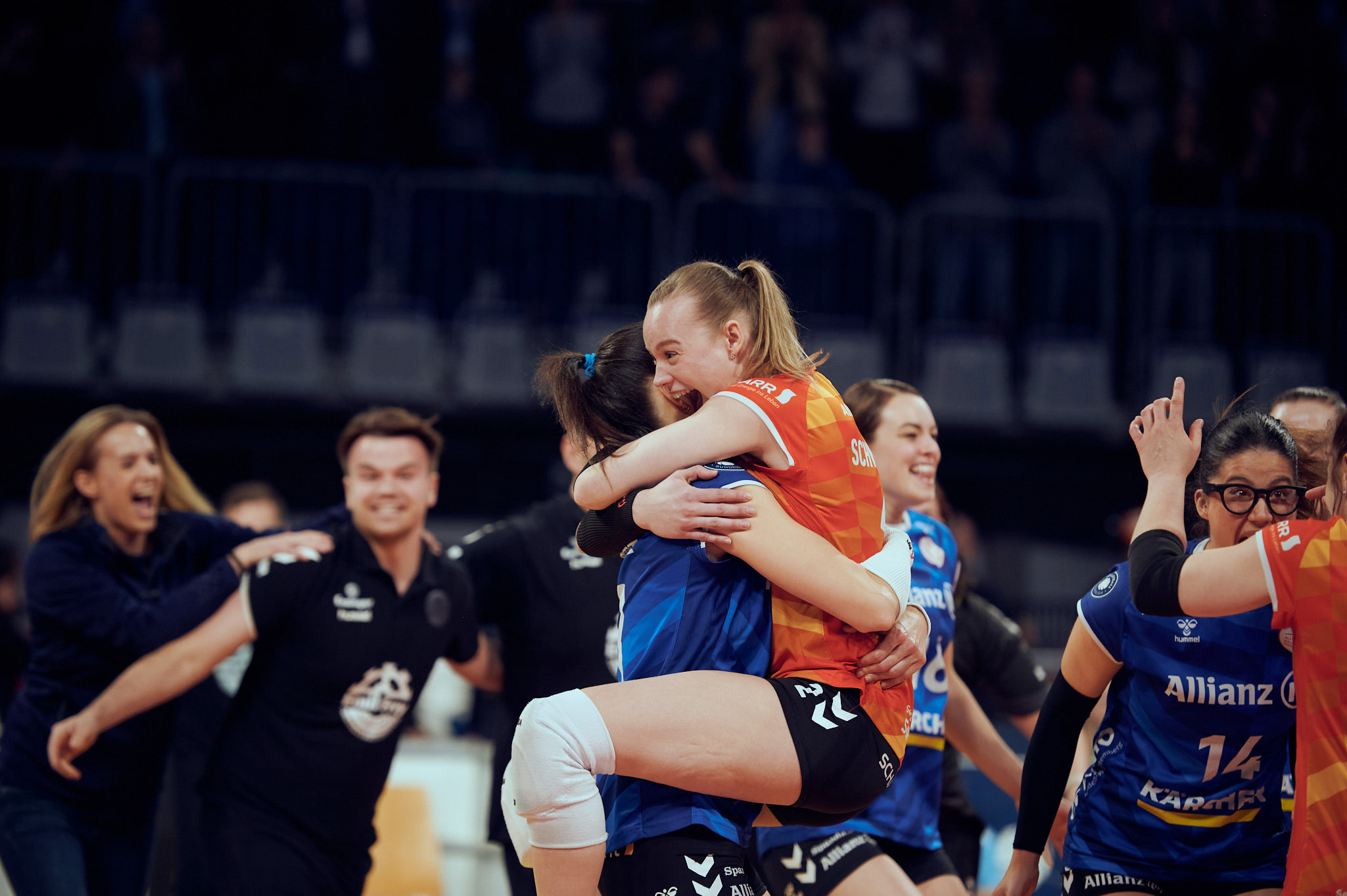 Capturing emotions in volleyball photography - Image: Oliver T. RubertCapturing emotions in volleyball photography - Image: Oliver T. Rubert
What is the best way to edit the images?
In the vast majority of cases, sports photography also means continuous shooting! You quickly come home with 2-4000 photos, which then need to be viewed, sorted and edited. This means you need software for batch processing. Most colleagues would probably reach for the top dog "Lightroom" or "Lightroom Classic" from Adobe out of reflex.
I also tried out this software recently, but for event photography I would recommend the competition: Capture One. Capture One (also known as C1) was developed by the camera manufacturer PhaseOne for their cameras in order to be able to process the large image files of the PhaseOne cameras more efficiently and was then also opened up to other camera manufacturers.
Why is Capture One instead of Lightroom?
But why is C1 now better than Lightroom for this scenario? The answer is: speed! With Lightroom, I still have to wait a little less than a second for each photo to load after import. Then I need another second for the settings to be applied to the image before I can select the next image. With CaptureOne, I don't have this noticeable loading time on my MacBook Air with M1 processor. In my case, Capture One also beat Lightroom quite clearly when exporting.
For me, who in the vast majority of cases does sports photography directly for clients, the speed of my workflow is the absolute number one criterion, as I also have to deliver quickly. That's why, from my experience, I can only recommend Capture One if you don't want to spend hours waiting. But now to the actual workflow! As always with image editing and processing: many paths lead to the photo, my path is just one of many possible examples of how you can structure it, it is not a blueprint of the only correct approach.
The first question is always: where do I save my photos? Here I would advise using an external SSD as a storage location, as you can quickly accumulate more than 100GB per day, so that the main hard disk of the computer is still free. I personally have a SanDisk Extreme Portable V2 SSD with 1TB for my active productions, which is simply super handy and practical. I create one folder per game (and per set for the big events like the German Cup final) where I copy the photos from my two cameras.
From there, the photos are then imported into CaptureOne, where I have previously created a new album in my annual project for the respective event/game (important when importing: "Add to catalog" setting, do not copy into the catalog!) Once these are loaded, I go through all the photos and use a keyboard shortcut to highlight my selection in color and then simply filter them by color. Then I take the first photo in the selection and edit it in detail: Exposure correction, color correction, Colorgrade. I then copy these settings from the first photo to all the other photos in the album and then only need to go through the individual photos and correct the exposure minimally (fortunately not much effort is required due to the rarely changing lighting conditions) and can then export the photos.

Capture One Pro
- Improved noise reduction for better quality images at high ISO values
- New Basic Color Editor is compact and easy to use, one-click adjustment of hue, saturation and brightness
- Revised tools for the high dynamic range with controls for highlights, shadows, black and white
- Visible handles in the cropping tool make it easier to achieve the desired image section
- Pin your favorite tools to the top while you scroll through the other tools
- Easily copy layers and masks between photos
- Support for DNG files
- Speed up import and export and benefit from a smooth editing workflow
- Use the wide range of image editing and color correction tools to bring your creative vision to life in the best possible way
- Transfer images via tethering directly while shooting to review or adjust them immediately after shooting
- Save time thanks to the customizable user interface and create your personal workspace
- Choose the payment method that suits you best - opt for the purchase of a license or a subscription
- Over 500 supported camera models
More about Oliver T. Rubert
I started out in the portrait segment and shortly afterwards lost my heart to event and sports photography:
My name is Oliver T. Rubert and I have been working in the field of event and sports photography for over 5 years now. In addition to the moments that pass by quickly, my work focuses in particular on what happens off the pitch: emotions. Whether it's the team on the field, the coaches or the fans - everyone is passionate about their sport and their team and it's precisely this atmosphere that makes sporting events so special for me. This spirit is what I want to capture in addition to the action scenes.
Starting in 2016 with a small Nikon D3200, I have remained loyal to the system and have now been working with two Nikon Z6s for 3 years.
In addition to sports and event photography, I have found my creative playground in cosplay, both as a photographer and as a model. Even though - or maybe because - it is a very strong contrast to my professional, photographic work, it helps me to constantly challenge myself and deal with new techniques and stylistic elements, which I might not be able to experiment with for my clients.
You can find my photos on Instagram at @otr.photo, my work as a cosplayer and model at @otr.cosplay.
My website: www.otr-photo.de