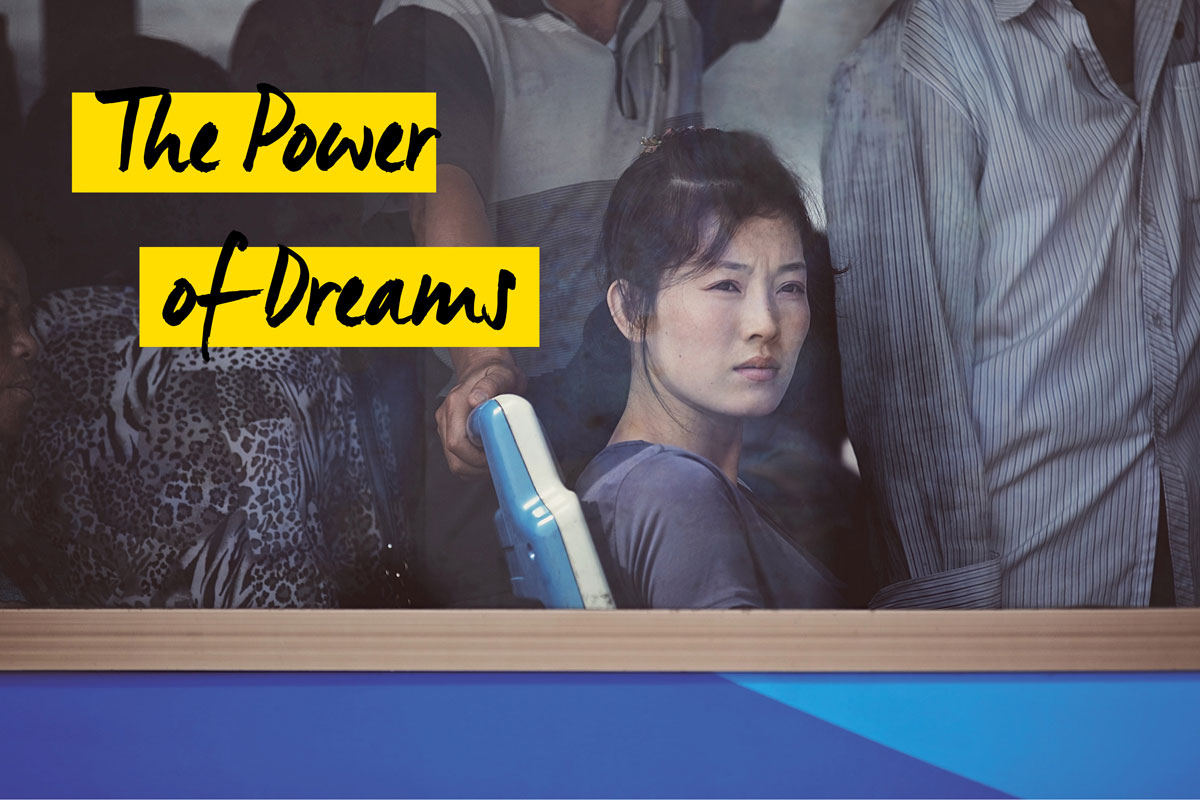
The Power Of Dreams
from the current Snapshot No. 60
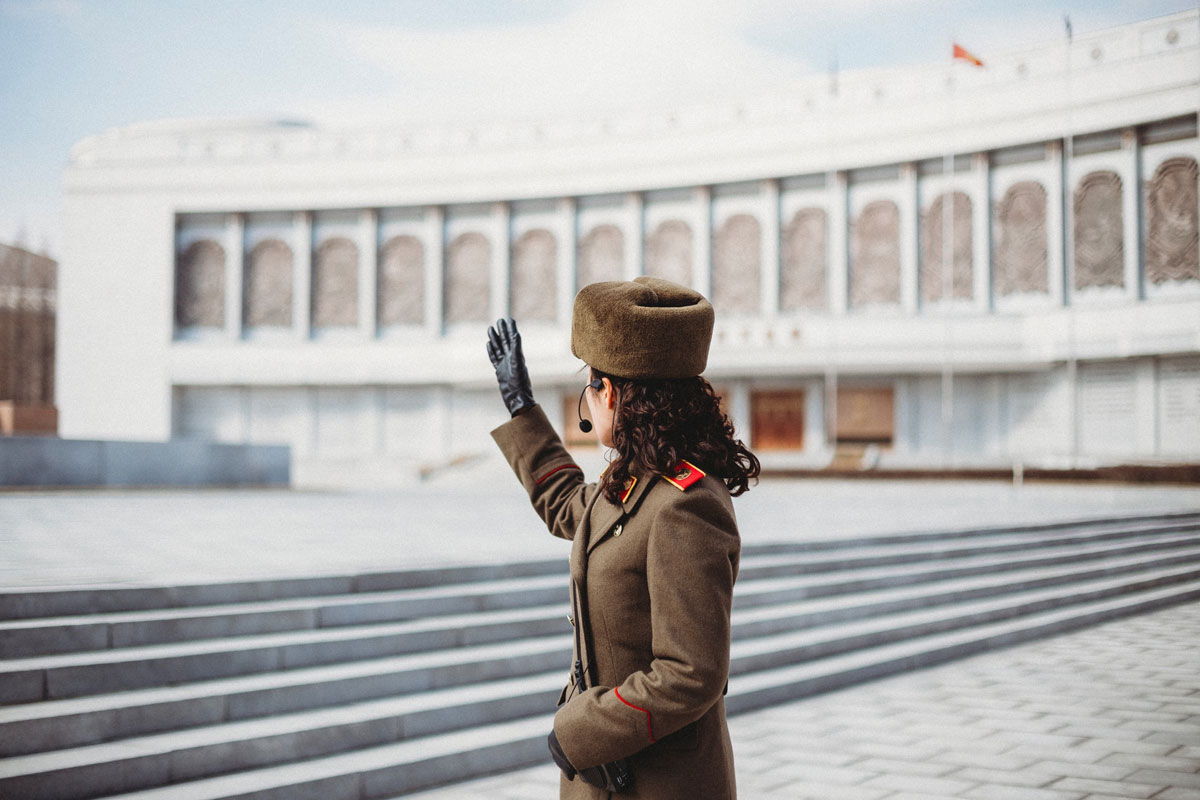
North Korea is probably by far the most secretive country in the world. Hardly anyone has visited the isolated state or would even consider it. Time and again we hear of travel groups who are presented with a staged image in strictly planned itineraries. Photographer Xiomara Bender has already traveled to Kim Jong-un's country seven times and manages to look behind the facade. Her impressive photos are featured in her book "North Korea - The Power of Dreams" and in a current exhibition at the Roschlaub Gallery in Hamburg. In our interview, she talks about her experiences
Xiomara Bender in an interview with Daniel Krug
1. What do you think is the real North Korea?
It is the last country of its kind and, like every country in the world, it has a history that once
made it what it is today. Many different actors were involved and still are today. You have to know the history to understand it. For me, it radiates an incredible calm and strength. It's like traveling back in time, perhaps to China in the 1980s. The landscape is impressively beautiful, people are bustling from A to B everywhere, everyone is doing something and they never seem to tire. They ooze pride and dignity in the city and in the countryside.
I think the real North Korea, which we in the West keep questioning in its "otherness", is slowly beginning to shine. North Korea is no longer a starving state; the country is certainly ready for reforms, which I have seen over the last seven years. "Change through approachment at eye level" is what Willy Brandt once called his policy towards the East ... and in my opinion, we Germans in particular should be aware of our own historical inadequacy. Immunization against seduction thus requires sincere devotion from us, not preachy arrogance. North Korea is what it is: a country with almost 26 million people who, just like us, want to live their lives.

2. So North Korea has changed in the course of your visits?
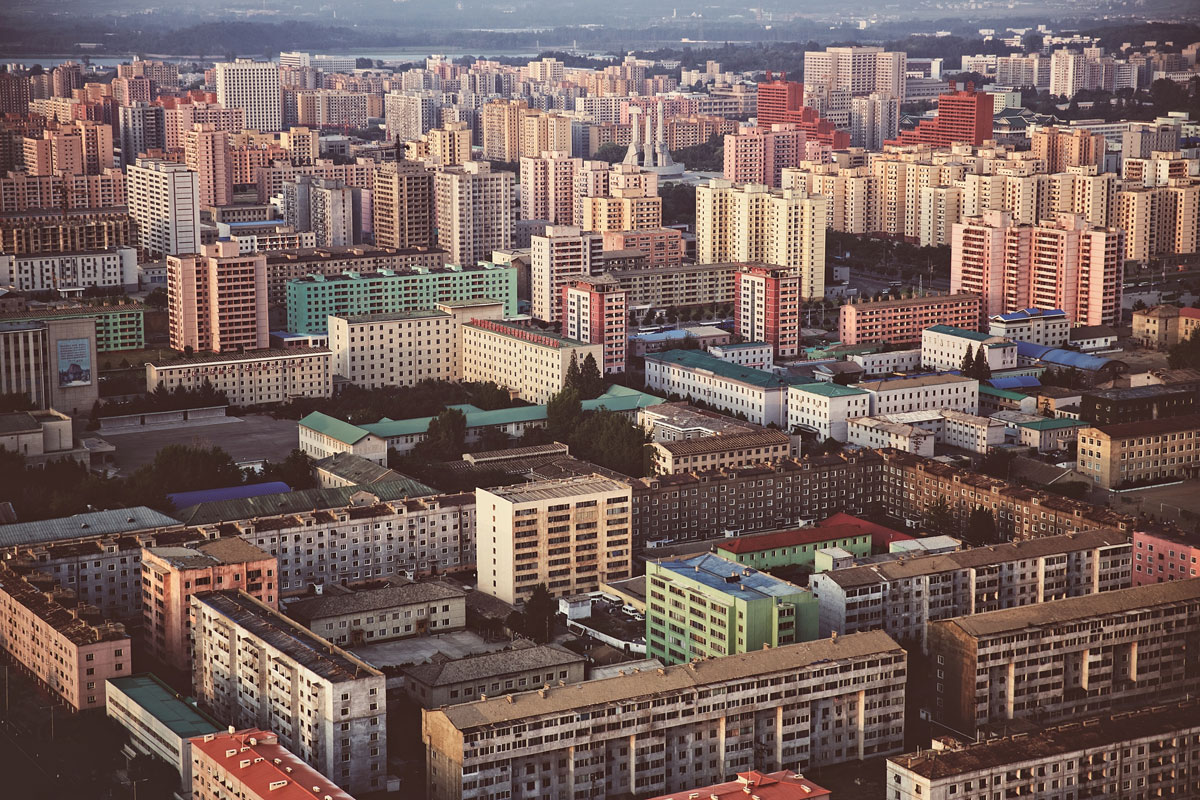
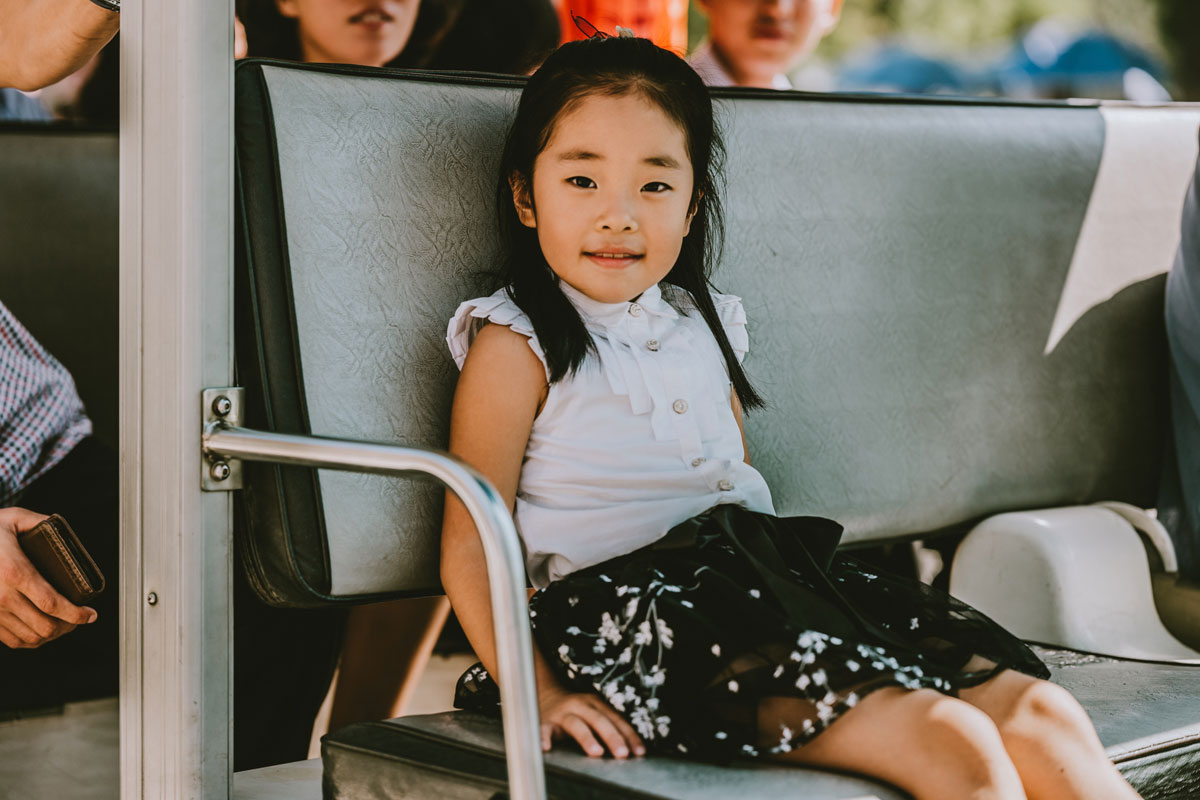
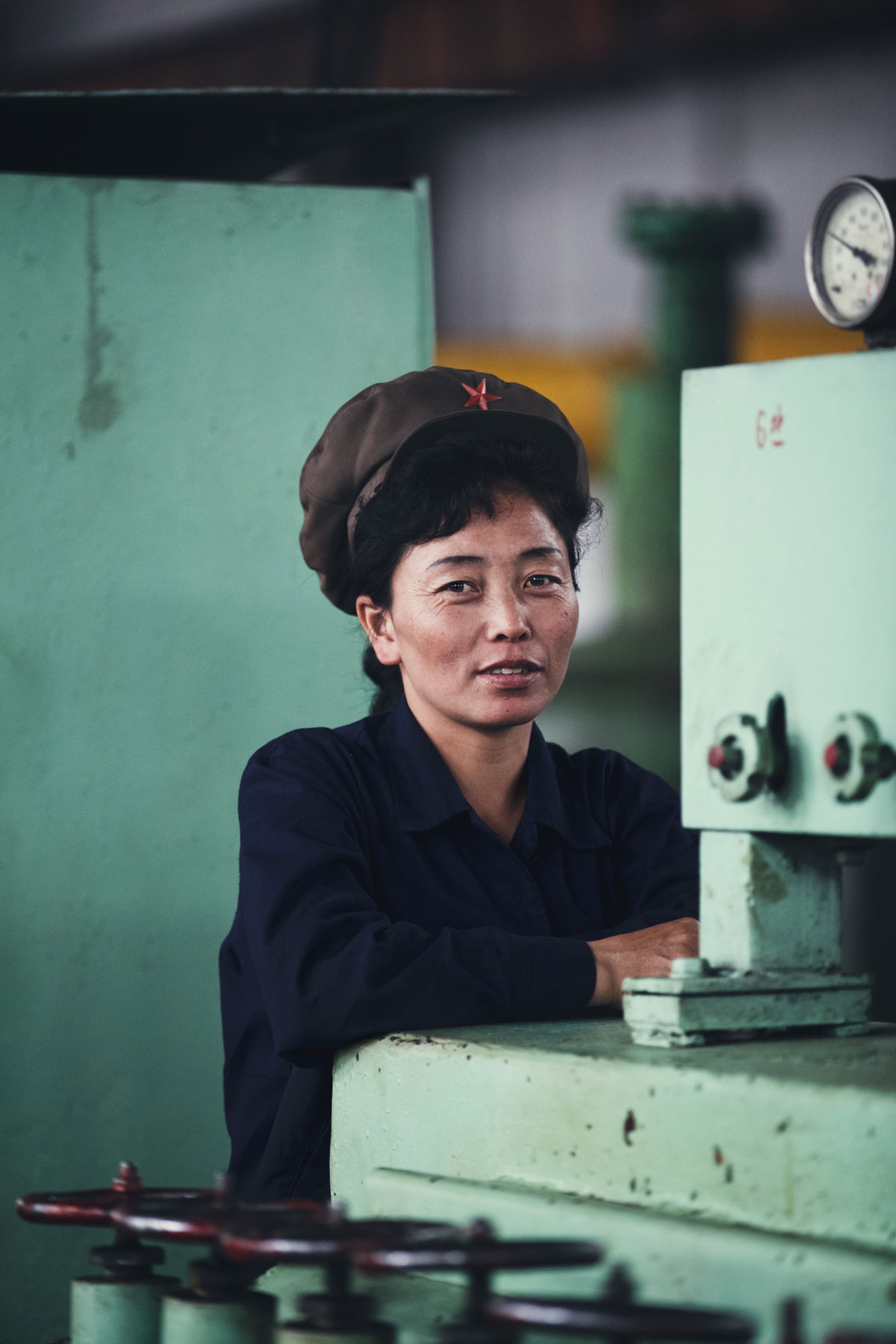
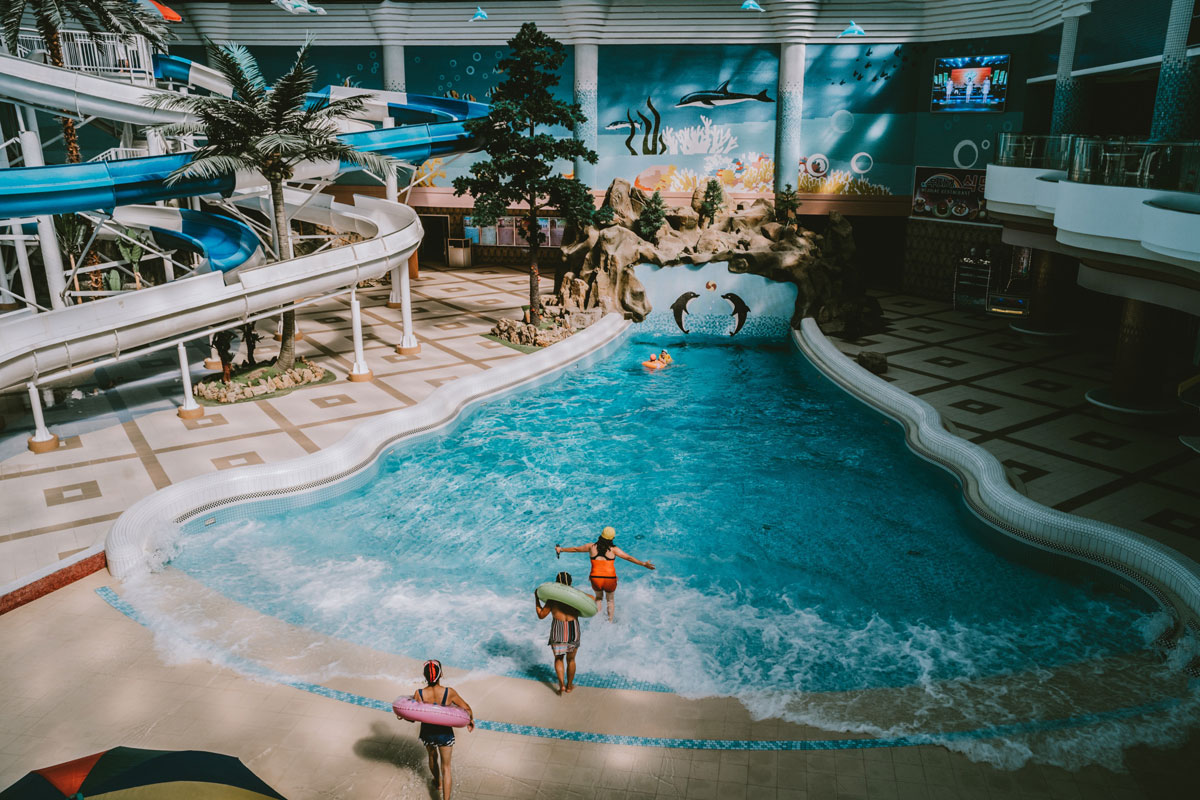
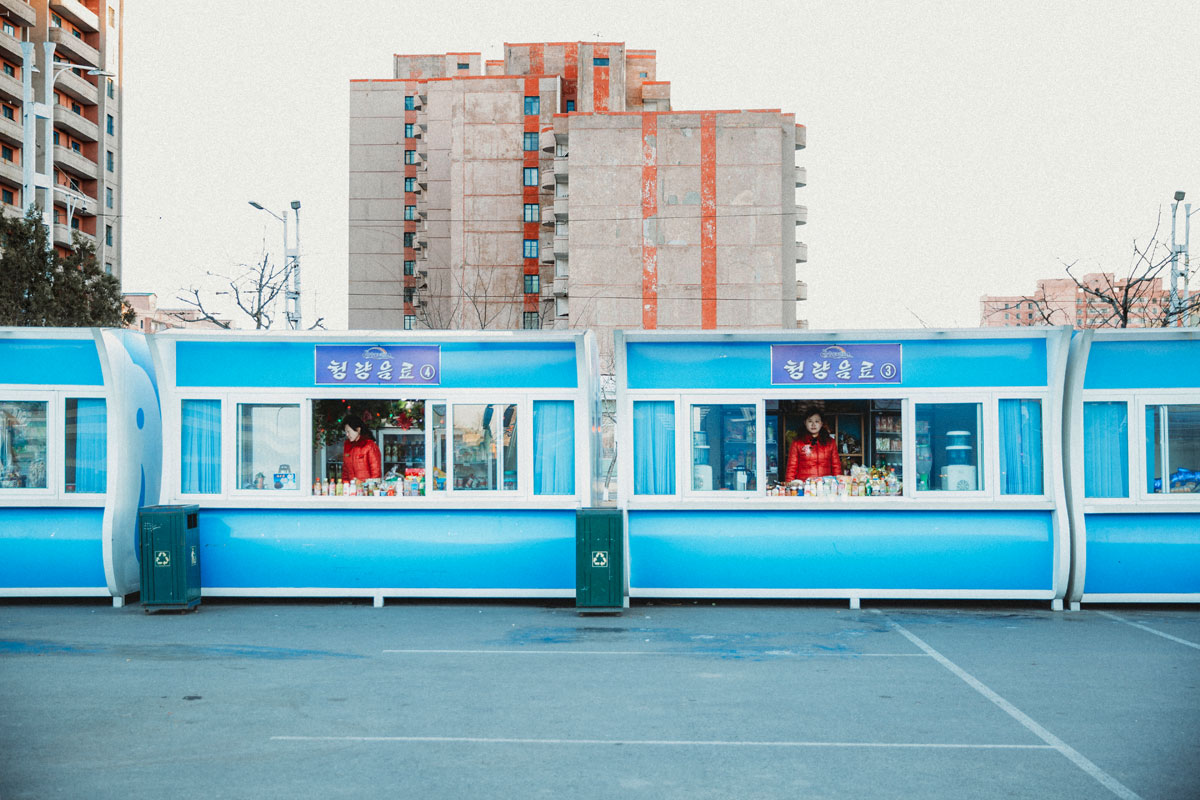
Oh yes! When I visited this country for the first time in 2011, I encountered frightened and shy people in some parts. There were hardly any people on the streets and when someone did show up, they were dressed in gray. Today, everything is quite colorful, the clothes and even the building facades. Women dress more individually, colors, hats, high-heeled shoes. There are now lots of kiosks and stores by the roadside. I didn't see any of this eight years ago. The streets are also filling up with cars. For three years now, there have been many cabs driving through the city. Of course, the process is much slower in the countryside. Large parts of North Korea are poor, but not as poor as I know it from Brazil, India, Africa or Eastern Europe. It is a peasant and working-class society that has organized itself within its system and has to ensure its survival by working hard in the fields. We could really make a difference by doing the exact opposite and easing the sanctions. They have been in place for 20 years and they are getting us nowhere. We need to radically rethink, yes acknowledge North Korea as a problem, but then look for real and sincere solutions. What I can say is that Kim Jong-un is currently carrying out an astonishing modernization of the country, a very cautious opening that we have not been able to observe for so long. The photographer has been visiting North Korea since 2011.
The country has been in a steadily developing market economy for around ten years now. This means that North Koreans are slowly becoming more economically independent of the state. New communication channels are being developed that no longer have anything to do with the state, and they are becoming more self-confident. Meanwhile, there are huge income disparities in the country, which are tearing apart a society built on equality and suddenly contradicting the ideology. Bringing this together will be the great challenge and balancing act that people will have to face.
3. How do you manage to depict the real North Korea?
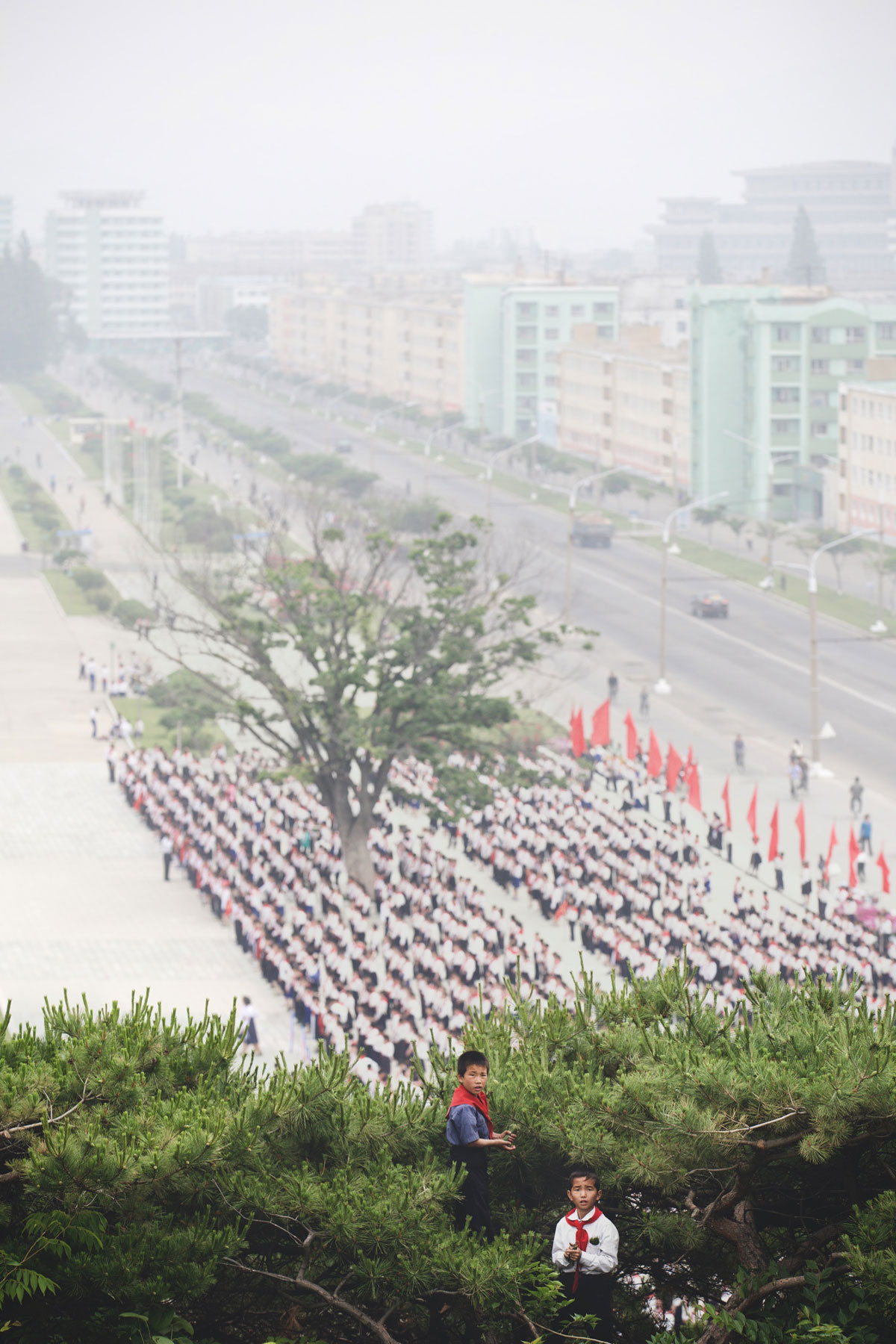
I have been visiting this country since 2011 and, after seven trips now, I have mainly accompanied and seen a development that has noticeably changed the country since Kim Jong-un came to power. As a photographer, I had to ask myself how the duty imposed on me to allow the viewer to be impartial relates to the risk, inseparable from a totalitarian state, of becoming an involuntary carrier of propagandistic messages due to state restrictions. However, the reality portrayed by the regime and the local media does not correspond to reality. To depict this as far as possible must be the claim out of responsibility towards the viewer. These pictures attempt an answer to this. My aim is to allow the viewer to create a new image in their mind based on their own interpretation and to encourage them to sensitize themself to the subject. The free spaces that they create with unagitated persistence could one day become freedom. Here too, pictures show so much more than 1,000 words could describe. I want to use my camera to convey knowledge where ignorance creates room for prejudice and fear.
4. What do you want to show with your pictures?
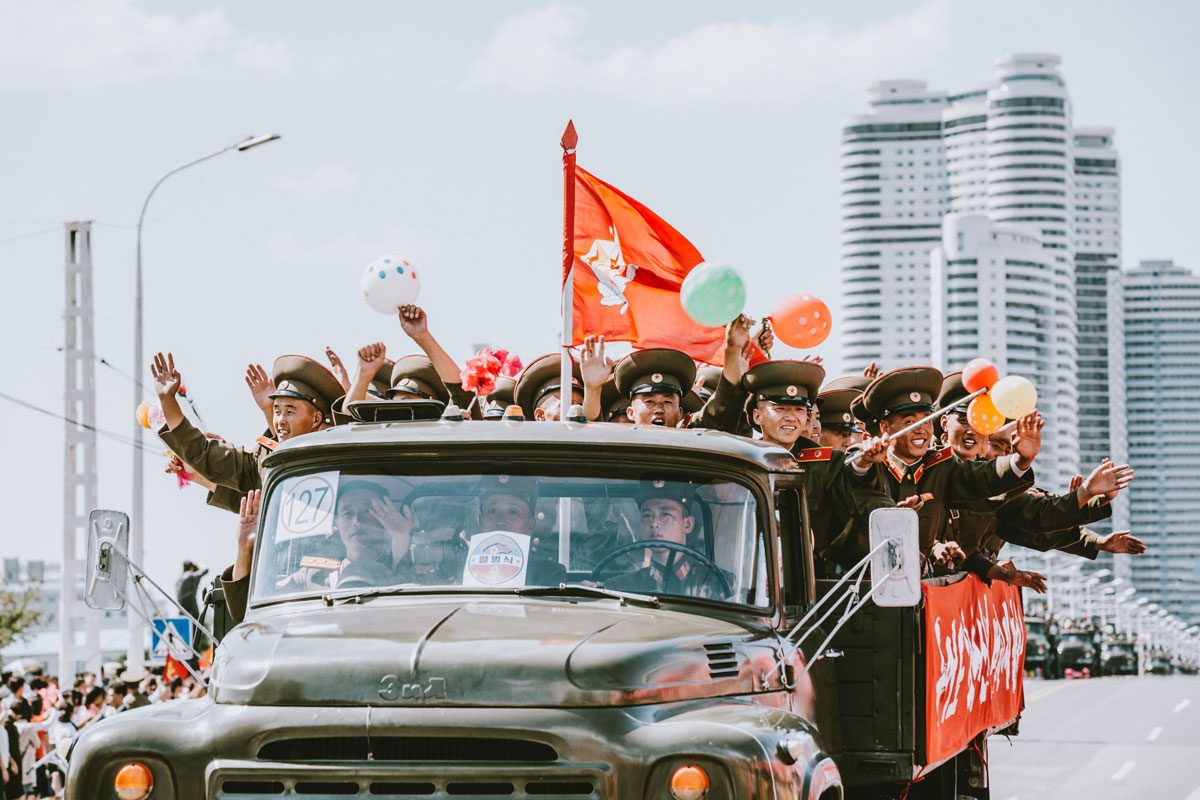
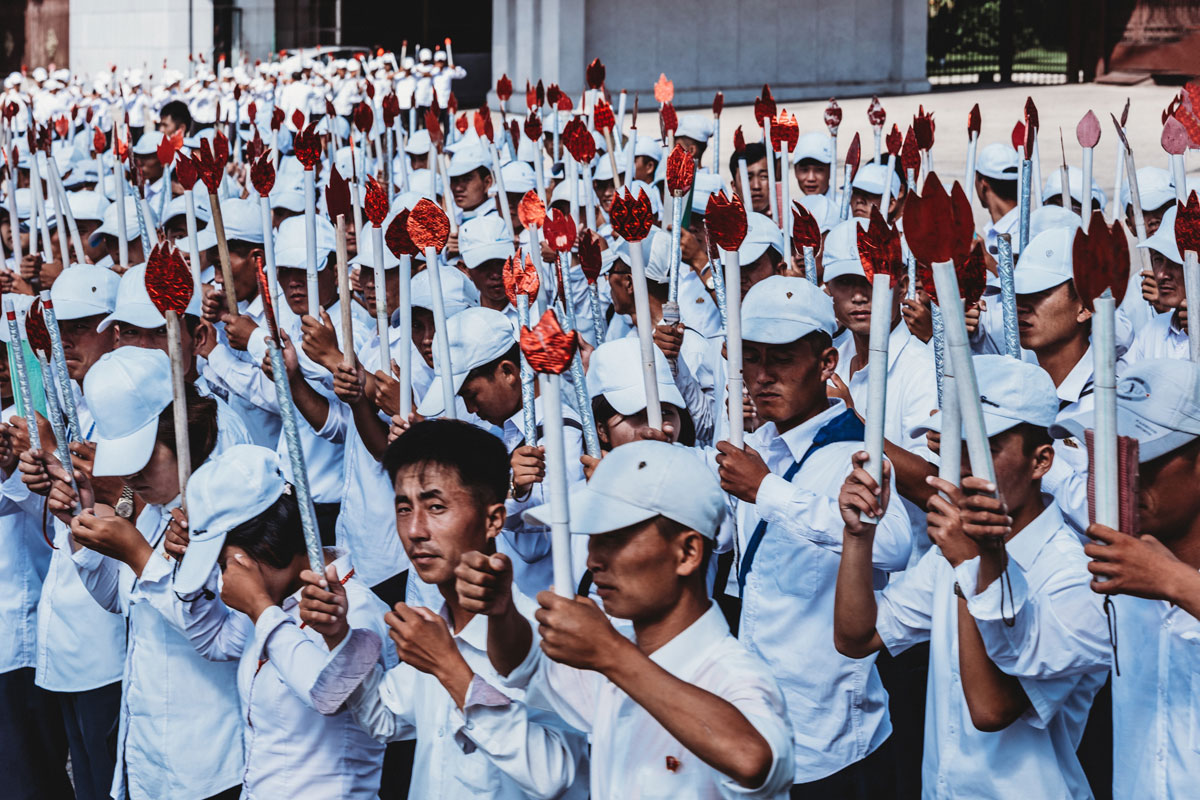
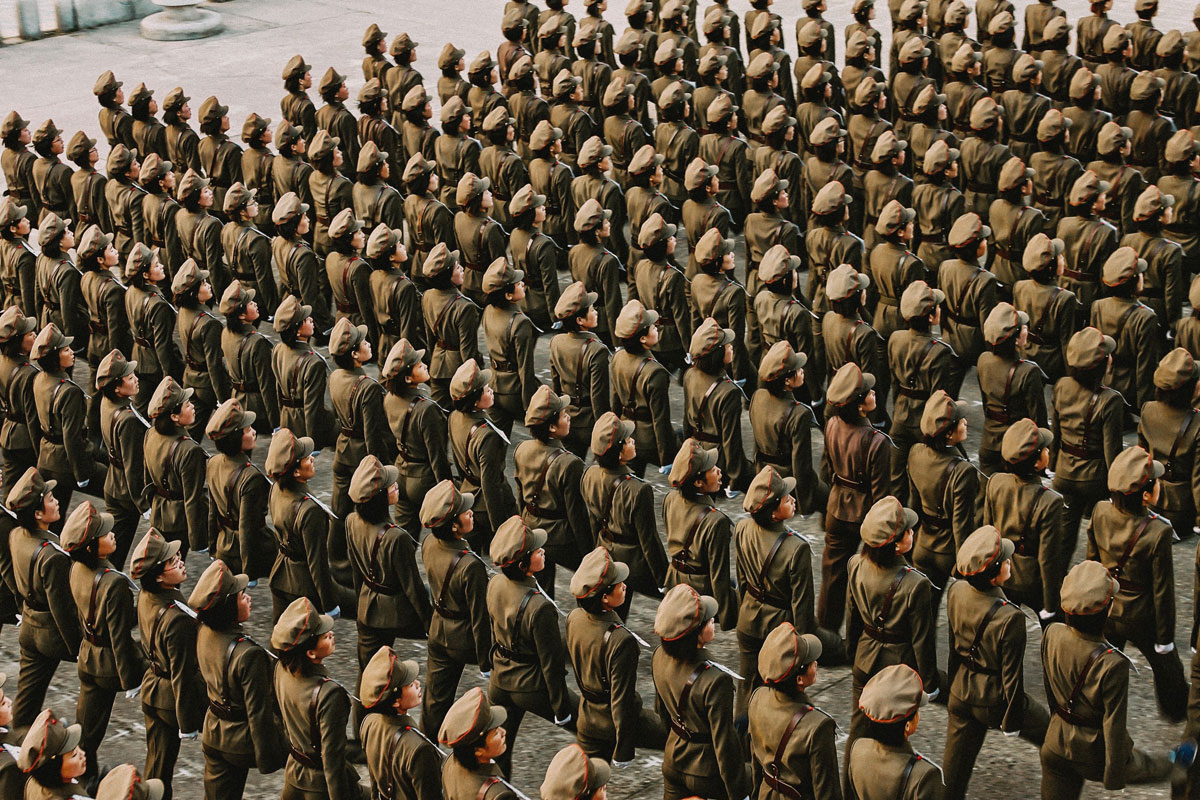
In my book "North Korea - The Power of Dreams", it was important for me to use the photographs to convey a degree of closeness to the people portrayed in their everyday lives that would arouse curiosity and empathy in the viewer. The pictures are intended to inspire people to engage with the unfamiliar and motivate them to venture an interpretative examination of the photos in order to create their own image: The step out of the picture and beyond the picture. The more opaque the world is, the greater the tendency to simplify. In order not to lose one's own orientation in the turbulence of today's flood of media images, the recipient, trapped in the backdrop of his convictions, expectations, prejudices and desires, likes to believe that what he sees is true.I wanted to find the people beyond the uniformed masquerade, to break through the dramaturgy of state staging in order to destroy with my pictures, as it were, the local arrogance and ignorance towards a country - not a system - which is more than just a "baby dictator" and a nuclear weapons program. With my work and my pictures, I want to encourage people to travel to the country and thereby force change, also in the minds of the local people.
more info and more works by the artist: Xiomara Bender xiomara-bender.com Instagram:@xiomarabenderphotographer
View into the Schnappschuss
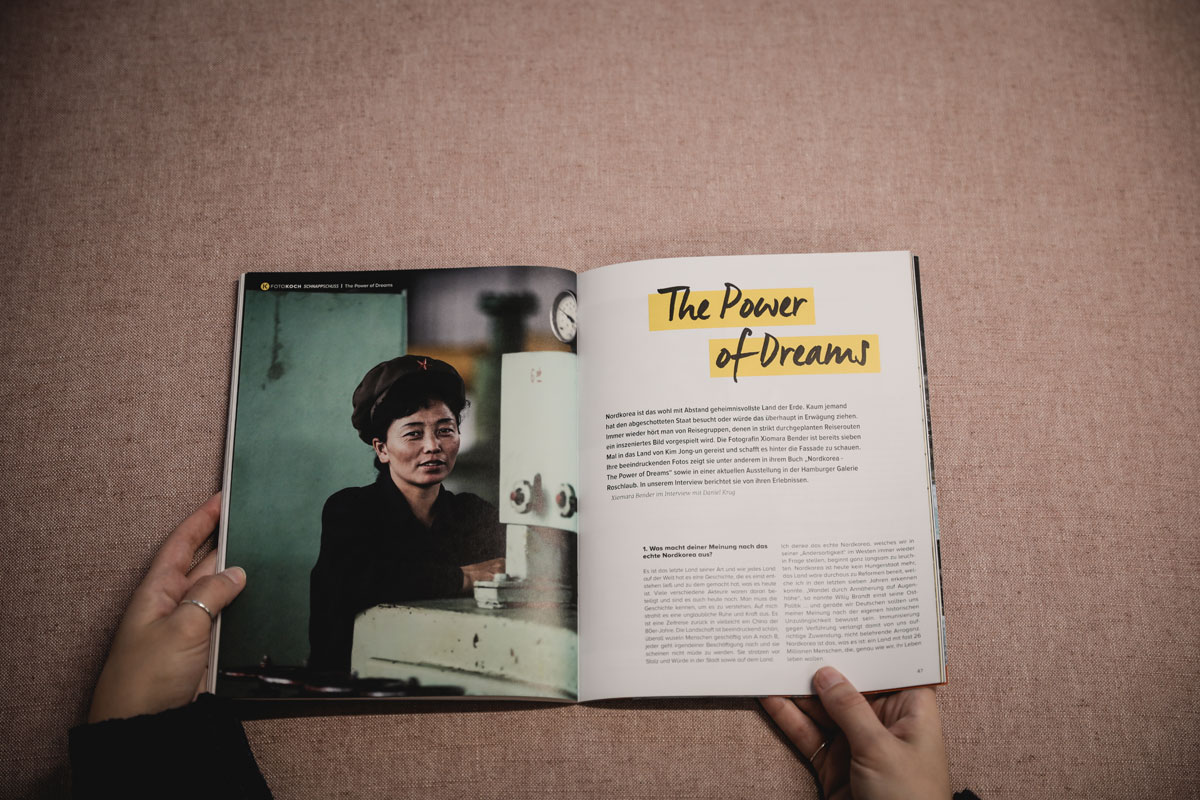
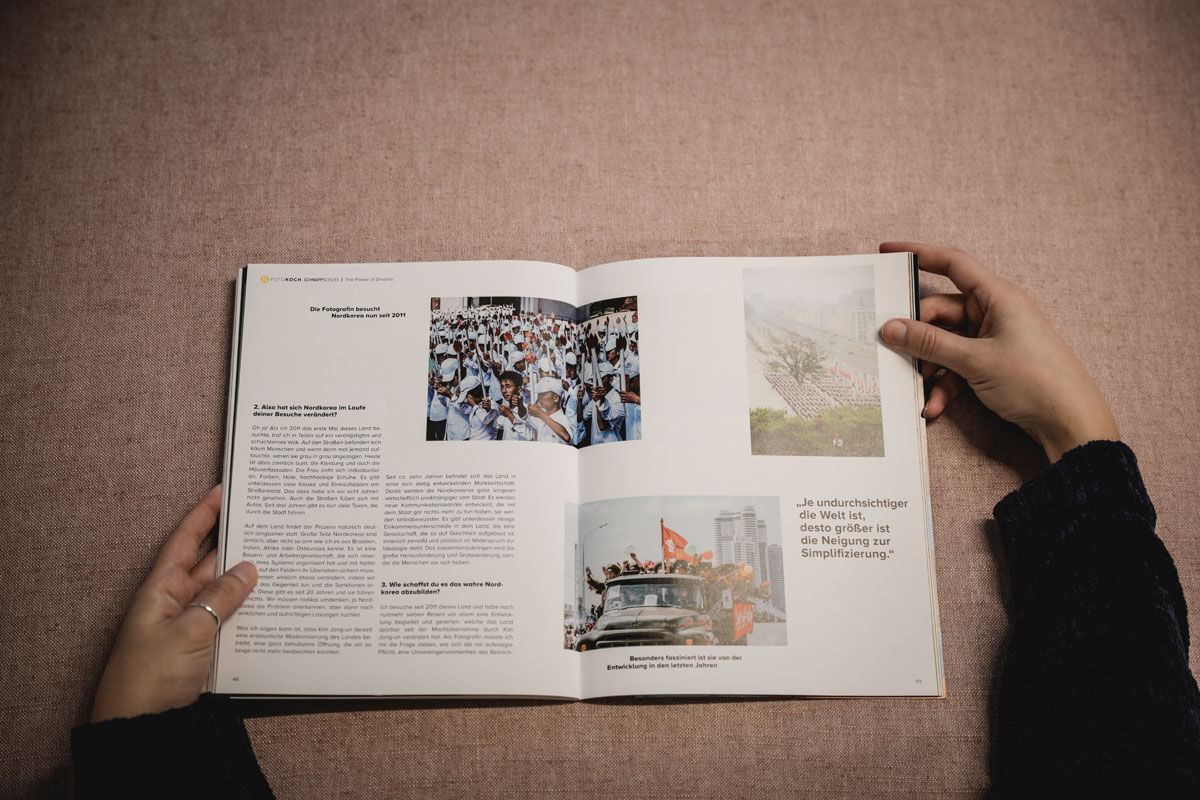
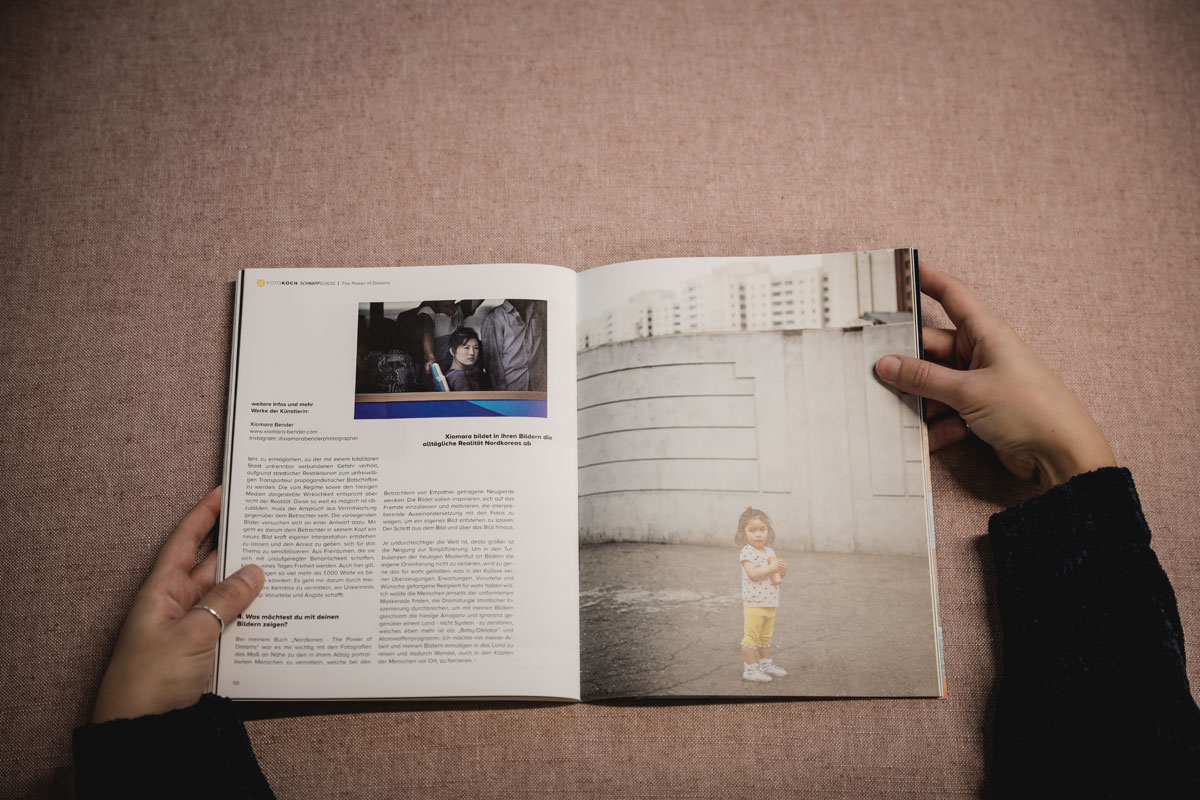
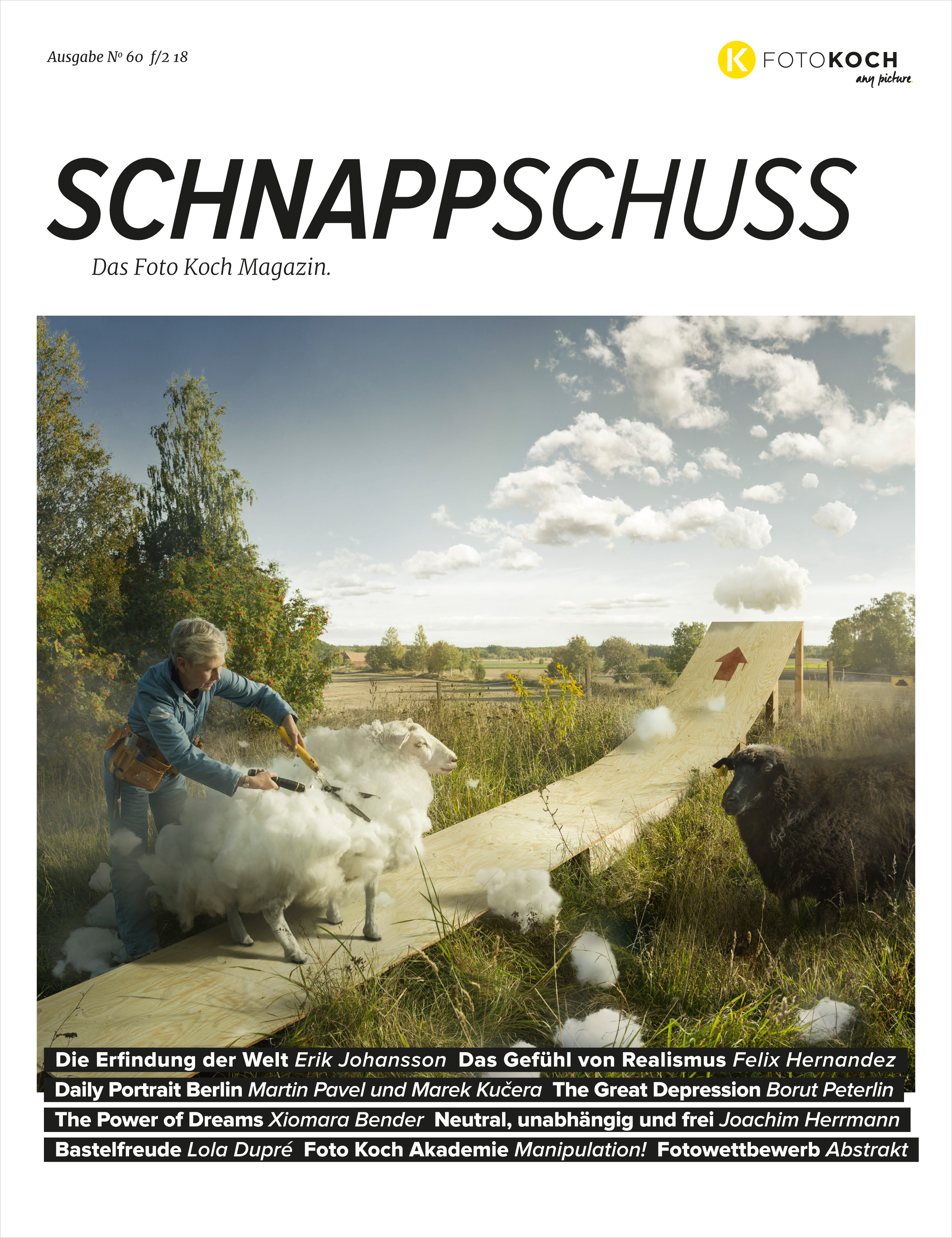
"Schnappschuss " magazine
The Foto Koch magazine has a modern, creative design and is relatively unique in terms of design and content further information