Canon EOS 6D - my experience report
Three years with the Canon EOS 6D. About great moments and many experiences I've had with Canon's entry-level full-frame camera.

How quickly time flies! It doesn't seem that long to me. I've been shooting with a full-frame camera for three years now. I only realized it the other day when I was sorting my photos by camera model. At first I thought "Phew! What a flood of pictures", but at the same time I also remembered the many great moments and experiences I've had with the camera since then.
When I bought the Canon EOS 6D at the end of 2014, I did a lot of research, read a lot and browsed through the first reviews. It wasn't just a question of switching to full format, but also a question of where I wanted to go and what I wanted to photograph.
The passion that every photographer knows had been burning inside me for quite some time. At the time, I had a Canon EOS 50D and only one lens, the Canon EF-S 15-85 mm. But I knew I wanted to change and wanted to do more with photography.
When I held the 6D in my hand for the first time to take a few test photos in the store, I knew: this is the one! After a few days, I was finally able to call the camera my own. Since my beautiful old 15-85 mm was an EF-S lens for APS-C cameras, it unfortunately didn't work on the EOS 6D. A new lens was needed. In order to remain as flexible as possible, I decided on a 24-105 mm.
I can already say one thing in advance, the camera still works without any problems. Even though it has already been through a few shutter releases, it still accompanies me as it did on the first day.
Haptics
Let's start with a very central and important point. How is the camera built and how does it feel?
Holding the 6D in your hand for the first time, I think you get a very special feeling. Compared to many other cameras, the Canon EOS 6D is made of a magnesium/plastic mix. This material makes the camera robust and light at the same time. A great feature of using both materials is the direct integration of Wi-Fi and GPS into the body. Many other cameras require adapters or other accessories to enable these functions. The 6D offers all this without any detours.
In addition, the use of magnesium makes the camera more robust than pure plastic bodies. In my experience, it can withstand light falls from a normal height very well, even if it is a small moment of cardiac arrest each time. Of course, this does not mean that a fall can't also go wrong.
Unfortunately, the camera is not splash-proof. It has the usual seals, which protect it from the ingress of dust, but these do not keep out splash water. I have been caught in a rain shower with the camera a few times, but I wouldn't necessarily use it in the pouring rain.
The well-balanced size of the camera also means that it sits particularly well in the hand. Even without the battery grip, it is very grippy and big enough for my hands. On my previous cameras, I was almost forced to use a handgrip so that the camera would fit better in my hand.
I have bought a battery grip for the 6D over the years, but only because I often take portraits.


Operation
Somehow all Canon cameras are similar in terms of operation. As I have always photographed with Canon, the changeover was not too difficult. The switches, buttons and dials are arranged intuitively and you can find your way around very well even when "flying blind", i.e. in the dark.
Sometimes, however, I find the control via the quick menu a little awkward. You can think of the function you need faster than the camera. But even that's nothing that can't be integrated into everyday life.
The integrated Wi-Fi and GPS function are a different story. Two really great features that Canon has integrated into this camera. I have to admit that I use the GPS function much more often than the Wi-Fi. But when I needed the Wi-Fi, it was always a bit of a challenge. Because even if you had already used it and everything was set up, the camera just wouldn't reconnect. Often the only thing that helped was resetting the Wi-Fi setting. But when it works, it's really practical. You can connect the camera not only to a computer, but also to a smartphone. You then have access to the essential settings, can take great remote-controlled shots and upload images to your smartphone on the go, edit them and publish or share them immediately. In this day and age of Facebook and Instagram, this is definitely a plus point.
The GPS has already brought back some wonderful travel memories for me. I usually activate it when I'm traveling, as I like to look at my route and the locations on a map at home. But it's not just useful for tracking the route, because most smartphones have the function stored in their photo library and you get all the photos displayed for the location.
Unfortunately, this great feature consumes a lot of power, especially if you're on the road for a long time and don't have a second battery with you, it can get you into trouble. However, you should of course always have several batteries with you and can switch off power-hungry functions such as the GPS if necessary.
I can say that apart from the Wi-Fi challenges, the 6D always works very reliably and hasn't let me down once in all this time.
Image quality & resolution
This is usually the reason why you buy a full-frame camera like the 6D and in my case this was also one of the deciding factors for the camera. I wanted to move away from the APS-C format and broaden my horizons. What better way to do this than with a full-frame camera?
The image quality impressed me from day one and still does today. Of course, 20 megapixels is no longer the non plus ultra these days, but does it always have to be an arsenal of megapixels? With full format, it's not just the number of pixels that matters, but also the performance in general. I have come to appreciate the low-light performance in particular in many projects and it cannot be compared with an APS-C camera. The ISO noise sets in much later and you have a lot of leeway when it comes to the bokeh.
Of course, as always, you should shoot in RAW format in order to have the widest possible range of editing options at the end, e.g. in Adobe Photoshop RAW Converter or Adobe's Lightroom.
Focus system
The focus system of the 6D is sufficient for almost everything I have photographed so far. There was only very rarely a situation where I thought to myself, now you could be a bit quicker or more precise. I've never had any problems with portraits, still subjects or landscape shots without backlighting. If the subject is moving quickly, the autofocus may not be able to keep up.
What sometimes bothers me a little are the very central AF points, which is why you still have to pan a little for certain image compositions despite the outer point. For real backlit shots - as I often had in the mountains now - I had to switch to the center point. This is a cross-type sensor and was always very reliable.


Concluding words
What can you say about Canon's entry-level full-frame camera? Quite a lot, actually. The 6D has been with me for more than three years now. I've appreciated the camera from day one and I still love using it when I'm out and about
Canon has brought a great SLR camera onto the market that still offers remarkable performance today and, thanks to the current excellent price-performance ratio, is a successful entry into the full-frame class. The outstanding image quality of a full-frame sensor will delight any ambitious photographer. Of course, there are cameras on the market that are significantly more professional, have more megapixels or better autofocus, but you can quickly double or triple the price. The direct successor, the Canon EOS 6D Mark II, is also significantly more expensive, so the improvements to the video function or the folding display would not be of interest to me at the moment
I can really only recommend this camera to anyone who wants to enjoy the benefits of the full format but doesn't want to spend a lot of money.


Positive things about the Canon EOS 6D
- Silent Mode - noise-reduced shooting: The 6D comes with a so-called Silent Mode, which significantly reduces the shutter noise. This is a clearly (inaudible) advantage, especially in quiet environments, e.g. in churches
- Cross-type sensor: The middle cross-type sensor noticeably improves focusing in low light conditions compared to the other sensors.
- Body made of plastic and magnesium: The EOS 6D has a mix of body materials that makes the camera both robust and lightweight. This also enables the integration of WIFI & GPS directly in the body
- GPS tagging for photos: The 6D is able to add GPS geodata (GeoTagging) to photos (on request). This makes it easy to link or integrate the photos with Google Maps, for example, on the PC.
- WiFi - control via Wi-Fi: The camera has WiFi and can be easily connected to a computer or smartphone and then controlled via it. Keyword Tethering.
- Using the Canon LP-E6 battery: Canon decided to use the LP-E6 battery, which has been around for a few years, in the 6D. This can also be found in many other camera models.
Continuous shooting speed 4.5 frames/second: This speed is more than sufficient for most situations. - ISO range up to 102,400: The sensitivity of the 6D's sensor has been further optimized. Especially in combination with the full-frame sensor, a lower ISO noise than with APS-C cameras is noticeable
- HDR mode: The 6D offers a built-in HDR mode, which automatically combines several photos with different exposures into one photo with a high dynamic range
Negative things about the Canon EOS 6D
- Number of autofocus fields: The 6D only has a total of 11 autofocus fields.
- Sensor resolution of 20.2 megapixels: Of course, there are now full-frame cameras with 30 megapixels or more. But the question is, do you really need that? The 20 megapixels deliver excellent results, even for A1-size prints.
- Only 1 cross-type sensor: The 6D has only one cross-type sensor. This center focus point is very reliable. Perhaps Canon could have added two more for the peripheral area. Because this could prove to be helpful, especially in backlighting.
- 97% viewfinder image: The EOS 6D "only" has a 97% viewfinder image. The new Canon EOS 6D Mark II has a 98% viewfinder image. The EOS 5D Mark III, for example, has a 100% viewfinder image.
- 1/4000 second shutter speed: For many situations, of course, completely sufficient. However, if you want to take pictures in full sunlight with an open aperture, then 1/4000 second is already reaching the limits of feasibility.


Valentin Schnitzler instagram.com/valentin.schnitzler #valentinschnitzler
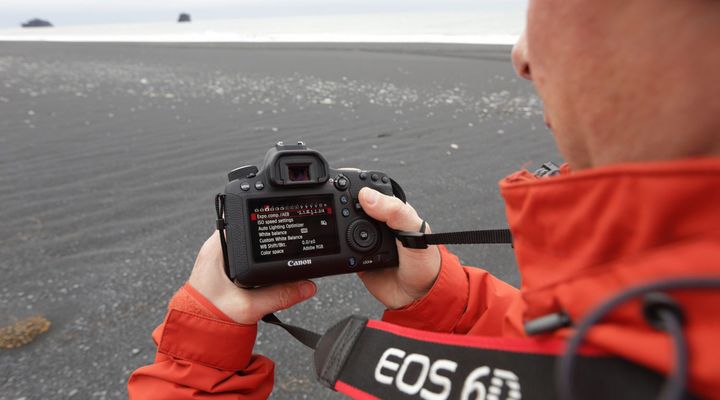

Canon EOS 6D - Full-frame creativity
Were we able to convince you of the great possibilities of the Canon EOS 6D? Come and visit our store or order your personal EOS 6D right here
Order nowSimilar topics
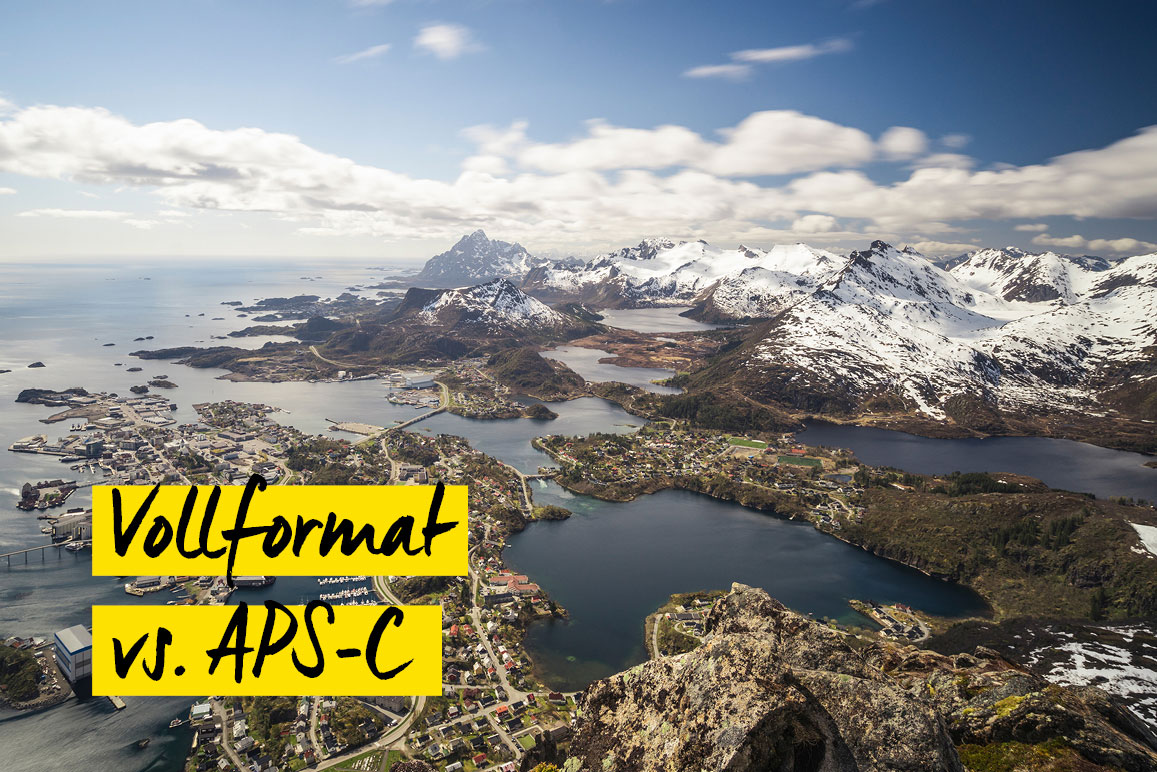
Full-frame vs. APS-C format - What's so great about full-frame?
Discover the full potential of full-frame cameras. What does full-frame format mean and what are the differences to APS-C cameras? We answer these questions and many more on our information page about full-frame cameras.