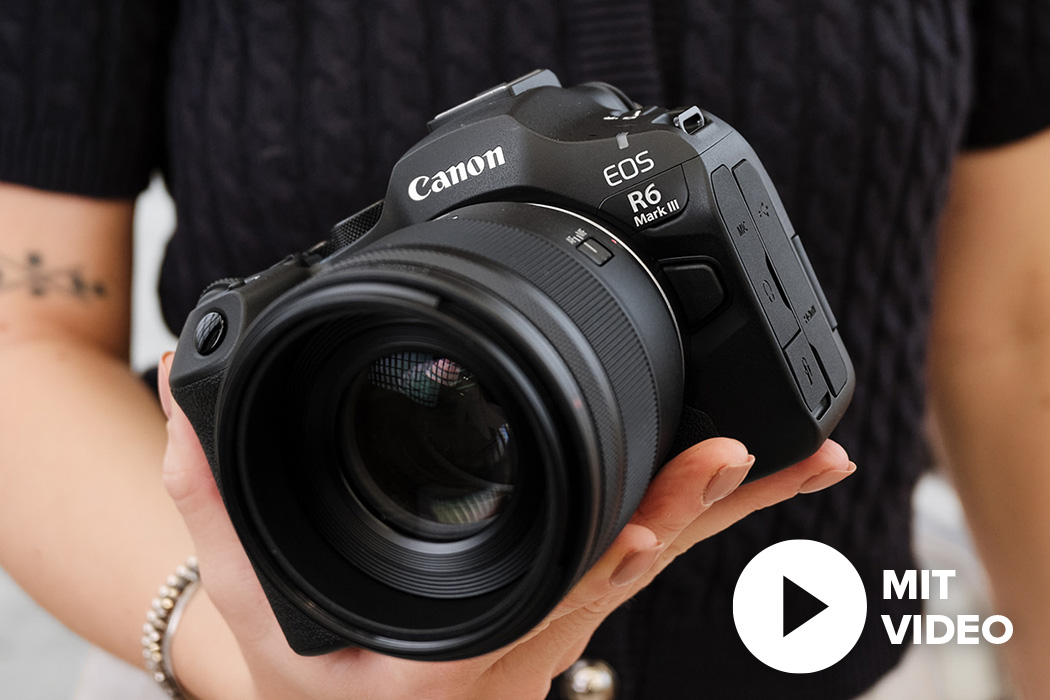
Canon EOS R5 II - a camera that fundamentally changes photography?
The leap from analog to digital cameras, the change from technically limited DSLRs to modern and much more versatile mirrorless system cameras, the path from pure photo cameras to extremely powerful photo-video hybrids - there have been a number of innovations in recent decades that have rethought cameras. But the time in which almost every new camera sets new standards, not least through technical developments, and thus fundamentally changes the way in which photographers interact with cameras, seems to be over; or maybe not?
The new Canon EOS R5 II could indeed finally set new standards again. After 4 years of waiting and hoping, Canon has finally released a camera that rethinks photography and videography with the new R5 II. You can find out why this is the case and what exactly makes the camera so special in this blog post with video.
At the same time, Canon also presented the new EOS R1, which we naturally also took a closer look at:

1. Body and design
As with the EOS R1, Canon has not fundamentally redesigned the body of the new R5 II, but has listened to customer feedback and made some adjustments in terms of form factor and operation: From the separate mode lever for photo and video, to the Smart Hotshoe and smaller details, such as the new joystick: everything that needed to be optimized has also been adapted. This also applies to the small ventilation slits near the ports and under the display, which we will come back to later.
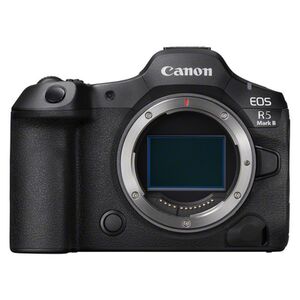
Canon EOS R5 Mark II Body
- 45 megapixel stacked BSI sensor
- CMOS full-frame sensor
- Continuous shooting up to 30 fps
- Dual Pixel Intelligent AF
- 8K RAW video up to 60p
- DIGIC Accelerator + DIGIC X
- 0.5 inch OLED electronic color viewfinder
1.1 Viewfinder and eye tracking
What immediately catches the eye when looking at the camera is the really massive viewfinder (EVF). Of course, it is not without reason that it is so large: in addition to the display, the viewfinder also contains many sensors that are responsible for eye tracking. Eye tracking is an extremely exciting feature that we already know from the EOS R3 and is now also on board the R1 and R5 II. Eye tracking enables control of the autofocus point directly with your own eye in the viewfinder. Admittedly, this may take a little getting used to at first, but after a short familiarization phase it allows you to work super fast. Compared to the R3, Canon has significantly revised and further developed this feature. Eye tracking is now not only even faster and more reliable, but after refining the calibration in the menu, it also works perfectly with glasses - and even with sunglasses.


2. Sensor and image quality
After this first look at the camera's external appearance, we can look a little further into the body and take a closer look at the sensor. The sensor was specially developed by Canon for the new R5 II, has 45 megapixels and is now not only back-illuminated, but also stacked. This means that the sensor not only has better low-light performance, but can also be read out more quickly.
What is also new, however, is what is hidden behind the sensor. In addition to the DIGIC X processor, there is also the so-called DIGIC Accelerator. This processor combination not only significantly improves the performance of the EOS R5 II, but also enables one or two other nice features, which we will come back to later.
Especially with high-resolution sensors, it is a great challenge to process the large amount of data as quickly as possible. With the R5 II, Canon has been able to accelerate the readout speed so much that it can manage almost 10 more images per second (i.e. 30 instead of the previous 20 with the R5). In addition, each individual image is also read out faster, which results in improved performance in terms of rolling shutter. The image results are, as usual from Canon, really impressive.

The high resolution of the EOS R5 II is particularly interesting for professionals who implement projects that require a higher resolution and who do not want to compromise on light sensitivity or color reproduction, such as the Düsseldorf fashion photographer Silke an Mey, who was allowed to test the R5 II exclusively with us.
However, we do have one wish at this point : it would be great if the camera could be used in a kind of "low-res mode", especially if you want to take a lot of continuous shots. In other words, a mode in which you could also work with a lower resolution, such as 24 MP.
3. Autofocus
A real innovation in the R5 II and the EOS R1 is the autofocus. Canon is breaking new ground here and using Deep Learning Technology not only to recognize and track subjects in the image as well as possible, but also goes one step further and tries to teach the camera how different subjects will behave.
Of course, it will probably never be possible to predict the future exactly, but if a camera had a basic understanding of certain motion sequences in individual situations, the autofocus would of course also be much more reliable and therefore also much easier to assess.

3.1 Action priority
How is a soccer player who has just received the ball likely to continue moving? And what actually happens when he passes the ball again? Thanks to the new "Action Priority", the R1 and R5 II now answer these questions virtually by themselves. If this is activated for the corresponding sport, the camera also recognizes the ball and links its motif recognition with the information on where the ball is currently located. If the player passes the ball to another player, the camera understands that the player has now changed person and focuses on the new person.
Of course, this doesn't just work for soccer, but also for other sports. So far, this includes basketball and volleyball as well as soccer. We are curious to see if and when Canon will add more sports here.

4. Computational photography features
In addition to autofocus, the new processors of the R5 II are also used for other AI-supported features. Canon is thus taking the first steps towards computational photography.
In computational photography, the images are significantly improved by internal image processing. Of course, this already happens in the background anyway, but manufacturers are also increasingly offering the option of processing their own images in the camera.
Canon has developed some important functions in this area:
4.1 Upscaling
With the upscaling function, selected images from the memory card can be scaled up to four times the resolution directly in the camera. This not only artificially increases the resolution, but also adds more detail using the deep learning algorithm.
In contrast to the familiar pixel shift function, this process can be started after the picture has been taken and now also works with all exposure times. This is of course extremely exciting, especially for wildlife and sports!
4.2 Change image sections
But that's not all! In the new R5 II it is now possible to change the image sections and aspect ratios while still in the camera. The resolution lost as a result can then be easily compensated for by the aforementioned upscaling.
4.3 AI noise reduction
AI-supported noise reduction, as we know it from various image editing programs, is also on board. The amount of detail and sharpness returned by the noise reduction is really impressive! So if you accidentally set the ISO value a little too high, you have the option of saving the image directly in the camera.
One small drawback here, however: The images are of course saved as JPG after noise reduction and are therefore compressed. At least a HEIF format would be desirable here, which could still be edited in case of doubt.
The functions mentioned here can all also be found in the new Canon EOS R1 and were presumably developed for sports cameras with a lower resolution. Nevertheless, we are of course very pleased that Canon has integrated these features into both cameras.
You can find our detailed review of the R1, which was introduced at the same time as the R5 II, here:
5. Video
Like its predecessor, the EOS R5 II is also designed for hybrid use. Canon has obviously learned from the criticisms of the R5 and has improved many things in the new R5 II.
To prevent the camera from overheating, the new R5 II now comes with ventilation slots at the ports and on the underside. Although it does not have an active fan like the R5c, for example, the ventilation slits allow the heat to find its way out of the body. But Canon has also taken heat dissipation into account in the design, so that at least two hours of 8K video recording at 30p should now be possible here.
If you don't want to worry about this issue at all, you can also rely on an external solution: In addition to the normal battery grip, Canon has also designed a second grip with an integrated fan that pushes air through the camera's ventilation slots, actively cooling it down. The grip is also equipped with a LAN port for tethering via the network. (The old battery handle remains compatible, but can only be used to a limited extent! )
Canon has thus not only solved the problems of its predecessor, but has also taken the subject of video much more seriously.
In addition to 8K/60fps RAW, there is also a newer, slightly smaller "S-RAW" codec, with which you can record a slightly smaller RAW format at 4K with 60fps. Of course, more frames per second are also possible: If you want, you can also record in FullHD with 240p or 4K with up to 120p video and audio.
But that's not all: the EOS R5 II has not only become more professional and more powerful in the video sector, but also comes with a very special feature for hybrid use of the camera: both the R1 and the R5 II offer the option of taking photos directly via the shutter release while filming - and even in series!
And yes, the Full-Size HDMI connection is now finally available!
In addition, the stabilizer has also been tweaked, which can correct up to 8.5 exposure levels and enables butter-smooth camera movements.

6. Conclusion
The new Canon EOS R5 II is an absolute flagship! No matter where you look here: Canon has really brought out the best in this camera in all areas and developed a camera that will make every professional photographer and videographer happy. At the same time, you can also see that the cameras and their many features are maturing. The R5 II does a lot of things extremely well and is an absolutely well-rounded product.
However, if you're mainly into sports, you should definitely take a look at the new Canon EOS R1, which was developed precisely for this area. You should also take a look at our detailed, exclusive live talk on the two new products: