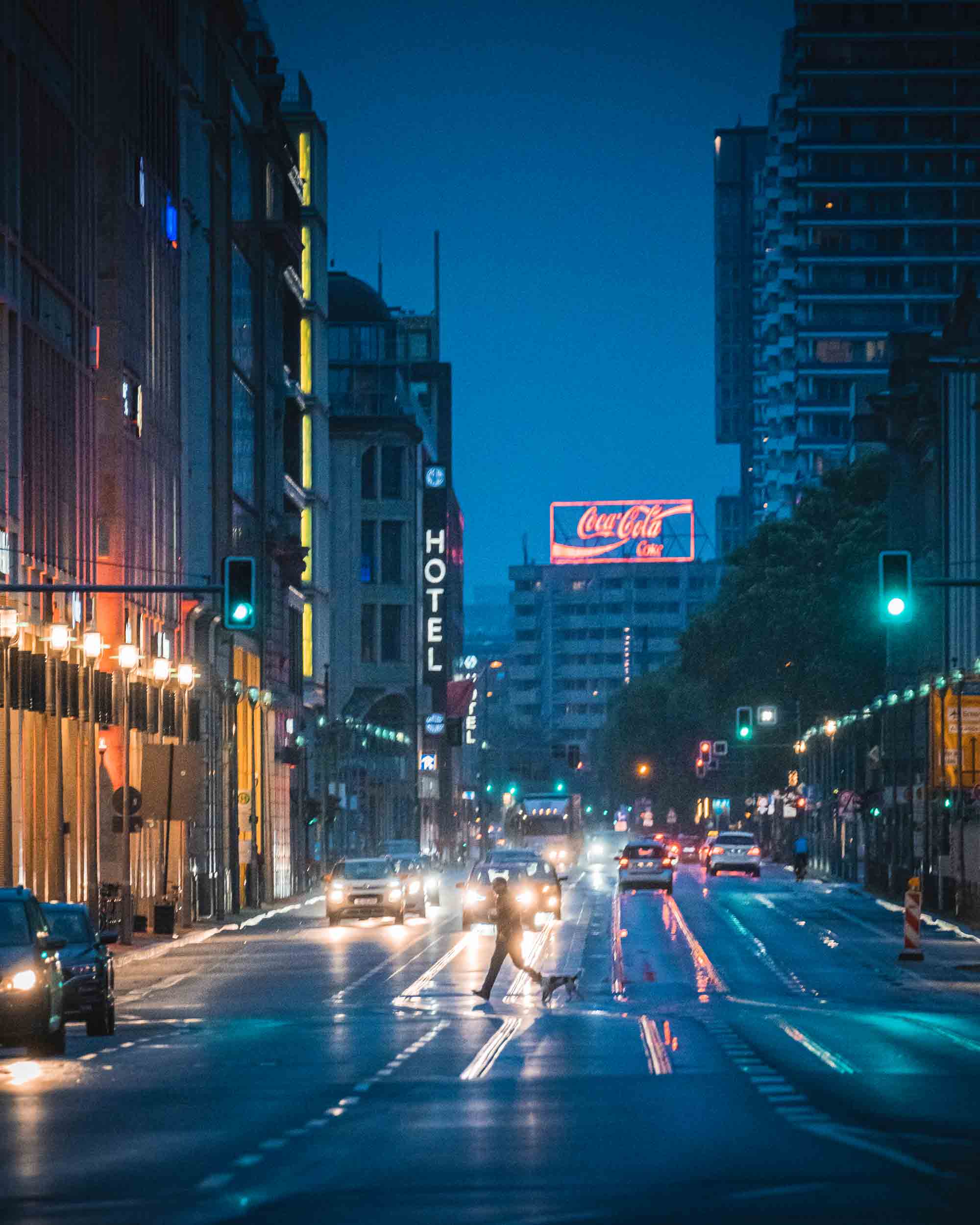
 Naro - Kudamm
The blue hour
When the sun with its warm, golden colors disappears behind the horizon, the time of the blue hour has come...and the time of Naro. The amateur photographer, who was born in Bangkok and grew up in Berlin, loves the blue hour, i.e. the light in the sky before complete darkness falls.
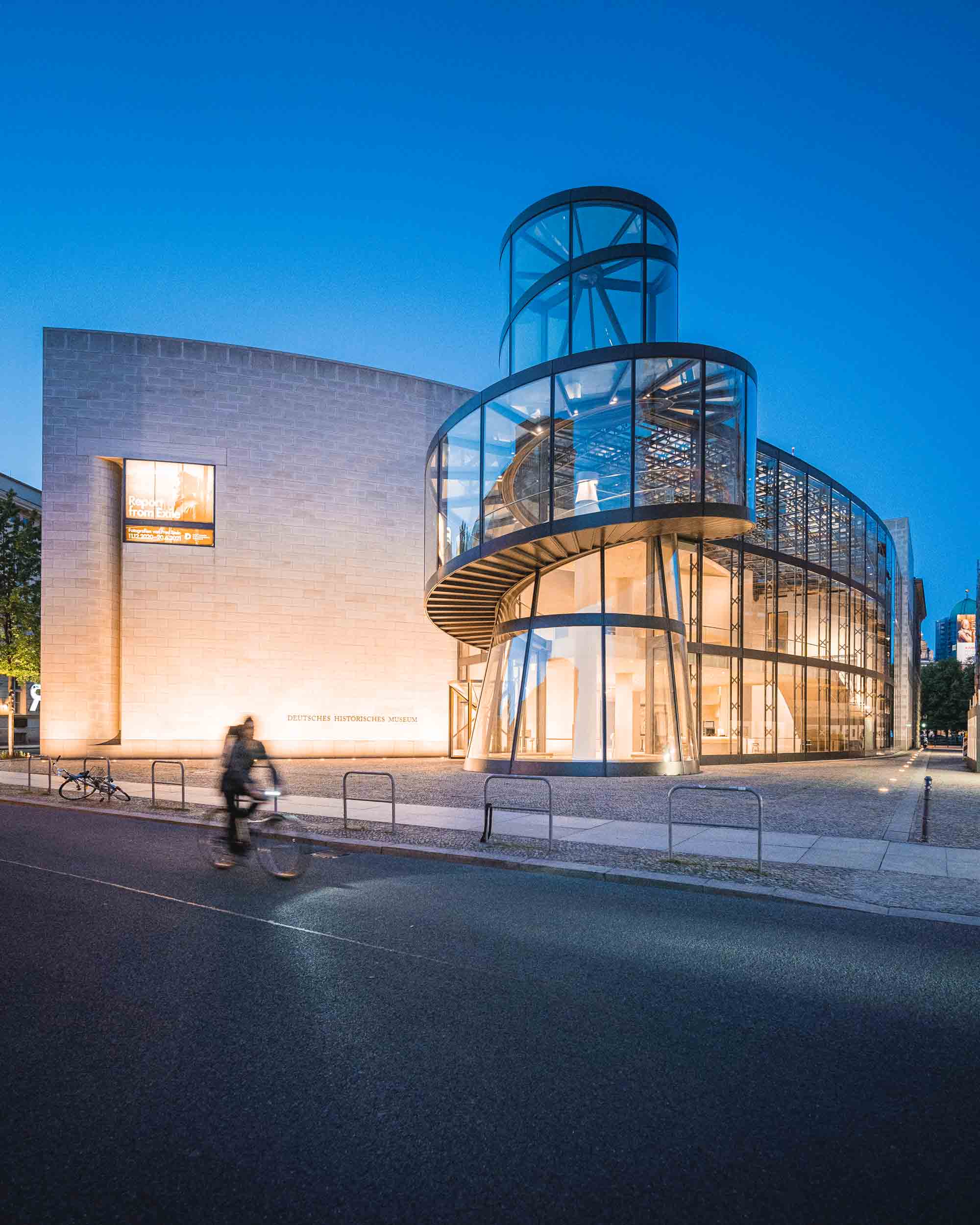 Naro - Oranienburger Mitte
What is the blue hour?
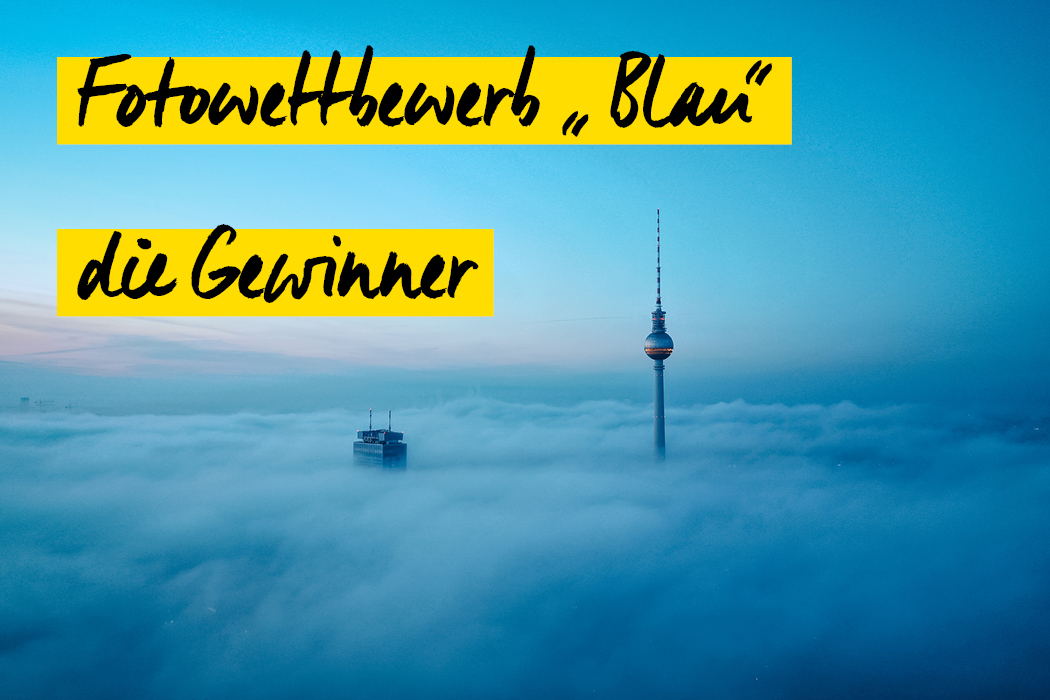
The blue hour describes the time shortly before sunrise or shortly after sunset. It can last for 10 minutes or several hours, depending on the location and the time of year; at the Earth's poles, this condition can even last for several weeks.
The counterpart to the blue hour is the golden hour, which bathes the world in a warm, orange mood during the first and last minutes or hours of sunshine of the day.
Popular subjects during the blue hour are mainly landscapes and architecture, as the sky is shown to its best advantage and the contrast to the other elements in the picture is perfectly staged. Buildings, lights or other objects are recommended in the foreground.
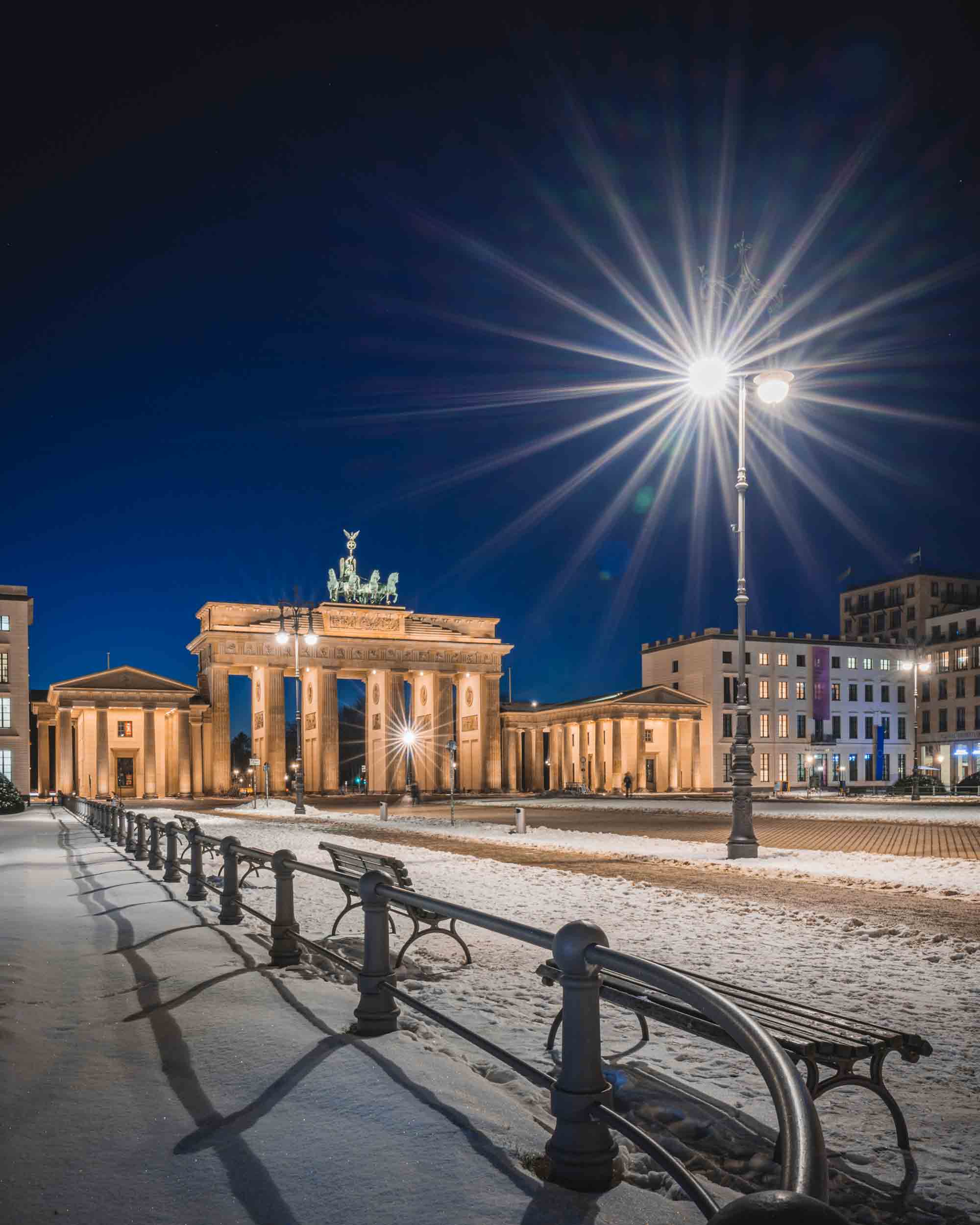
 Naro - Brandenburger Tor
a photographic highlight...
The blue hour is also a photographic highlight for Naro: "I prefer to take photos at the time when day turns into night, or vice versa. That's when the light is most exciting and special motifs are created." Naro is then mainly out and about in urban locations with lots of movement. He often finds his spots while walking, on his way to work or through tips from other photographers. "Sometimes I also see beautiful perspectives on Instagram or other platforms and think in my mind's eye about what the subject might look like in the blue hour. In Berlin, for example, the long streets where you can see the Brandenburg Gate, the Victory Column or the TV tower are very photogenic. The conditions such as weather, light and the position of the sun are different every time. "
He particularly likes the Blue Hour because at this time the lighting conditions within the artificial lighting of the city and that in the sky do not form too great a contrast.
This balances out the image without areas being clearly too bright or too dark. The colors also play an important role here. Naro likes the complementary contrast: "In the city, the streetlights glow in a warm orange tone and the sky in a beautiful dark blue. That creates a certain harmony."
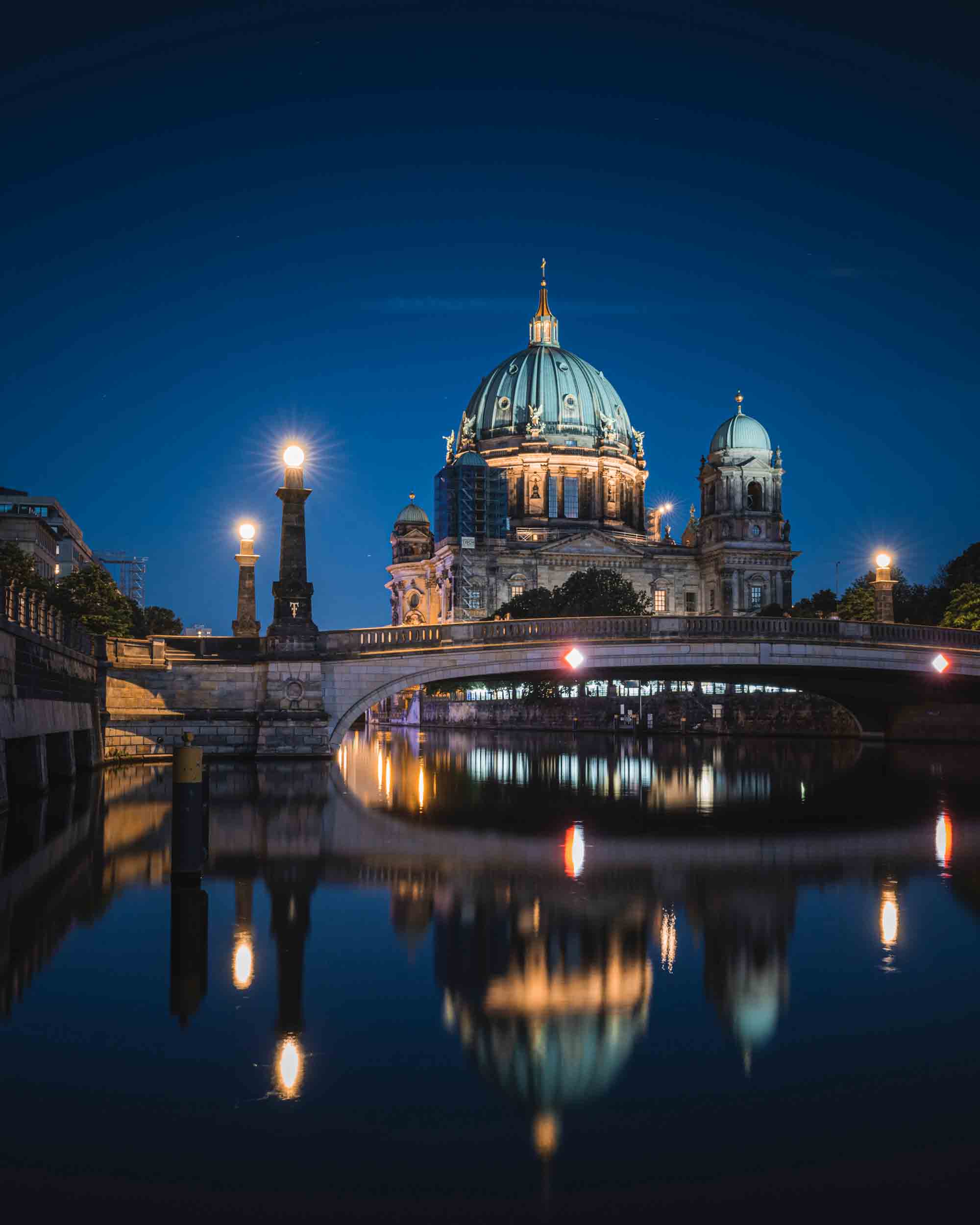 Berlin Cathedral - Naro
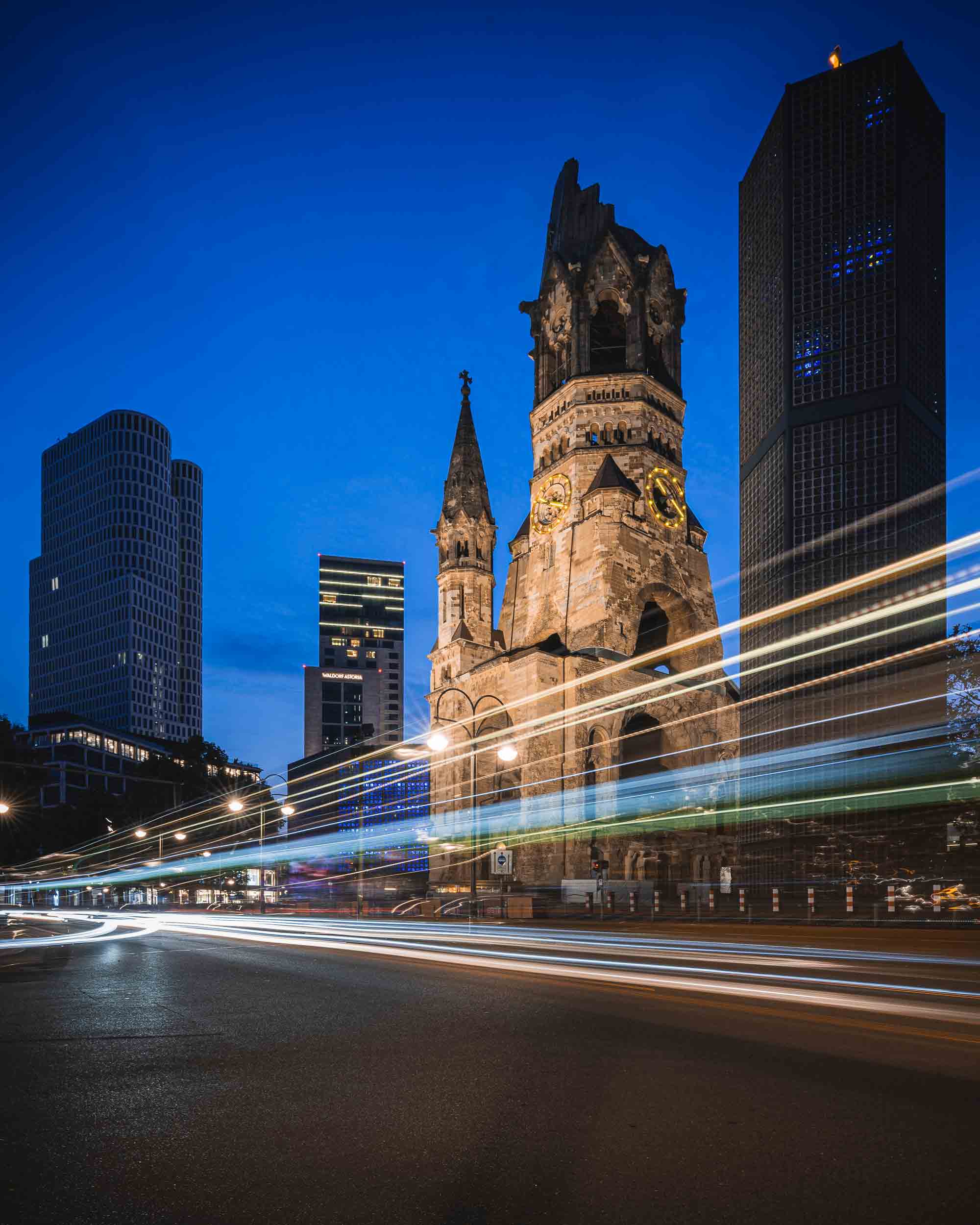 Kudamm - Naro
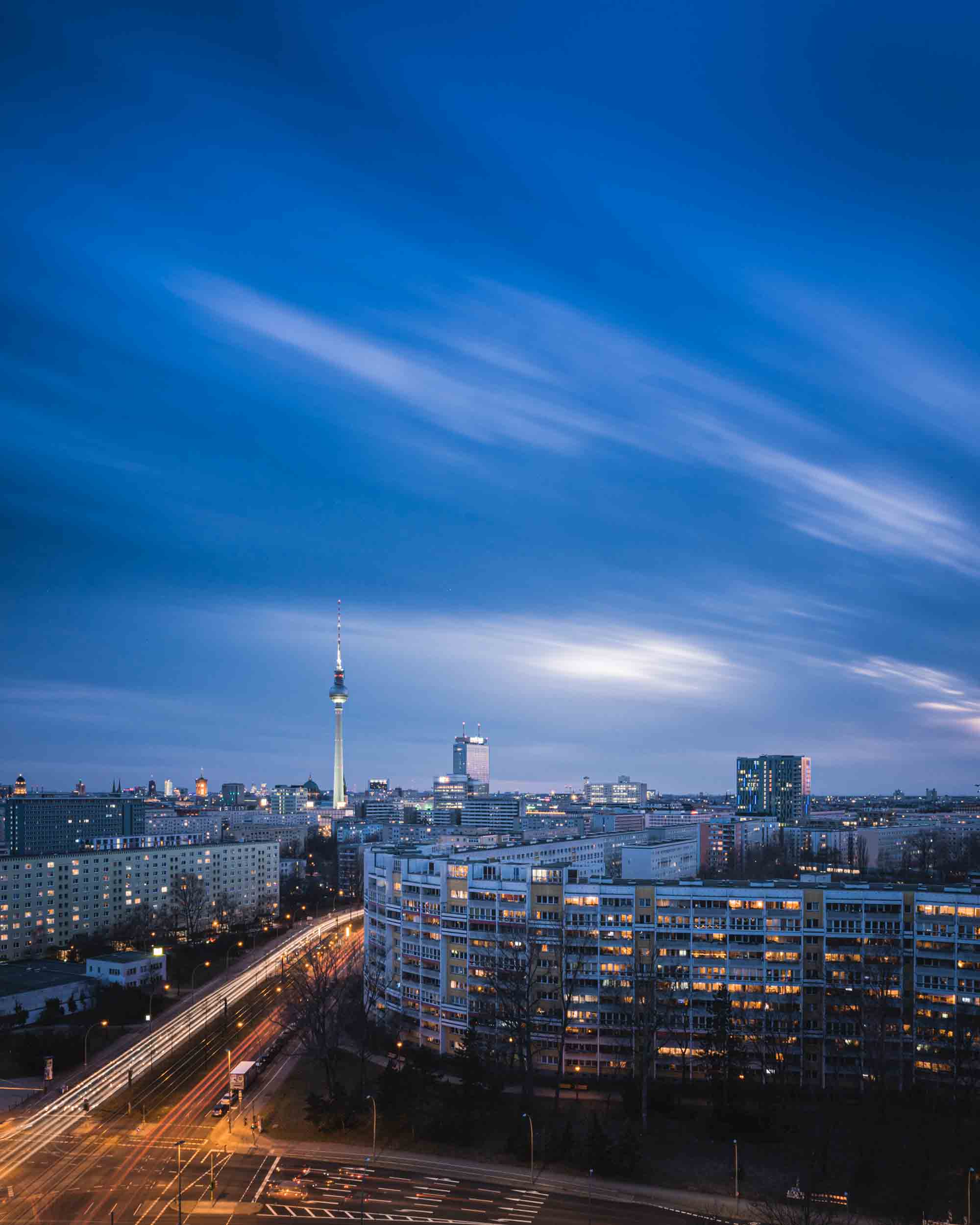 Naro - Square of the United Nations
The right exposure is very important to get a coherent picture
The right exposure is important for blue hour photos. Depending on the subject, longer exposure times and a correspondingly high or low ISO as well as a more or less closed aperture are recommended. In most cases, however, long exposures are used, for which a tripod is necessary. The image stabilizer in the cameras and lenses should be deactivated. In order to achieve consistent sharpness, many people like to close the aperture and use ISO values that are not too high to prevent too much noise. The exposure time must be correspondingly long for this in turn.
Naro uses these means deliberately: "During this time, it is still possible or already possible to work very well without an additional ND filter. You can expose for a good 20 to 30 seconds with the aperture closed. People disappear from the pictures or are shown as shadowy outlines, passing cars create long light trails and water surfaces are smoothed out. If the lights fall directly into the lens, aperture stars are often created, which I have a weakness for. However, it doesn't always have to be a long exposure. For interesting street scenes, I like to use my fastest lens and try to capture the subject with the shortest possible exposure time of around 1/125 or 1/100 seconds. "
How the picture was ultimately taken, whether digital or analog, plays a subordinate role for me. However, if I consciously take my time, I prefer photography on black and white film.
Ignited passion
If you want to take photos at this time of day, you can use blue hour calculators, which are available online and as apps. You should also shoot in RAW, especially here, so that you can adjust the white balance, colors and noise afterwards if necessary.
Naro already learned at least the basics of photography with the exposure triangle in art lessons at school and was able to develop and experiment with images himself in the photo lab.
In his later architecture studies, he learned a lot about the structure of an image and a workshop on architectural photography finally awakened his passion.
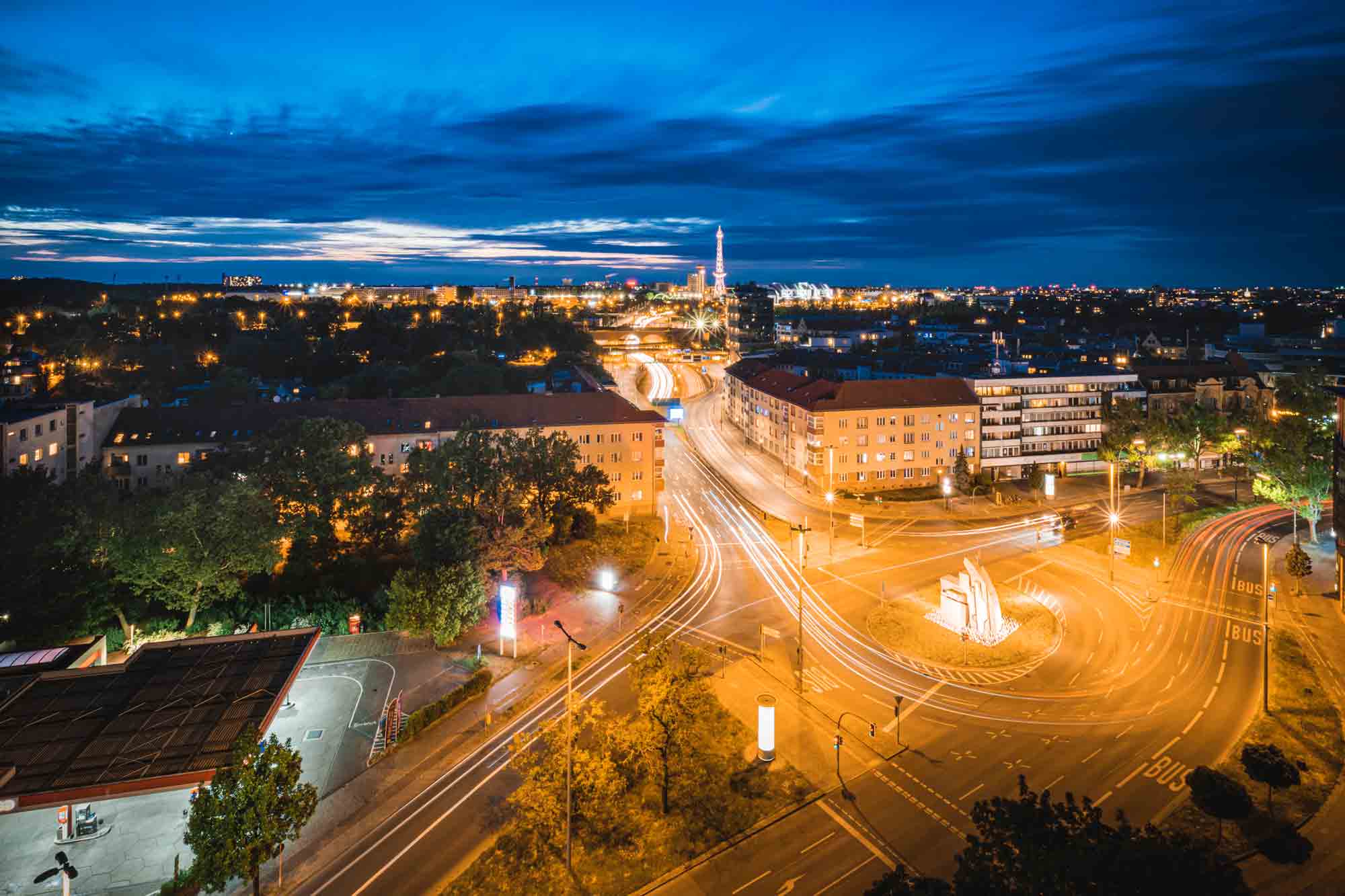 Naro - Rathenau Platz
Photography is versatile and always present
He tells us: "Photography has always been present for me. I like looking through old photo albums and then the respective memories or even emotions come up. Photos are a great way of capturing certain moments, as a kind of documentation. But it's only in recent years, when I've been getting more and more involved with photography, that I've discovered new possibilities. I'm learning a lot, especially thanks to the great community on Instagram. Also that photography is a real craft and no master falls from the sky. You have to know your 'tools' and know what the camera can do and where its limits are. But that comes with time and a bit of practice. I'm always learning from other people and try to be open to other perspectives. That's the beauty of photography for me, because every photographer sees things differently, has a different perspective and the post-processing is usually individual for everyone."
More from Naro
To his Instagram channel